Results by title
3369 books match the query 'Cultural & Social' and 119 start with h

Here is Where I Walk
Episodes From a Life in the ForestLeslie Carol Roberts
University of Nevada Press, 2019
In layered stories of her life and travels, Leslie turns her daily walks into revelations of deeper meaning. From Maryland to Iowa to Tasmania, we follow a fierce and keenly observant walker through places of exquisite beauty and complexity. Her daily walks inspire Leslie to accept the invitation of the beckoning trees where she finds herself colliding with the urban coyote, the peculiar banana slug, and the manzanita. She also notes both ridiculous and poignant aspects of human ecosystems in pursuit of what it means to live a life of creativity and creation from scientist-activists battling to save environments to the tragic realities of ordinary life.
In this finely crafted eco-memoir, each place provides Leslie with exactly the scaffolding needed to survive, with nature serving as the tonic. Here is Where I Walk provides a vivid answer to how we can find our place, not only in nature but within ourselves and the world we walk.
Here, Our Culture Is Hard
Stories of Domestic Violence from a Mayan Community in BelizeBy Laura McClusky
University of Texas Press, 2001
Marriage among the Maya of Central America is a model of complementarity between a man and a woman. This union demands mutual respect and mutual service. Yet some husbands beat their wives.
In this pioneering book, Laura McClusky examines the lives of several Mopan Maya women in Belize. Using engaging ethnographic narratives and a highly accessible analysis of the lives that have unfolded before her, McClusky explores Mayan women's strategies for enduring, escaping, and avoiding abuse. Factors such as gender, age inequalities, marriage patterns, family structure, educational opportunities, and economic development all play a role in either preventing or contributing to domestic violence in the village. McClusky argues that using narrative ethnography, instead of cold statistics or dehumanized theoretical models, helps to keep the focus on people, "rehumanizing" our understanding of violence. This highly accessible book brings to the social sciences new ways of thinking about, representing, and studying abuse, marriage, death, gender roles, and violence.
Heresy in the University
The Black Athena Controversy and the Responsibilities of American IntellectualsJacques Berlinerblau
Rutgers University Press, 1999
Heritage in the Body
Sensory Ecologies of Health Practice in Times of ChangeKristina Baines
University of Arizona Press, 2024
Employing an embodied ecological heritage (EEH) framework, Baines explores the links between health and heritage as a fluid series of ecological practices. Health and wellness are holistically defined and approached from a phenomenological perspective. Baines focuses on how sensory experiences change the body through practice and provides insights into community-driven alternatives as a means to maintain and support happy, healthy lives.
Herlands
Exploring the Women's Land Movement in the United StatesKeridwen N. Luis
University of Minnesota Press, 2018
How women-only communities provide spaces for new forms of culture, sociality, gender, and sexuality
Women’s lands are intentional, collective communities composed entirely of women. Rooted in 1970s feminist politics, they continue to thrive in a range of ways, from urban households to isolated rural communes, providing spaces where ideas about gender, sexuality, and sociality are challenged in both deliberate and accidental ways. Herlands, a compelling ethnography of women’s land networks in the United States, highlights the ongoing relevance of these communities as vibrant cultural enclaves that also have an impact on broader ideas about gender, women’s bodies, lesbian identity, and right ways of living.
As a participant-observer, Keridwen N. Luis brings unique insights to the lives and stories of the women living in these communities. While documenting the experiences of specific spaces in Massachusetts, Tennessee, New Mexico, and Ohio, Herlands also explores the history of women’s lands and breaks new ground exploring culture theory, gender theory, and how lesbian identity is conceived and constructed in North America. Luis also discusses how issues of race and class are addressed, the ways in which nudity and public hygiene challenge dominant constructions of the healthy or aging body, and the pervasive influence of hegemonic thinking on debates about transgender women. Luis finds that although changing dominant thinking can be difficult and incremental, women’s lands provide exciting possibilities for revolutionary transformation in society.

Heroes and Hero Cults in Latin America
Edited by Samuel Brunk and Ben Fallaw
University of Texas Press, 2006
Latin American history traditionally has been defined by larger-than-life heroes such as Símon Bolívar, Emiliano Zapata, and Evita Perón. Recent scholarship, however, tends to emphasize social and cultural factors rather than great leaders. In this new collection, Samuel Brunk and Ben Fallaw bring heroes back to the center of the debate, arguing that heroes not only shape history, they also "tell us a great deal about the places from which they come."
The original essays in this collection examine ten modern Latin American heroes whose charisma derived from the quality of their relationships with admirers, rather than their innate personal qualities. The rise of mass media, for instance, helped pave the way for populists such as radio actress-turned-hero Evita Perón. On the other hand, heroes who become president often watch their images crumble, as policies replace personality in the eyes of citizens. In the end, the editors argue, there is no formula for Latin American heroes, who both forge, and are forged by, unique national events. The conclusion points toward Mexico, where the peasant revolutions that elevated Miguel Hidalgo and, later, Emiliano Zapata are so revered that today's would-be heroes, such as the EZLN's Subcomandante Marcos, must link themselves to peasant mythology even when their personal roots are far from native ground. The enduring (or, in some cases, fading) influence of those discussed in this volume validates the central placement of heroes in Latin American history.
Hierarchies of Care
Girls, Motherhood, and Inequality in PeruKrista E. Van Vleet
University of Illinois Press, 2019
Hierarchy, History, and Human Nature
The Social Origins of Historical ConsciousnessDonald E. Brown
University of Arizona Press, 1988
"This is an intriguing and stimulating study of historical differences in the indigenous historiography of parts of Asia, the Middle East, and Europe."—American Anthropologist.
High Stakes
Florida Seminole Gaming and SovereigntyJessica R. Cattelino
Duke University Press, 2008
Cattelino presents a vivid ethnographic account of the history and consequences of Seminole gaming. Drawing on research conducted with tribal permission, she describes casino operations, chronicles the everyday life and history of the Seminole Tribe, and shares the insights of individual Seminoles. At the same time, she unravels the complex connections among cultural difference, economic power, and political rights. Through analyses of Seminole housing, museum and language programs, legal disputes, and everyday activities, she shows how Seminoles use gaming revenue to enact their sovereignty. They do so in part, she argues, through relations of interdependency with others. High Stakes compels rethinking of the conditions of indigeneity, the power of money, and the meaning of sovereignty.

Hikikomori
Adolescence without EndSaito Tamaki
University of Minnesota Press, 2013
This is the first English translation of a controversial Japanese best seller that made the public aware of the social problem of hikikomori, or “withdrawal”—a phenomenon estimated by the author to involve as many as one million Japanese adolescents and young adults who have withdrawn from society, retreating to their rooms for months or years and severing almost all ties to the outside world. Saitō Tamaki’s work of popular psychology provoked a national debate about the causes and extent of the condition.
Since Hikikomori was published in Japan in 1998, the problem of social withdrawal has increasingly been recognized as an international one, and this translation promises to bring much-needed attention to the issue in the English-speaking world. According to the New York Times, “As a hikikomori ages, the odds that he’ll re-enter the world decline. Indeed, some experts predict that most hikikomori who are withdrawn for a year or more may never fully recover. That means that even if they emerge from their rooms, they either won’t get a full-time job or won’t be involved in a long-term relationship. And some will never leave home. In many cases, their parents are now approaching retirement, and once they die, the fate of the shut-ins—whose social and work skills, if they ever existed, will have atrophied—is an open question.”
Drawing on his own clinical experience with hikikomori patients, Saitō creates a working definition of social withdrawal and explains its development. He argues that hikikomori sufferers manifest a specific, interconnected series of symptoms that do not fit neatly with any single, easily identifiable mental condition, such as depression.
Rejecting the tendency to moralize or pathologize, Saitō sensitively describes how families and caregivers can support individuals in withdrawal and help them take steps toward recovery. At the same time, his perspective sparked contention over the contributions of cultural characteristics—including family structure, the education system, and gender relations—to the problem of social withdrawal in Japan and abroad.

Hip Hop Desis
South Asian Americans, Blackness, and a Global Race ConsciousnessNitasha Tamar Sharma
Duke University Press, 2010
Hipbillies
Deep Revolution in the Arkansas OzarksJared M. Phillips
University of Arkansas Press, 2019
Hipster Economy
Taste and Authenticity in Late Modern CapitalismAlessandro Gerosa
University College London, 2024
The Hipster Economy gives hipsterism the serious analysis it deserves, through which he reveals the importance of hipster aesthetics, based on authenticity, for today’s consumption-based economy.
Since being authentic has become an aspiration and an imperative, the notion of authenticity shapes the consumption habits of individuals in the most diverse contexts such as food and drinks, clothing, music, tourism, and the digital sphere. It even transforms urban areas and their local economies. In this book, Alessandro Gerosa analyzes this complex set of related phenomena to argue that the quest for authenticity has been a driver of Western societies from the emersion of capitalism and industrial society to today.
The Hipster Economy provides a historically and sociologically grounded explanation of the value of authenticity in the contemporary economy and society, through which it shows why and how authenticity has become a fundamental value orienting consumers' taste in late modern capitalism. In clear and convincing writing, Gerosa proposes a novel conceptualization of the aesthetic regime of consumption and an analysis of how the hipster economy impacts the urban space.
Historical Distance and the Holocaust
Interactions Between Historians and Middle-Class Western Europeans in Memory EducationThomas Van de Putte
Central European University Press, 2026
A detailed interactional analysis and thick ethnographic description demonstrate how the temporal, moral and emotional distancing practices reenforce the lay moralities and political subjectivities of the white middle-class. This comes with (mostly unintended) consequences. Distanced approaches to the Holocaust in non-academic environments reduce empathy for victims and survivors, normalize violence, disconnect the meaning of the Holocaust from contemporary conflict, and re-activate stereotypes about groups who employ more ‘close’ approaches to the Holocaust.
Historicizing Fear
Ignorance, Vilification, and OtheringTravis D. Boyce
University Press of Colorado, 2019
Contributors ground their work in the theory of Othering—the reductive action of labeling a person as someone who belongs to a subordinate social category defined as the Other—in relation to historical events, demonstrating that fear of the Other is universal, timeless, and interconnected. Chapters address the music of neo-Nazi white power groups, fear perpetuated through the social construct of black masculinity in a racially hegemonic society, the terror and racial cleansing in early twentieth-century Arkansas, the fear of drug-addicted Vietnam War veterans, the creation of fear by the Tang Dynasty, and more.
Timely, provocative, and rigorously researched, Historicizing Fear shows how the Othering of members of different ethnic groups has been used to propagate fear and social tension, justify state violence, and prevent groups or individuals from gaining equality. Broadening the context of how fear of the Other can be used as a propaganda tool, this book will be of interest to scholars and students of history, anthropology, political science, popular culture, critical race issues, social justice, and ethnic studies, as well as the general reader concerned with the fearful framing prevalent in politics.
Contributors:
Quaylan Allen, Melanie Armstrong, Brecht De Smet, Kirsten Dyck, Adam C. Fong, Jeff Johnson, Łukasz Kamieński, Guy Lancaster, Henry Santos Metcalf, Julie M. Powell, Jelle Versieren
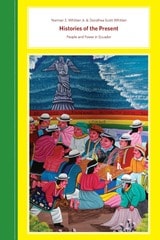
Histories of the Present
People and Power in EcuadorNorman E. Whitten Jr. and Dorothea Scott Whitten
University of Illinois Press, 2011
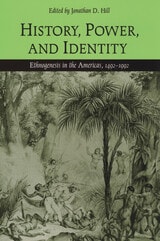
History, Power, and Identity
Ethnogenesis in the Americas, 1492-1992Jonathan D. Hill
University of Iowa Press, 1996
For the past five centuries, indigenous and African American communities throughout the Americas have sought to maintain and recreate enduring identities under conditions of radical change and discontinuity. The essays in this groundbreaking volume document this cultural activity—this ethnogenesis—within and against the broader contexts of domination; the authors simultaneously encompass the entanglements of local communities in the webs of national and global power relations as well as people's unique abilities to gain control over their history and identity.
By defining ethnogenesis as the synthesis of people's cultural and political struggles, History, Power, and Identity breaks out of the implicit contrast between isolated local cultures and dynamic global history. From the northeastern plains of North America to Amazonia, colonial and independent states in the Americas interacted with vast multilingual and multicultural networks, resulting in the historical emergence of new ethnic identities and the disappearance of many earlier ones. The importance of African, indigenous American, and European religions, myths, and symbols, as historical cornerstones in the building of new ethnic identities, emerges as one of the central themes of this convincing collection.

Hitchhiking Hitchhiking Twenty-Five Thousand Miles
Crisscrossing the USA for free in the 1960s and 1970sPeter Madcat Ruth
Parkhurst Brothers, Inc., 2026
Personal Travelogue with dates, ride lists, and commentary about the hitchhiking culture of the era.
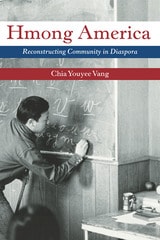
Hmong America
Reconstructing Community in DiasporaChia Youyee Vang
University of Illinois Press, 2010
Vang depicts Hmong experiences in Asia and examines aspects of community building in America to reveal how new Hmong identities have been formed and how they have challenged popular assumptions about race and ethnicity in multicultural America. Combining participant observation and archival research with personal experience, Vang constructs a nuanced and complex portrait of the more than 130,000 Hmong people who came to the United States as political refugees beginning in the mid-1970s. Her critique of previous representations of the Hmong community provides the sociological underpinnings for a bold reassessment of Hmong history in the greater context of globalization. This new understanding redefines concepts of Hmong homogeneity and characterizes ordinary Hmong migrants not as passive victims but as dynamic actors who have exercised much power over their political and social destinies.

Holidays in the Danger Zone
Entanglements of War and TourismDebbie Lisle
University of Minnesota Press, 2016
Holidays in the Danger Zone exposes the mundane and everyday interactions between two seemingly opposed worlds: warfare and tourism. Debbie Lisle shows how a tourist sensibility shapes the behavior of soldiers in war—especially the experiences of Western military forces in “exotic” settings. This includes not only R&R but also how battlefields become landscapes of leisure and tourism. She further explores how a military sensibility shapes the development of tourism in the postwar context, from “Dark Tourism” (engaging with displays of conflict and atrocity) to exhibitions of conflict in museums and at memorial sites, as well as advertising, film, journals, guidebooks, blogs, and photography.
Focused on how war and tourism reinforce prevailing modes of domination, Holidays in the Danger Zone critically examines the long historical arc of the war–tourism nexus—from nineteenth-century imperialism to World War I and World War II, from the Cold War to globalization and the War on Terror.
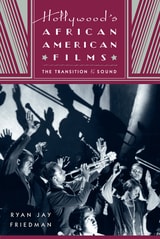
Hollywood's African American Films
The Transition to SoundRyan Friedman
Rutgers University Press, 2011

Home Away from Home
Japanese Corporate Wives in the United StatesSawa Kurotani
Duke University Press, 2005
Kurotani interviewed and spent time with more than 120 women in three U.S. locations with sizable expatriate Japanese communities: Centerville, a pseudonymous Midwestern town; the New York metropolitan area; and North Carolina’s Research Triangle area. She highlights the contradictory situations faced by the transient wives. Their husbands’ assignments in the United States typically last from three to five years, and they frequently emphasize the temporariness of their situation, referring to it as a “long vacation.” Yet they are responsible for creating comfortable homes for their families, which necessitates producing a familiar and permanent environment. Kurotani looks at the dynamic friendships that develop among the wives and describes their feelings about returning to Japan. She conveys how their sense of themselves as Japanese women, of home, and of their relationships with family members are altered by their personal experiences of transnational homemaking.
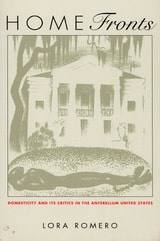
Home Fronts
Domesticity and Its Critics in the Antebellum United StatesLora Romero
Duke University Press, 1997
Romero remaps the literary landscape of the last century by looking at the operations of domesticity on the frontier as well as within the middle-class home and by reconsidering such crucial (if sometimes unexpected) sites for the workings of domesticity as social reform movements, African-American activism, and homosocial high culture. In the process, she indicts theories of the nineteenth century based on binarisms and rigidity while challenging models of power and resistance based on the idea that "culture" has the capacity to either free or enslave. Through readings of James Fenimore Cooper, Catherine Beecher, Harriet Beecher Stowe, Maria Stewart, and Nathaniel Hawthorne, Romero shows how the politics of culture reside in local formulations rather than in essential and ineluctable political structures.

Home Signs
An Ethnography of Life beyond and beside LanguageJoshua O. Reno
University of Chicago Press, 2024
Home Signs grew out of the anthropologist Joshua Reno’s experience of caring for and trying to communicate with his teenage son, Charlie, who cannot speak. To manage interactions with others, Charlie uses what are known as “home signs,” gestures developed to meet his need for expression, ranging from the wiggle of a finger to a subtle sideways glance. Though he is nonverbal, he is far from silent: in fact, he is in constant communication with others.
In this intimate reflection on language, disability, and togetherness, the author invites us into his and Charlie’s shared world. Combining portraits of family life and interviews with other caregivers, Reno upends several assumptions, especially the idea that people who seem not to be able to speak for themselves need others to speak on their behalf. With its broad exploration of nonverbal communication in both human and nonhuman contexts, Home Signs challenges us to think harder about what it means to lead a “normal” life and to connect with another person.
Home and Work
Negotiating Boundaries through Everyday LifeChristena E. Nippert-Eng
University of Chicago Press, 1996
Arguing that relationships between the two realms range from those that are highly "integrating" to those that are highly "segmenting," Nippert-Eng examines the ways people sculpt the boundaries between home and work. With remarkable sensitivity to the symbolic value of objects and actions, Nippert-Eng explores the meaning of clothing, wallets, lunches and vacations, and the places and ways in which we engage our family, friends, and co-workers. Commuting habits are also revealing, showing how we make the transition between home and work selves though ritualized behavior like hellos and goodbyes, the consumption of food, the way we dress, our choices of routes to and from work, and our listening, working, and sleeping habits during these journeys.
The ways each of us manages time, space, and people not only reflect but reinforce lives that are more "integrating" or "segmenting" at any given time. In clarifying what we take for granted, this book will leave you thinking in different ways about your life and work.
Homeplaces
Dwelling and Habitability in Critical TimesJoão Biehl and Federico Neiburg, editors
Duke University Press, 2026

Homesick
Nicholas Shapiro
Duke University Press, 2025
Homophobias
Lust and Loathing across Time and SpaceDavid A. B. Murray, ed.
Duke University Press, 2009
The contributors to this volume open up the scope of inquiry into processes of homophobia, moving the analysis of a particular form of “hate” into new, wider sociocultural and political fields. The ongoing production of homophobic discourses is carefully analyzed in diverse sites including New York City, Australia, the Caribbean, Greece, India, and Indonesia, as well as American Christian churches, in order to uncover the complex operational processes of homophobias and their intimate relationships to nationalism, sexism, racism, class, and colonialism. The contributors also critically inquire into the limitations of the term homophobia and interrogate its utility as a cross-cultural designation.
Contributors. Steven Angelides, Tom Boellstorff, Lawrence Cohen, Don Kulick, Suzanne LaFont, Martin F. Manalansan IV, David A. B. Murray, Brian Riedel, Constance R. Sullivan-Blum

Honor
Frank Henderson Stewart
University of Chicago Press, 1994
In the first sustained comparative analysis of this elusive notion, Frank Stewart writes that none of these ideas is correct. Drawing on information about Western ideas of honor from sources as diverse as medieval Arthurian romances, Spanish dramas of the sixteenth and seventeenth centuries, and the writings of German jurists of the nineteenth and twentieth centuries, and comparing the European ideas with the ideas of a non-Western society—the Bedouin—Stewart argues that honor must be understood as a right, basically a right to respect. He shows that by understanding honor this way, we can resolve some of the paradoxes that have long troubled scholars, and can make sense of certain institutions (for instance the medieval European pledge of honor) that have not hitherto been properly understood.
Offering a powerful new way to understand this complex notion, Honor has important implications not only for the social sciences but also for the whole history of European sensibility.
Honor and the Political Economy of Marriage
Violence against Women in the Kurdistan Region of IraqJoanne Payton
Rutgers University Press, 2020
Honor and the Political Economy of Marriage provides a description of ‘honor’-based violence that focuses upon the structure of the family rather than the perpetrator’s culture. The author, Joanne Payton, argues that within societies primarily organized by familial and marital connections, women’s ‘honor’ is a form of symbolic capital within a ‘political economy’ in which marriage organizes intergroup connections.
Drawing on statistical analysis of original data contextualized with historical and anthropological readings, Payton explores forms of marriage and their relationship to ‘honor’, sketching changing norms around the familial control of women from agrarian/pastoral roots to the contemporary era.
Hop on Pop
The Politics and Pleasures of Popular CultureHenry Jenkins, Tara McPherson and Jane Shattuc, eds.
Duke University Press, 2003
The essays cover a wide and colorful array of subjects including pro wrestling, the computer games Myst and Doom, soap operas, baseball card collecting, the Tour de France, karaoke, lesbian desire in the Wizard of Oz, Internet fandom for the series Babylon 5, and the stress-management industry. Broader themes examined include the origins of popular culture, the aesthetics and politics of performance, and the social and cultural processes by which objects and practices are deemed tasteful or tasteless. The commitment that binds the contributors is to an emergent perspective in cultural studies, one that engages with popular culture as the culture that "sticks to the skin," that becomes so much a part of us that it becomes increasingly difficult to examine it from a distance. By refusing to deny or rationalize their own often contradictory identifications with popular culture, the contributors ensure that the volume as a whole reflects the immediacy and vibrancy of its objects of study.
Hop on Pop will appeal to those engaged in the study of popular culture, American studies, cultural studies, cinema and visual studies, as well as to the general educated reader.
Contributors. John Bloom, Gerry Bloustein, Aniko Bodroghkozy, Diane Brooks, Peter Chvany, Elana Crane, Alexander Doty, Rob Drew, Stephen Duncombe, Nick Evans, Eric Freedman, Joy Fuqua, Tony Grajeda, Katherine Green, John Hartley, Heather Hendershot, Henry Jenkins, Eithne Johnson, Louis Kaplan, Maria Koundoura, Sharon Mazer, Anna McCarthy, Tara McPherson, Angela Ndalianis, Edward O’Neill, Catherine Palmer, Roberta Pearson, Elayne Rapping, Eric Schaefer, Jane Shattuc, Greg Smith, Ellen Strain, Matthew Tinkhom, William Uricchio, Amy Villarego, Robyn Warhol, Charles Weigl, Alan Wexelblat, Pamela Robertson Wojcik, Nabeel Zuberi
Hope Is Cut
Youth, Unemployment, and the Future in Urban EthiopiaDaniel Mains
Temple University Press, 2013
How do ambitious young men grapple with an unemployment rate in urban Ethiopia hovering around fifty percent? Urban, educated, and unemployed young men have been the primary force behind the recent unrest and revolutions in North Africa and the Middle East. Daniel Mains' detailed and moving ethnographic study, Hope is Cut, examines young men's struggles to retain hope for the future in the midst of economic uncertainty and cultural globalization.
Through a close ethnographic examination of young men's day-to-day lives Hope is Cut explores the construction of optimism through activities like formal schooling, the consumption of international films, and the use of khat, a mild stimulant.
Mains also provides a consideration of social theories concerning space, time, and capitalism. Young men here experience unemployment as a problem of time—they often congregate on street corners, joking that the only change in their lives is the sun rising and setting. Mains addresses these factors and the importance of reciprocity and international migration as a means of overcoming the barriers to attaining aspirations.
Hopis and the Counterculture
Traditionalism, Appropriation, and the Birth of a Social FieldBrian D. Haley
University of Arizona Press, 2024
Exploring the new social field that developed to spread these ideas, Hopis and the Counterculture meticulously traces the trajectories of figures such as Ammon Hennacy, Craig Carpenter, Frank Waters, and the Firesign Theatre, among others. Drawing on insights into the interplay between primitivism, radicalism, stereotyping, and identity, Haley expands on concepts from scholars such as Roy Harvey Pearce’s notion of “isolated radicals” and Jonathan Friedman’s observations regarding the ascendancy of primitivism amid global crises. Haley scrutinizes the roles played by non-Hopi actors and the timing behind the widespread popularization of Hopi religious practices.
House of Mourning
A Biocultural History of the Mountain Meadows MassacreShannon A Novak
University of Utah Press, 2008
On September 11, 1857, some 120 men, women, and children from the Arkansas hills were murdered in the remote desert valley of Mountain Meadows, Utah. This notorious massacre was, in fact, a mass execution: having surrendered their weapons, the victims were bludgeoned to death or shot at point-blank range. The perpetrators were local Mormon militiamen whose motives have been fiercely debated for 150 years.
In House of Mourning, Shannon A. Novak goes beyond the question of motive to the question of loss. Who were the victims at Mountain Meadows? How had they settled and raised their families in the American South, and why were they moving west once again? What were they hoping to find or make for themselves at the end of the trail? By integrating archival records and oral histories with the first analysis of skeletal remains from the massacre site, Novak offers a detailed and sensitive portrait of the victims as individuals, family members, cultural beings, and living bodies.
The history of the massacre has often been treated as a morality tale whose chief purpose was to vilify (or to glorify) some collective body. Resisting this tendency to oversimplify the past, Novak explores Mountain Meadows as a busy and dangerous intersection of cultural and material forces in antebellum America. House of Mourning is a bold experiment in a new kind of history, the biocultural analysis of complex events.
Winner of the Society for Historical Archaeology James Deetz Book Award.

House of Plenty
The Rise, Fall, and Revival of Luby's CafeteriasBy Carol Dawson and Carol Johnston
University of Texas Press, 2006
Violet Crown Award, Writers League of Texas, 2007
Citation, San Antonio Conservation Society, 2009
Scarred by the deaths of his mother and sisters and the failure of his father's business, a young man dreamed of making enough money to retire early and retreat into the secure world that his childhood tragedies had torn from him. But Harry Luby refused to be a robber baron. Turning totally against the tide of avaricious capitalism, he determined to make a fortune by doing good. Starting with that unlikely, even naive, ambition in 1911, Harry Luby founded a cafeteria empire that by the 1980s had revenues second only to McDonald's. So successfully did Luby and his heirs satisfy the tastes of America that Luby's became the country's largest cafeteria chain, creating more millionaires per capita among its employees than any other corporation of its size. Even more surprising, the company stayed true to Harry Luby's vision for eight decades, making money by treating its customers and employees exceptionally well.
Written with the sweep and drama of a novel, House of Plenty tells the engrossing story of Luby's founding and phenomenal growth, its long run as America's favorite family restaurant during the post-World War II decades, its financial failure during the greed-driven 1990s when non-family leadership jettisoned the company's proven business model, and its recent struggle back to solvency. Carol Dawson and Carol Johnston draw on insider stories and company records to recapture the forces that propelled the company to its greatest heights, including its unprecedented practices of allowing store managers to keep 40 percent of net profits and issuing stock to all employees, which allowed thousands of Luby's workers to achieve the American dream of honestly earned prosperity. The authors also plumb the depths of the Luby's drama, including a hushed-up theft that split the family for decades; the 1991 mass shooting at the Killeen Luby's, which splattered the company's good name across headlines nationwide; and the rapacious over-expansion that more than doubled the company's size in nine years (1987-1996), pushed it into bankruptcy, and drove president and CEO John Edward Curtis Jr. to violent suicide.
Disproving F. Scott Fitzgerald's adage that "there are no second acts in American lives," House of Plenty tells the epic story of an iconic American institution that has risen, fallen, and found redemption—with no curtain call in sight.
Houses in a Landscape
Memory and Everyday Life in MesoamericaJulia A. Hendon
Duke University Press, 2010
Hendon conducted research on three contemporaneous Native American civilizations that flourished from the seventh century through the eleventh CE: the Maya kingdom of Copan, the hilltop center of Cerro Palenque, and the dispersed settlement of the Cuyumapa valley. She analyzes domestic life in these societies, from cooking to crafting, as well as public and private ritual events including the ballgame. Combining her findings with a rich body of theory from anthropology, history, and geography, she explores how objects—the things people build, make, use, exchange, and discard—help people remember. In so doing, she demonstrates how everyday life becomes part of the social processes of remembering and forgetting, and how “memory communities” assert connections between the past and the present.
How Climate Change Comes to Matter
The Communal Life of FactsCandis Callison
Duke University Press, 2014
The disparate efforts of these groups illuminate the challenge of maintaining fidelity to scientific facts while transforming them into ethical and moral calls to action. Callison investigates the different vernaculars through which we understand and articulate our worlds, as well as the nuanced and pluralistic understandings of climate change evident in different forms of advocacy. As she demonstrates, climate change offers an opportunity to look deeply at how issues and problems that begin in a scientific context come to matter to wide publics, and to rethink emerging interactions among different kinds of knowledge and experience, evolving media landscapes, and claims to authority and expertise.
How Development Projects Persist
Everyday Negotiations with Guatemalan NGOsErin Beck
Duke University Press, 2017

How Difficult It Is to Be God
Shining Path’s Politics of War in Peru, 1980–1999Carlos Iván Degregori; Edited and with an introduction by Steve J. Stern; Translated by Nancy Appelbaum, Joanna Drzewieniecki, Héctor Flores, Eric Hershberg, Judy Rein, Steve J. Stern, and Kimberly Theidon
University of Wisconsin Press, 2012
In How Difficult It Is to Be God, Carlos Iván Degregori—the world’s leading expert on Shining Path and the intellectual architect for Peru’s highly regarded Truth and Reconciliation Commission—elucidates the movement’s dynamics. An anthropologist who witnessed Shining Path’s recruitment of militants in the 1970s, Degregori grounds his findings in deep research and fieldwork. He explains not only the ideology and culture of revolution among the insurgents, but also their capacity to extend their influence to university youths, Indian communities, and competing social and political movements.
Making Degregori’s most important work available to English-language readers for the first time, this translation includes a new introduction by historian Steve J. Stern, who analyzes the author’s achievement, why it matters, and the debates it sparked. For anyone interested in Peru and Latin America’s age of “dirty war,” or in the comparative study of revolutions, Maoism, and human rights, this book will provide arresting new insights.
How French Moderns Think
The Lévy-Bruhl Family, From “Primitive Mentality” to Contemporary PandemicsFrédéric Keck
HAU, 2023
How French Moderns Think tells the story of the French sociological tradition through four generations of the Lévy-Bruhl family: Lucien, who founded the Institute of Ethnology at the University of Paris; his son Henri, who founded the Institute of Roman Law; his grandson Raymond, who took part in the creation of the National Institute of Statistics and Economic Studies; and his great-grandson Daniel, a vaccine specialist at the Institute of Public Health. This family history casts a new light on the philosophical debates about “primitive mentality” and the “savage mind.” By drawing on the expert knowledge inherent in this family genealogy, the articulation between the logical and the “pre-logical” is not a cognitive question but rather a problem of anticipating unpredictable events. By relating Lévy-Bruhl’s engagements from the Dreyfus Affair to the Minister of Armaments during the First World War, Keck narrates the confrontation of the socialist ideal of justice and truth with the French colonial experience and its transformations in global technologies preparing for pandemics.
How Humans Cooperate
Confronting the Challenges of Collective ActionRichard E. Blanton
University Press of Colorado, 2016
In How Humans Cooperate, Richard E. Blanton and Lane F. Fargher take a new approach to investigating human cooperation, developed from the vantage point of an "anthropological imagination." Drawing on the discipline’s broad and holistic understanding of humans in biological, social, and cultural dimensions and across a wide range of temporal and cultural variation, the authors unite psychological and institutional approaches by demonstrating the interplay of institution building and cognitive abilities of the human brain.
Blanton and Fargher develop an approach that is strongly empirical, historically deep, and more synthetic than other research designs, using findings from fields as diverse as neurobiology, primatology, ethnography, history, art history, and archaeology. While much current research on collective action pertains to local-scale cooperation, How Humans Cooperate puts existing theories to the test at larger scales in markets, states, and cities throughout the Old and New Worlds.
This innovative book extends collective action theory beyond Western history and into a broadly cross-cultural dimension, places cooperation in the context of large and complex human societies, and demonstrates the interplay of collective action and aspects of human cognitive ability. By extending the scope and content of collective action theory, the authors find a fruitful new path to understanding human cooperation.

How Is It Between Us?
Relational Ethics and Care for the WorldJarrett Zigon
HAU, 2024
In How Is It Between Us?, Jarrett Zigon puts anthropology and phenomenological hermeneutics in conversation to develop a new theory of relational ethics. This relational ethics takes place in the between, the interaction not just between people, but all existents. Importantly, this theory is utilized as a framework for considering some of today’s most pressing ethical concerns—for example, living in a condition of post-truth and worlds increasingly driven by algorithms and data extraction, various and competing calls for justice, and the ethical demands of the climate crisis. Written by one of the preeminent contributors to the anthropology of ethics, this is a ground-breaking book within that literature, developing a robust and systematic ethical theory to think through contemporary ethical problems.
How Lifeworlds Work
Emotionality, Sociality, and the Ambiguity of BeingMichael Jackson
University of Chicago Press, 2017
In How Lifeworlds Work, Jackson draws on years of ethnographic fieldwork in West Africa to highlight the dynamic quality of human relationships and reinvigorate the study of kinship and ritual. How, he asks, do we manage the perpetual process of accommodation between social norms and personal emotions, impulses, and desires? How are these two dimensions of lived reality joined, and how are the dual imperatives of individual expression and collective viability managed? Drawing on the pragmatist tradition, psychology, and phenomenology, Jackson offers an unforgettable, beautifully written account of how we make, unmake, and remake, our lifeworlds.
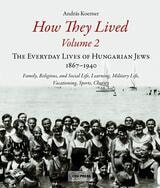
How They Lived 2
The Everyday Lives of Hungarian Jews, 1867-1940: Family, Religious, and Social Life, Learning, Military Life, Vacationing, Sports, CharityAndrás Koerner
Central European University Press, 2017
How They Lived
The Everyday Lives of Hungarian Jews, 1867–1940András Koerner
Central European University Press, 2015
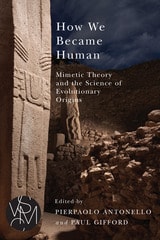
How We Became Human
Mimetic Theory and the Science of Evolutionary OriginsPierpaolo Antonello
Michigan State University Press, 2015

How Would You Like to Pay?
How Technology Is Changing the Future of MoneyBill Maurer
Duke University Press, 2015
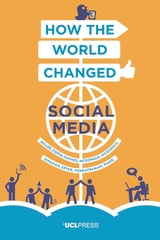
How the World Changed Social Media
Daniel Miller, Elisabetta Costa, Nell Haynes, Tom McDonald, Razvan Nicolescu, Jolynna Sinanan, Juliano Spyer, Shriram Venkatraman, and Xinyuan Wang,
University College London, 2016
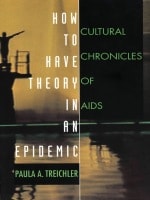
How to Have Theory in an Epidemic
Cultural Chronicles of AIDSPaula A. Treichler
Duke University Press, 1999
“AIDS is more than an epidemic disease,” Treichler writes, “it is an epidemic of meanings.” Exploring how such meanings originate, proliferate, and take hold, her essays investigate how certain interpretations of the epidemic dominate while others are obscured. They also suggest ways to understand and choose between overlapping or competing discourses. In her coverage of roughly fifteen years of the AIDS epidemic, Treichler addresses a range of key issues, from biomedical discourse and theories of pathogenesis to the mainstream media’s depictions of the crisis in both developed and developing countries. She also examines representations of women and AIDS, treatment issues, and the role of activism in shaping the politics of the epidemic. Linking the AIDS tragedy to a uniquely broad spectrum of contemporary theory and culture, this collection concludes with an essay on the continued importance of theoretical thought for untangling the sociocultural phenomena of AIDS—and for tackling the disease itself.
With an exhaustive bibliography of critical and theoretical writings on HIV and AIDS, this long-awaited volume will be essential to all those invested in studying the course of AIDS, its devastating medical effects, and its massive impact on contemporary culture. It should become a standard text in university courses dealing with AIDS in biomedicine, sociology, anthropology, gay and lesbian studies, women’s studies, and cultural and media studies.

How to Shoot the Longbow
A Guide from Historical and Applied SourcesHugh D. H. Soar
Westholme Publishing, 2015
“Soar’s book [The Crooked Stick] is indispensible.”—Bernard Cornwell, New York Times bestselling author
Relying on more than fifty years’ experience in archery, historian Hugh D. H. Soar reflects on how the longbow was drawn and shot across the centuries through examining the design of the bow and early literature about the bow, combined with his and his colleagues’ applied knowledge using replica bows. No complete medieval longbow has survived, but those found aboard the Tudor warship Mary Rose provide the best archaeological evidence to the possible construction of the medieval bow. Contemporary treatises written about the proper manner of shooting the bow, together with the resurgence in interest and construction of replica bows beginning in the late sixteenth century that form part of the author’s collection provide the basis for this work. How to Shoot the Longbow: A Guide from Historical and Applied Sources is a fascinating and practical look at the use of a legendary invention.