Results by title
2728 books match the query 'Education' and 68 start with h

How To Teach Your Children the Latin of the Church
Jack Clark
Catholic University of America Press, 2027
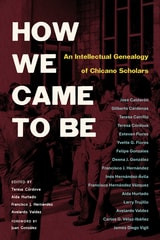
How We Came to Be
An Intellectual Genealogy of Chicano ScholarsEdited by Teresa Córdova, Aída Hurtado, Francisco J. Hernández, Avelardo Valdez; Foreword by Juan González
University of Arizona Press, 2026
This work chronicles the lives and legacies of Chicana and Chicano scholars whose formative experiences in the Chicano Movement shaped the development of Chicano studies and transformed higher education. Originating from the Reuniónes de Colegas—gatherings of veteran scholars reflecting on their shared histories—the volume features sixteen essays organized into five thematic sections that explore the intersections of activism, scholarship, and institutional change.
The contributors document how grassroots organizing evolved into academic inquiry, leading to the creation of departments, student support systems, and policy reforms that advanced equity and representation in universities. Essays address how community-engaged research influenced urban planning, health advocacy, and cultural production, while also highlighting Indigenous and transnational epistemologies that redefined theoretical frameworks in Chicano studies. The volume concludes with reflections on academic leadership and the breaking of barriers by Chicana scholars in higher education administration.
Together, these essays offer a powerful intellectual history and a testament to a generation’s enduring commitment to social justice. How We Came to Be is both a scholarly archive and a call to action, preserving the legacy of those who built Chicano studies and inspiring future generations to continue the work of transformation within and beyond the academy.
Contributors
José Calderón
Gilberto Cárdenas
Teresa Carrillo
Teresa Córdova
Estevan Flores
Yvette G. Flores
Felipe Gonzales
Deena J. González
Francisco J. Hernández
Inés Hernández-Ávila
Francisco Hernández Vázquez
Aída Hurtado
Larry Trujillo
Avelardo Valdez
Carlos G. Vélez-Ibáñez
James Diego Vigil
How We Make Each Other
Trans Life at the Edge of the UniversityPerry Zurn
Duke University Press, 2025
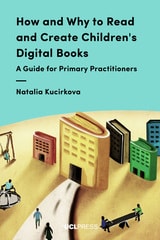
How and Why to Read and Create Children's Digital Books
A Guide for Primary PractitionersNatalia Kucirkova
University College London, 2018
How the Financial Crisis and Great Recession Affected Higher Education
Edited by Jeffrey R. Brown and Caroline M. Hoxby
University of Chicago Press, 2014
The studies in this volume explore how various practices at institutions of higher education, such as the drawdown of endowment resources, the awarding of financial aid, and spending on research, responded to the financial crisis. The studies examine universities as economic organizations that operate in a complex institutional and financial environment. The authors examine the role of endowments in university finances and the interaction of spending policies, asset allocation strategies, and investment opportunities. They demonstrate that universities’ behavior can be modeled using economic principles.
How to Educate an American
The Conservative Vision for Tomorrow's SchoolsMichael J. Petrilli
Templeton Press, 2020
Today, these gains are in retreat, ceding ground to progressive nostrums that do little to boost the skills and knowledge of young people. Far from being discouraged, however, conservatives should seize the moment to refresh their vision of quality K–12 education for today’s America. These essays by 20 leading conservative thinkers do just that.
Students, according to this vision, should complete high school with a thorough understanding of the country’s history, including gratitude for its sacrifices, respect for its achievements, and awareness of its shortcomings. They should also learn to be trustworthy stewards of a democratic republic, capable of exercising virtue and civic responsibility.
Beyond helping to form their character, schools ought to ready their pupils for careers that are productive, rewarding, and dignified. Excellent technical-training opportunities will await those not headed to a traditional college. Regardless of the paths and schools that they select, all students must come to understand that they can succeed in America if they are industrious, creative, and responsible.
Anchored in tradition yet looking towards tomorrow, How to Educate an American should be read by anyone concerned with teaching future generations to preserve the country’s heritage, embody its universal ethic, and pursue its founding ideals.
How to Study
Suggestions for High-School and College StudentsArthur W. Kornhauser
University of Chicago Press, 1993
*Mastering rather than just memorizing material
*Learning the secrets of mental preparation before tackling difficult assignments or exams
*Strengthening skills for better reading, note taking, and listening
*Improving use of time in the classroom, the library, and at home
It offers a wealth of advice, from the commonsensical ("Never begin study immediately after eating" and "Check every tendency to daydream") to the more psychological ("Use your knowledge by thinking, talking, and writing about the things you are learning").
Thoroughly revised and updated, this powerful little book can help any motivated and capable student work smarter, not just harder, from high school through college.
When he wrote How to Study Arthur W. Kornhauser (1896-1990) was associate professor of business psychology at the University of Chicago.
How to Succeed in College (While Really Trying)
A Professor's Inside AdviceJon B. Gould
University of Chicago Press, 2010
After years of preparation and anticipation, many students arrive at college without any real knowledge of the ins and outs of college life. They’ve been focused on finding the right school and have been carefully guided through the nuances of the admissions process, but too often they have little knowledge about how college will be different from high school or what will be expected of them during that crucial first year and beyond. Written by an award-winning teacher, How to Succeed in College (While Really Trying) provides much-needed help to students, offering practical tips and specific study strategies that will equip them to excel in their new environment.
Drawing on years of experience teaching at a variety of campuses, from large research universities to small liberal arts colleges, Jon B. Gould gives readers the lay of the land and demystifies the college experience. In the course of the book, students will learn how to identify the best instructors, how to choose classes and settle on a major, how to develop effective strategies for reading and note taking, and how to write good papers and successfully complete exams.
Because much of the college experience takes place outside of the classroom, Gould also advises students on how to effectively manage their cocurricular activities, work obligations, and free time, as well as how to take advantage of the typically untapped resources on every campus. With candid advice and insights from a seasoned insider, this guide will leave students better prepared not only to succeed in college but to enjoy it as well.
How to Teach Art?
Wiktoria Furrer, Carla Gabrí, Nastasia Louveau, Maria Ordoñez, and Artur Zmijewski
Diaphanes, 2021
How should art be taught? What kind of knowledge should artists absorb? How might an ordinary person become a creature addicted to the creative process? In other words, how can a non-artist become an artist? Such programmatic questions articulated by acclaimed Polish artist Artur Żmijewski were at the heart of the workshop “How to Teach Art?” Żmijewski invited a group of graduate and doctoral students from three Zurich universities—the Swiss Federal Institute of Technology, the University of Zurich, and the Zurich University of the Arts—to collectively reflect on their artistic practices. Over the course of four months, the group met several times a week for hourlong sessions, following individual and collective exercises induced by Żmijewski himself.
This book retraces the workshop and its process by showing inconclusive, fragmentary results between theory and practice. How to Teach Art? presents drawings, videos, photographs, 16mm films, and accompanying reflections on the central premise, “How to teach art?”
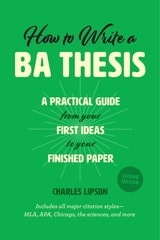
How to Write a BA Thesis, Second Edition
A Practical Guide from Your First Ideas to Your Finished PaperCharles Lipson
University of Chicago Press, 2018
How to Write a BA Thesis
A Practical Guide from Your First Ideas to Your Finished PaperCharles Lipson
University of Chicago Press, 2005
This book offers step-by-step advice on how to turn a vague idea into a clearly defined proposal, then a draft paper, and, ultimately, a polished thesis. Lipson also tackles issues beyond the classroom-from good work habits to coping with personal problems that interfere with research and writing.
Filled with examples and easy-to-use highlighted tips, the book also includes handy time schedules that show when to begin various tasks and how much time to spend on each. Convenient checklists remind students which steps need special attention, and a detailed appendix, filled with examples, shows how to use the three main citation systems in the humanities and social sciences: MLA, APA, and Chicago.
How to Write a BA Thesis will help students work more comfortably and effectively-on their own and with their advisers. Its clear guidelines and sensible advice make it the perfect text for thesis workshops. Students and their advisers will refer again and again to this invaluable resource. From choosing a topic to preparing the final paper, How to Write a BA Thesis helps students turn a daunting prospect into a remarkable achievement.
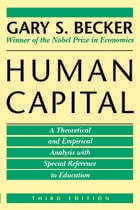
Human Capital
A Theoretical and Empirical Analysis, with Special Reference to Education, 3rd EditionGary S. Becker
University of Chicago Press, 1993
This expanded edition includes four new chapters, covering recent ideas about human capital, fertility and economic growth, the division of labor, economic considerations within the family, and inequality in earnings.
Human Resources and Higher Education
Staff Report on the Commission on Human Resources and Advanced EducationJohn K. Folger
Russell Sage Foundation, 1970
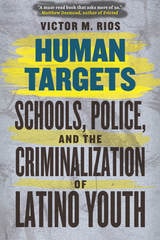
Human Targets
Schools, Police, and the Criminalization of Latino YouthVictor M. Rios
University of Chicago Press, 2017
In Human Targets, Rios takes us to the streets of California, where we encounter young men who find themselves in much the same situation as fifteen-year-old Victor. We follow young gang members into schools, homes, community organizations, and detention facilities, watch them interact with police, grow up to become fathers, get jobs, get rap sheets—and in some cases get killed. What is it that sets apart young people like Rios who succeed and survive from the ones who don’t? Rios makes a powerful case that the traditional good kid/bad kid, street kid/decent kid dichotomy is much too simplistic, arguing instead that authorities and institutions help create these identities—and that they can play an instrumental role in providing young people with the resources for shifting between roles. In Rios’s account, to be a poor Latino youth is to be a human target—victimized and considered an enemy by others, viewed as a threat to law enforcement and schools, and burdened by stigma, disrepute, and punishment. That has to change.
This is not another sensationalistic account of gang bangers. Instead, the book is a powerful look at how authority figures succeed—and fail—at seeing the multi-faceted identities of at-risk youths, youths who succeed—and fail—at demonstrating to the system that they are ready to change their lives. In our post-Ferguson era, Human Targets is essential reading.
Humanities in the Time of AI
Laurent Dubreuil
University of Minnesota Press, 2025
Why AI offers a chance for the humanities to strengthen their relevance and significance
If humanistic research consists of the generation of consensus positions, simple expression, summarized texts, or passable translations, then we have arrived at the place where AI is able to accomplish these different missions to a convincing degree. However, Laurent Dubreuil argues, such tasks do not, in any way, constitute the humanities. On the contrary, he posits, a maximalist take on scholarship would not focus on generation but on creation, as a subject and as an object. Dubreuil seizes the opportunity of what AI reveals about the meaning of humanistic inquiry to offer a path for the renewal of the humanities on transhistorical, transcultural, and transdisciplinary grounds.
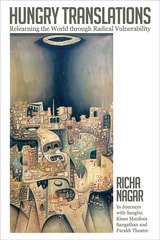
Hungry Translations
Relearning the World through Radical VulnerabilityRicha Nagar
University of Illinois Press, 2019
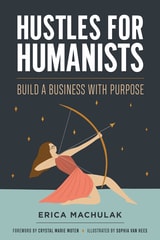
Hustles for Humanists
Build a Business with PurposeErica Machulak
Rutgers University Press, 2025
As a humanities professional, your skills are in demand. Despite the challenges of a competitive job market, the unique skill set that you possess is highly transferable to various industries and roles. Knowing how to position your creativity, knowledge and empathy is vital for achieving meaningful employment and professional growth.
Hustles for Humanists provides a detailed roadmap for humanities professionals who want to leverage their valuable skills to find or create meaningful work. Drawing from her experiences as an academic turned entrepreneur, Erica Machulak gives practical advice on how to connect with your core values, market yourself, build relationships with clients, and negotiate fair compensation.
This is an essential field guide for finding work that aligns with the core values of your humanities scholarship and practice. It demonstrates how the professional strengths of the humanities can be drawn upon to create fairer, more just and equitable entrepreneurial approaches – whether you’re launching a business, job hunting, or looking for inspiration. Hustles for Humanists helps you unlock the value of your humanities practice and explore exciting new pathways to achieving economic stability both within and beyond academia.
Hutchins' University
A Memoir of the University of Chicago, 1929-1950William H. McNeill
University of Chicago Press, 1991
Hutchins' scathing opposition to the departmentalization of learning and his resounding call for reforms in general education sparked controversy and fueled debate on campus and off. It became a struggle for the heart and soul of higher education—and McNeill, as a student and then as an instructor, was a participant. His account of the university's history is laced with personal reminiscences, encounters with influential fellow scholars such as Richard McKeon, R. S. Crane, and David Daiches, and details drawn from Hutchins' papers and other archives.
McNeill sketches the interplay of personalities with changing circumstances of the Depression, war, and postwar eras. But his central concern is with the institutional life of the University, showing how student behavior, staff and faculty activity and even the Hyde Park neighborhood all revolved around the charismatic figure of Robert Maynard Hutchins—shaped by him and in reaction against him.
Successive transformations of the College, and the tribulations of the ideal of general or liberal education are central to much of the story; but the memoir also explores how the University was affected by such events as Red scares, the remarkably successful Round Table radio broadcasts, the
abolition of big time football, and the inauguration of the nuclear age under the west stands of Stagg Field in 1942.
In short, Hutchins' University sketches an extraordinarily vibrant period for the University of Chicago
and for American higher education. It will revive old controversies among veterans from those times, and may provoke others to reflect anew about the proper role of higher education in American society.