2706 books match the query 'European' and 63 start with h
cover of How Poems Think

How Poems Think

Reginald Gibbons

University of Chicago Press, 2015
To write or read a poem is often to think in distinctively poetic ways—guided by metaphors, sound, rhythms, associative movement, and more. Poetry’s stance toward language creates a particular intelligence of thought and feeling, a compressed articulation that expands inner experience, imagining with words what cannot always be imagined without them. Through translation, poetry has diversified poetic traditions, and some of poetry’s ways of thinking begin in the ancient world and remain potent even now. In How Poems Think, Reginald Gibbons presents a rich gallery of poetic inventiveness and continuity drawn from a wide range of poets—Sappho, Pindar, Shakespeare, Keats, William Carlos Williams, Marina Tsvetaeva, Gwendolyn Brooks, and many others. Gibbons explores poetic temperament, rhyme, metonymy, etymology, and other elements of poetry as modes of thinking and feeling. In celebration and homage, Gibbons attunes us to the possibilities of poetic thinking.
[more]
cover of How We Learn Where We Live: Thomas Bernhard, Architecture, and Bildung

How We Learn Where We Live

Thomas Bernhard, Architecture, and Bildung

Fatima Naqvi

Northwestern University Press, 2015

How We Learn Where We Live opens new avenues into thinking about one of the most provocative writers of the twentieth century, Thomas Bernhard. In one of the first English studies of his work, Fatima Naqvi focuses on the Austrian author’s critique of education (Bildung) through the edifices in which it takes place. She demonstrates that both literature and architecture are implicated in the concept of Bildung. His writings insist that learning has always been a life-long process that is helped—or hindered—by the particular buildings in which Bildung occurs. Naqvi offers close readings of Bernhard’s major prose works, from Amras (1964) to Old Masters (1985) and brings them into dialogue with major architectural debates of the times. She examines Bernard’s interrogation of the theoretical foundations underpinning the educational system and its actual sites.
[more]
cover of How Will the Heart Endure: Elizabeth Bowen and the Landscape of War

How Will the Heart Endure

Elizabeth Bowen and the Landscape of War

Heather Bryant Jordan

University of Michigan Press, 1992
The career of Elizabeth Bowen (1899-1973) has been hard to categorize. As an Anglo-lrish writer, a follower of the modernists but not technically one herself; as an independent woman writer but not, by her admission, a feminist; and as a creative writer in time of war, she has eluded compartmentalization. In How Will the Heart Endure, Heather Bryant Jordan provides a new assessment of Bowen’s achievement, arguing that Bowen’s response to war is the best lens for elucidating the relation between art and life expressed in Bowen’s work.Bowen created novels, short stories, essays, and autobiographical works in a war-torn world that saw successively the Troubles in Ireland, the Irish Civil War, World War I, and World War Il. The strains she felt as a result of these experiences were expressed in the intensely personal vision of loss and betrayal that her fiction conveys.Jordan’s study combines historical and literary analysis and incorporates new archival research on Bowen’s correspondence and on her war reports to the Ministry of Information. How Will the Heart Endure offers not only a new reading of Bowen’s work, but an insightful look into the wartime publishing climate in which Bowen and her circle—which included Virginia Woolf, T. S. Eliot, John and Rosalind Lehmann, Cyril Connolly, Evelyn Waugh, Graham Greene, and Stephen Spender—operated. It will be of interest to specialists in modern British fiction, women’s studies, Irish studies, and Anglo-lrish literature.
[more]
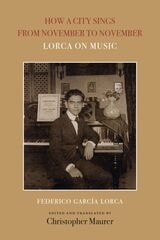
cover of How a City Sings from November to November: Lorca on Music

How a City Sings from November to November

Lorca on Music

Federico García Lorca

Swan Isle Press, 2026

Illuminates the place of music in the life and poetry of Federico García Lorca.

“Yo ante todo, soy músico,” Federico García Lorca once remarked: “Before all else, I am a musician.” Whether seated at the piano, collecting folksongs on his travels through Spain, or composing music for his plays, few poets have lived music so deeply. For Lorca, songs were “living creatures.” How a City Sings from November to November: Lorca on Music brings together for the first time in English the poet’s writing on music and musicians. In these pages, through lectures, letters, and interviews, Lorca celebrates the musical seasons of Granada, “a city enclosed by mountains and made for music”; the sources of cante jondo (flamenco deep song); the haunting melodies of Spanish cradle songs; and the dance of La Argentina. He describes learning the guitar, staging Spanish ballads in Buenos Aires, and listening to spirituals in New York. In bed with a fever, he compares it to a “delicate tempo rubato of Chopin.” Based on recent archival research, edited and newly translated by noted Lorca scholar Christopher Maurer, this collection offers an intricate and enjoyable counterpoint to Lorca’s poetry and theater.
[more]
cover of How the Russians Read the French: Lermontov, Dostoevsky, Tolstoy

How the Russians Read the French

Lermontov, Dostoevsky, Tolstoy

Priscilla Meyer

University of Wisconsin Press, 2008
Russian writers of the nineteenth century were quite consciously creating a new national literary tradition. They saw themselves self-consciously through Western European eyes, at once admiring Europe and feeling inferior to it. This ambivalence was perhaps most keenly felt in relation to France, whose language and culture had shaped the world of the Russian aristocracy from the time of Catherine the Great.
            In How the Russians Read the French, Priscilla Meyer shows how Mikhail Lermontov, Fyodor Dostoevsky, and Lev Tolstoy engaged with French literature and culture to define their own positions as Russian writers with specifically Russian aesthetic and moral values. Rejecting French sensationalism and what they perceived as a lack of spirituality among Westerners, these three writers attempted to create moral and philosophical works of art that drew on sources deemed more acceptable to a Russian worldview, particularly Pushkin and the Gospels. Through close readings of A Hero of Our Time, Crime and Punishment, and Anna Karenina, Meyer argues that each of these great Russian authors takes the French tradition as a thesis, proposes his own antithesis, and creates in his novel a synthesis meant to foster a genuinely Russian national tradition, free from imitation of Western models.
 
Winner, University of Southern California Book Prize in Literary and Cultural Studies, American Association for the Advancement of Slavic Studies
[more]
cover of How to Make a Soul: The Wisdom of John Keats

How to Make a Soul

The Wisdom of John Keats

Eric G. Wilson

Northwestern University Press, 2015

In this innovative hybrid of biography, memoir, and criticism, Eric G. Wilson describes how John Keats gave him solace during a bout of mental illness in spring 2012. While on a tour of the principal sites in Keats’s life—ranging from his London medical school to the small room in Rome where he died—Wilson discovered analogies between the poet’s troubles and his own. He was most struck by Keats’s enlivening vision of the soul.

For Keats, we don’t possess but rather make a soul. We do this by imaginatively transforming our suffering into empathy toward humans and nature alike. Tracking this idea in Keats’s tumultuous yet exhilarating life and work, Wilson struggles to envision his depression anew, desperate to overcome the apathy alienating him from his family.

How to Make a Soul offers fresh perspectives on Keats’s pragmatism, irony, comedy, ethics, and aesthetics, but is above all a lyrical celebration of those galvanizing instances when life springs into art.

[more]
cover of How to Read Barthes' Image-Music-Text

How to Read Barthes' Image-Music-Text

Ed White

Pluto Press, 2012

Roland Barthes remains one of the most influential cultural theorists of the postwar period and Image-Music-Text collects his most influential essays. Ed White provides students with a clear guide to this essential but difficult text.

As students are increasingly expected to write across a range of media, Barthes' work can be understood as an early mapping of what we now call interdisciplinary or multidisciplinary study. The book's detailed section-by-section readings makes Barthes' most important writings accessible to undergraduate readers.

This book is a perfect companion for teaching and learning Barthes' ideas in cultural studies and literary theory.
[more]
cover of Hugo von Hofmannsthal and His Time: The European Imagination, 1860-1920

Hugo von Hofmannsthal and His Time

The European Imagination, 1860-1920

Hermann Broch

University of Chicago Press, 1984

Hermann Broch (1886-1951) is remembered among English-speaking readers for his novels The Sleepwalkers and The Death of Virgil, and among German-speaking readers for his novels as well as his works on moral and political philosophy, his aesthetic theory, and his varied criticism. This study reveals Broch as a major historian as well, one who believes that true historical understanding requires the faculties of both poet and philosopher.

Through an analysis of the changing thought and career of the Austrian poet, librettist, and essaist Hugo von Hofmannsthal (1874-1929), Broch attempts to define and analyze the major intellectual issues of the European fin de siècle, a period that he characterizes according to the Nietzschean concepts of the breakdown of rationality and the loss of a central value system. The result is a major examination of European thought as well as a comparative study of political systems and artistic styles.
[more]
cover of Human Rights and Oppressed Peoples: Collected Essays and Speeches

Human Rights and Oppressed Peoples

Collected Essays and Speeches

Georg Brandes

University of Wisconsin Press, 2020

Georg Brandes was known as the "Father of the Modern Breakthrough" for his influence on Scandinavian writers in the late nineteenth century. A prominent writer, thinker, and speaker, he often examined intellectual topics beyond the literary criticism he was best known for. In this collection, William Banks has translated a number of Brandes's pieces that engage in the concerns of oppressed peoples. By collecting, annotating, and contextualizing these works, Banks reintroduces Brandes as a major progenitor of thinking about the rights of national minorities and the colonized.
Human Rights and Oppressed Peoples includes thirty-five essays and published speeches from the early twenty-first century on subjects as diverse as the Boxer Rebellion, displaced peoples from World War I, Finland's Jewish population, and imperialism. This collection will interest interdisciplinary scholars of human rights as well as those who study Scandinavian intellectual and literary history.
[more]
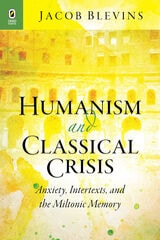
cover of Humanism and Classical Crisis: Anxiety, Intertexts, and the Miltonic Memory

Humanism and Classical Crisis

Anxiety, Intertexts, and the Miltonic Memory

Jacob Blevins

The Ohio State University Press, 2014

While earlier critics have demonstrated significant insight into the relationship between the classical world and the early modern period, Humanism and Classical Crisis: Anxiety, Intertexts, and the Miltonic Memory, by Jacob Blevins, offers a new psychoanalytic approach to understanding classical reception, specifically during the early modern period. Blevins asserts that influence and imitation are primarily driven by anxious desires to identify the poetic self with the past while simultaneously affirming the autonomy and individuality of the self within its own cultural, ideological, and poetic moment. Since the poet cannot hold positions simultaneously in both past and present, anxiety irrupts as the poet fails to understand the fissures in his sense of identity and how that identity is articulated in poetic expression.
 
Blevins grounds his approach in the theories of Jacques Lacan, whose work challenges the very notions of what identity is and, as a result, exposes the complexities of identity formation. Areas and authors covered include imitations and translations of classical works of the sixteenth and seventeenth centuries in England and France by Andrew Marvell, Edmund Spencer, Pierre Ronsard, Joachim Du Bellay, Ben Jonson, Sir Thomas Wyatt, and John Milton.
 
This book not only provides a new perspective on early modern poetic imitation, but also offers a foundational methodology for examining the classical presence within the modern self.
 
[more]
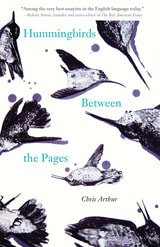
cover of Hummingbirds Between the Pages

Hummingbirds Between the Pages

Chris Arthur

The Ohio State University Press, 2018
In his latest collection, Hummingbirds Between the Pages, prizewinning Irish essayist Chris Arthur muses on subjects ranging from Charles Darwin’s killing of a South American fox to the carnal music sounding in a statue of the Buddha, from how Egyptian seashells contain echoes of World War II to a child’s first encounter with death. Whether he’s looking at skipping stones, old photographs, butterflies, the resonance of a remembered phrase, or being questioned at an army checkpoint during Northern Ireland’s Troubles, what gives these unorthodox meditations their appeal is the way in which—with striking lyricism—they tap into unexpected seams of meaning and mystery in our everyday terrain. Arthur explores the moments that have left him spellbound, tying his own experiences as a young boy from Ulster who saw his first hummingbirds in London to the wonder felt by early settlers to America who sent pressed hummingbirds across the ocean to the communities they had left behind. Through rumination on the seemingly quotidian, Arthur’s lyrical prose exposes new layers of possibility just beneath the surface of the expected.
[more]
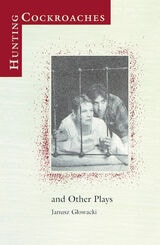
cover of Hunting Cockroaches and Other Plays

Hunting Cockroaches and Other Plays

Janusz Glowacki

Northwestern University Press, 1990
Janusz Glowacki's highly theatrical and often hilarious works concern the immigrant experience of the Eastern European in America, the struggles of the individual in a repressive state, and the manipulations of political and social power. The girls' reform school of Cinders, the Lower East Side tenement of Hunting Cockroaches, and the Norwegian court littered with bodies in Fortinbras Gets Drunk serve as backdrops for Glowacki's tragicomic explorations of the play within the play of contemporary existence.
[more]
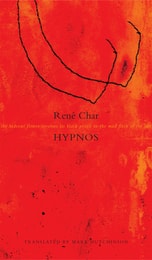
cover of Hypnos

Hypnos

René Char

Seagull Books, 2014

Now in paperback, René Char’s Hypnos is both a remarkable work of literature and a document of unique significance in the history of the French Resistance.

Hailed by the poet Paul Eluard as an "absolute masterpiece" upon its first appearance in 1946, René Char’s Hypnos is both a remarkable work of literature and a document of unique significance in the history of the French Resistance. Based on a journal Char kept during his time in the Maquis, it ranges in style from abrupt and sometimes enigmatic reflections, in which the poet seeks to establish compass bearings in the darkness of Occupied France, to narrative descriptions that throw into vivid relief the dramatic and often tragic nature of the issues he had to confront as the head of his Resistance network. A tribute to the individual men and women who fought at his side, this volume is also a meditation on the white magic of poetry and a celebration of the power of beauty to combat terror and transform our lives.

Translated into German by Paul Celan and into Italian by Vittorio Sereni, the book has never been carried over into English with the attention to style and detail that it deserves. Published in full here for the first time, this long-awaited new translation does justice at last to the incandescence and pathos of the original French.
[more]