Results by title
395 books match the query 'How' and 153 start with h
How the West Really Lost God
A New Theory of SecularizationMary Eberstadt
Templeton Press, 2014
How the Workers Became Muslims
Immigration, Culture, and Hegemonic Transformation in EuropeFerruh Yilmaz
University of Michigan Press, 2016
Yilmaz’s primary case study is Danish immigration discourse, but his argument contextualizes his study in terms of questions of current concern across Europe, where right-wing groups that were long on the fringes of “legitimate” politics have managed to make significant gains with populations traditionally aligned with the Left. Specifically, Yilmaz argues that sociopolitical space has been transformed in the last three decades such that group classification has been destabilized to emphasize cultural rather than economic attributes.
According to this point-of-view, traditional European social and political splits are jettisoned for new “cultural” alliances pulling the political spectrum to the right, against the “corrosive” presence of Muslim immigrants, whose own social and political variety is flattened into an illusion of alien sameness.
How the World Changed Social Media
Daniel Miller, Elisabetta Costa, Nell Haynes, Tom McDonald, Razvan Nicolescu, Jolynna Sinanan, Juliano Spyer, Shriram Venkatraman, and Xinyuan Wang,
University College London, 2016
How to Abandon Ship
Sasha West
Four Way Books, 2024
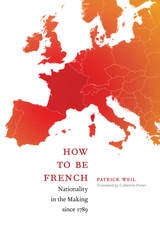
How to Be French
Nationality in the Making since 1789Patrick Weil
Duke University Press, 2008
Throughout How to Be French, Weil compares French laws to those of other countries, including the United States, Great Britain, and Germany, showing how France both borrowed from and influenced other nations’ legislation. Examining moments when a racist approach to nationality policy held sway, Weil brings to light the Vichy regime’s denaturalization of thousands of citizens, primarily Jews and anti-fascist exiles, and late-twentieth-century efforts to deny North African immigrants and their children access to French nationality. He also reveals stark gender inequities in nationality policy, including the fact that until 1927 French women lost their citizenship by marrying foreign men. More than the first complete, systematic study of the evolution of French nationality policy, How to be French is a major contribution to the broader study of nationality.
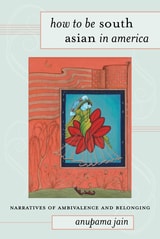
How to Be South Asian in America
Narratives of Ambivalence and BelongingAuthored by anupama jain
Temple University Press, 2011
Providing a useful analysis of and framework for understanding immigration and assimilation narratives, anupama jain's How to Be South Asian in America considers the myth of the American Dream in fiction (Meena Alexander's Manhattan Music), film (American Desi, American Chai), and personal testimonies. By interrogating familiar American stories in the context of more supposedly exotic narratives, jain illuminates complexities of belonging that also reveal South Asians' anxieties about belonging, (trans)nationalism, and processes of cultural interpenetration.
jain argues that these stories transform as well as reflect cultural processes, and she shows just how aspects of identity—gender, sexual, class, ethnic, national—are shaped by South Asians' accommodation of and resistance to mainstream American culture.
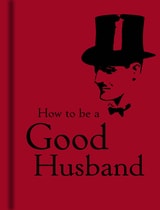
How to Be a Good Husband
Edited by the Bodleian Library
Bodleian Library Publishing, 2008
Don’t forget that very true remark that while face powder may catch a man, baking powder is the stuff to hold him.
Marriage can be a series of humorous miscommunications, a power struggle, or a diplomatic nightmare. Men and women have long struggled to figure each other out—and the misunderstandings can continue well after they’ve been joined in matrimony. But long before Men Are From Mars, Women Are From Venus, couples turned to self-help booklets such as How to Be a GoodHusband and How to Be a Good Wife, two historic advice books that are now delightfully reproduced by the Bodleian Library.
The books, originally published in the 1930s for middle-class British couples, are filled with witty and charming aphorisms on how wives and husbands should treat each other. Some advice is unquestionably outdated—“It is a wife’s duty to look her best. If you don’t tidy yourself up, don’t be surprised if your husband begins to compare you unfavorably with the typist at the office”—but many other pieces of advice are wholly applicable today. They include such insightful sayings as: “Don’t tell your wife terminological inexactitudes, which are, in plain English, lies. A woman has wonderful intuition for spotting even minor departures from the truth”; “After all is said and done, husbands are not terribly difficult to manage”; or “Don’t squeeze the tube of toothpaste from the top instead of from the bottom. This is one of the small things of life that always irritates a careful wife.”
Entertaining and charmingly illustrated, How to Be a Good Husband and How to Be a Good Wife offer enduringly useful advice for all couples, from the newly engaged to those celebrating their golden anniversary.
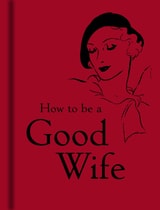
How to Be a Good Wife
Edited by the Bodleian Library
Bodleian Library Publishing, 2008
Don’t forget that very true remark that while face powder may catch a man, baking powder is the stuff to hold him.
Marriage can be a series of humorous miscommunications, a power struggle, or a diplomatic nightmare. Men and women have long struggled to figure each other out—and the misunderstandings can continue well after they’ve been joined in matrimony. But long before Men Are From Mars, Women Are From Venus, couples turned to self-help booklets such as How to Be a GoodHusband and How to Be a Good Wife, two historic advice books that are now delightfully reproduced by the Bodleian Library.
The books, originally published in the 1930s for middle-class British couples, are filled with witty and charming aphorisms on how wives and husbands should treat each other. Some advice is unquestionably outdated—“It is a wife’s duty to look her best. If you don’t tidy yourself up, don’t be surprised if your husband begins to compare you unfavorably with the typist at the office”—but many other pieces of advice are wholly applicable today. They include such insightful sayings as: “Don’t tell your wife terminological inexactitudes, which are, in plain English, lies. A woman has wonderful intuition for spotting even minor departures from the truth”; “After all is said and done, husbands are not terribly difficult to manage”; or “Don’t squeeze the tube of toothpaste from the top instead of from the bottom. This is one of the small things of life that always irritates a careful wife.”
Entertaining and charmingly illustrated, How to Be a Good Husband and How to Be a Good Wife offer enduringly useful advice for all couples, from the newly engaged to those celebrating their golden anniversary.
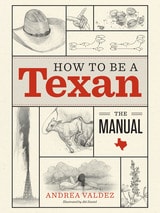
How to Be a Texan
The ManualBy Andrea Valdez
University of Texas Press, 2016
There are certain things every Texan should know how to do and say, whether your Lone Star roots reach all the way back to the 1836 Republic or you were just transplanted here yesterday. Some of these may be second nature to you, but others . . . well, maybe it wouldn’t hurt to have a few handy hints if, say, branding the herd or hosting a tamalada aren’t your usual pastimes. That’s where How to Be a Texan can help.
In a friendly, lighthearted style, Andrea Valdez offers illustrated, easy-to-follow steps for dozens of authentic Texas activities and sayings. In no time, you’ll be talking like a Texan and dressing the part; hunting, fishing, and ranching; cooking your favorite Texas dishes; and dancing cumbia and two-step. You’ll learn how to take a proper bluebonnet photo and build a Día de los Muertos altar, and you’ll have a bucket list of all the places Texans should visit in their lifetime. Not only will you know how to do all these things, you’ll finish the book with a whole new appreciation for what it means to be a Texan and even more pride in saying “I’m from Texas” anywhere you wander in the world.
How to Be an Indian in the 21st Century
Louis V. Clark (Two Shoes)
Wisconsin Historical Society Press, 2017
How to Be an Intellectual in the Age of TV
The Lessons of Gore VidalMarcie Frank
Duke University Press, 2005
Frank highlights the connections between Vidal’s attitudes toward TV, sex, and American politics as they have informed his literary and political writings and screen appearances. She deftly situates his public persona in relation to those of Andy Warhol, Jacqueline Susann, Mary McCarthy, Susan Sontag, and others. By describing Vidal’s shrewd maneuvering between different media, Frank suggests that his career offers a model to aspiring public intellectuals and a refutation to those who argue that electronic media have eviscerated public discourse.
How to Build Successful Business Relationships
Frances Kay
The Institution of Engineering and Technology, 2009

How to Communicate in Business
A handbook for engineersDavid Silk
The Institution of Engineering and Technology, 1995
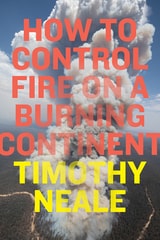
How to Control Fire on a Burning Continent
Timothy Neale
Duke University Press, 2026
Each year, Australia faces increasingly unprecedented wildfires, marked both by their scale and by the intense public disagreements about their political, cultural, and ecological causes. How to Control Fire on a Burning Continent is a critical and ethnographic exploration of wildfire management in Australia and the technoscientific systems of control that shape its current and future possibilities. Timothy Neale observes how two seemingly opposing forces—an entrenched sense of crisis and widespread normalization—combine to form an apparatus of institutional fire management that increasingly centers technical control and militarization. While sympathetic to the double binds many fire management professionals find themselves in, Neale ties contemporary wildfire problems to ongoing colonization and Indigenous dispossession, exploring Indigenous-led land management and cultural burning as a practical assertion of sovereignty. Through dialogue and collaboration with professional fire managers and Indigenous environmental stewards, Neale calls for a collective movement beyond control thinking by fostering new alliances and modes of coping with, rather than commanding, our flammable world.
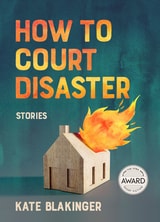
How to Court Disaster
Blakinger, Kate
University of Iowa Press, 2026
How to Court Disaster takes us from wide expanses of open ocean to the enclosed spaces of grimy dive bars, echoing caves, and the holds of a musty ship. A grieving mother explores the secret chambers of a cave system. A stranded sailor joins the crew of a movie being filmed on a remote tropical island. A pregnant teenager finds herself on foot in the middle of a whiteout snowstorm with a stranger’s baby in her arms. A bed-and-breakfast owner struggles to rekindle her bond with the husband who no longer fully remembers their life together. Moving headlong into trouble, the characters in these stories discover they possess the inner resources they need to carry them beyond it: pluck, grit, fierceness, hope, and a growing sense of who they are becoming.
How to Create a Universe
Jakob Ion Wille, Simon Jon Andreasen, and Gunnar Wille
University of Westminster Press, 2025
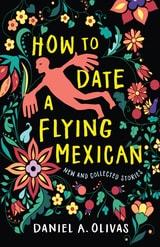
How to Date a Flying Mexican
New and Collected StoriesDaniel A. Olivas
University of Nevada Press, 2022
The collection is made up of Olivas’s favorite previously published stories, along with two new stories—one dystopian and the other magical— that challenge the Trump administration’s anti-immigration rhetoric and policies. How to Date a Flying Mexican draws together some of Olivas’s most unforgettable and strange tales, allowing readers to experience his very distinct, and very Chicano, fiction.
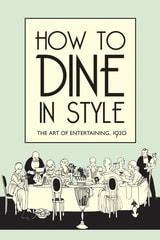
How to Dine in Style
The Art of Entertaining, 1920J. Rey
Bodleian Library Publishing, 2013
By turns a collection of practical advice and a catalog of eccentricities, The Whole Art of Dining, republished by the Bodleian Library as How to Dine in Style, contained everything the would-be socialite needed to know in order to elevate food to high art, from tricks for putting together a proper French menu or throwing a garden party to practical tips on serving wines in the correct order and at the right temperature. Throughout the book are stories of astonishing excess, such as the search for ever-more-elaborate themes and venues, and the more daring of the book’s devotees might have been tempted to emulate efforts like those of the intrepid hostess whose mountaineering-themed dinner party had guests rappel to the rooftop of her Chicago home or American millionaire George A. Kessler, whose infamous “Gondola Party” flooded— for the first and only time—the central courtyard of the Savoy.
A captivating glimpse into the golden age of fine dining, this book will be consumed with interest by discerning diners and fans of the Roaring Twenties—and it may even inspire readers to try their hand at throwing a stylish soiree of their own.
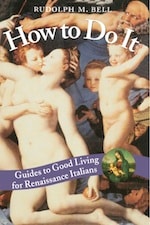
How to Do It
Guides to Good Living for Renaissance ItaliansRudolph M. Bell
University of Chicago Press, 1999
"Lively and curious reading, particularly in its cascade of anecdote, offered in a breezy, cozy, journalistic style." —Lauro Martines, Times Literary Supplement
"[Bell's] fascinating book is a window on a lost world far nearer to our own than we might imagine. . . . How pleasant to read his delightful, informative and often hilarious book." —Kate Saunders, The Independent
"An extraordinary work which blends the learned with the frankly bizarre." —The Economist
"Professor Bell has a sly sense of humor and an enviably strong stomach. . . . He wants to know how people actually behaved, not how the Church or philosophers or earnest humanists thought they should behave. I loved this book." —Christopher Stace, Daily Telegraph
How to Do Things with Legal Doctrine
Pierre Schlag and Amy J. Griffin
University of Chicago Press, 2020
How to Do Things with Sensors
Jennifer Gabrys
University of Minnesota Press, 2019
An investigation of how-to guides for sensor technologies
Sensors are increasingly common within citizen-sensing and DIY projects, but these devices often require the use of a how-to guide. From online instructional videos for troubleshooting sensor installations to handbooks for using and abusing the Internet of Things, the how-to genres and formats of digital instruction continue to expand and develop. As the how-to proliferates, and instructions unfold through multiple aspects of technoscientific practices, Jennifer Gabrys asks why the how-to has become one of the prevailing genres of the digital. How to Do Things with Sensors explores the ways in which things are made do-able with and through sensors and further considers how worlds are made sense-able and actionable through the instructional mode of citizen-sensing projects.
Forerunners: Ideas First
Short books of thought-in-process scholarship, where intense analysis, questioning, and speculation take the lead
How to Do Things with Videogames
Ian Bogost
University of Minnesota Press, 2011
In recent years, computer games have moved from the margins of popular culture to its center. Reviews of new games and profiles of game designers now regularly appear in the New York Times and the New Yorker, and sales figures for games are reported alongside those of books, music, and movies. They are increasingly used for purposes other than entertainment, yet debates about videogames still fork along one of two paths: accusations of debasement through violence and isolation or defensive paeans to their potential as serious cultural works. In How to Do Things with Videogames, Ian Bogost contends that such generalizations obscure the limitless possibilities offered by the medium’s ability to create complex simulated realities.
Bogost, a leading scholar of videogames and an award-winning game designer, explores the many ways computer games are used today: documenting important historical and cultural events; educating both children and adults; promoting commercial products; and serving as platforms for art, pornography, exercise, relaxation, pranks, and politics. Examining these applications in a series of short, inviting, and provocative essays, he argues that together they make the medium broader, richer, and more relevant to a wider audience.
Bogost concludes that as videogames become ever more enmeshed with contemporary life, the idea of gamers as social identities will become obsolete, giving rise to gaming by the masses. But until games are understood to have valid applications across the cultural spectrum, their true potential will remain unrealized. How to Do Things with Videogames offers a fresh starting point to more fully consider games’ progress today and promise for the future.
How to Do the History of Homosexuality
David M. Halperin
University of Chicago Press, 2002
Dealing both with male homosexuality and with lesbianism, this study imparts to the history of sexuality a renewed sense of adventure and daring. It recovers the radical design of Michel Foucault's epochal work, salvaging Foucault's insights from common misapprehensions and making them newly available to historians, so that they can once again provide a powerful impetus for innovation in the field. Far from having exhausted Foucault's revolutionary ideas, Halperin maintains that we have yet to come to terms with their startling implications. Exploring the broader significance of historicizing desire, Halperin questions the tendency among scholars to reduce the history of sexuality to a mere history of sexual classifications instead of a history of human subjectivity itself. Finally, in a theoretical tour de force, Halperin offers an altogether new strategy for approaching the history of homosexuality—one that can accommodate both ruptures and continuities, both identity and difference in sexual experiences across time and space.
Impassioned but judicious, controversial but deeply informed, How to Do the History of Homosexuality is a book rich in suggestive propositions as well as eye-opening details. It will prove to be essential reading for anyone interested in the history of sexuality.
How to Draw a Circle
On Reading and WritingDan Beachy-Quick
University of Michigan Press, 2024
How to Dungeon Master Parenting
A Guidebook for Gamifying the Child Rearing Quest, Leveling Up Your Skills, and Raising Future AdventurersShelly Mazzanoble
University of Iowa Press, 2024
2025 National Indie Excellence Award Finalist, Parenting & Family
2025 Independent Publishers Book Awards (IPPY Awards) bronze medalist, Parenting
2024 Zibby Awards, Best Book for Parents selection
2024 Foreword INDIES Book of the Year Awards Finalist, Family & Relationship
2024 American Book Fest Best Book Award Finalist, Parenting
Gather your party, it’s time to level up your parenting game!
For years, millions of fans have looked to the beloved roleplaying game Dungeons & Dragons for fun, friendship, and entertainment. And now parents and parents-to-be can use D&D to gain inspiration and how-to when it comes to their most challenging and rewarding role yet. Dungeon Masters are not just expert storytellers and arbiters of the rules, they’re compassionate, creative, quick-thinking leaders who embody the same traits that make a great parent.
Where do you find an adventuring party who will have your back? What must-have starting equipment should you own before venturing into babyland? How does your gaming style reflect your parenting style? You don’t have to know how to be a Dungeon Master to master parenting—just think like one. Kids may not come with rulebooks, but now their parents do.
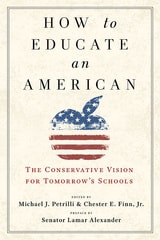
How to Educate an American
The Conservative Vision for Tomorrow's SchoolsMichael J. Petrilli
Templeton Press, 2020
Today, these gains are in retreat, ceding ground to progressive nostrums that do little to boost the skills and knowledge of young people. Far from being discouraged, however, conservatives should seize the moment to refresh their vision of quality K–12 education for today’s America. These essays by 20 leading conservative thinkers do just that.
Students, according to this vision, should complete high school with a thorough understanding of the country’s history, including gratitude for its sacrifices, respect for its achievements, and awareness of its shortcomings. They should also learn to be trustworthy stewards of a democratic republic, capable of exercising virtue and civic responsibility.
Beyond helping to form their character, schools ought to ready their pupils for careers that are productive, rewarding, and dignified. Excellent technical-training opportunities will await those not headed to a traditional college. Regardless of the paths and schools that they select, all students must come to understand that they can succeed in America if they are industrious, creative, and responsible.
Anchored in tradition yet looking towards tomorrow, How to Educate an American should be read by anyone concerned with teaching future generations to preserve the country’s heritage, embody its universal ethic, and pursue its founding ideals.
How to Escape from The Diabolic Triangle?
Followed by a Short Analysis of Some Other Collective DelusionsJan Berting
Eburon Academic Publishers, 2010

How to Find a Martian
A Fossil Hunter’s Guide to the Red PlanetSean McMahon
University of Chicago Press, 2027
Join today’s search for signs of alien life in fossil remains from prehistoric Mars, an Earth-like world that glittered with rivers, lakes, and deep blue seas.
Billions of years ago, there was another Earth in our solar system: the temperate and blue-streaked world of ancient Mars. Today, the rocky ruins of that lost world offer our best hope of finding signs of alien life. In How to Find a Martian, astrobiologist and paleontologist Sean McMahon argues that we may soon find fossils on Mars—perhaps even in our lifetime.
There are now thousands of astrobiologists around the world, using the tools of modern science to answer some of the most profound, intellectually exciting questions that have ever been asked: What is life? How does it evolve and proliferate across vast spans of space and time, and what forms might it take on alien worlds? The search for life on Mars is a mainstay of this research program, and it has never been more advanced, more sophisticated, or better funded than it is today. Although scientists have not yet found fossils on Mars, astrobiologist Sean McMahon says, we have at least learned how to find them. We now know which regions and landscapes on Mars could once have supported life and preserved its remains in rocks and minerals. We know how the remains of living organisms can end up woven into the texture of ancient rocks, transmuted into minerals or transcribed into the subtle language of fossil carbon molecules. But we have also learned to be cautious—and not to be fooled when non-living nature imitates the patterns of life.
Accessibly explaining trailblazing ideas and findings in astronomy, geology, microbiology, and paleontology, McMahon makes a persuasive and alluring case that we have the tools, ideas, methods, and missions to find past life on Mars.

How to Fool a Cat
Japanese Folktales for ChildrenHiroko Fujita & Fran Stallings
Parkhurst Brothers, Inc., 2015
“Charming and captivating, these authentic and little-known Japanese folktales are told clearly and simply, making them easily accessible to young listeners at home or in the classroom. Thoughtful comments and notes from the two tellers provide clear tips for successful telling, along with a very useful glossary. If you tell stories to children, this is a must-purchase book!”
—Sherry Norfolk, Storyteller, Author and Teaching Artist
How to Get into Our House and Where We Keep the Money
Panio Gianopoulos
Four Way Books, 2017
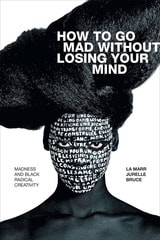
How to Go Mad without Losing Your Mind
Madness and Black Radical CreativityLa Marr Jurelle Bruce
Duke University Press, 2020
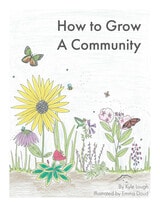
How to Grow a Community
Kyle Lough
Michigan Publishing Services, 2023
The objective was to create a book that uses the topic of urban gardening to teach young readers about the importance of environmental stewardship— respecting and caring for Earth and the diversity of life it sustains.
Through art and science, we can better understand complex environmental issues like access to food and water, loss of biodiversity, and land-use. Any reader, of any age, can make a difference in their community through forming stronger connections with people and the earth.
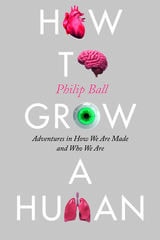
How to Grow a Human
Adventures in How We Are Made and Who We ArePhilip Ball
University of Chicago Press, 2019
In his most mind-bending book yet, Ball makes that disconcerting question the focus of a tour through what scientists can now do in cell biology and tissue culture. He shows how these technologies could lead to tailor-made replacement organs for when ours fail, to new medical advances for repairing damage and assisting conception, and to new ways of “growing a human.” For example, it might prove possible to turn skin cells not into neurons but into eggs and sperm, or even to turn oneself into the constituent cells of embryos. Such methods would also create new options for gene editing, with all the attendant moral dilemmas. Ball argues that such advances can therefore never be about “just the science,” because they come already surrounded by a host of social narratives, preconceptions, and prejudices. But beyond even that, these developments raise questions about identity and self, birth and death, and force us to ask how mutable the human body really is—and what forms it might take in years to come.
How to Have Theory in an Epidemic
Cultural Chronicles of AIDSPaula A. Treichler
Duke University Press, 1999
“AIDS is more than an epidemic disease,” Treichler writes, “it is an epidemic of meanings.” Exploring how such meanings originate, proliferate, and take hold, her essays investigate how certain interpretations of the epidemic dominate while others are obscured. They also suggest ways to understand and choose between overlapping or competing discourses. In her coverage of roughly fifteen years of the AIDS epidemic, Treichler addresses a range of key issues, from biomedical discourse and theories of pathogenesis to the mainstream media’s depictions of the crisis in both developed and developing countries. She also examines representations of women and AIDS, treatment issues, and the role of activism in shaping the politics of the epidemic. Linking the AIDS tragedy to a uniquely broad spectrum of contemporary theory and culture, this collection concludes with an essay on the continued importance of theoretical thought for untangling the sociocultural phenomena of AIDS—and for tackling the disease itself.
With an exhaustive bibliography of critical and theoretical writings on HIV and AIDS, this long-awaited volume will be essential to all those invested in studying the course of AIDS, its devastating medical effects, and its massive impact on contemporary culture. It should become a standard text in university courses dealing with AIDS in biomedicine, sociology, anthropology, gay and lesbian studies, women’s studies, and cultural and media studies.
How to House the Homeless
Ingrid Gould Ellen
Russell Sage Foundation, 2010
How to Humble a Wingnut and Other Lessons from Behavioral Economics
Cass R. Sunstein
University of Chicago Press, 2013

How to Identify Grasses and Grasslike Plants
Sedges and RushesH. D. Harrington
Ohio University Press, 1977
There is no easy way to identify grasses. And no one understands this better than H.D. Harrington, who observed thousands of students struggle and learn. His clear, concise, and well-organized guide will continue to be a basic and essential text for use in the classroom or in the field. The book contains over 500 drawings and an illustrated glossary.
How to Keep Union Records
Michael Nash
Society of American Archivists, 2010
How to Kill a Goat and Other Monsters
Saúl Hernández
University of Wisconsin Press, 2024
These pages are infused with comfort, with desire, with heartache. Never absent is love, family. Hernández—hyperaware of American society’s dismissal or hatred of people who look like him—writes with a refreshing confidence, a sure knowledge of who he is and where he comes from. Transcending any particular experience, this volume will continue to resonate with multiple readings.
How to Leave Hialeah
Capó Crucet, Jennine
University of Iowa Press, 2009
Crucet’s writing has been shaped by the people and landscapes of South Florida and by the stories of Cuba told by her parents and abuelos. Her own stories are informed by her experiences as a Cuban American woman living within and without her community, ready to leave and ready to return, “ready to mourn everything.”
Coming to us from the predominantly Hispanic working-class neighborhoods of Hialeah, the voices of this steamy section of Miami shout out to us from rowdy all-night funerals and kitchens full of plátanos and croquetas and lechón ribs, from domino tables and cigar factories, glitter-purple Buicks and handed-down Mom Rides, private homes of santeras and fights on front lawns. Calling to us from crowded expressways and canals underneath abandoned overpasses shading a city’s secrets, these voices are the heart of Miami, and in this award-winning collection Jennine Capó Crucet makes them sing.
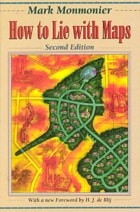
How to Lie with Maps
Mark Monmonier
University of Chicago Press, 1996
The second edition is updated with the addition of two new chapters, 10 color plates, and a new foreword by renowned geographer H. J. de Blij. One new chapter examines the role of national interest and cultural values in national mapping organizations, including the United States Geological Survey, while the other explores the new breed of multimedia, computer-based maps.
To show how maps distort, Monmonier introduces basic principles of mapmaking, gives entertaining examples of the misuse of maps in situations from zoning disputes to census reports, and covers all the typical kinds of distortions from deliberate oversimplifications to the misleading use of color.
"Professor Monmonier himself knows how to gain our attention; it is not in fact the lies in maps but their truth, if always approximate and incomplete, that he wants us to admire and use, even to draw for ourselves on the facile screen. His is an artful and funny book, which like any good map, packs plenty in little space."—Scientific American
"A useful guide to a subject most people probably take too much for granted. It shows how map makers translate abstract data into eye-catching cartograms, as they are called. It combats cartographic illiteracy. It fights cartophobia. It may even teach you to find your way. For that alone, it seems worthwhile."—Christopher Lehmann-Haupt, The New York Times
". . . witty examination of how and why maps lie. [The book] conveys an important message about how statistics of any kind can be manipulated. But it also communicates much of the challenge, aesthetic appeal, and sheer fun of maps. Even those who hated geography in grammar school might well find a new enthusiasm for the subject after reading Monmonier's lively and surprising book."—Wilson Library Bulletin
"A reading of this book will leave you much better defended against cheap atlases, shoddy journalism, unscrupulous advertisers, predatory special-interest groups, and others who may use or abuse maps at your expense."—John Van Pelt, Christian Science Monitor
"Monmonier meets his goal admirably. . . . [His] book should be put on every map user's 'must read' list. It is informative and readable . . . a big step forward in helping us to understand how maps can mislead their readers."—Jeffrey S. Murray, Canadian Geographic
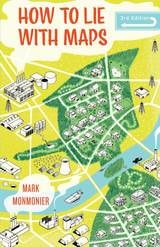
How to Lie with Maps, Third Edition
Mark Monmonier
University of Chicago Press, 2018
Fully updated for the digital age, this new edition of How to Lie with Maps examines the myriad ways that technology offers new opportunities for cartographic mischief, deception, and propaganda. While retaining the same brevity, range, and humor as its predecessors, this third edition includes significant updates throughout as well as new chapters on image maps, prohibitive cartography, and online maps. It also includes an expanded section of color images and an updated list of sources for further reading.
How to Live like a Lord Without Really Trying
Shepherd Mead
Bodleian Library Publishing, 2012
In 1958, ad man and soon-to-be best-selling author Shepherd Mead moved to England with his family to pursue his career. Six years later, his observations on the oddities of British culture were enough to compile a satirical guidebook for fellow Americans planning to visit from across the pond. The blunders that could befall them were many. For instance, explains Mead, “Pants are always underpants and what you wear out in the open are trousers. Mistakes in this area can lead to nasty misunderstandings.”
How to Live, What to Do
Thirteen Ways of Looking at Wallace StevensJoan Richardson
University of Iowa Press, 2018
How to Live, What to Do is an indispensable introduction to and guide through the work of a poet equal in power and sensibility to Shakespeare and Milton. Like them, Stevens shaped a new language, fashioning an instrument adequate to describing a completely changed environment of fact, extending perception through his poems to align what Emerson called our “axis of vision” with the universe as it came to be understood during his lifetime, 1879–1955, a span shared with Albert Einstein. Projecting his own imagination into spacetime as “a priest of the invisible,” persistently cultivating his cosmic consciousness through reading, keeping abreast of the latest discoveries of Einstein, Max Planck, Niels Bohr, Louis de Broglie, and others, Stevens pushed the boundaries of language into the exotic territories of relativity and quantum mechanics while at the same time honoring the continuing human need for belief in some larger order. His work records how to live, what to do in this strange new world of experience, seeing what was always seen but never seen before.
Joan Richardson, author of the standard two-volume critical biography of Stevens and coeditor with Frank Kermode of the Library of America edition of the Collected Poetry and Prose, offers concise, lucid captures of Stevens’s development and achievement. Over the ten years of researching her Stevens biography, Richardson read all that he read, as well as his complete correspondence, journals, and notebooks. She weaves the details drawn from this deep involvement into the background of American cultural history of the period. This fabric is further enlivened by her preparation in philosophy and the sciences, creating in these thirteen panels a contemporary version of a medieval tapestry sequence, with Stevens in the place of the unicorn, as it were, holding our attention and eliciting, as necessary angel, individual solutions to the riddles of our existence on this planet spinning and hissing around its cooling star at 18.5 miles per second.
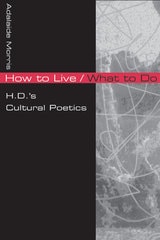
How to Live/What to Do
H.D.'s Cultural PoeticsAdalaide Morris
University of Illinois Press, 2002
Ever since the publication of her first H.D. essay in 1985 (included here in an expanded version), Morris has eschewed prevailing literary trends in favor of new approaches that both challenge and overpass dominant critical constructs. As she argues in this volume, the writing and, crucially, the reading of poetry is a process in which meaning is produced by the interplay of words on a page and in the ear of the reader. This quality of being not heard but overheard, composed within the body, is crucial to an appreciation of H.D.
Morris shows H.D. to be a playful linguistic innovator whose writings bear on debates in science, technology, and cinema as well as on poetry. Foremost, however, H.D. was a profound reshaper of the boundaries and possibilities of poetry, a generative form that, as this book shows, can indeed serve the cultural work of survival and resistance against the violence of modern culture.

How to Live
A memoir-in-essaysKelle Groom
Tupelo Press, 2023
—Joan Wickersham
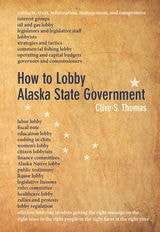
How to Lobby Alaska State Government
Clive S. Thomas
University of Alaska Press, 2019
This book starts by helping new lobbyists to think politically, by explaining the structure and operation of state government, the psychology and needs of public officials, and where the power lies in Juneau—who’s got political clout. How to Lobby then moves into the nitty-gritty of a lobbying campaign. It covers the basics of group influence, campaign planning and management, the pros and cons of various group tactics, tips on face-to-face meetings, and the challenges of lobbying day-to-day. In addition to extensive guidance on what to do, this book also emphasizes the things to avoid that will undermine or eliminate a lobbyist’s chances of success. Pragmatic and portable, this book will be valuable to new and professional lobbyists both, and anyone looking for fresh perspectives on this important business.

How to Look Good in a War
Justifying and Challenging State ViolenceBrian Rappert
Pluto Press, 2012
How to Look Good in A War examines the methods used to depict, defend and justify the use of state violence. Many books have shown how 'truth is the first casualty of war' but this is the first to analyse exactly how pro-war narratives are constructed and normalised.
Brian Rappert details the 'upside-down' world of war in which revelation conceals, knowledge fosters uncertainty, and transparency obscures. He looks at government spin during recent wars in Iraq, Afghanistan and Libya where officials manoeuvre between circulating and withholding information.
Examining how organised violence is justified, How to Look Good in A War draws on experiences from recent controversy to consider how ignorance about the operation of war is produced and how concerned individuals and groups can intervene to make a difference.
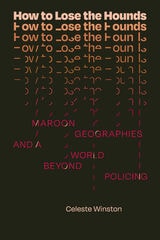
How to Lose the Hounds
Maroon Geographies and a World beyond PolicingCeleste Winston
Duke University Press, 2023
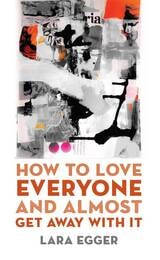
How to Love Everyone and Almost Get Away with It
Lara Egger
University of Massachusetts Press, 2021
Winner of Ploughshares’ 2022 John C. Zacharis First Book Award
Wrestling with desire, shame, and the complications of attempting to resist one's own nature, How to Love Everyone and Almost Get Away with It offers a tragicomic tour of a heart in midlife crisis. Populated by unruly angels, earthbound astronauts, xylophones, wordplay, and glitter glue, these wildly associative poems transform the world line by line, image by image. Part confessional, part kitsch, and often self-deprecating, this debut collection offers an honest and tender exploration of love's necessary absurdity. Lara Egger asks: Who put the end in crescendo, the over in lover? Are metaphors always reliable witnesses? Why does the past sleep with us when we hope the person beside us is the future?