Results by title
2194 books match the query 'Women's Studies' and 71 start with h

Home Safe Home
Housing Solutions for Survivors of Intimate Partner ViolenceBotein, Hilary
Rutgers University Press, 2016
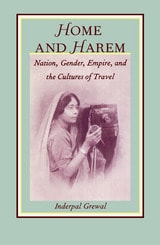
Home and Harem
Nation, Gender, Empire and the Cultures of TravelInderpal Grewal
Duke University Press, 1996
In her look at England, Grewal draws on nineteenth-century aesthetics, landscape art, and debates about women’s suffrage and working-class education to show how all social classes, not only the privileged, were educated and influenced by imperialist travel narratives. By examining diverse forms of Indian travel to the West and its colonies and focusing on forms of modernity offered by colonial notions of travel, she explores how Indian men and women adopted and appropriated aspects of European travel discourse, particularly the set of oppositions between self and other, East and West, home and abroad.
Rather than being simply comparative, Home and Harem is a transnational cultural study of the interaction of ideas between two cultures. Addressing theoretical and methodological developments across a wide range of fields, this highly interdisciplinary work will interest scholars in the fields of postcolonial and cultural studies, feminist studies, English literature, South Asian studies, and comparative literature.
Home and Hegemony
Domestic Service and Identity Politics in South and Southeast AsiaKathleen M. Adams and Sara Dickey, Editors
University of Michigan Press, 2000
This pathbreaking collection builds on recent examinations of identity in the postcolonial states of South and Southeast Asia by investigating the ways in which domestic workers and their employers come to know and depict one another and themselves through their interactions inside and outside of the home. This setting provides a particularly apt arena for examining the daily negotiations of power and hegemony.
Contributors to the volume, all anthropologists, provide rich ethnographic analyses that avoid a narrow focus on either workers or employers. Rather, they examine systems of power through specific topics that range from the notion of "nurture for sale" to the roles of morality and humor in the negotiation of hierarchy and the dilemmas faced by foreign employers who find themselves in life-and-death dependence on their servants.
With its provocative theoretical and ethnographic contributions to current debates, this collection will be of interest to scholars in Asian studies, women's studies, anthropology, sociology, and cultural studies.
Kathleen M. Adams is Associate Professor of Anthropology, Loyola University of Chicago. Sara Dickey is Associate Professor of Anthropology, Bowdoin College.
Homeland Maternity
US Security Culture and the New Reproductive RegimeNatalie Fixmer-Oraiz
University of Illinois Press, 2019
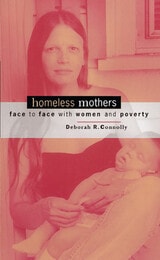
Homeless Mothers
Face to Face with Women and PovertyDeborah R. Connolly
University of Minnesota Press, 2001
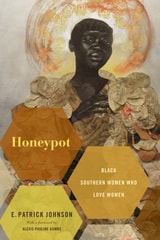
Honeypot
Black Southern Women Who Love WomenE. Patrick Johnson
Duke University Press, 2019
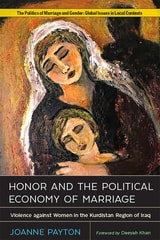
Honor and the Political Economy of Marriage
Violence against Women in the Kurdistan Region of IraqJoanne Payton
Rutgers University Press, 2020
Honor and the Political Economy of Marriage provides a description of ‘honor’-based violence that focuses upon the structure of the family rather than the perpetrator’s culture. The author, Joanne Payton, argues that within societies primarily organized by familial and marital connections, women’s ‘honor’ is a form of symbolic capital within a ‘political economy’ in which marriage organizes intergroup connections.
Drawing on statistical analysis of original data contextualized with historical and anthropological readings, Payton explores forms of marriage and their relationship to ‘honor’, sketching changing norms around the familial control of women from agrarian/pastoral roots to the contemporary era.
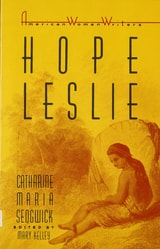
Hope Leslie
Or, Early Times in the MassachusettsSedgwick, Catherine M
Rutgers University Press, 1987
Hope Leslie (1827), set in the seventeenth-century New England, is a novel that forced readers to confront the consequences of the Puritans’ subjugation and displacement of the indigenous Indian population at a time when contemporaries were demanding still more land from the Cherokees, the Chickasaws, and the Choctaws.
"This handsome reprint ... makes available after many decades the New Englander's tale of seventeeth-century Puritans, and their relations with the indigenous Indian population." -- Nineteeth-Century Literature
" A splendidly conceived edition of Sedwick's historical romance. Highly recommended." --Choice
"Develop(s) the connections between patriarchal authority within the Puritan state and its policy of dispossessing and exterminating Indians. The different heritage it envisions explicitly link white women and Indians and elaborates a communal concept of liberty at odds with the individualistic concept which predominated in American culture." -- Legacy
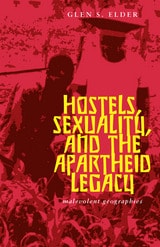
Hostels, Sexuality, and the Apartheid Legacy
Malevolent GeographiesGlen S. Elder
Ohio University Press, 2003
In the last decade, the South African state has been transformed dramatically, but the stubborn, menacing geography of apartheid still stands in the way of that country’s visions of change. Environmentally degraded old homelands still scar the rural geography of South Africa.
Formerly segregated, now gated, neighborhoods still inhibit free movement. Hostels, Sexuality, and the Apartheid Legacy is a study of another such space, the converted “male” migrant worker hostel.
Professor Glen Elder identifies hostels as sites of public and domestic violence, literal destruction and rebuilding, and as an important node in the spread of HIV/AIDS.
Hostels have also become home to increasing numbers of “invisible” female residents. Finding that one way to understand hostel space is through women’s experiences, Professor Elder turned to thirty black migrant women living in an East Rand hostel to map the everyday geographies of South Africa’s time of change.
By following the lives of these women, Elder identifies spatialized forms of marginalization, impoverishment, infection, and disempowerment. But, as he points out, the women’s survival strategies may provide signposts to the way out of apartheid’s malevolent geography.
Hostels, Sexuality, and the Apartheid Legacy argues that the gendered geography of the migrant labor system developed in South Africa was premised upon sexual assumptions about men, women, and their bodies, and that feminist and queer analyses of space can inform public policy decisions.
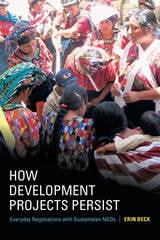
How Development Projects Persist
Everyday Negotiations with Guatemalan NGOsErin Beck
Duke University Press, 2017
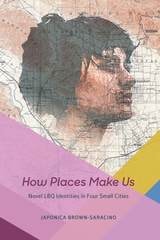
How Places Make Us
Novel LBQ Identities in Four Small CitiesJaponica Brown-Saracino
University of Chicago Press, 2017
Taking us into communities in Ithaca, New York; San Luis Obispo, California; Greenfield, Massachusetts; and Portland, Maine; Brown-Saracino shows how LBQ migrants craft a unique sense of self that corresponds to their new homes. How Places Make Us demonstrates that sexual identities are responsive to city ecology. Despite the fact that the LBQ residents share many demographic and cultural traits, their approaches to sexual identity politics and to ties with other LBQ individuals and heterosexual residents vary markedly by where they live. Subtly distinct local ecologies shape what it feels like to be a sexual minority, including the degree to which one feels accepted, how many other LBQ individuals one encounters in daily life, and how often a city declares its embrace of difference. In short, city ecology shapes how one “does” LBQ in a specific place. Ultimately, Brown-Saracino shows that there isn’t one general way of approaching sexual identity because humans are not only social but fundamentally local creatures. Even in a globalized world, the most personal of questions—who am I?—is in fact answered collectively by the city in which we live.

How Will the Heart Endure
Elizabeth Bowen and the Landscape of WarHeather Bryant Jordan
University of Michigan Press, 1992
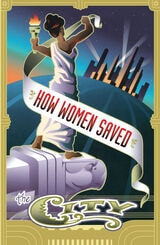
How Women Saved The City
Daphne Spain
University of Minnesota Press, 2001
Reclaims the lost history of women’s contributions to the development of American cities
In the days between the Civil War and World War I, women rarely worked outside the home, rarely went to college, and, if our histories are to be believed, rarely put their mark on the urban spaces unfolding around them. And yet, as this book clearly demonstrates, women did play a key role in shaping the American urban landscape.
To uncover the contribution of women to urban development during this period, Daphne Spain looks at the places where women participated most actively in public life—voluntary organizations like the Young Women’s Christian Association, the Salvation Army, the College Settlements Association, and the National Association of Colored Women. In the extensive building projects of these associations—boarding houses, vocational schools, settlement houses, public baths, and playgrounds—she finds clear evidence of a built environment created by women. Exploring this environment, Spain reconstructs the story of the "redemptive places" that addressed the real needs of city dwellers—especially single women, African-Americans, immigrants, and the poor—and established an environment in which newcomers could learn to become urban Americans.
How a Century of War Changed the Lives of Women
Lindsey German
Pluto Press, 2013
How a Century of War Changed the Lives of Women looks at the remarkable impact of war on women in Britain. It shows how conflict has changed women’s lives and how those changes have put women at the centre of peace campaigning.
Lindsey German, one of the UK's leading anti-war activists and commentators, shows how women have played a central role in anti-war and peace movements, including the recent wars in Afghanistan and Iraq. The women themselves talk about how they overcame prejudice and difficulty to become active. The book integrates this experience with a historical overview, analysing the two world wars as catalysts of social change for women. It looks at how the changing nature of war, especially the involvement of civilians, increasingly involves significant numbers of women.
As well as providing an inspiring account of women's opposition to war, the book also tackles key contemporary developments, challenging negative assumptions about Muslim women and showing how anti-war movements are feeding into a broader desire to change society.
How to be Human*
*Though an EconomistDeirdre N. McCloskey
University of Michigan Press, 2000
Anyone can learn about the field of economics from How to Be Human. She can learn how economics works as a discipline and as a piece of sociology, who the heroes are and the villains, how a career in economics relates to matters of ethics and epistemology. She can learn what it is like to be a new woman in a boys' subject, a subject that avoids at all costs the word "love."
During the 1990s Deirdre McCloskey established herself as the main internal critic of the economic mainstream. Her quarterly columns in the Eastern Economic Journal, many of which are collected here, have become a handbook for reform. Trained in economics herself, she knows the normal science of the field from the inside: she has done it as a distinguished economic historian; and has watched it work from the faculties of Chicago (for twelve years) and Iowa (for nineteen), and now at the University of Illinois at Chicago.
Her criticism from the inside is that the two methods on which economics has depended since the 1940s--existence-theorem mathematics and significance-testing statistics--are nonsense. They have, she claims, nothing to do with economic science, and have massively diverted economists from finding out how the economy works.
McCloskey's book is written for anyone interested in economics, whether trained in it or not--anyone who cares about the economy but is not taken in by the boys' game.
Deirdre McCloskey is University Professor of the Human Sciences, University of Illinois at Chicago.
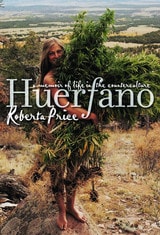
Huerfano
A Memoir of Life in the CountercultureRoberta M. Price
University of Massachusetts Press, 2004
In the late 1960s, new age communes began springing up in the American Southwest with names like Drop City, New Buffalo, Lama Foundation, Morning Star, Reality Construction Company, and the Hog Farm. In the summer of 1969, Roberta Price, a recent college graduate, secured a grant to visit these communities and photograph them. When she and her lover David arrived at Libre in the Huerfano Valley of southern Colorado, they were so taken with what they found that they wanted to participate instead of observe. The following spring they married, dropped out of graduate school in upstate New York, packed their belongings into a 1947 Chrysler Windsor Coupe, and moved to Libre, leaving family and academia behind.
Huerfano is Price's captivating memoir of the seven years she spent in the Huerfano ("Orphan") Valley when it was a petri dish of countercultural experiments. She and David joined with fellow baby boomers in learning to mix cement, strip logs, weave rugs, tan leather, grow marijuana, build houses, fix cars, give birth, and make cheese, beer, and furniture as well as poetry, art, music, and love. They built a house around a boulder high on a ridge overlooking the valley and made ends meet by growing their own food, selling homemade goods, and hiring themselves out as day laborers. Over time their collective ranks swelled to more than three hundred, only to diminish again as, for many participants, the dream of a life of unbridled possibility gradually yielded to the hard realities of a life of voluntary poverty.
Price tells her story with a clear, distinctive voice, documenting her experiences with photos as well as words. Placing her story in the larger context of the times, she describes her participation in the antiwar movement, the advent of the women's movement, and her encounters with such icons as Ken Kesey, Gary Snyder, Abbie Hoffman, Stewart Brand, Allen Ginsberg, and Baba Ram Dass.
At once comic, poignant, and above all honest, Huerfano recaptures the sense of affirmation and experimentation that fueled the counterculture without lapsing into nostalgic sentimentality on the one hand or cynicism on the other.
Humanity's Ruins
Ethics, Feminism, and Genocidal HumanitarianismDanielle Bouchard
Duke University Press, 2025

Hungry Heart
The Literary Emergence of Julia Ward HoweGary Williams
University of Massachusetts Press, 2009
Hungry Translations
Relearning the World through Radical VulnerabilityRicha Nagar
University of Illinois Press, 2019

Hypertext and the Female Imaginary
Jaishree K. Odin
University of Minnesota Press, 2010
Investigating the work of Trinh T. Minh-ha, Judy Malloy, Shelley Jackson, Stephanie Strickland, and M. D. Coverly, Odin demonstrates how these writers apply hypertextual strategies to subversively convey difference. Through her readings of various transformative hypertext narratives by women writers/artists, she pursues the question of what constitutes empowering descriptions of the world in a technology-mediated culture where the dominant discourse is turning everything into the same.
Using feminist as well as postcolonial perspectives, she explores the embodied state of the human as reflected in critically aware contemporary narratives and examines how these works consider what it means to be human in the twenty-first century.
Hysteric's Guide to the Future Female Subject
Juliet Flower Maccannell
University of Minnesota Press, 1999
Proposes an ethics of the feminine through an examination of women’s writing.
The Hysteric’s Guide to the Future Female Subject was first published in 1999. Minnesota Archive Editions uses digital technology to make long-unavailable books once again accessible, and are published unaltered from the original University of Minnesota Press editions.
How can a girl become a woman today—an ethical woman and a member of society—without being either a victim or a manipulator? Reflecting on this question, Juliet Flower MacCannell takes us for the first time beyond the flawed models for “becoming woman” left to us by Freud and Sade.Having previously explored the logic of feminine sexuality, MacCannell sets out in the Hysteric’s Guide to locate an ethics of the feminine. She does this by examining instances of the (often hysterical) feminine confrontation with (usually perverse) masculine subjects, confrontations that represent crucial scenes in the constitution of female sexuality. Her study takes us into Sadean ethics and the prescriptions of Freudian psychoanalysis; post-Enlightenment colonialism; racism during and after World War I; genocidal fascism in World War II; and the slowing of time and generation during the Cold War.MacCannell treats contemporary art, fiction, and theory, considering works by Arendt, Angelou, Rousseau, Kant, Stendhal, Kleist, Hitchcock, Atwood, Klein, Chodorow, Adorno, and Duras. Ultimately, this book reasserts “becoming woman” as an issue that has, until now, been denied for want of a feminine ethic relevant to contemporary life.