Results by title
3785 books match the query 'Poetry' and 122 start with h
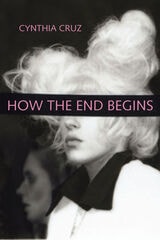
How the End Begins
Cynthia Cruz
Four Way Books, 2016
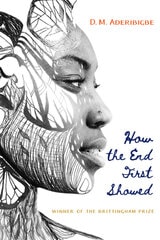
How the End First Showed
D. M. Aderibigbe
University of Wisconsin Press, 2018
Widening his gaze to capture the moral rhythms of life in Lagos, he embraces themes of love, spirituality, poverty, compassion, sickness, and death. Aderibigbe offers both an extended elegy for his mother and poems addressed to children of the African continent, poems that speak to the past that has made them.
We salivated; slices of yam softened.
We chewed our teeth; slices of yam perished.
Mother smiled. Father arrived,
filled the room with curses;
his voice beat in our hearts,
as thunder on the walls of a building.
His empty stomach was a bowl of anger.
In a room built with our silence,
father was hitting mother.
—excerpt from "Hungry Man" D. M. Aderibigbe. All rights reserved.
How to Abandon Ship
Sasha West
Four Way Books, 2024
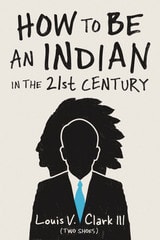
How to Be an Indian in the 21st Century
Louis V. Clark (Two Shoes)
Wisconsin Historical Society Press, 2017
How to Draw a Circle
On Reading and WritingDan Beachy-Quick
University of Michigan Press, 2024
How to Kill a Goat and Other Monsters
Saúl Hernández
University of Wisconsin Press, 2024
These pages are infused with comfort, with desire, with heartache. Never absent is love, family. Hernández—hyperaware of American society’s dismissal or hatred of people who look like him—writes with a refreshing confidence, a sure knowledge of who he is and where he comes from. Transcending any particular experience, this volume will continue to resonate with multiple readings.
How to Live, What to Do
Thirteen Ways of Looking at Wallace StevensJoan Richardson
University of Iowa Press, 2018
How to Live, What to Do is an indispensable introduction to and guide through the work of a poet equal in power and sensibility to Shakespeare and Milton. Like them, Stevens shaped a new language, fashioning an instrument adequate to describing a completely changed environment of fact, extending perception through his poems to align what Emerson called our “axis of vision” with the universe as it came to be understood during his lifetime, 1879–1955, a span shared with Albert Einstein. Projecting his own imagination into spacetime as “a priest of the invisible,” persistently cultivating his cosmic consciousness through reading, keeping abreast of the latest discoveries of Einstein, Max Planck, Niels Bohr, Louis de Broglie, and others, Stevens pushed the boundaries of language into the exotic territories of relativity and quantum mechanics while at the same time honoring the continuing human need for belief in some larger order. His work records how to live, what to do in this strange new world of experience, seeing what was always seen but never seen before.
Joan Richardson, author of the standard two-volume critical biography of Stevens and coeditor with Frank Kermode of the Library of America edition of the Collected Poetry and Prose, offers concise, lucid captures of Stevens’s development and achievement. Over the ten years of researching her Stevens biography, Richardson read all that he read, as well as his complete correspondence, journals, and notebooks. She weaves the details drawn from this deep involvement into the background of American cultural history of the period. This fabric is further enlivened by her preparation in philosophy and the sciences, creating in these thirteen panels a contemporary version of a medieval tapestry sequence, with Stevens in the place of the unicorn, as it were, holding our attention and eliciting, as necessary angel, individual solutions to the riddles of our existence on this planet spinning and hissing around its cooling star at 18.5 miles per second.
How to Live/What to Do
H.D.'s Cultural PoeticsAdalaide Morris
University of Illinois Press, 2002
Ever since the publication of her first H.D. essay in 1985 (included here in an expanded version), Morris has eschewed prevailing literary trends in favor of new approaches that both challenge and overpass dominant critical constructs. As she argues in this volume, the writing and, crucially, the reading of poetry is a process in which meaning is produced by the interplay of words on a page and in the ear of the reader. This quality of being not heard but overheard, composed within the body, is crucial to an appreciation of H.D.
Morris shows H.D. to be a playful linguistic innovator whose writings bear on debates in science, technology, and cinema as well as on poetry. Foremost, however, H.D. was a profound reshaper of the boundaries and possibilities of poetry, a generative form that, as this book shows, can indeed serve the cultural work of survival and resistance against the violence of modern culture.

How to Live
A memoir-in-essaysKelle Groom
Tupelo Press, 2023
—Joan Wickersham
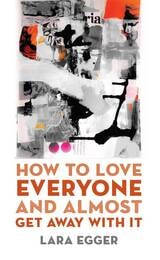
How to Love Everyone and Almost Get Away with It
Lara Egger
University of Massachusetts Press, 2021
Winner of Ploughshares’ 2022 John C. Zacharis First Book Award
Wrestling with desire, shame, and the complications of attempting to resist one's own nature, How to Love Everyone and Almost Get Away with It offers a tragicomic tour of a heart in midlife crisis. Populated by unruly angels, earthbound astronauts, xylophones, wordplay, and glitter glue, these wildly associative poems transform the world line by line, image by image. Part confessional, part kitsch, and often self-deprecating, this debut collection offers an honest and tender exploration of love's necessary absurdity. Lara Egger asks: Who put the end in crescendo, the over in lover? Are metaphors always reliable witnesses? Why does the past sleep with us when we hope the person beside us is the future?
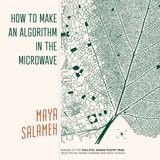
How to Make an Algorithm in the Microwave
Maya Salameh
University of Arkansas Press, 2022
“We need a new poetry lexicon—a new way of moleculing the poem on the page, even—and Maya Salameh brings it. We need all the strange Arabic-diasporic ways we can find for being in this terrible and joyful and often frighteningly banalizing world, and Salameh’s poems are a generous find. Her writing is an unexpected cousin in the colonized and capitalism-razed city, bewildering and divining things you’ve never heard but want to learn. . . . Prepare to be stretched and delighted.”
—Mohja Kahf, from the Foreword
The divine and the digital achieve a distinct corporality in Maya Salameh’s HOW TO MAKE AN ALGORITHM IN THE MICROWAVE, winner of the 2022 Etel Adnan Poetry Prize. Layering prayer with code, Salameh brings supposedly unassailable technological constructs like algorithm, recursion, and loop into conversation with the technologies of womanhood, whether liner, lipstick, or blood. Exploring the relationships we have with our devices, she speaks back to the algorithm (“a computer’s admission to blood”), which acts simultaneously as warden, confidant, and data thief.
Here Salameh boldly examines how an Arab woman survives the digitization of her body—experimenting with form to create an intimate collage of personal and neocolonial histories, fearlessly insinuating herself into the scripts that would otherwise erase her, and giving voice to the full mess of ritual.
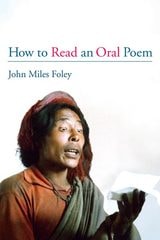
How to Read an Oral Poem
John Miles Foley
University of Illinois Press, 2002
Using dozens of examples, including a North American slam poet, a Tibetan paper-singer, a South African praise-poet, and an ancient Greek bard, John Miles Foley shows that although oral poetry long predates the invention of writing, it continues to be a vital culture-making and communications tool in societies all over the world. Based on fieldwork and archival research on epics, folktales, lyrics, laments, charms, and other oral traditions, How to Read an Oral Poem answers the questions, What is oral poetry? How does it work? What is reading, literally and figuratively?
This accessible and engaging work is enhanced by audio and video examples of oral poetry, which are available at http://www.oraltradition.org. The book can also be used as companion volume to Foley's Teaching Oral Traditions.
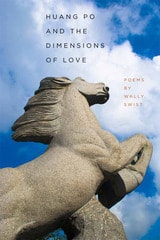
Huang Po and the Dimensions of Love
Wally Swist
Southern Illinois University Press, 2012
In Huang Po and the Dimensions of Love, poet Wally Swist blends themes of love and epiphany to lead readers into a more conscious interaction with the world around them. These ethereal poems call upon a spirituality unfettered to any specific religion, yet universal and potent in its scope, offering a window through which life can be not only viewed but also truly experienced.
This luminescent collection illustrates the joys to be found in the everyday world and the power of existence. Unveiled here are the twin edges of love and madness; the quiet mysteries and revelations of a New England night or the glittering spark of snowdrops; the sharp scents of sugar maple and cinnamon; and the rustle of a junco’s wings. From the restoration and peace of silence or the rush of a brook, to spiraling hawks and Botticelli’s “The Annunciation,” Swist’s poems linger somewhere between the earthbound and the sublime.
Human Is to Wander
Adrian Lürssen
University Press of Colorado, 2022
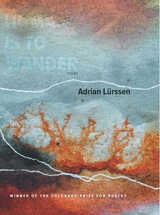
In Human Is to Wander, Lürssen explores these echoes of his personal history within a landscape that is familiar and unfamiliar all at once. Neither the brutally oppressive South Africa of his childhood nor the precarious United States of today, Lürssen’s landscape emerges in the broken rhyme between “troop” and “troupe” where “our captions / are picture less” and “the plan to explain is absolute, but only an entrance.” His is an inner landscape as song no longer sung in a mother tongue, in which the human cost of war, climate crisis, and forced migration is "all part of the explanation.” Lürssen uses collage, constrained cut-up, Oulipean procedures, abecedarian, and other generative play to allow poems to emerge that respond to the turmoil and dislocation of this violent century, attempting to witness if not understand his—and our—place in it.
Human Love
Doreen Gildroy
University of Chicago Press, 2005
This is my kitchen.
I looked around.
You think I would have noticed before
that it was safe.
(I started to feel.)
What I wanted first
was color.
I intended terra cotta,
but the paint turned
twice as vibrant:
true orange.
(And then I became used to
boldness.)
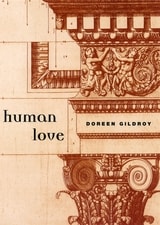
Doreen Gildroy's second book of poems is a marvel of lyric exactitude. On the surface a book about a man and a woman trying to conceive a child, Human Love is more deeply an attempt to focus on the process of human creativity in general and, ultimately, the desire to remake the world and self so that both will be more hospitable to new life.
Here, the physical processes of modern fertility treatments become a means through which the self experiences the world with grace and love; the wished-for child also begets a new relationship between man and woman. Though dark at times, Human Love never surrenders hope, and Gildroy never lets the muted music of her verse succumb to despair. A meditation on the body as a source of joy, anxiety, and regeneration, this collection extends the capacity of the lyric to articulate human feeling while considering the complications of love, both human and divine, and the distinctions between them.
Humming the Blues
Cass Dalglish
Calyx, 2008
Hungry Moon
Henrietta Goodman
University Press of Colorado, 2013
Hurdy-Gurdy
Tim Seibles
Cleveland State University Poetry Center, 1992
Hurricane Lamp
Turner Cassity
University of Chicago Press, 1985
Hypergraphia and Other Failed Attempts at Paradise
Jennifer Metsker
New Issues Poetry and Prose, 2021
This collection of poetry explores the disruptive state of psychosis, with all its insights and follies, and the challenges of living life after a departure from the self. These poems reach for an understanding of the ecstasy and tragedy of madness through both lyric and prose forms that mimic the sublime state of mania through their engagement with language. Ordinary life becomes strange in these poems, which are playful and humorous at times and dark at others, as they seek resolution to the question of what happens when the mind overthrows the body.
Hypnos
René Char
Seagull Books, 2014
Hailed by the poet Paul Eluard as an "absolute masterpiece" upon its first appearance in 1946, René Char’s Hypnos is both a remarkable work of literature and a document of unique significance in the history of the French Resistance. Based on a journal Char kept during his time in the Maquis, it ranges in style from abrupt and sometimes enigmatic reflections, in which the poet seeks to establish compass bearings in the darkness of Occupied France, to narrative descriptions that throw into vivid relief the dramatic and often tragic nature of the issues he had to confront as the head of his Resistance network. A tribute to the individual men and women who fought at his side, this volume is also a meditation on the white magic of poetry and a celebration of the power of beauty to combat terror and transform our lives.
Translated into German by Paul Celan and into Italian by Vittorio Sereni, the book has never been carried over into English with the attention to style and detail that it deserves. Published in full here for the first time, this long-awaited new translation does justice at last to the incandescence and pathos of the original French.
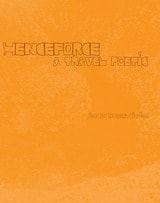
henceforce
A Travel PoeticKamden Ishmael Hilliard
Omnidawn, 2019