Results by title
8812 books match the query 'Political Science' and 217 start with h
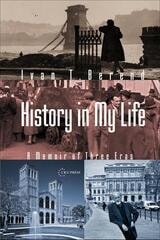
History in My Life
A Memoir of Three ErasIvan T. Berend is Distinguished Research Professor at the History Department of the University of California Los Angeles.
Central European University Press, 2009
Ivan T. Berend is Distinguished Professor at the University of California Los Angeles, Director of the European Studies Program. He was one of the masterminds of regime change in Hungary. He made a career in Hungary as a university professor, Rector of the University of Economics (1973–79), and President of the Hungarian Academy of Sciences (1985–90). He was President of the International Committee of Historical Sciences (1995–2000), and Vice-President of the International Economic History Association (1986–1994). His research interests are the complex economic, social, ideological, and cultural history of Central and Eastern Europe in the 19th–20th century; economic modernization; problems of European backwardness; transition from state socialism to capitalism. He published and 26 books and more than 120 studies.
Before he became a professor at UCLA, Ivan Berend had survived five regime changes and two revolutions in Hungary, had been in prison and German concentration camp in 1944–45.
His memoir offers an interesting case study, a subjective addition to the “objective” historical works on Central and Eastern European state socialism. It describes the hard choices of intellectuals in a dictatorial state: 1. remain in isolation, concentrate on scholarly works, and exclude politics in your personal life; 2. be in opposition, criticize and unveil the regime, accept discrimination and exclusion; 3. remain within the establishment and work for reforming the country using legal possibilities to criticize the regime and to achieve changes from within.
Berend’s book raises basic historical questions and debates, compares East European and American higher education systems, and presents an eyewitness’ insights on life in the United States.
History of Political Ideas, Volume 5 (CW23)
Religion and the Rise of ModernityEric Voegelin, Edited by James L. Wiser
University of Missouri Press, 1998
Examining the emergence of modernity within the philosophical and political debates of the sixteenth century, Religion and the Rise of Modernity resumes the analysis of the "great confusion" introduced in Volume IV of History of Political Ideas. Encompassing a vast range of events ignited by Luther's Ninety-Five Theses, this period is one of controversy, revolution, and partiality.
Despite the era's fragmentation and complexity, Voegelin's insightful analysis clarifies its significance and suggests the lines of change converging at a point in the future: the medieval Christian understanding of a divinely created closed cosmos was being replaced by a distinctly modern form of human consciousness that posits man as the proper origin of meaning in the universe.
Analyzing the most significant features of the great confusion, Voegelin examines a vast range of thought and issues of the age. From the more obvious thinkers to those less frequently studied, this volume features such figures as Calvin, Althusius, Hooker, Bracciolini, Savonarola, Copernicus, Tycho de Brahe, and Giordano Bruno. Devoting a considerable amount of attention to Jean Bodin, Voegelin presents him as a prophet of a new, true religion amid the civilizational disorder of the post-Christian era. Focusing on such traditional themes as monarchy, just war theory, and the philosophy of law, this volume also investigates issues within astrology, cosmology, and mathematics.
Religion and the Rise of Modernity is a valuable work of scholarship not only because of its treatment of individual thinkers and doctrines influential in the sixteenth century and beyond but also because of its close examination of those experiences that formed the modern outlook.
History of Political Ideas, Volume 6 (CW24)
Revolution and the New ScienceEric Voegelin, Edited & Intro by Barry Cooper
University of Missouri Press, 1999
Volume VI of Voegelin's account of the history of Western political ideas continues from the point reached in the previous volume with the study of the mystic-philosopher Jean Bodin. Voegelin begins with a discussion of the conflict between Bishop Bossuet and Voltaire concerning the relationship between what is conventionally identified as sacred history and profane history. Bossuet maintained the traditional Christian position, the origin of which may be traced to Saint Augustine's City of God. Voegelin shows, however, that while Bossuet may have been heir to an adequate understanding of human existence, Voltaire drew attention to a series of historical facts, such as the comparative size of the Russian and Roman empires, the existence of Chinese civilization, and the discovery of the New World, that could be incorporated into Bossuet's account only with great difficulty or not at all.
For the first time, the theoretical problem of the historicity of evocative symbols of political order becomes the focus of Voegelin's analysis. This major problem, which found a provisional solution in the New Science of Vico, was intertwined with several additional ones that may be summarized in terms of an increasing closure toward what Voegelin calls the world- transcendent ground of reality. Voegelin traces the consequences of the new attitudes and sentiments in terms of an increasing disorientation in personal, social, and political life, a disorientation that was expressed in increasingly impoverished experiences and accounts of history and of nature.
Vico represents the great exception to this decline in the intellectual adequacy of modern political ideas and modern self- understanding. Readers familiar with Voegelin's New Science of Politics will find in the long, challenging, and brilliant chapter on Vico and his New Science one of the major textual analyses that sustained Voegelin's entire intellectual enterprise. Indeed, the chapter on Vico, along with similarly provocative and insightful chapters on Bodin and on Schelling in other volumes, may almost be read as an element of Voegelin's own spiritual autobiography.
History of Political Ideas, Volume 7 (CW25)
The New Order and Last OrientationEric Voegelin, Edited & Intro by Jurgen Gebhardt & Thomas A. Hollweck
University of Missouri Press, 1999
In The New Order and Last Orientation, Eric Voegelin explores two distinctly different yet equally important aspects of modernity. He begins by offering a vivid account of the political situation in seventeenth-century Europe after the decline of the church and the passing of the empire. Voegelin shows how the intellectual and political disorder of the period was met by such seemingly disparate responses as Grotius's theory of natural right, Hobbes's Leviathan, the role of the Fronde in the formation of the French national state, Spinoza's Tractatus Theologico-Politicus, and Locke's Second Treatise, the blueprint of a modern middle-class society. By putting these responses and the thought of Montesquieu, Hume, and others in the context of the birth pains of the national state and the emergence of a new self-understanding of man, Voegelin achieves a brilliant mixture of political history and profound philosophical analysis.
Voegelin's verdict of modernity is pronounced most powerfully in the opening part of "Last Orientation," in the chapter entitled "Phenomenalism." His discussion of the intellectual confusion underlying the modern project of scientistic phenomenalism is the most original criticism leveled against modernity to date. It is at the same time the first step toward a recovery of reality through philosophy conceived as a science of substance in the spirit of Giordano Bruno. Voegelin's first example of such an effort at recovering reality is the chapter on Schelling, one of the spiritual realists who has not been affected by the prevailing rationalist or reductionist creeds that are part of the modern disorder. Schelling's indirect yet powerful influence on Schopenhauer, Nietzsche, and Freud more than justifies Voegelin's interest in his philosophy and character, even though Voegelin would later distance himself from some of Schelling's positions.
The volume's concluding chapter, "Nietzsche and Pascal," applies the understanding gained from the study of Schelling to the thought of the most powerful critic of the age, Nietzsche. Nietzsche's self-avowed affinity with Pascal provides the key to an analysis of the strengths and weaknesses of his thought and reaffirms the connection that links the beginning of modernity with its most recent crises and the efforts to overcome them.
History of Political Ideas, Volume 8 (CW26)
Crisis and the Apocalypse of ManEric Voegelin, Edited & Intro by David Walsh.
University of Missouri Press, 1999
Reaching into our own time, Crisis and the Apocalypse of Man confronts the disintegration of traditional sources of meaning and the correlative attempt to generate new sources of order from within the self. Voegelin allows us to contemplate the crisis in its starkest terms as the apocalypse of man that now seeks to replace the apocalypse of God. The totalitarian upheaval that convulsed Voegelin's world, and whose aftermath still defines ours, is only the external manifestation of an inner spiritual turmoil. Its roots have been probed throughout the eight volumes of History of Political Ideas, but its emergence is marked by the age of Enlightenment.
In our postmodern era, discussions of the collapse of the "enlightenment project" have become commonplace. Voegelin compels us to follow the great-souled individuals who sought to go from disintegration of the present toward evocations of order for the future. Such thinkers as Comte, Bakunin, and Marx suffered through the crisis and fully understood the need for a new outpouring of the spirit. They resolved to supply the deficiency themselves. As a consequence they launched us irrevocably on the path of the apocalypse of man.
One of the great merits of Voegelin's analysis is his exposition of the pervasive character of this crisis. It is not confined to the megalomaniacal dreamers of a revolutionary apocalypse; rather, echoes of it are found in the more moderate Enlightenment preoccupation with progress to be attained through application of the scientific method. Faith in the capacity of instrumental reason to answer the ultimate questions of human existence defined men such as Voltaire, Helvétius, Diderot, D'Alembert, and Condorcet. It remains the authoritative faith of our world today, Voegelin argues, demonstrated by our continuing inability to step outside the parameters of the Enlightenment. Are we condemned, then, to oscillate between the rational incoherence of a science that never delivers on its promises and a now discredited revolutionary idealism that wreaks havoc in practice? This is the question toward which Voegelin's final volume points. While not direct, his response is evident everywhere. Crisis and the Apocalypse of Man could have been written only by a man who had reached his own resolution of the crisis.
History of Political Philosophy
Edited by Leo Strauss and Joseph Cropsey
University of Chicago Press, 2001
History's Erratics
Irish Catholic Dissidents and the Transformation of American Capitalism, 1870-1930David M. Emmons
University of Illinois Press, 2024
As Ice Age glaciers left behind erratics, so the external forces of history tumbled the Irish into America. Existing both out of time and out of space, a diverse range of these Roman-Catholic immigrants saw their new country in a much different way than did the Protestants who settled and claimed it. These erratics chose backward looking tradition and independence over assimilation and embraced a quintessentially Irish form of subversiveness that arose from their culture, faith, and working-class outlook. David M. Emmons draws on decades of research and thought to plumb the mismatch of values between Protestant Americans hostile to Roman Catholicism and the Catholic Irish strangers among them. Joining ethnicity and faith to social class, Emmons explores the unique form of dissidence that arose when Catholic Irish workers and their sympathizers rejected the beliefs and symbols of American capitalism.
A vibrant and original tour de force, History’s Erratics explores the ancestral roots of Irish nonconformity and defiance in America.
History, the Human, and the World Between
R. Radhakrishnan
Duke University Press, 2008
Radhakrishnan develops his rationale of the “between” through three linked essays where he locates the terms “world,” “history,” “human,” and “subject” between phenomenology and poststructuralism, and in the process sets forth a nuanced reading of the politics of a gendered postcolonial humanism. Critically juxtaposing the works of thinkers such as Friedrich Nietzsche, Adrienne Rich, Frantz Fanon, Edward Said, Michel Foucault, Maurice Merleau-Ponty, Martin Heidegger, David Harvey, and Ranajit Guha, Radhakrishnan examines the relationship between systems of thought and their worldly situations. History, the Human, and the World Between is a powerful argument for a theoretical perspective that combines the existential urgency of phenomenology with the discursive rigor of poststructuralist practices.
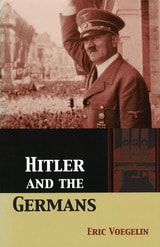
Hitler and the Germans
Eric Voegelin, Edited, Translated, & Intro by Detlev Clemens & Brendan Purcell
University of Missouri Press, 2003

Hizbu'llah
Politics and ReligionAmal Saad-Ghorayeb
Pluto Press, 2001
Hizbu’llah is the largest and most prominent political party in Lebanon, and one of the most renowned Islamist movements in the world. In this book, Amal Saad-Ghorayeb examines the organisation’s understanding of jihad and how this, together with its belief in martyrdom, brought about the withdrawal of Israeli occupation forces from Lebanon in May 2000.
Saad-Ghorayeb explores the nature of the party’s struggle against the West by studying its views on the use of violence against Westerners. Crucially, she also addresses the question of whether Hizbu’llah depicts this struggle in purely political or civilisational terms. The existential nature of the movement’s conflict with Israel is analysed and the Islamic roots of its anti-Judaism is unearthed.
The author explores the mechanics and rationale behind the party’s integration into the Lebanese political system, and sheds light on how it has reconciled its national idenitity with its solidarity with the Muslim umma.
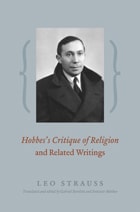
Hobbes's Critique of Religion and Related Writings
Leo Strauss
University of Chicago Press, 2011
Leo Strauss’s The Political Philosophy of Hobbes deservedly ranks among his most widely acclaimed works. In it Strauss argues that the basis for Hobbes’s natural and political science is his interest in “self-knowledge of man as he really is.” The writings collected in this book, each written prior to that classic volume, complement that account. Thus at long last, this book allows us to have a complete picture of Strauss’s interpretation of Hobbes, the thinker pivotal to the fundamental theme of his life’s work: the conflicting demands of philosophy and revelation, or as he termed it, “the theologico-political problem.”
It is no exaggeration to say that Strauss’s work on Hobbes’s critique of religion is essential to his analysis of Hobbes’s political philosophy, and vice versa. This volume will spark new interest in Hobbes’s explication of the Bible and in his understanding of religion by revealing previously neglected dimensions and motives of Hobbes’s “theology.” At the same time, scholars interested in the intellectual development of Leo Strauss will find in these writings the missing link, as it were, between his two early books,Spinoza’s Critique of Religion and The Political Philosophy of Hobbes.
In addition, this volume makes available for the first time in English a letter, a book outline, an extended review, an engagement with legal positivism, and an account of Strauss’s work on Hobbes by Heinrich Meier, all of which shed light on Strauss’s concerns and his approach to Hobbes in particular, as well as to modern political thought and life.
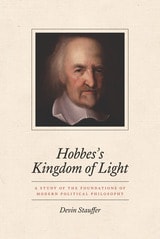
Hobbes's Kingdom of Light
A Study of the Foundations of Modern Political PhilosophyDevin Stauffer
University of Chicago Press, 2018
In Hobbes’s Kingdom of Light, Stauffer argues that Hobbes was engaged in a struggle on multiple fronts against forces, both philosophic and religious, that he thought had long distorted philosophy and destroyed the prospects of a lasting peace in politics. By exploring the twists and turns of Hobbes’s arguments, not only in his famous Leviathan but throughout his corpus, Stauffer uncovers the details of Hobbes’s critique of an older outlook, rooted in classical philosophy and Christian theology, and reveals the complexity of Hobbes’s war against the “Kingdom of Darkness.” He also describes the key features of the new outlook—the “Kingdom of Light”—that Hobbes sought to put in its place. Hobbes’s venture helped to prepare the way for the later emergence of modern liberalism and modern secularism. Hobbes’s Kingdom of Light is a wide-ranging and ambitious exploration of Hobbes’s thought.
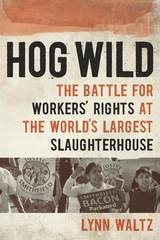
Hog Wild
The Battle for Workers' Rights at the World's Largest SlaughterhouseLynn Waltz
University of Iowa Press, 2018
Author and journalist Lynn Waltz reveals how these aggressive tactics went unchecked for years until Sherri Buffkin, a higher-up manager at Smithfield, blew the lid off the company’s corrupt practices. Through meticulous reporting, in-depth interviews with key players, and a mind for labor and environmental histories, Waltz weaves a fascinating tale of the nearly two-decade struggle that eventually brought justice to the workers and accountability to the food giant, pitting the world’s largest slaughterhouse against the world’s largest meatpacking union.
Following in a long tradition of books that expose the horrors of the meatpacking industry—from Upton Sinclair’s The Jungle to Eric Schlosser’s Fast Food Nation—Hog Wild uncovers rampant corporate environmental hooliganism, labor exploitation, and union-busting by one of the nation’s largest meat producers. Waltz’s eye-opening examination sheds new light on the challenges workers face not just in meatpacking, but everywhere workers have lost their power to collectively bargain with powerful corporations.
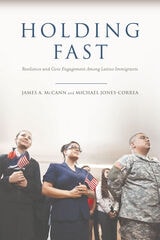
Holding Fast
Resilience and Civic Engagement Among Latino ImmigrantsJames A. McCann
Russell Sage Foundation, 2020
Holding Fast draws largely from a yearlong survey of Latino immigrants, including both citizens and noncitizens, conducted before and after the 2016 election. The survey gauges immigrants’ attitudes about the direction of the country and the emotional underpinnings of their political involvement. While survey respondents expressed pessimism about the direction of the United States following the 2016 election, there was no evidence of their withdrawal from civic life. Instead, immigrants demonstrated remarkable resilience in their political engagement, and their ties to America remained robust.
McCann and Jones-Correa examine Latino immigrants’ trust in government as well as their economic concerns and fears surrounding possible deportations of family members and friends. They find that Latino immigrants who were concerned about the likelihood of deportation were more likely to express a lack of trust in government. Concerns about personal finances were less salient. Disenchantment with the U.S. government did not differ based on citizenship status, length of stay in America, or residence in immigrant-friendly states. Foreign-born Latinos who are naturalized citizens shared similar sentiments to those with fewer political rights, and immigrants in California, for example, express views similar to those in Texas.
Addressing the potential influence immigrant voters may wield in in the coming election, the authors point to signs that the turnout rate for naturalized Latino immigrant may be higher than that for Latinos born in the United States. The authors further underscore the importance of the parties' platforms and policies, noting the still-tenuous nature of Latino immigrants’ affiliations with the Democratic Party.
Holding Fast outlines the complex political situation in which Latino immigrants find themselves today. Despite well-founded feelings of anger, fear, and skepticism, in general they maintain an abiding faith in the promise of American democracy. This book provides a comprehensive account of Latino immigrants’ political opinions and a nuanced, thoughtful outlook on the future of Latino civic participation. It will be an important contribution to scholarly work on civic engagement and immigrant integration.

Holidays in the Danger Zone
Entanglements of War and TourismDebbie Lisle
University of Minnesota Press, 2016
Holidays in the Danger Zone exposes the mundane and everyday interactions between two seemingly opposed worlds: warfare and tourism. Debbie Lisle shows how a tourist sensibility shapes the behavior of soldiers in war—especially the experiences of Western military forces in “exotic” settings. This includes not only R&R but also how battlefields become landscapes of leisure and tourism. She further explores how a military sensibility shapes the development of tourism in the postwar context, from “Dark Tourism” (engaging with displays of conflict and atrocity) to exhibitions of conflict in museums and at memorial sites, as well as advertising, film, journals, guidebooks, blogs, and photography.
Focused on how war and tourism reinforce prevailing modes of domination, Holidays in the Danger Zone critically examines the long historical arc of the war–tourism nexus—from nineteenth-century imperialism to World War I and World War II, from the Cold War to globalization and the War on Terror.
Hollywood Diplomacy
Film Regulation, Foreign Relations, and East Asian RepresentationsHye Seung Chung
Rutgers University Press, 2020
Hollywood in Havana
US Cinema and Revolutionary Nationalism in Cuba before 1959Megan Feeney
University of Chicago Press, 2018
Megan Feeney argues that the freedom fighting extolled in American World War II dramas and the rebellious values and behaviors seen in postwar film noir helped condition Cuban audiences to expect and even demand purer forms of Cuban democracy and national sovereignty. At the same time, influential Cuban intellectuals worked to translate Hollywood ethics into revolutionary rhetoric—which, ironically, led to pointed critiques and subversions of the US presence in Cuba. Hollywood in Havana not only expands our notions of how American cinema was internalized around the world—it also broadens our view of the ongoing history of US-Cuban interactions, both cultural and political.

Hollywood's Hawaii
Race, Nation, and WarDelia Malia Caparoso Konzett
Rutgers University Press, 2017
Delia Malia Caparoso Konzett highlights films that mirror the cultural and political climate of the country over more than a century—from the era of U.S. imperialism on through Jim Crow racial segregation, the attack on Pearl Harbor and WWII, the civil rights movement, the contemporary articulation of consumer and leisure culture, as well as the buildup of the modern military industrial complex. Focusing on important cultural questions pertaining to race, nationhood, and war, Konzett offers a unique view of Hollywood film history produced about the national periphery for mainland U.S. audiences. Hollywood’s Hawaii presents a history of cinema that examines Hawaii and the Pacific and its representations in film in the context of colonialism, war, Orientalism, occupation, military buildup, and entertainment.

Holocaust And Memory In The Global Age
Daniel Levy
Temple University Press, 2005
Originally published in Germany, The Holocaust and Memory in the Global Age examines the nature of collective memory in a globalized world, and how the memory of one particular event—the Holocaust—helped give rise to an emerging global consensus on human rights.
Daniel Levy and Natan Sznaider show how memories of the Holocaust have been de-contextualized from the original event and offer a framework for interpreting contemporary acts of injustice such as ethnic cleansing and genocide. Representations of mass atrocities in Bosnia and Kosovo during the 1990s resonated with iconographies of the Holocaust and played a significant role in the political and military interventions in the Balkans. Subsequently, these representations have had a crucial impact on the consolidation of international human rights and related issues of transitional justice, reparations, and restitution.
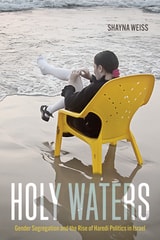
Holy Waters
Gender Segregation and the Rise of Haredi Politics in IsraelShayna Weiss
Rutgers University Press, 2027
Examining the politics of pools and beaches, Holy Waters reveals a surprising history about Haredi Jews and Israel. By looking at the battles to establish gender segregating swimming in Israel, which required a partnership between the Israeli government and its Haredi population to reshape public space, the book argues that the establishment of Israel created a new Haredi pragmatic politics. Unlike some Ultra-Orthodox Jews, who rejected the Jewish state entirely, these radical moderates worked with the state to make it feel more Jewish, and to improve life for its Haredi population, without embracing Zionist ideology. Holy Waters examines three cases: a failure to prevent mixed swimming in Jerusalem, the successful establishment of a separate beach in Tel Aviv, and the mixed results of a Diaspora awareness campaign. Connecting historical controversies to today’s debates of gender segregation, the book demonstrates how these radical moderates still influence Israel today.
This book is published with the support of the Jordan Schnitzer First Book Publication Award, administered by the Association for Jewish Studies.
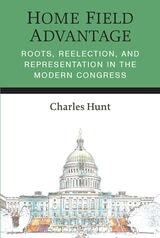
Home Field Advantage
Roots, Reelection, and Representation in the Modern CongressCharles Hunt
University of Michigan Press, 2022
Although partisan polarization gets much of the attention in political science scholarship about Congress, members of Congress represent diverse communities around the country. Home Field Advantage demonstrates the importance of this understudied element of American congressional elections and representation in the modern era: the local, place-based roots that members of Congress have in their home districts. Charles Hunt argues that legislators’ local roots in their district have a significant and independent impact on their campaigns, election outcomes, and more broadly on the relationship between members of the U.S. House of Representatives and their constituents. Drawing on original data, his research reveals that there is considerable variation in election outcomes, performance relative to presidential candidates, campaign spending, and constituent communication styles that are not fully explained by partisanship, incumbency, or other well-established theories of American political representation. Rather, many of these differences are the result of the depth of a legislator’s local roots in their district that predate their time in Congress. Hunt lays out a detailed “Theory of Local Roots” and their influence in congressional representation, demonstrating this influence empirically using multiple original measures of local roots over a full cross-section of legislators and a significant period of time.
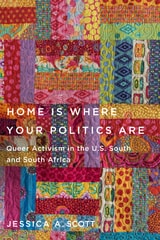
Home Is Where Your Politics Are
Queer Activism in the U.S. South and South AfricaJessica A. Scott
Rutgers University Press, 2024

Home Safe Home
Housing Solutions for Survivors of Intimate Partner ViolenceBotein, Hilary
Rutgers University Press, 2016
Homeland Securities, Volume 2005
Kavita Philip, Eliza Jane Reilly and David Serlin
Duke University Press, 0
The contributors to this special issue offer critical perspectives on the many fronts of the global “war on terror” and reveal continuities and discontinuities within familiar strategies of political control, racial discrimination, and state-sanctioned violence. Featured articles explore such issues as the intersection of racism, homophobia, and imperialism at Abu Ghraib; the conundrum faced by economically disadvantaged Latino youth who find themselves doubly targeted by aggressive army recruitment and anti-immigration activity; and the ways that rhetoric and policies of homeland security have provided new legal tools in the ongoing project of defining “real Americans” through exclusion and state violence. Other essays examine the role of the military in civilian spaces, the right-wing assault on progressive historians and on area studies, librarians’ efforts to protect the privacy of their patrons’ records in light of the Patriot Act, and the role of intellectuals in resisting everyday forms of control and surveillance.
Contributors. Barbara Abrash, Lori A. Allen, Jerry Atkin, Rachel Tzvia Back, Francisco E. Balderrama, Beatriz da Costa, Lara Z. Deeb, Eric Hiltner, Martha Howell, Lawrence Jones, Burçak Keskin-Kozat, R. J. Lambrose, Jorge Mariscal, Joseph Masco, Conor McGrady, Quincy T. Mills, Priscilla Murolo, Enrique C. Ochoa, Claire Pentecost, Kavita Philip, Vivian H. Price, Jasbir K. Puar, Eliza Jane Reilly, Natsu Taylor Saito, Ellen Schrecker, David Serlin, Rogers M. Smith, Marc Stein, Matias Viegener, Kath Weston, Maurice B. Wheeler, Jessica Winegar
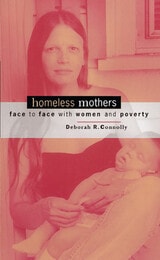
Homeless Mothers
Face to Face with Women and PovertyDeborah R. Connolly
University of Minnesota Press, 2001
Homeowners and Neighborhood Reinvestment
George C. Galster
Duke University Press, 1987
Multivariate statistical analyses of models were conducted using household data from Minneapolis and Wooster, Ohio. Three important findings emerged. First, homeowners' sense of solidarity with their neighbors is as significant in determining their efforts at home upkeep as are their income or age. Second, the optimism of homeowners toward increases in property values results in behavior opposite to that produced by optimism about neighborhood quality of life. This implies that different kinds of predictable gaming behavior occur among homeowners, depending on the neighborhoods in which they live. Third, both short-term and extremely long-term plans to move prove damaging to home upkeep.
The results of this study form the basis for a better understanding of such residential phenomena as class succession, racial transition, and gentrification. Galster's findings will also be valuable for analyzing policies that attempt to encourage neighborhood reinvestment.
Homo Americanus
The Rise of Totalitarian Democracy in AmericaZbigniew Janowski
St. Augustine's Press, 2021
“Only someone shortsighted, or someone who values equality more than freedom, would deny that today’s citizens enjoy little or no freedom, particularly freedom of speech, and even less the ability to express openly or publicly the opinions that are not in conformity with what the majority considers acceptable at a given moment. It may sound paradoxical to contemporary ears, but a fight against totalitarianism must also mean a fight against the expansion of democracy.”
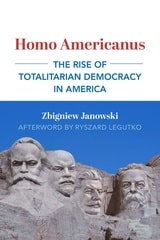
Janowski all at once brazen and out of bounds states what he calls the obvious and unthinkable truth: In the United States, we are already living in a totalitarian reality. The American citizen, the Homo Americanus, is an ideological being who is no longer good or bad, reasonable or irrational, proper or improper except when measured against the objectives of the dominating egalitarian mentality that American democracy has successfully incubated. American democracy has done what other despotic regimes have likewise achieved––namely, taken hold of the individual and forced him to renounce (or forget) his greatness, pursuit of virtue and his orientation toward history and Tradition.
Homo Americanus, Janowski argues, has no mind or soul and he cannot tolerate diversity and indeed he now censors himself. Democracy is not benign, and we should fear its principles come by and applied ad hoc. It is deeply troublesome that in the way democracy moves today it gives critics no real insight into any trajectory of reason behind its motion, which is erratic and unmappable. The Homo Americanus is an ideological entity whose thought and even morality are forbidden from universal abstraction.
Janowski mounts the offensive against what the American holds most sacred, and he does so in order to save him. After exposing the danger and the damage done, Janowski makes another startling proposal. It is a “diseased collective mind” that is the source of this ideology, the liberal anti-perspective that presses man into the image of the Homo Americanus, and its grip can only be broken through the recovery of instinct. Homo Americanus cannot be free again until he is himself again. That is, until the shadow that belongs only to him is restored, and he is thereby no longer alienated from others. Despite the condemnation Janowski seems to be levying on the citizen of the United States, he betrays a great hope and confidence that the means to shake ourselves awake from the bad dream are nevertheless in hand.
Janowski’s work is the next title in St. Augustine’s Press Dissident American Thought Today Series. It occupies a controversial overlapping terrain between the philosophical descriptions of liberalism as a tradition, psychology and the fundamentally influential critiques of democracy offered by Thucydides, Jefferson, Franklin, Tocqueville, Mill, Burke and more. More anecdotal than analytical, Janowski offers the contemporary proof that the reader is right to be scandalized by democracy and his or her own likeness of the Homo Americanus. Once upon a time it was the despicable Homo Sovieticus fruit of tyranny, but now we fear democratic society too might fall and all its citizens never be found again.
Hong Kong in Revolt
The Protest Movement and the Future of ChinaAu Loong-Yu
Pluto Press, 2020
Honor and the Political Economy of Marriage
Violence against Women in the Kurdistan Region of IraqJoanne Payton
Rutgers University Press, 2020
Honor and the Political Economy of Marriage provides a description of ‘honor’-based violence that focuses upon the structure of the family rather than the perpetrator’s culture. The author, Joanne Payton, argues that within societies primarily organized by familial and marital connections, women’s ‘honor’ is a form of symbolic capital within a ‘political economy’ in which marriage organizes intergroup connections.
Drawing on statistical analysis of original data contextualized with historical and anthropological readings, Payton explores forms of marriage and their relationship to ‘honor’, sketching changing norms around the familial control of women from agrarian/pastoral roots to the contemporary era.
Honor, Status, and Law in Modern Latin America
Sueann Caulfield, Sarah C. Chambers, and Lara Putnam, eds.
Duke University Press, 2005
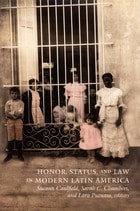
Each essay examines honor in the context of specific historical processes, including early republican nation-building in Peru; the transformation in Mexican villages of the cargo system, by which men rose in rank through service to the community; the abolition of slavery in Rio de Janeiro; the growth of local commerce and shifts in women’s status in highland Bolivia; the formation of a multiethnic society on Costa Rica’s Caribbean coast; and the development of nationalist cultural responses to U.S. colonialism in Puerto Rico. By connecting liberal projects that aimed to modernize law and society with popular understandings of honor and status, this volume sheds new light on broad changes and continuities in Latin America over the course of the long nineteenth century.
Contributors. José Amador de Jesus, Rossana Barragán, Sueann Caulfield, Sidney Chalhoub, Sarah C. Chambers, Eileen J. Findley, Brodwyn Fischer, Olívia Maria Gomes da Cunha, Laura Gotkowitz, Keila Grinberg, Peter Guardino, Cristiana Schettini Pereira, Lara Elizabeth Putnam
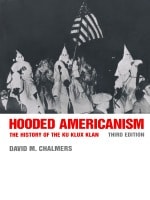
Hooded Americanism
The History of the Ku Klux KlanDavid M. Chalmers
Duke University Press, 1987
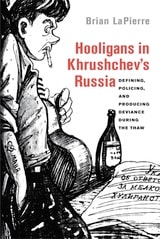
Hooligans in Khrushchev's Russia
Defining, Policing, and Producing Deviance during the ThawBrian LaPierre
University of Wisconsin Press, 2012
Hooligans in Khrushchev's Russia offers the first comprehensive study of how Soviet police, prosecutors, judges, and ordinary citizens during the Khrushchev era (1953–64) understood, fought against, or embraced this catch-all category of criminality. Using a wide range of newly opened archival sources, it portrays the Khrushchev period—usually considered as a time of liberalizing reform and reduced repression—as an era of renewed harassment against a wide range of state-defined undesirables and as a time when policing and persecution were expanded to encompass the mundane aspects of everyday life. In an atmosphere of Cold War competition, foreign cultural penetration, and transatlantic anxiety over "rebels without a cause," hooliganism emerged as a vital tool that post-Stalinist elites used to civilize their uncultured working class, confirm their embattled cultural ideals, and create the right-thinking and right-acting socialist society of their dreams.
Hope and Independence
Blacks' Response to Electoral and Party PoliticsPatricia Gurin
Russell Sage Foundation, 1989
Hope and Scorn
Eggheads, Experts, and Elites in American PoliticsMichael J. Brown
University of Chicago Press, 2020
Intellectuals “have been both rallying points and railed against in American politics, vessels of hope and targets of scorn,” writes Michael J. Brown as he invigorates a recurrent debate in American life: Are intellectual public figures essential voices of knowledge and wisdom, or out-of-touch elites? Hope and Scorn investigates the role of high-profile experts and thinkers in American life and their ever-fluctuating relationship with the political and public spheres.
From Eisenhower’s era to Obama’s, the intellectual’s role in modern democracy has been up for debate. What makes an intellectual, and who can claim that privileged title? What are intellectuals’ obligations to society, and how, if at all, are their contributions compatible with democracy? For some, intellectuals were models of civic engagement. For others, the rise of the intellectual signaled the fall of the citizen. Carrying us through six key moments in this debate, Brown expertly untangles the shifting anxieties and aspirations for democracy in America in the second half of the twentieth century and beyond. Hope and Scorn begins with “egghead” politicians like Adlai Stevenson; profiles scholars like Richard Hofstadter and scholars-turned-politicians like H. Stuart Hughes; and ends with the rise of public intellectuals such as bell hooks and Cornel West. In clear and unburdened prose, Brown explicates issues of power, authority, political backlash, and more. Hope and Scorn is an essential guide to American concerns about intellectuals, their myriad shortcomings, and their formidable abilities.
Hope in Hopeless Times
John Holloway
Pluto Press, 2022
Hope lies in our richness, in the joy of our collective creativity. But that richness exists in the peculiar form of money. The fact that we relate to one another through money causes tremendous social pain and destruction and is dragging us through pandemics and war towards extinction.
Richness against money: this battle will decide the future of humanity. If we cannot emancipate richness from money-capital profit, there is probably no hope. Money seems invincible but the constant expansion of debt shows that its rule is fragile. The fictitious expansion of money through debt is driven by fear, fear of us, fear of the rabble. Money contains, but richness overflows.

Hope in the Heartlands
Rebuilding Economies to Save DemocracyJohn Austin
Michigan State University Press, 2027
Why did the American heartland, once the engine of the world’s most dynamic economy, become the seedbed of its angriest politics? For more than twenty years, John Austin has pursued that question in Flint, Detroit, Milwaukee, and Pittsburgh—and now in Europe’s industrial regions, where many communities face the same reckoning. In Hope in the Heartlands he traces his journey from a minister’s son raised in West Virginia coal country to the man who made Flint and the industrial Midwest his adopted home. He shows how he came to see economic abandonment as the root of democratic decay—and what he and a network of like-minded leaders did about it. From coining the “Blue Economy” to championing “ally-shoring”—rebuilding supply chains across allied democracies—Austin offers a field-tested agenda for renewing left-behind regions. The stakes, he argues, could not be higher.
Hopes and Shadows
Eastern Europe After CommunismJ. F. Brown
Duke University Press, 1994
The forces at work in the midst of this revolution are examined from a perspective that is necessarily both historical and contemporary as the complex relationship between the tasks that face these countries and the legacy of their communist and pre-communist past shape the difficult present. As the usefulness of the designation "Eastern Europe" is itself questioned, Brown provides both regional and country-by-country analysis of the political situation. The Czech Republic, Slovakia, Hungary, and Poland are grouped together, as are Romania, Bulgaria, and Albania, to address questions such as the development of liberal democratic culture, the activation of democratic institutions and procedures, and the future of former communist bureaucracies. He considers the former Yugoslavia—now torn violently apart—largely as a separate case. The theoretical, political, social, financial, cultural, and psychological dimensions of the transition from socialism to a market economy are discussed in detail. The final aspect of this revolution, the failure of which most immediately threatens the entire process, is the attempt to build new and stable national statehoods. Brown explores the history and impact of the current reemergence of nationalism and the dangers it represents.
A comprehensive and authoritative survey, J. F. Brown’s analysis and presentation of the contemporary Eastern European political landscape will be essential reading for scholars and specialists and of great interest to general readers.
Horizontal Equity, Uncertainty, and Economic Well-being
Edited by Martin David and Timothy Smeeding
University of Chicago Press, 1985
Hostages of Each Other
The Transformation of Nuclear Safety since Three Mile IslandJoseph V. Rees
University of Chicago Press, 1996
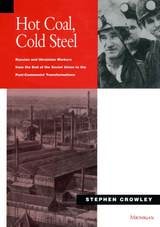
Hot Coal, Cold Steel
Russian and Ukrainian Workers from the End of the Soviet Union to the Post-Communist TransformationsStephen Crowley
University of Michigan Press, 1997
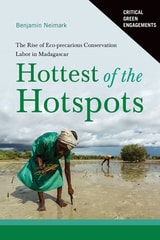
Hottest of the Hotspots
The Rise of Eco-precarious Conservation Labor in MadagascarBenjamin Neimark
University of Arizona Press, 2023
This book details the rollout of market conservation programs, including the finding of drugs from nature—or “bioprospecting”—biodiversity offsetting, and the selling of blue carbon credits from mangroves. It documents the tensions that exist at the local level, as many of these programs incorporate populations highly dependent on the same biodiversity now turned into global commodities for purposes of saving it. Proponents of market conservation mobilize groups of ecologically precarious workers, or the local “eco-precariat,” who do the hidden work of collecting and counting species, monitoring and enforcing the vital biodiversity used in everything from drug discovery to carbon sequestration and large mining company offsets.
Providing a voice for those community workers many times left out of environmental policy discussions, this volume proposes critiques that aim to build better conservation interventions with perspectives of the local eco-precariat.

House Money
A History of the American Mortgage MarketJonathan D. Rose and Kenneth Snowden
University of Chicago Press, 0
How the market that made the American Dream was made—and what that history tells us about its future and fluctuations.
When Americans poured into cities and suburbs during the twentieth century, they needed capital to build and own homes. The market that emerged did more than merely provide it: the American mortgage market became the consequential, if occasionally misunderstood, cornerstone of the US financial system.
House Money traces the history of the growth and occasional collapse of the American mortgage market over the last 150 years. Jonathan Rose and Kenneth Snowden show how three major housing-related crises (of the 1930s, 1980s, and 2000s) were not just cyclical events nor bubbles. Rather, they were episodes in a common pattern: shocks produced when the availability of capital in the market was eclipsed by the risk the market took on. Rose and Snowden chart the macro factors that produced these capital/risk asymmetries, showing that in all three crises, the macroeconomic trends—not just bubbles, not banker avarice—conspired to create a downturn despite federal and private safeguards. This illustrates Rose and Snowden’s core principle: housing markets can (and often, must) shoulder considerable risk. When the capital behind that risk evaporates, trouble becomes more likely.
Mining more than a century of economic history, Rose and Snowden show how the institutions and practices in the American mortgage market reflect the push-pulls of its past—both the private innovations and the government interventions. House Money reveals the great risk undertaken in service to American homeownership—and the perennial question of what happens when that risk goes wrong.
How America Gets Away with Murder
Illegal Wars, Collateral Damage and Crimes Against HumanityMichael Mandel
Pluto Press, 2004
How COVID-19 Took Over the World
Lessons for the FutureEdited by Christine Loh
Hong Kong University Press, 2023
The pandemic left disorder and crises in its wake everywhere it struck. Drawing on disciplines including public health, politics, and socioeconomics, this book tracks the spread of COVID-19 to weave a coherent picture that explains how scientists learned about the virus, how authorities reacted around the world, and how different societies coped.
Written by a leading team of public health, policy, and economics experts, How COVID-19 Took Over the World provides an in-depth analysis of various countries’ responses to the pandemic, as well as suggestions to increase the capability to fight future pandemics. The first part of the book provides an overview of global governance and international cooperation, the economic and social consequences of the outbreak, and breakthroughs in mathematical modeling and COVID-19 vaccines. The second part of the book examines and compares specific countries and regions through the lens of good governance, social contract, and political trust.
How COVID-19 Took Over the World is essential for anyone seeking to learn from the impact of COVID-19, particularly professionals and policymakers, as well as those with a general interest in governance and pandemics.
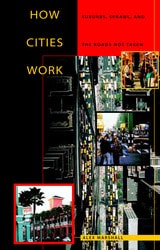
How Cities Work
Suburbs, Sprawl, and the Roads Not TakenBy Alex Marshall
University of Texas Press, 2001
Do cities work anymore? How did they get to be such sprawling conglomerations of lookalike subdivisions, megafreeways, and "big box" superstores surrounded by acres of parking lots? And why, most of all, don't they feel like real communities? These are the questions that Alex Marshall tackles in this hard-hitting, highly readable look at what makes cities work.
Marshall argues that urban life has broken down because of our basic ignorance of the real forces that shape cities—transportation systems, industry and business, and political decision making. He explores how these forces have built four very different urban environments—the decentralized sprawl of California's Silicon Valley, the crowded streets of New York City's Jackson Heights neighborhood, the controlled growth of Portland, Oregon, and the stage-set facades of Disney's planned community, Celebration, Florida.
To build better cities, Marshall asserts, we must understand and intelligently direct the forces that shape them. Without prescribing any one solution, he defines the key issues facing all concerned citizens who are trying to control urban sprawl and build real communities. His timely book will be important reading for a wide public and professional audience.
How Corrupt Is Britain?
Edited by David Whyte
Pluto Press, 2015
David Whyte brings together a wide range of leading commentators and campaigners, offering a series of troubling answers. Unflinchingly facing the corruption in British public life, they show that it is no longer tenable to assume that corruption is something that happens elsewhere; corrupt practices are revealed across a wide range of venerated institutions, from local government to big business. These powerful, punchy essays aim to shine a light on the corruption fundamentally embedded in UK politics, police, and finance.
How Democracies Live
Power, Statecraft, and Freedom in Modern SocietiesStein Ringen
University of Chicago Press, 2022
In the new century, the triumph of democracy at the end of the Cold War turned to retrenchment. The core democracies, in America and Britain, succumbed to polarization and misrule. Dictatorships, such as China, made themselves assertive. New democracies in Central Europe turned to muddled ideologies of “illiberal democracy.” In this book, Stein Ringen offers a meditation on what democracy is, the challenges it faces, and how it can be defended. Ringen argues that democracy must be rooted in a culture that supports the ability of citizens to exchange views and information among themselves and with their rulers.
Drawing on the ideas of Machiavelli, Aristotle, Tocqueville, Max Weber, and others, Ringen shows how power is the fuel of government, and statecraft turns power into effective rule. Democracy should prize freedom and minimizing unfairness, especially poverty. Altogether, Ringen offers powerful insight on the meaning of democracy, including a new definition, and how countries can improve upon it and make it function more effectively. Timely and thought-provoking, How Democracies Live is a sober reminder of the majesty of the democratic enterprise.
How Development Projects Persist
Everyday Negotiations with Guatemalan NGOsErin Beck
Duke University Press, 2017
How Difficult It Is to Be God
Shining Path’s Politics of War in Peru, 1980–1999Carlos Iván Degregori; Edited and with an introduction by Steve J. Stern; Translated by Nancy Appelbaum, Joanna Drzewieniecki, Héctor Flores, Eric Hershberg, Judy Rein, Steve J. Stern, and Kimberly Theidon
University of Wisconsin Press, 2012
In How Difficult It Is to Be God, Carlos Iván Degregori—the world’s leading expert on Shining Path and the intellectual architect for Peru’s highly regarded Truth and Reconciliation Commission—elucidates the movement’s dynamics. An anthropologist who witnessed Shining Path’s recruitment of militants in the 1970s, Degregori grounds his findings in deep research and fieldwork. He explains not only the ideology and culture of revolution among the insurgents, but also their capacity to extend their influence to university youths, Indian communities, and competing social and political movements.
Making Degregori’s most important work available to English-language readers for the first time, this translation includes a new introduction by historian Steve J. Stern, who analyzes the author’s achievement, why it matters, and the debates it sparked. For anyone interested in Peru and Latin America’s age of “dirty war,” or in the comparative study of revolutions, Maoism, and human rights, this book will provide arresting new insights.
How Failed Attempts to Amend the Constitution Mobilize Political Change
Roger C. Hartley
Vanderbilt University Press, 2017
This book is a demonstration of how social reformers and politicians have used the amendment process to achieve favorable political results even as their proposed amendments have failed to be adopted. For example, the ERA "failed" in the sense that it was never ratified, but the mobilization to ratify the ERA helped build the feminist movement (and also sparked a countermobilization). Similarly, the Supreme Court's ban on compulsory school prayer led to a barrage of proposed amendments to reverse the Court. They failed to achieve the requisite two-thirds support from Congress, but nevertheless had an impact on the political landscape. The definition of the relationship between Congress and the President in the conduct of foreign policy can also be traced directly to failed efforts to amend the Constitution during the Cold War.
Roger Hartley examines familiar examples like the ERA, balanced budget amendment proposals, and pro-life attempts to overturn Roe v. Wade, but also takes the reader on a three-century tour of lesser-known amendments. He explains how often the mere threat of calling a constitutional convention (at which anything could happen) effected political change.