Results by title
28164 books match the query 'History' and 906 start with h
Historic Indian Towns in Alabama, 1540-1838
Amos J. Wright
University of Alabama Press, 2003
Discover the lost towns that shaped Alabama’s earliest history.
This encyclopedic work is a listing of 398 ancient towns recorded within the present boundaries of the state of Alabama, containing basic information on each village's ethnic affiliation, time period, geographic location, descriptions, and (if any) movements. While publications dating back to 1901 have attempted to compile such a listing, none until now has so exhaustively harvested the 214 historic maps drawn between 1544, when Hernando de Soto's entourage first came through the southeastern territory, and 1846, when Indian removal to the Oklahoma Territory was complete. Wright combines the map data with a keen awareness of both previously published information and archival sources, such as colonial town lists, census information, and travel narratives.
The towns are listed alphabetically, and the text of each entry develops chronologically. While only a few of these towns have been accurately located by archaeologists, this volume provides a wealth of information for the future study of cultural geography, southeastern archaeology, and ethnohistory. It will be an enduring reference source for many years to come.
SAMPLE ENTRY,
ALIBAMA TOWN (Alibama)
The Alibama consisted of several towns—Mucclassa, Tawasa, Tomopa, Koarsati (Knight 1981, 27:48). Pickett ([1851] 1962:81) adds Ecanchati, Pawokti, and Autauga. The Alibama Town can also be added. Many maps show the Alibama as a group, but one map, 1796 Thomas and Andrews, locates the "Alabama Town"on the east bank of the Coosa just below Wetumpka.
Swanton ([1922] 1970a:209) wrote that the Tuskegee at the Alabama forks may have been known as the "Alabama Town"; however, this is unlikely, as Major W. Blue, a removal agent, wrote in July 1835 that Coosada, Alabama Town, and Tuskegee were ready to emigrate and they all lived adjoining each other in Macon County (ASP, Military Affairs 1861,6:731).
On 6 July 1838, some twenty-seven towns, including "Alibama" (NA M234 R225), attended the Creek council held in Indian Territory. Thomas Bibb, brother to Alabama territorial govenor William Wyatt Bibb, and others, including Nashville investors, founded the town of Alabama in 1817 at Ten Mile Bluff in Montgomery County (Moser 1980-94, 4:131). The town soon disappeared into history.
Historic Native Peoples of Texas
By William C. Foster
University of Texas Press, 2008
Several hundred tribes of Native Americans were living within or hunting and trading across the present-day borders of Texas when Cabeza de Vaca and his shipwrecked companions washed up on a Gulf Coast beach in 1528. Over the next two centuries, as Spanish and French expeditions explored the state, they recorded detailed information about the locations and lifeways of Texas's Native peoples. Using recent translations of these expedition diaries and journals, along with discoveries from ongoing archaeological investigations, William C. Foster here assembles the most complete account ever published of Texas's Native peoples during the early historic period (AD 1528 to 1722).
Foster describes the historic Native peoples of Texas by geographic regions. His chronological narrative records the interactions of Native groups with European explorers and with Native trading partners across a wide network that extended into Louisiana, the Great Plains, New Mexico, and northern Mexico. Foster provides extensive ethnohistorical information about Texas's Native peoples, as well as data on the various regions' animals, plants, and climate. Accompanying each regional account is an annotated list of named Indian tribes in that region and maps that show tribal territories and European expedition routes.
This authoritative overview of Texas's historic Native peoples reveals that these groups were far more cosmopolitan than previously known. Functioning as the central link in the continent-wide circulation of trade goods and cultural elements such as religion, architecture, and lithic technology, Texas's historic Native peoples played a crucial role in connecting the Native peoples of North America from the Pacific Coast to the Southeast woodlands.
Historic Preservation
Collective Memory and Historic IdentityBarthel, Diane
Rutgers University Press, 1996

Historic Structures
The Prague School Project, 1928–1946By F. W. Galan
University of Texas Press, 1985
In this first book-length study of Czech structuralism and semiotics in English, F. W. Galan explores one of the most important intellectual currents of the twentieth century, filling the gap between what has been written of the Russian formalism of the twenties and the French structuralism of the sixties and seventies. He records the evolution within the Prague Linguistic Circle of those theories which concern literature's change in time and the place of literature in society. In doing so, he reveals how the work of the Prague Linguistic Circle in the years 1928 to 1946 vindicate structuralism against its critics' charges that the structuralist approach—in linguistics, literary theory, film studies, and related fields—is inherently unhistorical. Overcoming this apparent methodological impasse was the main challenge confronted by the scholars of the Prague School–Roman Jakobson and Jan Mukarovsky, in particular.
Historic Texas from the Air
By David Buisseret, Richard Francaviglia, Gerald Saxon, and Jack Graves
University of Texas Press, 2009
The extremely varied geography of Texas, ranging from lush piney woods to arid, mountainous deserts, has played a major role in the settlement and development of the state. To gain full perspective on the influence of the land on the people of Texas, you really have to take to the air—and the authors of Historic Texas from the Air have done just that. In this beautiful book, dramatic aerial photography provides a complete panorama of seventy-three historic sites from around the state, showing them in extensive geographic context and revealing details unavailable to a ground-based observer.
Each site in Historic Texas from the Air appears in a full-page color photograph, accompanied by a concise description of the site's history and importance. Contemporary and historical photographs, vintage postcard images, and maps offer further visual information about the sites. The book opens with images of significant natural landforms, such as the Chisos Mountains and the Big Thicket, then shows the development of Texas history through Indian spiritual sites (including Caddo Mounds and Enchanted Rock), relics from the French and Spanish occupation (such as the wreck of the Belle and the Alamo), Anglo forts and methods of communication (including Fort Davis and Salado's Stagecoach Inn), nineteenth-century settlements and industries (such as Granbury's courthouse square and Kreische Brewery in La Grange), and significant twentieth-century locales, (including Spindletop, the LBJ Ranch, and the Dallas–Fort Worth International Airport).
For anyone seeking a visual, vital overview of Texas history, Historic Texas from the Air is the perfect place to begin.

Historic Watermills of North America
A Visual PreservationKen Boyd
University of Alabama Press, 2021
112 full-color artistic photographs of watermills still standing on the North American landscape
The scenic beauty of the watermill is undeniable. The iconic waterwheel has inspired romantics for generations with their warmth and charm. Watermills were once ubiquitous landmarks along brooks, creeks, and rivers across North America. Today, only a scattering of the old watermills grace the countryside, but through these mills, and the turning of their wheels and the whirling of their stones, a small but spectacular part of history lives on.
Through stunningly beautiful images, Historic Watermills of North America: A Visual Preservation presents 112 watermills still standing on the North American landscape. With idealized full-color photographs, Ken Boyd nostalgically hearkens back to a time after European settlement when these structures were the very heart of the communities whose livelihoods they made possible. These mills turned the power of flowing water into mechanical energy to grind corn and wheat into meal and flour, saw timber, loom wool and cotton cloth, and more for the benefit of their operators and communities.
At one time vital to their surrounding regions, most of these surviving mills are in rural areas that have been passed over by modern development. Their designs are as individual as their makers, and their settings are as varied as the landscape. Some have been converted into homes or museums or are part of local tourist attractions. Others have been abandoned but give witness to the significance of their heydays, and others are still in use, doing the same work they have done for generations.
Boyd’s beautifully rendered photographs preserve these extant structures and represent a variety of watermills across the United States and Canada. Each mill photograph is accompanied by a description providing the name of the mill, its location, date of construction, and brief comments highlighting its most noteworthy features. Additional photographs and commentary in the afterword explore the inner workings of watermills.

Historical Anthropology of the Middle Ages
Aaron Gurevich
University of Chicago Press, 1992
Gurevich's writing, while informed by the history of mentalities as practiced by the French school of Le Goff and Duby, reflects a broader view of European culture outside France. He rejects reductionist concepts and operates with a total view of culture, using a wide range of sources—legal as well as ecclesiastical, popular as well as learned, oral and visual as well as literary.
This collection amply demonstrates this breadth of Gurevich's work and highlights his ability to synthesize historical, anthropological, and semiotic approaches to culture. Especially valuable are pieces such as Gurevich's essay Wealth and Gift-Bestowal Among the Ancient Scandinavians, about the importance of gift exchange in the medieval world. One of the first studies for this practice, this classic essay has for years been unavailable. Other pieces range from the deities and heroes of Germanic poetry to the image of the Beyond in the Middle Ages.
Historical Archaeologies of the Caribbean
Contextualizing Sites through Colonialism, Capitalism, and Globalismedited by Todd M. Ahlman and Gerald F. Schroedl
University of Alabama Press, 2019
Historical Archaeologies of the Caribbean: Contextualizing Sites through Colonialism, Capitalism, and Globalism addresses issues in Caribbean history and historical archaeology such as freedom, frontiers, urbanism, postemancipation life, trade, plantation life, and new heritage. This collection moves beyond plantation archaeology by expanding the knowledge of the diverse Caribbean experiences from the late seventeenth through the mid-nineteenth centuries.
The essays in this volume are grounded in strong research programs and data analysis that incorporate humanistic narratives in their discussions of Amerindian, freedmen, plantation, institutional, military, and urban sites. Sites include a sample of the many different types found across the Caribbean from a variety of colonial contexts that are seldom reported in archaeological research, yet constitute components essential to understanding the full range and depth of Caribbean history.
Contributors examine urban contexts in Nevis and St. John and explore the economic connections between Europeans and enslaved Africans in urban and plantation settings in St. Eustatius. The volume contains a pioneering study of frontier exchange with Amerindians in Dominica and a synthesis of ceramic exchange networks among enslaved Africans in the Leeward Islands. Chapters on military forts in Nevis and St. Kitts call attention to this often-neglected aspect of the Caribbean colonial landscape. Contributors also directly address culture heritage issues relating to community participation and interpretation. On St. Kitts, the legacy of forced confinement of lepers ties into debates of current public health policy. Plantation site studies from Antigua and Martinique are especially relevant because they detail comparisons of French and British patterns of African enslavement and provide insights into how each addressed the social and economic changes that occurred with emancipation.
Contributors
Todd M. Ahlman / Douglas V. Armstrong / Samantha Rebovich Bardoe / Paul Farnsworth / Jeffrey R. Ferguson / R. Grant Gilmore III / Diana González-Tennant / Edward González-Tennant / Barbara J. Heath / Carter L. Hudgins Kenneth G. Kelly / Eric Klingelhofer / Roger H. Leech / Stephan Lenik / Gerald F. Schroedl / Diane Wallman / Christian Williamson
Historical Archaeology and the Latter-day Saint Past
Benjamin C. Pykles
Utah State University Press, 2025
The Arrington Lecture series, established in honor of one of the twentieth-century American West’s most distinguished historians, Leonard Arrington, has become a leading forum for prominent scholars to address topics related to Latter-day Saint history. Utah State University hosts the Leonard J. Arrington Mormon History Lecture Series through the Merrill-Cazier Library’s Special Collections and Archives.
Historical Archaeology in the Cortez Mining District
Under the Nevada GiantErich Obermayr
University of Nevada Press, 2025
Readers interested in the archaeology of the West, mining history, and the history of Nevada will find this book fascinating.
Historical Atlas of West Virginia
FRANK S. RIDDEL
West Virginia University Press, 2008
Few reference works are as valuable to both scholars and non-scholars as a historical atlas. Therefore, The Historical Atlas of West Virginia will be an important title for libraries, schools, and every West Virginian who wants to understand how historical forces are mapped onto the state’s terrain. This atlas also shows how the distribution of natural resources intersects with various means of distribution. Frank Riddel’s The Historical Atlas of West Virginia is copiously illustrated with maps, tables, and charts depicting everything from geological deposits and strata that have fed the state’s industries to the settlement patterns of the immigrants who settled in West Virginia. Using federal and state statistics, it also includes revelations from the national census figures since 1790.
Historical Atlases
The First Three Hundred Years, 1570-1870Walter Goffart
University of Chicago Press, 2003
Beginning in the sixteenth century, and continuing down to the late nineteenth, Walter Goffart discusses milestones in the origins of historical atlases as well as individual maps illustrating historical events in alternating, paired chapters. He focuses on maps of the medieval period because the development of maps for history hinged particularly on portrayals of this segment of the postclassical, "modern" past. Goffart concludes the book with a detailed catalogue of more than 700 historical maps and atlases produced from 1570 to 1870.
Historical Atlases will immediately take its place as the single most important reference on its subject. Historians of cartography, medievalists, and anyone seriously interested in the role of maps in portraying history will find it invaluable.

Historical Comedy on Screen
Edited by Hannu Salmi
Intellect Books, 2011
In 1893 Friedrich Engels branded history “the cruelest goddess of all.” This sorrowful vision of the past is deeply rooted in the Western imagination, and history is thus presented as a joyless playground of inevitability rather than a droll world of possibilities. There are few places this is more evident than in historical cinema which tends to portray the past in a somber manner.
Historical Comedy on Screen examines this tendency paying particular attention to the themes most difficult to laugh at and exploring the place where comical and historical storytelling intersect. The book emphasizes the many oft-overlooked comical renderings of history and asks what they have to tell us if we begin to take them seriously.
Historical Distance and the Holocaust
Interactions Between Historians and Middle-Class Western Europeans in Memory EducationThomas Van de Putte
Central European University Press, 2026
A detailed interactional analysis and thick ethnographic description demonstrate how the temporal, moral and emotional distancing practices reenforce the lay moralities and political subjectivities of the white middle-class. This comes with (mostly unintended) consequences. Distanced approaches to the Holocaust in non-academic environments reduce empathy for victims and survivors, normalize violence, disconnect the meaning of the Holocaust from contemporary conflict, and re-activate stereotypes about groups who employ more ‘close’ approaches to the Holocaust.

Historical Evidence and Argument
David Henige
University of Wisconsin Press, 2005
Historians know about the past because they examine the evidence. But what exactly is “evidence,” how do historians know what it means—and how can we trust them to get it right? Historian David Henige tackles such questions of historical reliability head-on in his skeptical, unsparing, and acerbically witty Historical Evidence and Argument. “Systematic doubt” is his watchword, and he practices what he preaches through a variety of insightful assessments of historical controversies—for example, over the dating of artifacts and the textual analysis of translated documents. Skepticism, Henige contends, forces us to recognize the limits of our knowledge, but is also a positive force that stimulates new scholarship to counter it.
Historical Justice and Memory
Edited by Klaus Neumann and Janna Thompson
University of Wisconsin Press, 2015
The historical justice movement has inspired the spread of truth and reconciliation processes around the world and has pushed governments to make reparations and apologies for past wrongs. It has changed the public understanding of justice and the role of memory. In this book, leading scholars in philosophy, history, political science, and semiotics offer new essays that discuss and assess these momentous global developments. They evaluate the strength and weaknesses of the movement, its accomplishments and failings, its philosophical assumptions and social preconditions, and its prospects for the future.
Historical Knowledge, Historical Error
A Contemporary Guide to PracticeAllan Megill
University of Chicago Press, 2006
In the past thirty years, historians have broadened the scope of their discipline to include many previously neglected topics and perspectives. They have chronicled language, madness, gender, and sexuality and have experimented with new forms of presentation. They have turned to the histories of non-Western peoples and to the troubled relations between “the West” and the rest. Allan Megill welcomes these developments, but he also suggests that there is now confusion among historians about what counts as a justified account of the past.
In Historical Knowledge, Historical Error, Megill dispels some of the confusion. Here, he discusses issues of narrative, objectivity, and memory. He attacks what he sees as irresponsible uses of evidence while accepting the art of speculation, which incomplete evidence forces upon historians. Along the way, he offers succinct accounts of the epistemological road historians have traveled from Herodotus and Thucydides through Leopold von Ranke and Alexis de Tocqueville, and on to Hayden White, Natalie Zemon Davis, and Lynn Hunt.
Historical Milton
Manuscript, Print, and Political Culture in Revolutionary EnglandThomas Fulton
University of Massachusetts Press, 2010
Historical Thinking
Sam Wineburg
Temple University Press, 2001
Although most of us think of history -- and learn it -- as a conglomeration of facts, dates, and key figures, for professional historians it is a way of knowing, a method for developing and understanding about the relationships of peoples and events in the past. A cognitive psychologist, Wineburg has been engaged in studying what is intrinsic to historical thinking, how it might be taught, and why most students still adhere to the "one damned thing after another" concept of history.
Whether he is comparing how students and historians interpret documentary evidence or analyzing children's drawings, Wineburg's essays offer "rough maps of how ordinary people think about the past and use it to understand the present." Arguing that we all absorb lessons about history in many settings -- in kitchen table conversations, at the movies, or on the world-wide web, for instance -- these essays acknowledge the role of collective memory in filtering what we learn in school and shaping our historical thinking.
Historical and Philosophical Issues in the Conservation of Cultural Heritage
Nicholas Price
J. Paul Getty Trust, The, 1996
The thirty major art historians and scholars represented raise questions such as when to restore, what to preserve, and how to maintain aesthetic character. Excerpts have been selected from the following books and essays: John Ruskin, The Seven Lamps of Architecture; Bernard Berenson, Aesthetics and History in the Visual Arts; Clive Bell, The Aesthetic Hypothesis; Cesare Brandi, Theory of Restoration; Kenneth Clark, Looking at Pictures; Erwin Panofsky, The History of Art as a Humanistic Discipline; E. H. Gombrich, Art and Illusion; Marie Cl. Berducou, The Conservation of Archaeology; and Paul Philippot, Restoration from the Perspective of the Social Sciences. The fully illustrated book also contains an annotated bibliography and an index.
Historicizing Fat in Anglo-American Culture
Edited by Elena Levy-Navarro
The Ohio State University Press, 2010
Historicizing Fat in Anglo-American Culture, edited by Elena Levy-Navarro, is the first collection of essays to offer a historical consideration of fat bodies in Anglophone culture. The interdisciplinary essays cover periods from the medieval to the contemporary, mapping out a new terrain for historical consideration. These essays question many of the commonplace assumptions that circulate around the category of fat: that fat exists as a natural and transhistorical category; that a premodern period existed which universally celebrated fat and knew no fatphobia; and that the thin, youthful body, as the presumptively beautiful and healthy one, should be the norm by which to judge other bodies.
The essays begin with a consideration of the interrelationship between the rise of weight-watching and the rise of the novel. The essays that follow consider such wide-ranging figures as the fat child’s body as a contested site in post-Blair U.K. and in Lord of the Flies; H. G. Wells; Wilkie Collins’s subversively performative Fosco; Ben Jonson; the voluptuous Lillian Russell; Shakespeare’s Venus and Adonis; the opera diva; and the fat feminist activists of recent San Francisco. In developing their histories in a self-conscious way that addresses the pervasive fatphobia of the present-day Anglophone culture, Historicizing Fat suggests ways in which scholarship and criticism in the humanities can address, resist, and counteract the assumptions of late modern culture.
Historicizing Fear
Ignorance, Vilification, and OtheringTravis D. Boyce
University Press of Colorado, 2019
Contributors ground their work in the theory of Othering—the reductive action of labeling a person as someone who belongs to a subordinate social category defined as the Other—in relation to historical events, demonstrating that fear of the Other is universal, timeless, and interconnected. Chapters address the music of neo-Nazi white power groups, fear perpetuated through the social construct of black masculinity in a racially hegemonic society, the terror and racial cleansing in early twentieth-century Arkansas, the fear of drug-addicted Vietnam War veterans, the creation of fear by the Tang Dynasty, and more.
Timely, provocative, and rigorously researched, Historicizing Fear shows how the Othering of members of different ethnic groups has been used to propagate fear and social tension, justify state violence, and prevent groups or individuals from gaining equality. Broadening the context of how fear of the Other can be used as a propaganda tool, this book will be of interest to scholars and students of history, anthropology, political science, popular culture, critical race issues, social justice, and ethnic studies, as well as the general reader concerned with the fearful framing prevalent in politics.
Contributors:
Quaylan Allen, Melanie Armstrong, Brecht De Smet, Kirsten Dyck, Adam C. Fong, Jeff Johnson, Łukasz Kamieński, Guy Lancaster, Henry Santos Metcalf, Julie M. Powell, Jelle Versieren
Historicizing the Enlightenment, Volume 1
Politics, Religion, Economy, and Society in BritainMichael McKeon
Bucknell University Press, 2023
Published by Bucknell University Press. Distributed worldwide by Rutgers University Press.
Historicizing the Enlightenment, Volume 2
Literature, the Arts, and the Aesthetic in BritainMichael McKeon
Bucknell University Press, 2023
Published by Bucknell University Press. Distributed worldwide by Rutgers University Press.
Histories of Dirt
Media and Urban Life in Colonial and Postcolonial LagosStephanie Newell
Duke University Press, 2020
Histories of Global Health in Africa
Melissa Graboyes and Jennifer Tappan
Ohio University Press, 0
Histories of Global Health in Africa offers a concise and compelling introduction to the development and practice of global health on the African continent over the past century. Rather than centering institutions, the book foregrounds the people whose lives and labor have shaped global health—including African communities receiving care and the practitioners and experts who have long driven biomedical work across the region.
Drawing on cutting-edge scholarship, the book traces the colonial roots of global health and examines how these legacies continue to influence contemporary interventions, from vaccination campaigns and disease eradication efforts to epidemic responses. Its accessible thematic chapters explore key topics, including data collection, demography, ethics, and equity.
Designed for classroom use and ideal for nonspecialists, Histories of Global Health in Africa provides a flexible structure and a rich suite of teaching materials, including online multimedia components. It is an essential resource for students and readers seeking to understand how global health has evolved—and why its future depends on confronting its past.
Histories of Infamy
Francisco López de Gómara and the Ethics of Spanish ImperialismCristián A. Roa-de-la-Carrera
University Press of Colorado, 2005
- Luis Fernando Restrepo, University of Arkansas
“In an eloquent and thorough exegesis, Roa-de-la-Carrera reveals how and why López de Gómara, having written the best of all possible books in exultation of Spanish imperialism, nevertheless failed to convince the readers of his time."
- Susan Schroeder, Tulane University
In Histories of Infamy, Cristián Roa-de-la-Carrera explores Francisco López de Gómara's (1511-ca.1559) attempt to ethically reconcile Spain's civilizing mission with the conquistadors' abuse and exploitation of Native peoples.
The most widely read account of the conquest in its time, Gómara's Historia general de las Indias y Conquista de México rationalized the conquistadors' crimes as unavoidable evils in the task of bringing "civilization" to the New World. Through an elaborate defense of Spanish imperialism, Gómara aimed to convince his readers of the merits of the conquest, regardless of the devastation it had wrought upon Spain's new subjects. Despite his efforts, Gómara's apologist text quickly fell into disrepute and became ammunition for Spain's critics. Evaluating the effectiveness of ideologies of colonization, Roa-de-la-Carrera's analysis will appeal to scholars in colonial studies and readers interested in the history of the Americas.

Histories of Race and Racism
The Andes and Mesoamerica from Colonial Times to the PresentLaura Gotkowitz, ed.
Duke University Press, 2012
Contributors
Rossana Barragán
Kathryn Burns
Andrés Calla
Pamela Calla
Rudi Colloredo-Mansfeld
María Elena García
Laura Gotkowitz
Charles R. Hale
Brooke Larson
Claudio Lomnitz
José Antonio Lucero
Florencia E. Mallon
Khantuta Muruchi
Deborah Poole
Seemin Qayum
Arturo Taracena Arriola
Sinclair Thomson
Esteban Ticona Alejo
Histories of Scientific Observation
Edited by Lorraine Daston and Elizabeth Lunbeck
University of Chicago Press, 2010
Observation is the most pervasive and fundamental practice of all the modern sciences, both natural and human. Its instruments include not only the naked senses but also tools such as the telescope and microscope, the questionnaire, the photographic plate, the notebook, the glassed-in beehive, and myriad other ingenious inventions designed to make the invisible visible, the evanescent permanent, the abstract concrete. Yet observation has almost never been considered as an object of historical inquiry in itself. This wide-ranging collection offers the first examination of the history of scientific observation in its own right, as both epistemic category and scientific practice.
Histories of Scientific Observation features engaging episodes drawn from across the spectrum of the natural and human sciences, ranging from meteorology, medicine, and natural history to economics, astronomy, and psychology. The contributions spotlight how observers have scrutinized everything—from seaweed to X-ray radiation, household budgets to the emotions—with ingenuity, curiosity, and perseverance verging on obsession. This book makes a compelling case for the significance of the long, surprising, and epistemologically significant history of scientific observation, a history full of innovations that have enlarged the possibilities of perception, judgment, and reason.
Histories of Southeastern Archaeology
Edited by Shannon Tushingham, Jane Hill, and Charles H. McNutt
University of Alabama Press, 2002
Histories of Southeastern Archaeology originated as a symposium at the 1999 Southeastern Archaeological Conference (SEAC) organized in honor of the retirement of Charles H. McNutt following 30 years of teaching anthropology. Written for the most part by members of the first post-depression generation of southeastern archaeologists, this volume offers a window not only into the archaeological past of the United States but also into the hopes and despairs of archaeologists who worked to write that unrecorded history or to test scientific theories concerning culture.
The contributors take different approaches, each guided by experience, personality, and location, as well as by the legislation that shaped the practical conduct of archaeology in their area. Despite the state-by-state approach, there are certain common themes, such as the effect (or lack thereof) of changing theory in Americanist archaeology, the explosion of contract archaeology and its relationship to academic archaeology, goals achieved or not achieved, and the common ground of SEAC.
This book tells us how we learned what we now know about the Southeast's unwritten past. Of obvious interest to professionals and students of the field, this volume will also be sought after by historians, political scientists, amateurs, and anyone interested in the South.
Additional reviews:

Histories of Technology, the Environment, and Modern Britain
Edited by Jon Agar and Jacob Ward
University College London, 2018
Histories of the Present
People and Power in EcuadorNorman E. Whitten Jr. and Dorothea Scott Whitten
University of Illinois Press, 2011

Histories of the Transgender Child
Jules Gill-Peterson
University of Minnesota Press, 2018
A groundbreaking twentieth-century history of transgender children
With transgender rights front and center in American politics, media, and culture, the pervasive myth still exists that today’s transgender children are a brand new generation—pioneers in a field of new obstacles and hurdles. Histories of the Transgender Child shatters this myth, uncovering a previously unknown twentieth-century history when transgender children not only existed but preexisted the term transgender and its predecessors, playing a central role in the medicalization of trans people, and all sex and gender.
Beginning with the early 1900s when children with “ambiguous” sex first sought medical attention, to the 1930s when transgender people began to seek out doctors involved in altering children’s sex, to the invention of the category gender, and finally the 1960s and ’70s when, as the field institutionalized, transgender children began to take hormones, change their names, and even access gender confirmation, Julian Gill-Peterson reconstructs the medicalization and racialization of children’s bodies. Throughout, they foreground the racial history of medicine that excludes black and trans of color children through the concept of gender’s plasticity, placing race at the center of their analysis and at the center of transgender studies.
Until now, little has been known about early transgender history and life and its relevance to children. Using a wealth of archival research from hospitals and clinics, including incredible personal letters from children to doctors, as well as scientific and medical literature, this book reaches back to the first half of the twentieth century—a time when the category transgender was not available but surely existed, in the lives of children and parents.

Histories on Econometrics, Volume 43
Marcel Boumans, Ariane Dupont-Kieffer, Dou Qin, editors
Duke University Press, 0
Contributors: John Aldrich, Jeff E. Biddle, Olav Bjerkholt, Marcel Boumans, Chao-Hsi Huang, Robert W. Dimand, Duo Qin, Ariane Dupont-Kieffer, Hsiang-Ke Chao, Aiko Ikeo, Francisco Louçã, Mary S. Morgan, Daniela Parisi, Alain Pirotte, Charles G. Renfro, Thomas Stapleford, Sofia Terlica
Marcel Boumans is Associate Professor of Economics at the University of Amsterdam. Ariane Dupont-Kieffer is a Researcher at the French National Institute of Research on Transport and Safety. Duo Qin is Reader of Economics at the University of London.
Historiography
Ancient, Medieval, and ModernErnst Breisach
University of Chicago Press, 1995
Historiography
Ancient, Medieval, and Modern, Third EditionErnst Breisach
University of Chicago Press, 2007
In this pioneering work, Ernst Breisach presents an effective, well-organized, and concise account of the development of historiography in Western culture. Neither a handbook nor an encyclopedia, this up-to-date third edition narrates and interprets the development of historiography from its origins in Greek poetry to the present, with compelling sections on postmodernism, deconstructionism, African-American history, women’s history, microhistory, the Historikerstreit, cultural history, and more. The definitive look at the writing of history by a historian, Historiography provides key insights into some of the most important issues, debates and innovations in modern historiography.
History & Subjectivity
Roger Gottlieb
Temple University Press, 1987
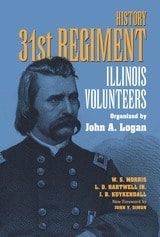
History 31st Regiment
Illinois Volunteers Organized by John A. LoganW. S. Morris, J. B. Kuykendall, and L. D. Hartwell. Foreword by John Y. Simon
Southern Illinois University Press, 1998
The story of John A. Logan’s famed 31st Regiment Illinois Volunteers, told by three veterans, follows the regiment from the battles of Belmont, Fort Donelson, Vicksburg, Kenesaw Mountain, and Atlanta through the March to the Sea and into North Carolina. "Few regiments," notes historian John Y. Simon in the foreword, "fought longer or more fiercely, suffered more casualties, or won more victories."
Logan proved a valiant and valuable Union commander, yet when the Civil War first began, it was far from clear whether he would lead Union or Confederate troops. In dramatic fashion, however, he broke what Simon calls an "ominous silence ... interpreted by many as sympathy for the South." Speaking from a wagon platform in Marion, Illinois, Logan proclaimed: "[The] time has come when a man must be for or against his country." Logan accepted a commission from Illinois governor Richard Yates, recruited heavily in southern Illinois, and formed the 31st Regiment Illinois Volunteers.
The 31st became a prime component in Grant’s western campaigns, fighting for the first time at Belmont, Missouri. In February of 1862, the 31st foiled Confederate general Gideon J. Pillow’s dramatic escape from the Union siege at Fort Donelson. Although this is often listed as one of the proudest moments for the 31st, casualties ran high (fifty-eight killed), with Logan so severely wounded that at first he was reported dead. Logan’s valor at Fort Donelson won him promotion to brigadier general.
History 4° Celsius
Search for a Method in the Age of the AnthropoceneIan Baucom
Duke University Press, 2020

History Afield
Stories from the Golden Age of Wisconsin Sporting LifeRobert C Willging
Wisconsin Historical Society Press, 2011

History And 9/11
Joanne Meyerowitz
Temple University Press, 2003
History Continues
Georges Duby
University of Chicago Press, 1994
Since its beginning in the 1940s, Duby's career has been rich and varied, encompassing economic history, social history, the history of mentalites, art history, microhistory, urban history, the history of women and sexuality, and, most recently, the Church's influence on feudal society. In retracing this singular career path, Duby candidly remembers his life's most formative influences, including the legendary historians Marc Bloch and Lucien Febvre, the Annales School so closely associated with them, and the College de France.
Duby also offers insights about the proper methods of gathering and using archival data and on constructing penetrating interpretations of the documents. Indeed, his discussion of how he chose his subjects, collected his materials, developed the arguments, erected the scaffolding and constructed his theses offers the best introduction to the craft available to aspiring historians.
Candid and charming, this book is both a memoir of one of this century's great scholars and a history of the French historical school since the mid-twentieth century. It will be required reading for anyone interested in the French academic milieu, medieval history, French history, or the recording of history in general.
Georges Duby, a member of the Academie francaise, for many years held the distinguished chair in medieval history at the College de France. His numerous books include The Age of Cathedrals; The Knight, the Lady, and the Priest; Love and Marriage in the Middle Ages; and The Three Orders—all published by the University of Chicago Press.
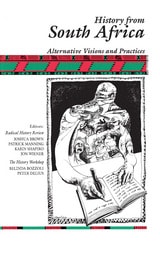
History From South Africa
Alternative Visions and PracticesJoshua Brown
Temple University Press, 1991
More starkly than any other contemporary social conflict, the crisis in South Africa highlights the complexities and conflicts in race, gender, class, and nation. These original articles, most of which were written by South African authors, are from a special issue of the Radical History Review, published in Spring 1990, that mapped the development of interpretations of the South African past that depart radically from the official history. The articles range from the politics of black movements in the nineteenth and twentieth centuries to studies of film, television, and theater as reflections of modern social conflict.
History from South Africa is presented in two main sections: discussions of the historiography of South Africa from the viewpoint of those rewriting it with a radical outlook; and investigations into popular history and popular culture—the production and reception of history in the public realm. In addition, two photo essays dramatize this history visually; maps and a chronology complete the presentation. The book provides a fresh look at major issues in South African social and labor history and popular culture, and focuses on the role of historians in creating and interacting with a popular movement of resistance and social change.

History Is Bunk
Assembling the Past at Henry Ford's Greenfield VillageSwigger Jessie
University of Massachusetts Press, 0
History Just Ahead
A Guide to Wisconsin's Historical MarkersSarah Davis McBride
Wisconsin Historical Society Press, 1999
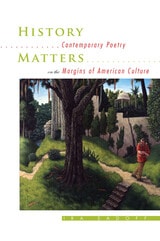
History Matters
Contemporary Poetry on the Margins of American CultureIra Sadoff
University of Iowa Press, 2009
Much of our most adventurous writing has occurred at history’s margins, simultaneously making use of and resisting tradition. By tracking key contemporary poets—including John Ashbery, Olena Kaltyiak Davis, Louise Glück, Czeslaw Milosz, Frank O’Hara, and C. K. Williams—as well as musing on jazz and other creative enterprises, Sadoff investigates the lively poetic art of those who have grappled with late twentieth-century attitudes about history, subjectivity, contingency, flux, and modernity. In plainspoken writing, he probes the question of the poet’s capacity to illuminate and universalize truth. Along the way, we are called to consider how and why art moves and transforms human beings.
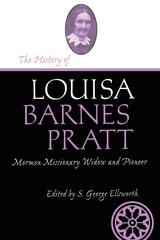
History Of Louisa Barnes Pratt
The Autobiography of a Mormon Missionary Widow and PioneerGeorge S Ellsworth
Utah State University Press, 1998
Volume 3, Life Writings of Frontier Women series, ed. Maureen Ursenbach Beecher
In her memoir, and 1870s revision of her journal and diary, Louisa Barnes Pratt tells of childhood in Massachusetts and Canada during the War of 1812, and independent career as a teacher and seamstress in New England, and her marriage to the Boston seaman Addison Pratt.
Converting to the LDS Church, the Pratts moved to Nauvoo, Illinois, from where Brigham Young sent Addison on the first of the long missions to the Society Islands that would leave Louisa on her own. As a sole available parent, she hauled her children west to Winter Quarters, to Utah in 1848, to California, and, in Addison's wake, to Tahiti in 1850.
The Pratts joined the Mormon colony at San Bernardino, California. When in 1858 a federal army's march on Utah led to the colonists' recall, Addision—alienated from the Mormon Church after long absences—chose not to go. Mostly separated thereafter (Addison died in 1872), Louisa settled in Beaver, Utah, where she campaigned for women's rights, contributed to the Woman's Exponent, and depended on her own means, as she had much of her life, until her death in 1880.

History Of Scandinavia
Norway, Sweden, Denmark, Finland, And IcelandT.K. Derry
University of Minnesota Press, 2000
This concise account traces the history of the Scandinavian countries from earliest times to the present, emphasizing common features in their heritage and in their contribution to the modern world. The author’s aim is to describe each country’s history, traditions, and way of life and to examine the political development of the five nations in the context of the whole Nordic region.
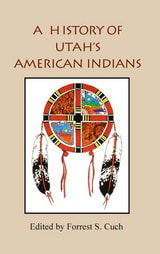
History Of Utah's American Indians
Forrest S. Cuch
Utah State University Press, 2003
This book is a joint project of the Utah Division of Indian Affairs and the Utah State Historical Society. It is distributed to the book trade by Utah State University Press.
The valleys, mountains, and deserts of Utah have been home to native peoples for thousands of years. Like peoples around the word, Utah's native inhabitants organized themselves in family units, groups, bands, clans, and tribes. Today, six Indian tribes in Utah are recognized as official entities. They include the Northwestern Shoshone, the Goshutes, the Paiutes, the Utes, the White Mesa or Southern Utes, and the Navajos (Dineh). Each tribe has its own government. Tribe members are citizens of Utah and the United States; however, lines of distinction both within the tribes and with the greater society at large have not always been clear. Migration, interaction, war, trade, intermarriage, common threats, and challenges have made relationships and affiliations more fluid than might be expected. In this volume, the editor and authors endeavor to write the history of Utah's first residents from an Indian perspective. An introductory chapter provides an overview of Utah's American Indians and a concluding chapter summarizes the issues and concerns of contemporary Indians and their leaders. Chapters on each of the six tribes look at origin stories, religion, politics, education, folkways, family life, social activities, economic issues, and important events. They provide an introduction to the rich heritage of Utah's native peoples. This book includes chapters by David Begay, Dennis Defa, Clifford Duncan, Ronald Holt, Nancy Maryboy, Robert McPherson, Mae Parry, Gary Tom, and Mary Jane Yazzie.
Forrest Cuch was born and raised on the Uintah and Ouray Ute Indian Reservation in northeastern Utah. He graduated from Westminster College in 1973 with a bachelor of arts degree in behavioral sciences. He served as education director for the Ute Indian Tribe from 1973 to 1988. From 1988 to 1994 he was employed by the Wampanoag Tribe in Gay Head, Massachusetts, first as a planner and then as tribal administrator. Since October 1997 he has been director of the Utah Division of Indian Affairs.
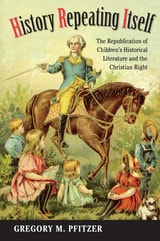
History Repeating Itself
The Republication of Children's Historical Literature and the Christian RightGregory M. Pfitzer
University of Massachusetts Press, 2014
Recently publishers on the Christian Right have been reprinting nineteenth-century children's history books and marketing them to parents as “anchor texts” for homeschool instruction. Why, Gregory M. Pfitzer asks, would books written more than 150 years ago be presumed suitable for educating twenty-first-century children? The answer, he proposes, is that promoters of these recycled works believe that history as a discipline took a wrong turn in the early twentieth century, when progressive educators introduced social studies methodologies into public school history classrooms, foisting upon unsuspecting and vulnerable children ideologically distorted history books.
In History Repeating Itself, Pfitzer tests these assertions by scrutinizing and contextualizing the original nineteenth-century texts on which these republications are based. He focuses on how the writers borrowed from one another to produce works that were similar in many ways yet differed markedly in terms of pedagogical strategy and philosophy of history. Pfitzer demonstrates that far from being non-ideological, these works were rooted in intense contemporary debates over changing conceptions of childhood.
Pfitzer argues that the repurposing of antiquated texts reveals a misplaced resistance to the idea of a contested past. He also raises essential philosophical questions about how and why curricular decisions are shaped by the “past we choose to remember” on behalf of our children.