Results by title
314 books match the query 'African' and 15 start with i
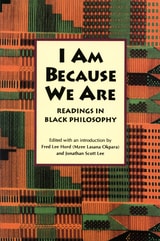
I Am Because We Are
Readings in Africana PhilosophyFred Lee Hord
University of Massachusetts Press, 2016
First published in 1995, I Am Because We Are has been recognized as a major, canon-defining anthology and adopted as a text in a wide variety of college and university courses. Bringing together writings by prominent Black thinkers from Africa, the Caribbean, and North America, Fred Lee Hord and Jonathan Scott Lee made the case for a tradition of “relational humanism” distinct from the philosophical preoccupations of the West.
Over the past twenty years, however, new scholarly research has uncovered other contributions to the discipline now generally known as “Africana philosophy” that were not included in the original volume. In this revised and expanded edition, Hord and Lee build on the strengths of the earlier anthology while enriching the selection of readings to bring the text into the twenty-first century. In a new introduction, the editors reflect on the key arguments of the book's central thesis, refining them in light of more recent philosophical discourse. This edition includes important new readings by Kwame Gyekye, Oyeronke Oy ewumi, Paget Henry, Sylvia Wynter, Toni Morrison, Charles Mills, and Tommy Curry, as well as extensive suggestions for further reading.
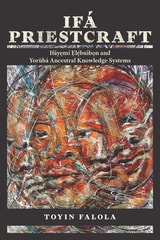
Ifá Priestcraft
Ifáyemí Elébuìbon and Yorùbá Ancestral Knowledge SystemsToyin Falola
University of Wisconsin Press, 2026
Born in 1947, Ifáyẹmí Ọ̀ṣúndàgbonù Ẹlẹ́buìbọn descends from a long line of Yorùbá healers, philosophers, and priests. A fervent disciple of Ifá from age four, Ẹlẹ́buìbọn grew to become both a living moral exemplar and an internationally recognized face of his religion. The first scholarly work to connect the biography of a devout Ifá practitioner to broader intellectual conversations around pluriversalism and Indigenous knowledge systems, Ifá Priestcraft analyzes the complexities of Yorùbá philosophy and religion and their lasting cultural impact in Nigeria and throughout the diaspora. Toyin Falola, a world-renowned scholar of African studies, employs a phenomenological approach that recognizes and solidifies the voice of the “guru” as an organic and authentic source of knowledge. The result is a wholly original and uniquely interdisciplinary study of Yorùbá spirituality and an extraordinary contribution to the field of ancestral studies.
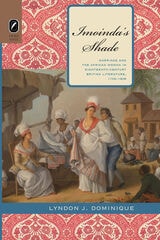
Imoinda’s Shade
Marriage and the African Woman in Eighteenth-Century British Literature, 1759–1808Lyndon J. Dominique
The Ohio State University Press, 2012
As the eighteenth century is entirely bereft of narratives written by African women, one might assume that these women had little to no impact on British literature and the national psyche of the period. Yet these kinds of assumptions are belied by the influence of one prominent African woman featured in the period’s literary texts.
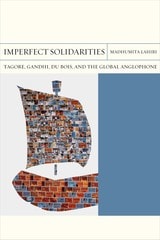
Imperfect Solidarities
Tagore, Gandhi, Du Bois, and the Global AnglophoneMadhumita Lahiri
Northwestern University Press, 2021
A century ago, activists confronting racism and colonialism—in India, South Africa, and Black America—used print media to connect with one another. Then, as now, the most effective medium for their undertakings was the English language. Imperfect Solidarities: Tagore, Gandhi, Du Bois, and the Global Anglophone tells the story of this interconnected Anglophone world. Through Rabindranath Tagore’s writings on China, Mahatma Gandhi’s recollections of South Africa, and W. E. B. Du Bois’s invocations of India, Madhumita Lahiri theorizes print internationalism. This methodology requires new terms within the worldwide hegemony of the English language (“the global Anglophone”) in order to encourage alternate geographies (such as the Global South) and new collectivities (such as people of color).
The women of print internationalism feature prominently in this account. Sonja Schlesin, born in Moscow, worked with Indians in South Africa. Sister Nivedita, an Irish woman in India, collaborated with a Japanese historian. Jessie Redmon Fauset, an African American, brought the world home to young readers through her work as an author and editor.
Reading across races and regions, genres and genders, Imperfect Solidarities demonstrates the utility of the neologism for postcolonial literary studies.
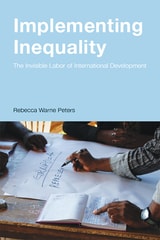
Implementing Inequality
The Invisible Labor of International DevelopmentRebecca Warne Peters
Rutgers University Press, 2020
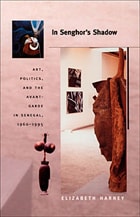
In Senghor's Shadow
Art, Politics, and the Avant-Garde in Senegal, 1960–1995Elizabeth Harney
Duke University Press, 2004
Heavily illustrated with nearly one hundred images, including some in color, In Senghor’s Shadow surveys the work of a range of Senegalese artists, including painters, muralists, sculptors, and performance-based groups—from those who worked at the height of Senghor’s patronage system to those who graduated from art school in the early 1990s. Harney reveals how, in the 1970s, avant-gardists contested Negritude beliefs by breaking out of established artistic forms. During the 1980s and 1990s, artists such as Moustapha Dimé, Germaine Anta Gaye, and Kan-Si engaged with avant-garde methods and local artistic forms to challenge both Senghor’s legacy and the broader art world’s understandings of cultural syncretism. Ultimately, Harney’s work illuminates the production and reception of modern Senegalese art within the global arena.
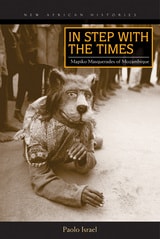
In Step with the Times
Mapiko Masquerades of MozambiquePaolo Israel
Ohio University Press, 2014
The helmet-shaped mapiko masks of Mozambique have garnered admiration from African art scholars and collectors alike, due to their striking aesthetics and their grotesque allure. This book restores to mapiko its historic and artistic context, charting in detail the transformations of this masquerading tradition throughout the twentieth century.
Based on field research spanning seven years, this study shows how mapiko has undergone continuous reinvention by visionary individuals, has diversified into genres with broad generational appeal, and has enacted historical events and political engagements. This dense history of creativity and change has been sustained by a culture of competition deeply ingrained within the logic of ritual itself. The desire to outshine rivals on the dance ground drives performers to search for the new, the astonishing, and the topical. It is this spirit of rivalry and one-upmanship that keeps mapiko attuned to the times that it traverses.
In Step with the Times is illustrated with vibrant photographs of mapiko masks and performances. It marks the most radical attempt to date to historicize an African performative tradition.

In Touch
Encounters between Art and ResearchHans-Jörg Rheinberger
Diaphanes, 2026
The entanglements between science and art have always been multiple, even if they are not always readily noticeable. In this volume, historian and philosopher of science Hans-Jörg Rheinberger reflects on the work of seven different artists, apprehending artworks not as art-historical exegeses, but rather ongoing research processes with their own character and specificities, more akin to scientific experimentation.
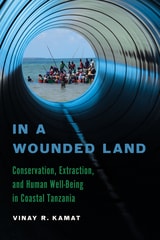
In a Wounded Land
Conservation, Extraction, and Human Well-Being in Coastal TanzaniaVinay R. Kamat
University of Arizona Press, 2024
Focusing on the human element of marine conservation and the extractive industry in Tanzania, this volume illuminates what happens when impoverished people living in underdeveloped regions of Africa are suddenly subjected to state-directed conservation and natural resource extraction projects, implemented in their landscapes of subsistence. In a Wounded Land draws on ethnographically rich case studies and vignettes collected over a ten-year period in several coastal villages on Tanzania’s southeastern border with Mozambique. In seven chapters, the book demonstrates how state power, processes of displacement and dispossession, forms of local resistance and acquiescence, environmental and social justice, and human well-being become interconnected.
Written in lucid, accessible language, this is the first book that reveals the social implications of the co-presence of a marine park and a gas project at a time when internationally funded conservation initiatives and extraction projects among rural African populations are engendering rapid social transformation.
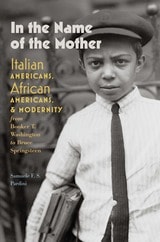
In the Name of the Mother
Italian Americans, African Americans, and Modernity from Booker T. Washington to Bruce SpringsteenSamuele F. S. Pardini
Dartmouth College Press, 2017

Individual Freedoms and State Security in the African Context
The Case of ZimbabweJohn Hatchard
Ohio University Press, 1993
In 1980 the ZANU/PF government of Robert Mugabe came to power after an extended war of liberation. They inherited a cluster of emergency laws similar to those available to the authorities in South Africa. It was also the beginning of the cynical South African state policy of destabilization of the frontline states. This led to a dangerous period of insurrection in Mashonaland and increased activity by Renamo.
Dr. Hatchard uses the case of Zimbabwe to ask questions about the use of authority in contemporary African states. He examines:
1. Whether and in what circumstances the declaration and retention of a state of emergency is justified;
2.The scope of emergency regulations and their impact on individual freedoms;
3.What safeguards are necessary in order to protect those freedoms during a state of emergency.
The relationship is studied from a political as well as a legal perspective. Dr. Hatchard examines the role law has played, is playing and may play. The author concludes that, even if the state of emergency is justified, this does not necessitate the curtailment of the exercise of individual freedoms.
There are many comparisons with the rest of Africa. The book is of practical importance for members of the judiciary, legal practitioners, politicians and human rights organizations. The difficult questions it poses make stimulating teaching material for students of the Third World who want to understand the reality of the exercise of power in fragile situations.
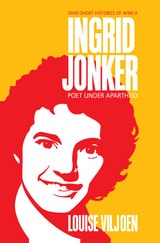
Ingrid Jonker
Poet under ApartheidLouise Viljoen
Ohio University Press, 2012
Nelson Mandela brought the poetry of Ingrid Jonker to the attention of South Africa and the wider world when he read her poem “Die kind” (The Child) at the opening of South Africa’s first democratic parliament on May 24, 1994. Though Jonker was already a significant figure in South African literary circles, Mandela’s reference contributed to a revival of interest in Jonker and her work that continues to this day.
Viljoen’s biography illuminates the brief and dramatic life of Jonker, who created a literary oeuvre—as searing in its intensity as it is brief—before taking her own life at the age of thirty-one. Jonker wrote against a background of escalating apartheid laws, violent repression of black political activists, and the banning of the African National Congress and the Pan Africanist Congress. Viljoen tells the story of Ingrid Jonker in the political and cultural context of her time, provides sensitive insights into her poetry, and considers the reasons for the enduring fascination with her life and death.
Her writings, her association with bohemian literary circles, and her identification with the oppressed brought her into conflict with her father, a politician in the white ruling party, and with other authority figures from her Afrikaner background. Her life and work demonstrate the difficulty and importance of artistic endeavor in a place of terrible conflict.
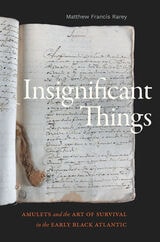
Insignificant Things
Amulets and the Art of Survival in the Early Black AtlanticMatthew Francis Rarey
Duke University Press, 2023
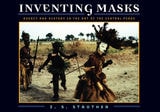
Inventing Masks
Agency and History in the Art of the Central PendeZ. S. Strother
University of Chicago Press, 1998
"Its presentation, its exceptionally lively style, the perfection of its illustrations make this a stunning book, perfectly fitting for the study of a performing art and its content is indeed seminal. . . . A breakthrough."—Jan Vansina, African Studies Review
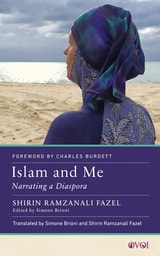
Islam and Me
Narrating a DiasporaShirin Ramzanali Fazel
Rutgers University Press, 2023
In Islam and Me, Fazel tells her story and shares the experiences of other Muslim women living in Italy, revealing the wide variety of Muslim identities and the common prejudices they encounter. Looking at Italian school textbooks, newspapers, and TV programs, she invites us to change the way Muslim immigrants, and especially women, are depicted in both news reports and scholarly research. Islam and Me is a meditation on our multireligious, multiethnic, and multilingual reality, as well as an exploration of how we might reimagine national culture and identity so that they become more diverse, inclusive, and anti-racist.