187 books match the query 'African American women' and 7 start with i
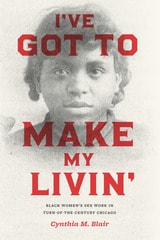
cover of I've Got to Make My Livin': Black Women's Sex Work in Turn-of-the-Century Chicago

I've Got to Make My Livin'

Black Women's Sex Work in Turn-of-the-Century Chicago

Cynthia M. Blair

University of Chicago Press, 2010

For many years, the interrelated histories of prostitution and cities have perked the ears of urban scholars, but until now the history of urban sex work has dealt only in passing with questions of race. In I’ve Got to Make My Livin’, Cynthia Blair explores African American women’s sex work in Chicago during the decades of some of the city’s most explosive growth, expanding not just our view of prostitution, but also of black women’s labor, the Great Migration, black and white reform movements, and the emergence of modern sexuality.

Focusing on the notorious sex districts of the city’s south side, Blair paints a complex portrait of black prostitutes as conscious actors and historical agents; prostitution, she argues here, was both an arena of exploitation and abuse, as well as a means of resisting middle-class sexual and economic norms. Blair ultimately illustrates just how powerful these norms were, offering stories about the struggles that emerged among black and white urbanites in response to black women’s increasing visibility in the city’s sex economy. Through these powerful narratives, I’ve Got to Make My Livin’ reveals the intersecting racial struggles and sexual anxieties that underpinned the celebration of Chicago as the quintessentially modern twentieth-century city.

[more]
cover of Imitation of Life

Imitation of Life

Fannie Hurst

Duke University Press, 2004

A bestseller in 1933, and subsequently adapted into two beloved and controversial films, Imitation of Life has played a vital role in ongoing conversations about race, femininity, and the American Dream. Bea Pullman, a white single mother, and her African American maid, Delilah Johnston, also a single mother, rear their daughters together and become business partners. Combining Bea’s business savvy with Delilah’s irresistible southern recipes, they build an Aunt Jemima-like waffle business and an international restaurant empire. Yet their public success brings them little happiness. Bea is torn between her responsibilities as a businesswoman and those of a mother; Delilah is devastated when her light-skinned daughter, Peola, moves away to pass as white. Imitation of Life struck a chord in the 1930s, and it continues to resonate powerfully today.

The author of numerous bestselling novels, a masterful short story writer, and an outspoken social activist, Fannie Hurst was a major celebrity in the first half of the twentieth century. Daniel Itzkovitz’s introduction situates Imitation of Life in its literary, biographical, and cultural contexts, addressing such topics as the debates over the novel and films, the role of Hurst’s one-time secretary and great friend Zora Neale Hurston in the novel’s development, and the response to the novel by Hurst’s friend Langston Hughes, whose one-act satire, “Limitations of Life” (which reverses the races of Bea and Delilah), played to a raucous Harlem crowd in the late 1930s. This edition brings a classic of popular American literature back into print.
[more]
cover of In Praise of Black Women, Volume 1: Ancient African Queens

In Praise of Black Women, Volume 1

Ancient African Queens

Simone Schwarz-Bart with Andre Schwarz-Bart

University of Wisconsin Press, 2001

    In Praise of Black Women is a magnificent tribute to women in Africa and the African diaspora from the ancient past to the present. Lavishly illustrated, with text written and selected by the celebrated Guadeloupian novelist Simone Schwarz-Bart, this four-volume series celebrates remarkable women who distinguished themselves in their time and shaped the course of culture and history.
    Volume 1: Ancient African Queens weaves together oral tradition, folk legends and stories, songs and poems, historical accounts, and travelers’ tales from Egypt to southern Africa, from prehistory to the nineteenth century. These women rulers, warriors, and heroines include Amanirenas, the queen of Kush who battled Roman armies and defeated them at Aswan; Daurama, mother of the seven Hausa kingdoms; Amina Kulibali, founder of the Gabu dynasty in Senegal; Ana de Sousa Nzinga, who resisted the Portuguese conquest of Angola; Beatrice Kimpa Vita, a Kongo prophet burned at the stake by Christian missionaries; Nanda, mother of the famous warrior-king Shaka Zulu; and many others.
    These extraordinary women's stories, narrated in the style of African oral tradition, are absorbing, informative, and accessible. The abundant illustrations, many of them rare archival images, depict the diversity among Black women and make this volume a unique treasure for every art lover, every school, and every family.
[more]
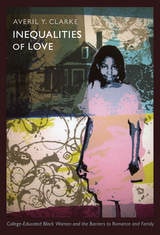
cover of Inequalities of Love: College-Educated Black Women and the Barriers to Romance and Family

Inequalities of Love

College-Educated Black Women and the Barriers to Romance and Family

Averil Y. Clarke

Duke University Press, 2011
Inequalities of Love uses the personal narratives of college-educated black women to describe the difficulties they face when trying to date, marry, and have children. While conventional wisdom suggests that all women, regardless of race, must sacrifice romance and family for advanced educations and professional careers, Averil Y. Clarke’s research reveals that educated black women’s disadvantages in romance and starting a family are consequences of a system of racial inequality and discrimination. The author analyzes the accounts of black women who repeatedly return to incompatible partners as they lose hope of finding “Mr. Right” and reject unwed parenting because it seems to affirm a negative stereotype of black women’s sexuality that is inconsistent with their personal and professional identities. She uses national survey data to compare college-educated black women’s experiences of romance, reproduction, and family to those of less-educated black women and those of white and Hispanic women with degrees. She reports that degreed black women’s lives include less marriage and sex, and more unwanted pregnancy, abortion, and unwed childbearing than college-educated white and Hispanic women. Black women’s romantic limitations matter because they constitute deprivation and constraint in romance and because they illuminate important links between race, class, and gender inequality in the United States. Clarke’s discussion of the inequities that black women experience in romance highlights the connections between individuals’ sexual and reproductive decisions, their performance of professional or elite class identities, and the avoidance of racial stigma.
[more]
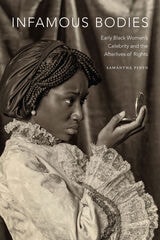
cover of Infamous Bodies: Early Black Women’s Celebrity and the Afterlives of Rights

Infamous Bodies

Early Black Women’s Celebrity and the Afterlives of Rights

Samantha Pinto

Duke University Press, 2020
The countless retellings and reimaginings of the private and public lives of Phillis Wheatley, Sally Hemings, Sarah Baartman, Mary Seacole, and Sarah Forbes Bonetta have transformed them into difficult cultural and black feminist icons. In Infamous Bodies, Samantha Pinto explores how histories of these black women and their ongoing fame generate new ways of imagining black feminist futures. Drawing on a variety of media, cultural, legal, and critical sources, Pinto shows how the narratives surrounding these eighteenth- and nineteenth-century celebrities shape key political concepts such as freedom, consent, contract, citizenship, and sovereignty. Whether analyzing Wheatley's fame in relation to conceptions of race and freedom, notions of consent in Hemings's relationship with Thomas Jefferson, or Baartman's ability to enter into legal contracts, Pinto reveals the centrality of race, gender, and sexuality in the formation of political rights. In so doing, she contends that feminist theories of black women's vulnerable embodiment can be the starting point for future progressive political projects.
[more]
cover of Inside the Body of Black Feminism: Science, Race, Culture

Inside the Body of Black Feminism

Science, Race, Culture

Samantha Pinto

Duke University Press, 2026

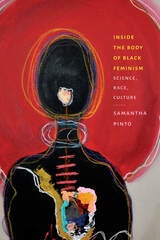
Inside the Body of Black Feminism connects historical studies of medical racism with Black feminist theories of the body to reimagine the material and metaphoric possibilities for political subjectivity across race, gender, and culture.

Inside the Body of Black Feminism charts a cultural genealogy of antiracist and feminist engagement with some of the most objectified internal “parts” of racist medical and scientific inquiry: bones and blood, brains and hearts, guts and wombs. In a move counterintuitive to Black feminism’s emphasis on externalized representations of the body, Samantha Pinto reinterprets the relationship between embodiment, health, and race through cultural archives that reimagine the inside of the Black body. Working through materials such as medical textbooks, memoirs, data visualizations, museum displays, speculative fiction, and horror films, Pinto explores how a visually inaccessible corporeal interior becomes discernible and racialized in the public sphere. Inside the Body of Black Feminism engages expressive cultural work to ask how we might know the inside of the Black body differently through Black feminist theory and how scientific and medical inquiry might enable us to understand political subjectivity anew.
[more]
cover of Interpreting 2 Peter through African American Women’s Moral Writings

Interpreting 2 Peter through African American Women’s Moral Writings

Shively T. J. Smith

SBL Press, 2023

Shively T. J. Smith reconsiders what is most distinct, troubling, and potentially thrilling about the often overlooked and dismissed book of 2 Peter. Using the rhetorical strategies of nineteenth-century African American women, including Ida B. Wells, Jarena Lee, Anna Julia Cooper, and others, Smith redefines the use of biblical citations, the language of justice and righteousness, and even the matter of pseudonymity in 2 Peter. She approaches 2 Peter as an instance of Christian cultural rhetoric that forges a particular kind of community identity and behavior. This pioneering study considers how 2 Peter cultivates the kind of human relations and attitudes that speak to the values of moral people seeking justice in the past as well as today.
[more]