Results by title
15 books match the query 'Sailors'
A Confederate Chronicle
The Life of a Civil War SurvivorPamela Chase Hain
University of Missouri Press, 2005
Billy Budd, Sailor
Herman Melville
University of Chicago Press, 1962

Dark Stones
Dias de Melo, Introduction by Maria João Dodman, Translated by Gregory McNab
Tagus Press, 2021
This expanded Tagus Press edition features Gregory McNab’s masterful 1988 translation of Dark Stones and a new introduction from Maria João Dodman. As an insider from the island of Pico, Dias de Melo writes in a realistic style that is passionate and forceful, yet tenacious, without ever losing certainty and control.
Double Duty in the Civil War
The Letters of Sailor and Soldier Edward W. BaconEdited by George S. Burkhardt
Southern Illinois University Press, 2009
In 1861 at the age of eighteen, Edward Woolsey Bacon, a Yale student and son of well-known abolitionist minister Leonard Bacon, left his home in New Haven, Connecticut, to fight for the United States. Over the next four years Bacon served in both the Union navy and army, which gave him a sweeping view of the Civil War. His postings included being a captain’s clerk on the USS Iroquois, a hospital clerk in his hometown, a captain in the 29th Connecticut Infantry (Colored), and a major in the 117th U.S. Colored Infantry, and he described these experiences in vibrant letters to his friends and family. Historian George S. Burkhardt has compiled these letters, as well as Bacon’s diary in the impressive Double Duty in the Civil War: The Letters of Sailor and Soldier Edward W. Bacon.
Bacon tells of hunting Confederate commerce raiders on the high seas, enduring the tedium of blockade duty, and taking part in riverine warfare on the Mississippi. He recalls sweating in South Carolina as an infantry officer during drill and picket duty, suffering constant danger in the battlefield trenches of Virginia, marching victoriously on fallen Richmond, and tolerating the boredom of occupation duty in Texas.
His highly entertaining letters shed new light on naval affairs and reveal a close-knit family life. The narrative of his duty with black troops is especially valuable, since few first-hand accounts from white officers of the U.S. Colored Troops exist. Furthermore, his beliefs about race, slavery, and the Union cause were unconventional for the time and stand in contrast to those held by many of his contemporaries.
Double Duty in the Civil War is filled with lively descriptions of the men Bacon met and the events he experienced. With Burkhardt’s careful editing and useful annotations, Bacon’s letters and diary excerpts give rare insight into areas of the Civil War that have been neglected because of a lack of available sources. Given the scarcity of eyewitness testimonies to navy life and life in African American regiments, this book is a rarity indeed.
Fire on the Water
Sailors, Slaves, and Insurrection in Early American Literature, 1789-1886Warren, Lenora
Bucknell University Press, 2019
Published by Bucknell University Press. Distributed worldwide by Rutgers University Press.
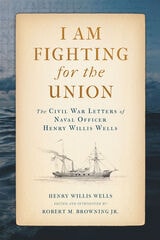
I Am Fighting for the Union
The Civil War Letters of Naval Officer Henry Willis WellsHenry Willis Wells, edited and introduced by Robert M. Browning Jr.
University of Alabama Press, 2023
A young officer’s insightful, detailed and steadfast devotion to the Union Navy—told in his own words.
On May 18, 1862, Henry Willis Wells wrote a letter to his mother telling her in clear terms, “I am fighting for the Union.” Since August 1861, when he joined the US Navy as a master’s mate he never wavered in his loyalty. He wrote to his family frequently that he considered military service a necessary and patriotic duty, and the career that ensued was a dramatic one, astutely and articulately documented by Wells in more than 200 letters home, leaving an invaluable account of daily life in the Union Navy.
Wells joined the navy shortly after the war began, initially on board the Cambridge, attached to the North Atlantic Blockading Squadron, which patrolled the waters of the Chesapeake Bay. He witnessed the Battle of Hampton Roads and the fight between the ironclads CSS Virginia and the USS Monitor. Next, the Cambridge assisted in the blockade of Wilmington, North Carolina. In one instance, the warship chased the schooner J. W. Pindar ashore during her attempt to run the blockade, and Confederate forces captured Henry’s boarding party. After a short prison stay in the infamous Libby Prison in Richmond, his Confederate captors paroled Henry. He travelled back to Brookline, and soon thereafter the Navy Department assigned him to the gunboat Ceres, which operated on the sounds and rivers of North Carolina, protecting army positions ashore. Henry was on board during the Confederate attempt to capture Washington, North Carolina. During this April 1863 attack, Henry was instrumental in the town’s defense, commanding a naval battery ashore during the latter part of the fight.
His exceptional service gained him a transfer to a larger warship, the USS Montgomery, again on the blockade of Wilmington. Later the service assigned him to the Gem of the Sea, part of the East Gulf Blockading Squadron. Through his hard work and professionalism, he finally earned his first command. In September 1864, he became the commanding officer of the Rosalie, a sloop used as a tender to the local warships. Later he commanded the schooner Annie, also a tender. At the end of December 1864, however, the Annie suffered a massive explosion, killing all hands, including Wells. He was twenty-three years old when his life and career ended tragically. Wells’s letters document both his considerable achievements and his frustrations. His challenges, triumphs, and disappointments are rendered with candor. I Am Fighting for the Union is a vital and deeply personal account of a momentous chapter in the history of the Civil War and its navies.
Redburn
Works of Herman Melville Volume FourHerman Melville
Northwestern University Press, 1969
Melville so disliked the novel that he submitted it to his publisher without polishing it. This scholarly edition corrects a number of errors that have persisted in subsequent editions. Based on collations of the editions published during his lifetime, it incorporates corrections made in the English edition and emendations made by the present editors.
As with all the books in the Northwestern-Newberry series, this edition of Redburn is an Approved Text of the Center for Editions of American Authors (Modern Language Association of America).
Sailing into History
Great Lakes Bulk Carriers of the Twentieth Century and the Crews Who Sailed ThemFrank Boles
Michigan State University Press, 2017
Ships and Shipwrecks
Stories from the Great LakesRichard Gebhart
Michigan State University Press, 2022
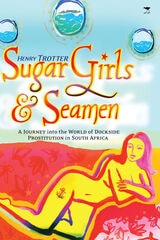
Sugar Girls & Seamen
A Journey into the World of Dockside Prostitution in South AfricaHenry Trotter
Ohio University Press, 2011
Sugar Girls and Seamen illuminates the shadowy world of dockside prostitution in South Africa, focusing on the women of Cape Town and Durban who sell their hospitality to foreign sailors.
Dockside “sugar girls” work at one of the busiest cultural intersections in the world. Through their continual interactions with foreign seamen, they become major traffickers in culture, ideas, languages, styles, goods, currencies, genes, and diseases. Many learn the seamen’s languages, develop emotional relationships with them, have their babies, and become entangled in vast webs of connection. Henry Trotter argues that these South African women are the ultimate cosmopolitans, the unsung sirens of globalization.
Based on research at the seamen’s nightclubs, plus countless interviews with sugar girls, sailors, club owners, cabbies, bouncers, and barmaids, this book provides a comprehensive account of dockside prostitution at the southern tip of Africa. Through stories, analysis, and firsthand experiences, it reveals this gritty world in all its raw vitality and fragile humanity. Sugar Girls and Seamen is simultaneously racy and light, critical and profound.
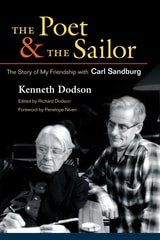
The Poet and the Sailor
The Story of My Friendship with Carl SandburgKenneth Dodson. Edited by Richard Dodson. Foreword by Penelope Niven
University of Illinois Press, 2006
Carl Sandburg first encountered Kenneth Dodson through a letter written at sea during World War II. Though Dodson wrote the letter to his wife, Letha, Sandburg read it in tears and told her, "I've got to meet this man." Composed primarily of their correspondence that continued until Sandburg's death in 1967, The Poet and the Sailor is a chronicle of the deep friendship that followed. Ranging over anything they found important, from writing to health and humor, the letters are arranged by Richard Dodson and are accompanied by a foreword from Sandburg's noted biographer, Penelope Niven.
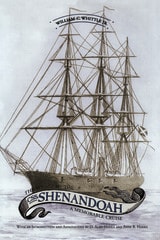
The Voyage of the CSS Shenandoah
A Memorable CruiseWilliam C. Whittle
University of Alabama Press, 2005
The only Confederate ship to circumnavigate the globe
The Confederate cruiser Shenandoah was the last of a group of commerce raiders deployed to prey on Union merchant ships. Ordered to the Pacific Ocean to “greatly damage and disperse” the Yankee whaling fleet in those waters, the Shenandoah’s successful pursuit of her quarry compared favorably with the exploits of the more celebrated Alabama and Florida but has never been as well known because it coincided with the war’s end and the Confederacy’s downfall. It was, however, one of the best documented naval expeditions—from England to the Indian Ocean, Australia and the South Pacific, the Bering Sea, San Francisco, and finally to port in Liverpool—during the Civil War.
The ship’s log and Captain James Waddell’s notes are well preserved, and a number of the Shenandoah’s officers kept detailed journals of the entire voyage. One of the most significant journals, by Lieutenant William Whittle, is presented here, with annotations from other journals, the official records and logs, and newspaper accounts of the Shenandoah’s activities, together bringing to life the history of this remarkable voyage.
Typee
A Peep at Polynesian LifeHerman Melville
Northwestern University Press, 2003
This scholarly edition is based on collations of all editions published during his lifetime, incorporating many authorial readings that have often been omitted and some that have been misprinted in all previous editions. This edition is an Approved Text of the Center for Editions of American Authors (Modern Language Association of America).
White Jacket, or The World in a Man-of-War
Volume Five, Scholarly EditionHerman Melville
Northwestern University Press, 1970
Already that same summer Melville had written Redburn, and he regarded the books as "two jobs, which I have done for money--being forced to it, as other men are to sawing wood." The reviewers were not as hard on White-Jacket as Melville himself was. The English liked its praise of British seamen. The Americans were more interested in Melville's attack on naval abuses, particularly flogging, and his advocacy of humanitarian causes. Soon Melville was acclaimed the best sea writer of the day.
Part autobiography, part epic fiction, White-Jacket remains a brilliantly imaginative social novel by one of the great writers of the sea. This text of the novel is an Approved Text of the Center for Editions of American Authors (Modern Language Association of America).
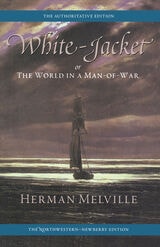
White-Jacket; or, The World in a Man-of-War
Volume FiveHerman Melville
Northwestern University Press, 2000
Already that same summer Melville had written Redburn, and he regarded the books as "two jobs, which I have done for money--being forced to it, as other men are to sawing wood." The reviewers were not as hard on White-Jacket as Melville himself was. The English liked its praise of British seamen. The Americans were more interested in Melville's attack on naval abuses, particularly flogging, and his advocacy of humanitarian causes. Soon Melville was acclaimed the best sea writer of the day.
Part autobiography, part epic fiction, White-Jacket remains a brilliantly imaginative social novel by one of the great writers of the sea. This text of the novel is an Approved Text of the Center for Editions of American Authors (Modern Language Association of America).