Results by title
664 books match the query 'Ancient & Classical' and 13 start with i
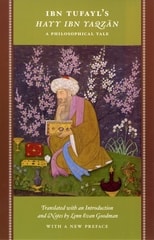
Ibn Tufayl's Hayy Ibn Yaqzan
A Philosophical TaleIbn Tufayl
University of Chicago Press, 2009
The Arabic philosophical fable Hayy Ibn Yaqzan is a classic of medieval Islamic philosophy. Ibn Tufayl (d. 1185), the Andalusian philosopher, tells of a child raised by a doe on an equatorial island who grows up to discover the truth about the world and his own place in it, unaided—but also unimpeded—by society, language, or tradition. Hayy’s discoveries about God, nature, and man challenge the values of the culture in which the tale was written as well as those of every contemporary society.
Goodman’s commentary places Hayy Ibn Yaqzan in its historical and philosophical context. The volume features a new preface and index, and an updated bibliography.
“One of the most remarkable books of the Middle Ages.”—Times Literary Supplement
“An enchanting and puzzling story. . . . The book transcends all historical and cultural environments to settle upon the questions of human life that perpetually intrigue men.”—Middle East Journal
“Goodman has done a service to the modern English reader by providing a readable translation of a philosophically significant allegory.”—Philosophy East and West
“Add[s] bright new pieces to an Islamic mosaic whose general shape is already known.”—American Historical Review
Identity Crises in Apuleius
The Empire and the Ass in Ancient RomeAshli J. E. Baker
University of Wisconsin Press, 2026
In the second century CE, the multiethnic, multilingual, and religiously diverse Roman Empire grew to its greatest extent. To maintain order, Rome relied heavily on strict social hierarchies, established not only through legal frameworks like citizenship, but also through cultural markers (such as clothing and language) and personal traits (such as educational achievement). Even as Rome grew into one of the world’s most powerful empires, however, its social systems strained under the stresses caused by that very growth, which encouraged cultural interaction, long-distance travel, and social mobility—all of which threatened the hierarchies that underpinned Roman order.
It was during this time that the North African–born, Latin-speaking, Greek-educated Apuleius—whose own background showcases the multiplicity of identities available then to Roman individuals—flourished. He remains one of the ancient world’s best-known authors today, thanks particularly to his famous novel, Metamorphoses, known also as The Golden Ass. Taking a bird’s-eye view of his work, Ashli J. E. Baker proffers a bold new reading of Apuleius, proposing that across his writings there is a consistent focus on the theme of identity and its instability. By placing close readings in conversation with sociocultural and material contexts, she shows that because the structures of Roman power depended on inherently unreliable markers of identity, Apuleius’ work can be read as a biting critique of the fraught relationship between the individual, society, and the state in his contemporary Rome.
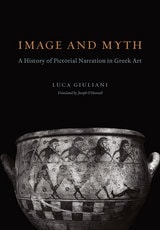
Image and Myth
A History of Pictorial Narration in Greek ArtLuca Giuliani
University of Chicago Press, 2013
Imperial Plato
Albinus, Maximus, Apuleius: Text and Translation, with an Introduction and CommentaryRyan C. Fowler
Parmenides Publishing, 2016
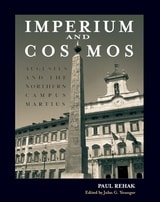
Imperium and Cosmos
Augustus and the Northern Campus MartiusPaul Rehak; Edited by John G. Younger
University of Wisconsin Press, 2006
Rehak closely examines the artistic imagery on these monuments, providing numerous illustrations, tables, and charts. In an analysis firmly contextualized by a thorough discussion of the earlier models and motifs that inspired these Augustan monuments, Rehak shows how the princeps used these on such an unprecedented scale as to truly elevate himself above the common citizen.
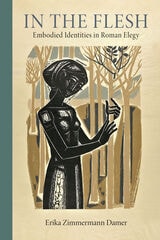
In the Flesh
Embodied Identities in Roman ElegyErika Zimmermann Damer
University of Wisconsin Press, 2022
Recognizing this power of material flesh to shape elegiac poetry, she asserts, grants figures at the margins of this poetic discourse—mistresses, rivals, enslaved characters, overlooked members of households—their own identities, even when they do not speak. She demonstrates how the three poets create a prominent aesthetic of corporeal abjection and imperfection, associating the body as much with blood, wounds, and corporeal disintegration as with elegance, refinement, and sensuality.
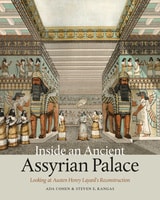
Inside an Ancient Assyrian Palace
Looking at Austen Henry Layard's ReconstructionAda Cohen and Steven E. Kangas
University Press of New England, 2016
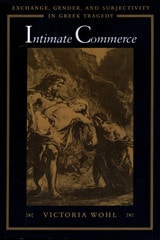
Intimate Commerce
Exchange, Gender, and Subjectivity in Greek TragedyBy Victoria Wohl
University of Texas Press, 1997
Exchanges of women between men occur regularly in Greek tragedy—and almost always with catastrophic results. Instead of cementing bonds between men, such exchanges rend them. They allow women, who should be silent objects, to become monstrous subjects, while men often end up as lifeless corpses. But why do the tragedies always represent the transferal of women as disastrous?
Victoria Wohl offers an illuminating analysis of the exchange of women in Sophocles' Trachiniae, Aeschylus' Agamemnon, and Euripides' Alcestis. She shows how the attempts of women in these plays to become active subjects rather than passive objects of exchange inevitably fail. While these failures seem to validate male hegemony, the women's actions, however futile, blur the distinction between male subject and female object, calling into question the very nature of the tragic self. What the tragedies thus present, Wohl asserts, is not only an affirmation of Athens' reigning ideologies (including its gender hierarchy) but also the possibility of resistance to them and the imagination of alternatives.
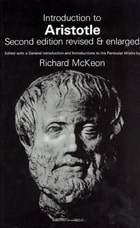
Introduction to Aristotle
Second Edition, Revised and EnlargedAristotle
University of Chicago Press, 1974
Aristotle's contribution to Western civilization is enormous. Our language, our distinctions, our ways of thinking, all are profoundly affected by his work. Since an understanding of Aristotle is indispensable for the understanding of our own culture, the ready availability of his work is crucial.
This collection, for students and general readers alike, provides in one volume Posterior Analytics (Logic), De Anima (On the Soul), Nicomachean Ethics, and Poetics, complete and unabridged, together with generous selections from Physics, On the Parts of Animals, Metaphysics, Politics, and Rhetoric. These works, together with Professor McKeon's revised introductions, provide a convenient and thorough exposure to the works of Aristotle and to the structural interrelations in the Aristotelian system of thought.
Iphigenia among the Taurians
Euripides
University of Chicago Press, 2014
My father killed me
Few contemporary poets elicit such powerful responses from readers and critics as Anne Carson. The New York Times Book Review calls her work “personal, necessary, and important,” while Publishers Weekly says she is “nothing less than brilliant.” Her poetry—enigmatic yet approachable, deeply personal yet universal in scope, wildly mutable yet always recognizable as her distinct voice—invests contemporary concerns with the epic resonance and power of the Greek classics that she has studied, taught, and translated for decades.
Iphigenia among the Taurians is the latest in Carson’s series of translations of the plays of Euripides. Originally published as part of the third edition of Chicago’s Complete Greek Tragedies, it is published here as a stand-alone volume for the first time. In Carson’s stunning translation, Euripides’s play—full of mistaken identities, dangerous misunderstandings, and unexpected interventions by gods and men—is as fierce and fresh as any contemporary drama. Carson has accomplished one of the rarest feats of translation: maintaining fidelity to a writer’s words even as she inflects them with her own unique poetic voice.
Destined to become the standard translation of the play, Iphigenia among the Taurians is a remarkable accomplishment, and an unforgettable work of poetic drama.
Isaeus
Translated with an introduction by Michael Edwards
University of Texas Press, 2007
This is the eleventh volume in the Oratory of Classical Greece. This series presents all of the surviving speeches from the late fifth and fourth centuries BC in new translations prepared by classical scholars who are at the forefront of the discipline. These translations are especially designed for the needs and interests of today's undergraduates, Greekless scholars in other disciplines, and the general public.
Classical oratory is an invaluable resource for the study of ancient Greek life and culture. The speeches offer evidence on Greek moral views, social and economic conditions, political and social ideology, law and legal procedure, and other aspects of Athenian culture that have recently been attracting particular interest: women and family life, slavery, and religion, to name just a few.
The orator Isaeus lived during the fourth century BC and was said to be the teacher of Demosthenes, Athens' most famous orator. Of the fifty or more speeches he is believed to have written, eleven survive in whole, one as a large fragment, and others as smaller fragments. This volume presents all the surviving works of Isaeus. The speeches mainly deal with inheritances and are a vital source of information regarding Greek law in this important area. In addition to translating the speeches, Michael Edwards provides a general introduction to Isaeus and Athenian inheritance law, as well as specific introductions and notes for each speech.
Isocrates I
Translated by David C. Mirhady and Yun Lee Too
University of Texas Press, 2000
This is the fourth volume in the Oratory of Classical Greece series. Planned for publication over several years, the series will present all of the surviving speeches from the late fifth and fourth centuries B.C. in new translations prepared by classical scholars who are at the forefront of the discipline. These translations are especially designed for the needs and interests of today's undergraduates, Greekless scholars in other disciplines, and the general public.
Classical oratory is an invaluable resource for the study of ancient Greek life and culture. The speeches offer evidence on Greek moral views, social and economic conditions, political and social ideology, and other aspects of Athenian culture that have been largely ignored: women and family life, slavery, and religion, to name just a few.
This volume contains works from the early, middle, and late career of the Athenian rhetorician Isocrates (436-338). Among the translated works are his legal speeches, pedagogical essays, and his lengthy autobiographical defense, Antidosis. In them, he seeks to distinguish himself and his work, which he characterizes as "philosophy," from that of the sophists and other intellectuals such as Plato. Isocrates' identity as a teacher was an important mode of political activity, through which he sought to instruct his students, foreign rulers, and his fellow Athenians. He was a controversial figure who championed a role for the written word in fourth-century politics and thought.
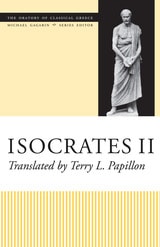
Isocrates II
Translated by Terry L. Papillon
University of Texas Press, 2004
This is the seventh volume in the Oratory of Classical Greece. This series presents all of the surviving speeches from the late fifth and fourth centuries BC in new translations prepared by classical scholars who are at the forefront of the discipline. These translations are especially designed for the needs and interests of today's undergraduates, Greekless scholars in other disciplines, and the general public.
Classical oratory is an invaluable resource for the study of ancient Greek life and culture. The speeches offer evidence on Greek moral views, social and economic conditions, political and social ideology, law and legal procedure, and other aspects of Athenian culture that have been largely ignored: women and family life, slavery, and religion, to name just a few. The Athenian rhetorician Isocrates (436-338) was one of the leading intellectual figures of the fourth century. This volume contains his orations 4, 5, 6, 8, 12, and 14, as well as all of his letters. These are Isocrates' political works. Three of the discourses—Panathenaicus, On the Peace, and the most famous, Panegyricus—focus on Athens, Isocrates' home. Archidamus is written in the voice of the Spartan prince to his assembly, and Plataicus is in the voice of a citizen of Plataea asking Athens for aid, while in To Philip, Isocrates himself calls on Philip of Macedon to lead a unified Greece against Persia.