Results by title
1272 books match the query 'Asia' and 45 start with i
If I Get Out Alive
The World War II Letters and Diaries of William H McDougall JrGary Topping
University of Utah Press, 2007
McDougall’s letters to his family offer a rare and detailed look at daily life in Tokyo and in Japanese-occupied Shanghai during the months leading up to the Pearl Harbor attack. After his imprisonment in Sumatra, he began keeping a daily journal of his experiences as a POW. Published here for the first time are the journals he retrieved at the end of World War II.
Written by an articulate and perceptive professional reporter, McDougall's letters and diaries offer an intimate, personal narrative of conditions in wartime East Asia.
Illusive Utopia
Theater, Film, and Everyday Performance in North KoreaSuk-Young Kim
University of Michigan Press, 2010
"North Korea is not just a security or human rights problem (although it is those things) but a real society. This book gets us closer to understanding North Korea beyond the usual headlines, and does so in a richly detailed, well-researched, and theoretically contextualized way."
---Charles K. Armstrong, Director, Center for Korean Research, Columbia University
"One of this book's strengths is how it deals at the same time with historical, geographical, political, artistic, and cultural materials. Film and theatre are not the only arts Kim studies---she also offers an excellent analysis of paintings, fashion, and what she calls 'everyday performance.' Her analysis is brilliant, her insights amazing, and her discoveries and conclusions always illuminating."
---Patrice Pavis, University of Kent, Canterbury
No nation stages massive parades and collective performances on the scale of North Korea. Even amid a series of intense political/economic crises and international conflicts, the financially troubled country continues to invest massive amounts of resources to sponsor unflinching displays of patriotism, glorifying its leaders and revolutionary history through state rituals that can involve hundreds of thousands of performers. Author Suk-Young Kim explores how sixty years of state-sponsored propaganda performances---including public spectacles, theater, film, and other visual media such as posters---shape everyday practice such as education, the mobilization of labor, the gendering of social interactions, the organization of national space, tourism, and transnational human rights. Equal parts fascinating and disturbing, Illusive Utopia shows how the country's visual culture and performing arts set the course for the illusionary formation of a distinctive national identity and state legitimacy, illuminating deep-rooted cultural explanations as to why socialism has survived in North Korea despite the fall of the Berlin Wall, the collapse of the Soviet Union, and China's continuing march toward economic prosperity. With over fifty striking color illustrations, Illusive Utopia captures the spectacular illusion within a country where the arts are not only a means of entertainment but also a forceful institution used to regulate, educate, and mobilize the population.
Suk-Young Kim is Associate Professor in the Department of Theater and Dance at the University of California, Santa Barbara, and coauthor with Kim Yong of Long Road Home: A Testimony of a North Korean Camp Survivor.
Images of the Canton Factories 1760–1822
Reading History in ArtPaul A. Van Dyke and Maria Kar-wing Mok
Hong Kong University Press, 2015
Imagining Asia in the Americas
Zelideth María Rivas and Debbie Lee-DiStefano
Rutgers University Press, 2016

Imagining Indonesia
Cultural Politics and Political CultureJim Schiller
Ohio University Press, 1997
The contributions presented here represent a wide range of disciplines, points of view, and ideological orientations. Taken together they convey the notion that much might be gained if the idea were abandoned that a single understanding of what constitutes Indonesian culture is possible or desirable.

Imperial Creatures
Humans and Other Animals in Colonial Singapore, 1819-1942Timothy P. Barnard
National University of Singapore Press, 2019
Through a multidisciplinary consideration of fauna, Imperial Creatures weaves together a series of tales to document how animals were cherished, monitored, employed, and slaughtered in a colonial society. All animals, including humans, Barnard shows, have been creatures of imperialism in Singapore. Their stories teach us lessons about the structures that upheld such a society and how it developed over time, lessons of relevance to animal historians, to historians of Singapore, and to urban historians and imperial historians with an interest in environmental themes.
Imperial Decline
Russia’s Changing Role in AsiaStephen J. Blank and Alvin Z. Rubinstein, eds.
Duke University Press, 1997
The essays in Imperial Decline describe the major changes that have occurred in Russia’s relations with China, Japan, and South Korea under Boris Yeltin’s presidency, speculating about both Russia’s future in the region and the impact this future could have on relations with the United States. Contributors to this volume demonstrate how incoherent taxation and investment, uncoordinated and contradictory economic policies, runaway inflation and currency instability, and problems of defense now constrain the possibility of Russia expanding its economic influence in the region. This book is essential for students and scholars of international relations, foreign policy, and Russian history.
Contributors. Stephen J. Blank, Bruce A. Elleman, Harry Gelman, Hongchan Chun , Rajan Menon, Alvin Z. Rubinstein, Oles M. Smolansky, Henry Trofimenko, Charles E. Ziegler
Imperial Science, the Organic Movement and the Path to Shangri La, 1900–1969
Ashok Malhotra
University College London, 2026
A global history project that examines the diffusion of scientific and environmental discourses from India to Britain and the US.
This book examines how imperial agendas and colonial stereotyping shaped dietary and agricultural research carried out in the 1920s in British India, from soil protection initiatives to studies of diet and healthy living. It also discusses how a selective interpretation of this research, which focused on the supposed vigor of one community, the Hunzas, influenced the organic and lifestyles movements that later emerged in Britain and the US from the 1940s to the 1960s.
Imperial Screen
Japanese Film Culture In The Fifteen Years War,Peter B. High
University of Wisconsin Press, 2003
Importing the European Army
The Introduction of European Military Techniques and Institutions in the Extra-European World, 1600-1914David B. Ralston
University of Chicago Press, 1996
Following the same format in his discussion of each country, Ralston makes this central theme in world history easily accessible to students while offering scholars a sophisticated understanding of the exact nature of the changes brought about by Europeanizing military reforms.
David B. Ralston, associate professor of history at the Massachusetts Institute of Technology, is the author of The Army of the Republic.
In Plain Sight
Impunity and Human Rights in ThailandTyrell Haberkorn
University of Wisconsin Press, 2019
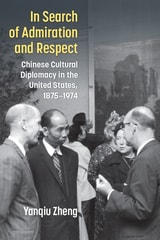
In Search of Admiration and Respect
Chinese Cultural Diplomacy in the United States, 1875–1974Yanqui Zheng
University of Michigan Press, 2024
In Search of Admiration and Respect uses the Chinese case to underscore what Zheng calls “infrastructure of persuasion,” in which American philanthropy, museums, exhibitions, and show business had disproportionate power in setting the agenda of unequal intercultural encounters. This volume also provides historical insights into China’s ongoing quest for international recognition. Drawing upon diverse archival sources, Zheng expands the contours of cultural diplomacy beyond established powers and sheds light on the limited agency of peripheral nations in their self-representation.
In the Event of Women
Tani Barlow
Duke University Press, 2021
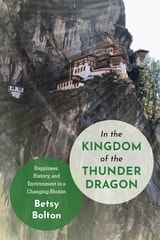
In the Kingdom of the Thunder Dragon
Happiness, History, and Environment in a Changing BhutanBetsy Bolton
Lever Press, 2025
International views on Bhutan tend to be sharply split between admiration for its democratizing development strategies and opposition to its human rights abuses—a division partly maintained by Bhutan’s tight limits on immigration and foreign travel within the country. In the first book-length study of its kind, In the Kingdom of the Thunder Dragon explores the tensions and contradictions of Bhutan’s rapid political and economic transformation from the perspective of a Fulbright scholar helping start a new master’s program in the remote east of the country.
Mingling personal narrative with historical context to engage undergraduate students and general readers, In the Kingdom of the Thunder Dragon explores Bhutan’s Vajrayana Buddhist heritage and ongoing embrace of tradition alongside development, the country’s newly minted democracy amidst a complicated history of citizenship and belonging, and the challenges the nation faces in a period of increasing globalization. Betsy Bolton further explores Bhutan’s recent events surrounding the 1990s expulsion of the Lhotshampa people and the development of GNH in the early 2000s. From here, Bolton illuminates how these historical narratives and issues have impacted Bhutanese citizens and students through stories gathered at educational and artistic institutions, festivals and community events. In the Kingdom of the Thunder Dragon is a fresh, accessible approach to Bhutanese history and will interest general readers as well as scholars of Asia, history, economics, sociology, and environmental studies.
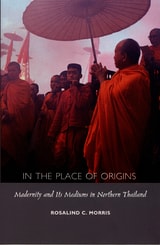
In the Place of Origins
Modernity and Its Mediums in Northern ThailandRosalind C. Morris
Duke University Press, 2000
Through her careful examination of the transformations of spirit mediumship wrought by the mass media, Morris takes readers into the world of the northern Thai past to discover the anticipations of future histories. In this process, she finds new objects for anthropological inquiry, including romantic love and epistolary poetry. She then turns her eye toward the relationships between commodification and prosaic form and photography and the discourses of gendered and national identity. Attending to these issues as they manifest themselves in the practices of mediums, Morris describes both the mundane activities of spirit mediums and the grand ambitions to political authority that are embodied in the increasingly spectacular forms of possession that are becoming so popular with both tourists and local culture brokers. In the Place of Origins traverses this ground with accounts of right-wing militarism and ritual revival during the 70s, and of the democracy movement of 1992, when a global mass media was galvanized by images of military repression and the spectacle of traditional ritual power in cursing. Finally, considering the claims that mediums make to magical power in the face of both AIDS and the Asian economic crisis, Morris reveals the potency of extrajudicial forms of power and violence in the late modern era.
This provocative study will interest anthropologists, historians, Asianists, and those involved in gender, performance, media, and literary studies.
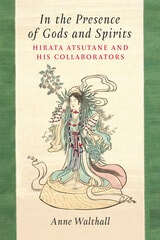
In the Presence of Gods and Spirits
Hirata Atsutane and His CollaboratorsAnne Walthall
University of Michigan Press, 2025
In the Province of the Gods
Kenny Fries
University of Wisconsin Press, 2021
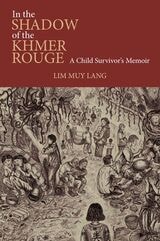
In the Shadow of the Khmer Rouge
A Child Survivor's MemoirMuy Lang Lim
National University of Singapore Press, 2025
Forty-five years have passed since the end of Khmer Rouge rule in Cambodia in 1979. Angkar, the hidden, menacing face of the revolutionary leadership, is gone, yet the misery, death, and destruction they wrought in the name of revolution cannot be forgotten. In In the Shadow of the Khmer Rouge, a voice is given to these memories by a child survivor of the catastrophe that engulfed Cambodia in the 1970’s.
Muy Lang's memoir begins by recalling her gentle childhood with her Sino-Cambodian family in Phnom Penh. With the fall of the city to the Khmer Rouge and its brutal emptying, the country descended into a utopian hell in which drastic economic ideas were enforced with deadly fervor. Muy Lang was only nine years old when she and her family were marched at gunpoint out of Phnom Penh in 1975. Within three years, she was completely alone; tragically, the seven other members of her family were all killed.
Muy Lang survived nearly four years of starvation, sickness, brutality, and threatened death in the Cambodian countryside. She ultimately escaped to Thailand with the first group of refugees to navigate a treacherous descent from the border through the landmine-infested Dângrêk Mountains. In the Shadow of the Khmer Rouge pays tribute to Muy Lang’s family and to other war victims who shared their stories with her. It offers future generations a personal reflection on themes such as displacement, loss of cultural identity, hope, and resilience in the face of unimaginable circumstances, and is an unflinching account of Cambodia's darkest years.
In the Shadows of the State
Indigenous Politics, Environmentalism, and Insurgency in Jharkhand, IndiaAlpa Shah
Duke University Press, 2010
Indian Ink
Script and Print in the Making of the English East India CompanyMiles Ogborn
University of Chicago Press, 2007
A commercial company established in 1600 to monopolize trade between England and the Far East, the East India Company grew to govern an Indian empire. Exploring the relationship between power and knowledge in European engagement with Asia, Indian Ink examines the Company at work and reveals how writing and print shaped authority on a global scale in the seventeenth and eighteenth centuries.
Tracing the history of the Company from its first tentative trading voyages in the early seventeenth century to the foundation of an empire in Bengal in the late eighteenth century, Miles Ogborn takes readers into the scriptoria, ships, offices, print shops, coffeehouses, and palaces to investigate the forms of writing needed to exert power and extract profit in the mercantile and imperial worlds. Interpreting the making and use of a variety of forms of writing in script and print, Ogborn argues that material and political circumstances always undermined attempts at domination through the power of the written word.
Navigating the juncture of imperial history and the history of the book, Indian Ink uncovers the intellectual and political legacies of early modern trade and empire and charts a new understanding of the geography of print culture.
Indian Migration and Empire
A Colonial Genealogy of the Modern StateRadhika Mongia
Duke University Press, 2018
India’s New Middle Class
Democratic Politics in an Era of Economic ReformLeela Fernandes
University of Minnesota Press, 2006
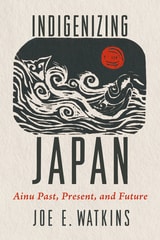
Indigenizing Japan
Ainu Past, Present, and FutureJoe E. Watkins
University of Arizona Press, 2025
Relaying the deep history of the islands of Japan, Watkins tells the archaeological story from the earliest arrivals some 40,000 years ago to 16,000 years ago when local cultures began utilizing pottery and stone tools. About 2,300 years ago, another group of people immigrated from the Korean peninsula into the Japanese archipelago, bringing wet rice agriculture with them. They intermarried with the people who were there, forming the basis of the contemporary Japanese majority culture. As the Japanese state developed on the central Islands of Honshu, Ryukyu, and Shikoku, the people of Hokkaido continued developing along a different trajectory with minimal interaction with the mainland until colonization in the mid-nineteenth century, when the people known as the Ainu came under Japanese governmental policy.
Watkins’s insightful analysis highlights the Ainu’s enduring spirit and their resurgence as part of the global Indigenous movement. Key events such as the 1997 Nibutani Dam case and the 2007 recognition of the Ainu as Japan’s Indigenous people are explored in depth, showcasing the Ainu’s ongoing fight for cultural preservation and self-determination. By situating the Ainu’s experiences within broader global colonial histories, Indigenizing Japan underscores the shared struggles and resilience of Indigenous communities worldwide.
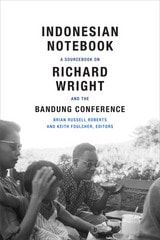
Indonesian Notebook
A Sourcebook on Richard Wright and the Bandung ConferenceBrian Russell Roberts and Keith Foulcher, editors
Duke University Press, 2016
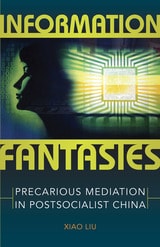
Information Fantasies
Precarious Mediation in Postsocialist ChinaXiao Liu
University of Minnesota Press, 2019
Winner of the Science Fiction Research Association Book Award
A groundbreaking, alternate history of information technology and information discourses
Although the scale of the information economy and the impact of digital media on social life in China today could pale that of any other country, the story of their emergence in the post-Mao sociopolitical environment remains untold. Information Fantasies offers a revisionist account of the emergence of the “information society,” arguing that it was not determined by the technology of digitization alone but developed out of a set of techno-cultural imaginations and practices that arrived alongside postsocialism.
Anticipating discussions on information surveillance, data collection, and precarious labor conditions today, Xiao Liu goes far beyond the current scholarship on internet and digital culture in China, questioning the limits of current new-media theory and history, while also salvaging postsocialism from the persistent Cold War structure of knowledge production.
Ranging over forgotten science fiction, unjustly neglected films, corporeal practices such as qigong, scientific journals, advertising, and cybernetic theories, Information Fantasies constructs an alternate genealogy of digital and information imaginaries—one that will change how we look at the development of the postsocialist world and the emergence of digital technologies.
Inheritance of Loss
China, Japan, and the Political Economy of Redemption after EmpireYukiko Koga
University of Chicago Press, 2016
Inheritance of Loss chronicles these sites of colonial inheritance––tourist destinations, corporate zones, and mustard gas exposure sites––to illustrate attempts by ordinary Chinese and Japanese to reckon with their shared yet contested pasts. In her explorations of everyday life, Koga directs us to see how the violence and injustice that occurred after the demise of the Japanese Empire compound the losses that later generations must account for, and inevitably inherit.
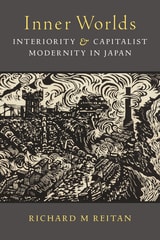
Inner Worlds
Interiority and Capitalist Modernity in JapanRichard M Reitan
University of Michigan Press, 2026
Inner Worlds examines the emergence and operation of representations of interiority—consciousness, “folk mind,” “spirit”—in Japan from its industrial revolution to the rise of fascism during the interwar period. These representations functioned to reproduce the capitalist system by containing its excesses. Thus, poverty in the 1880s was ostensibly the result of defects in one’s innate mental character. A degenerate “crowd mind” explained the strikes and riots of the early twentieth century. State subversion during the 1930s supposedly reflected an attenuated “folk spirit.” By locating the roots of capitalism’s excesses not within the socioeconomic order itself but within a defective interiority, ideologies of interiority operated to contain disruptions to Japan’s socioeconomic order, conceal its defects, and sustain the capitalist system. Inner Worlds reveals how interiority was constituted in ways consistent with both the demands of the emerging capitalist order of the late nineteenth century and the conditions that coalesced to form a fascist conjecture in the 1930s.
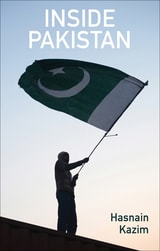
Inside Pakistan
Hasnain Kazim
Haus Publishing, 0
As Kazim and his wife arrived in Islamabad in 2009, they found the country of his parents’ birth riven with contradictions: a nuclear power with a tremendous gulf between the rich and poor, Pakistan has experienced a series of natural and manmade disasters in recent years alongside turbulent periods of economic growth and stagnation. What keeps the people of this Islamic society going? What hopes do they hold for the future? As Kazim spoke with Pakistanis at every level of society and of all political persuasions in search of answers to these questions, he discovered a much more complex country than the headlines of violence and extremism would suggest. Told from a sensitive and sympathetic insider’s perspective, Inside Pakistan pulls back the curtain on a section of the world that promises to play an ever more important role in years to come.
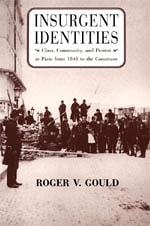
Insurgent Identities
Class, Community, and Protest in Paris from 1848 to the CommuneRoger V. Gould
University of Chicago Press, 1995
The difference was due to Baron Haussmann's massive urban renovation projects between 1852 and 1868, which dispersed workers from Paris's center to newly annexed districts on the outskirts of the city. In these areas, residence rather than occupation structured social relations. Drawing on evidence from trail documents, marriage records, reports of police spies, and the popular press, Gould demonstrates that this fundamental rearrangement in the patterns of social life made possible a neighborhood insurgent movement; whereas the insurgents of 1848 fought and died in defense of their status as workers, those in 1871 did so as members of a besieged urban community.
A valuable resource for historians and scholars of social movements, this work shows that collective identities vary with political circumstances but are nevertheless constrained by social networks. Gould extends this argument to make sense of other protest movements and to offer predictions about the dimensions of future social conflict.

Intellectual Politics in Post-Tiananmen China, Volume 16
Xudong Zhang
Duke University Press, 0
Creating a platform for further theoretical discussion about the ongoing struggle to bring about a new social system, the contributors grapple with the internal crisis or disorientation of the Chinese intellectual world as a distorted, but telling picture of the complexity of contemporary Chinese economics, politics, society, and culture. Essays offer a critical examination of the current state of Chinese intellectual discourse; a challenge to mainstream liberalism in China today and its commitment to democracy; a summary of reconsiderations of property rights, economic democracy, political participation, and the meaning of socialism in the age of flexible production; a reflection on the handover of Hong Kong in the context of a general discussion of Western colonialism in China; and an analysis of the rise of consumer nationalism and mass culture in China since the early 1990s. Intellectual Politics in Post-Tiananmen China sheds light on the evasive nature of Chinese society, and the contributors engage the Chinese problematic not only as a crisis but also as an ongoing historical dynamic.
Contributors. Rey Chow, Zhiyuan Cui, Wang Hui, Gan Yang, Xudong Zhang
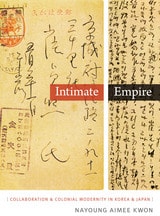
Intimate Empire
Collaboration and Colonial Modernity in Korea and JapanNayoung Aimee Kwon
Duke University Press, 2015
Intimate Industries
Restructuring (Im)Material Labor in AsiaRhacel Parreñas, Hung Cam Thai and Rachel Silvey, special issue editors
Duke University Press, 0
This issue addresses how laborers within intimate industries—those who do interpersonal work that tends to the sexual, bodily, health, hygiene, or care needs of individuals—are shaping Asia’s growing role in the global economy. The contributors investigate how intimate industries support relational connections for consumers while disrupting laborers’ relationships, as in the case of migrants who perform intimate labor away from their families and communities of origin. The articles collected here include examinations of such trade-offs and their complex meanings and implications for the workers. The authors explore these social processes through the lens of industries that organize, enable, or delimit the trade in domestic labor, marriage migration, companionship and romance, sex work, pornographic performance, surrogate mothering and ova donation, and cosmetics sales. This issue puts people, as embodied subjects, back into narratives of economic change and offers a perspective on globalization from below.
Contributors: Danièle Bélanger, Hae Yeon Choo, Nicole Constable, Daisy Deomampo, Akhil Gupta, Chaitanya Lakkimsetti, Pei-Chia Lan, Purnima Mankekar, Eileen Otis, Juno Salazar Parreñas, Rhacel Parreñas, Sharmila Rudrappa, Celine Parreñas Shimizu, Rachel Silvey, Hung Cam Thai, Leslie Wang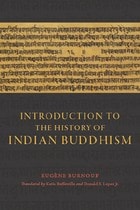
Introduction to the History of Indian Buddhism
Eugène Burnouf
University of Chicago Press, 2010
The most influential work on Buddhism to be published in the nineteenth century, Introduction à l’histoire du Buddhisme indien, by the great French scholar of Sanskrit Eugène Burnouf, set the course for the academic study of Buddhism—and Indian Buddhism in particular—for the next hundred years. First published in 1844, the masterwork was read by some of the most important thinkers of the time, including Schopenhauer and Nietzsche in Germany and Emerson and Thoreau in America.
Katia Buffetrille and Donald S. Lopez Jr.’s expert English translation, Introduction to the History of Indian Buddhism, provides a clear view of how the religion was understood in the early decades of the nineteenth century. Burnouf was an impeccable scholar, and his vision, especially of the Buddha, continues to profoundly shape our modern understanding of Buddhism. In reintroducing Burnouf to a new generation of Buddhologists, Buffetrille and Lopez have revived a seminal text in the history of Orientalism.
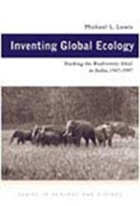
Inventing Global Ecology
Tracking the Biodiversity Ideal in India, 1947–1997Michael L. Lewis
Ohio University Press, 2004
Blue jeans, MTV, Coca-Cola, and… ecology? We don't often think of conservation sciences as a U.S. export, but in the second half of the twentieth century an astounding array of scientists and ideas flowed out from the United States into the world, preaching the gospel of conservation-oriented ecology.
Inventing Global Ecology grapples with how we should understand the development of global ecology in the twentieth century—a science that is held responsible for, literally, saving the world. Is the spread of ecology throughout the globe a subtle form of cultural imperialism, as some claim? Or is it a manifestation of an increasingly globalized world, where ideas, people, and things move about with greater freedom than ever before?
Using India as the case study, Professor Michael Lewis considers the development of conservation policies and conservation sciences since the end of World War II and the role of United States scientists, ideas, and institutions in this process. Was India subject to a subtle form of Americanization, or did Indian ecologists develop their own agenda, their own science, and their own way of understanding (and saving) the natural world? Does nationality even matter when doing ecology?
This readable narrative will carry you through the first fifty years of independent India, from the meadows of the Himalayan Mountains to the rainforests of southern India, from Gandhi and Nehru to Project Tiger. Of equal interest to the general reader, to scientists, and to scholars of history and globalization, Inventing Global Ecology combines ethnographic fieldwork and oral history conducted in India and the United States, as well as traditional archival research.

Invisibility by Design
Women and Labor in Japan's Digital EconomyGabriella Lukács
Duke University Press, 2020
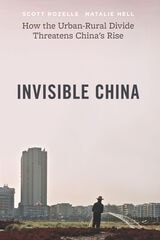
Invisible China
How the Urban-Rural Divide Threatens China’s RiseScott Rozelle and Natalie Hell
University of Chicago Press, 2020
As the glittering skyline in Shanghai seemingly attests, China has quickly transformed itself from a place of stark poverty into a modern, urban, technologically savvy economic powerhouse. But as Scott Rozelle and Natalie Hell show in Invisible China, the truth is much more complicated and might be a serious cause for concern.
China’s growth has relied heavily on unskilled labor. Most of the workers who have fueled the country’s rise come from rural villages and have never been to high school. While this national growth strategy has been effective for three decades, the unskilled wage rate is finally rising, inducing companies inside China to automate at an unprecedented rate and triggering an exodus of companies seeking cheaper labor in other countries. Ten years ago, almost every product for sale in an American Walmart was made in China. Today, that is no longer the case. With the changing demand for labor, China seems to have no good back-up plan. For all of its investment in physical infrastructure, for decades China failed to invest enough in its people. Recent progress may come too late. Drawing on extensive surveys on the ground in China, Rozelle and Hell reveal that while China may be the second-largest economy in the world, its labor force has one of the lowest levels of education of any comparable country. Over half of China’s population—as well as a vast majority of its children—are from rural areas. Their low levels of basic education may leave many unable to find work in the formal workplace as China’s economy changes and manufacturing jobs move elsewhere.
In Invisible China, Rozelle and Hell speak not only to an urgent humanitarian concern but also a potential economic crisis that could upend economies and foreign relations around the globe. If too many are left structurally unemployable, the implications both inside and outside of China could be serious. Understanding the situation in China today is essential if we are to avoid a potential crisis of international proportions. This book is an urgent and timely call to action that should be read by economists, policymakers, the business community, and general readers alike.
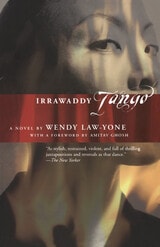
Irrawaddy Tango
Wendy Law-Yone
Northwestern University Press, 2003
Irrawaddy Tango, a pepper-tongued, tango-dancing Asian beauty rises from a village girlhood to become the wife of her country's dictator and then a leader of the rebel forces arrayed against him. Tango captures the attention of an ambitious colonel --the self-proclaimed Supremo--while dancing at a talent contest. Once married, she is forced to endure the cruelties of a ruthless and foolish husband, is kidnapped by rebel forces, recaptured and brutally punished by her husband's military clique, and eventually exiled to America. Her return to the fictional Republic of Daya (clearly Burma) brings about the destruction of her husband and his dictatorship. Irrawaddy Tango tells the unsettling tale of powerful men and powerless women. It evokes as well the harshness of exile, revealing the misunderstandings between East and West and by doing so captures the intensity of living between the two.
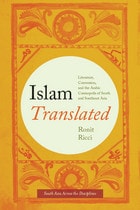
Islam Translated
Literature, Conversion, and the Arabic Cosmopolis of South and Southeast AsiaRonit Ricci
University of Chicago Press, 2011
In Islam Translated, Ronit Ricci uses the Book of One Thousand Questions—from its Arabic original to its adaptations into the Javanese, Malay, and Tamil languages between the sixteenth and twentieth centuries—as a means to consider connections that linked Muslims across divides of distance and culture. Examining the circulation of this Islamic text and its varied literary forms, Ricci explores how processes of literary translation and religious conversion were historically interconnected forms of globalization, mutually dependent, and creatively reformulated within societies making the transition to Islam.
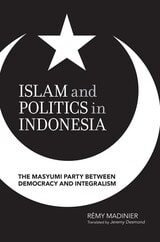
Islam and Politics in Indonesia
The Masyumi Party between Democracy and IntegralismRémy Madinier
National University of Singapore Press, 2015
This book examines the Masyumi Party from its roots in early 20th-century Muslim reformism to its contemporary legacy, and offers a perspective on political Islam which provides an alternative to the more widely-studied model of Middle-Eastern Islam. The party’s experience teaches us much about the fine line separating a moderate form of Islam open to democracy and a certain degree of secularisation from the sort of religious intransigence which can threaten the country’s denominational coexistence.
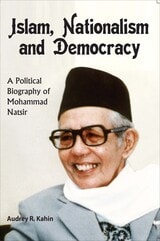
Islam, Nationalism and Democracy
a Political Biography of Mohammad NatsirAudrey R. Kahin
National University of Singapore Press, 2012
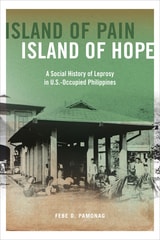
Island of Pain, Island of Hope
A Social History of Leprosy in U.S.-Occupied PhilippinesFebe D. Pamonag
University of Illinois Press, 2026
As Pamonag shows, Filipinos responded in many ways to the Segregation Law. Some resisted arrest and confinement. Others negotiated or complied because of family needs, fear, gender, class, and economic pressure. Rare archival documents reconstruct life inside Culion’s communities, where people fought for better food and living conditions, and used the courts to challenge their confinement and assert their rights. Pamonag also highlights previously untapped accounts that reveal how women navigated the stigma of the disease and the gendered restrictions imposed on them.
A new chapter in the history of public health, Island of Pain, Island of Hope shows the courageous and creative ways Filipinos coped with life under colonial rule.
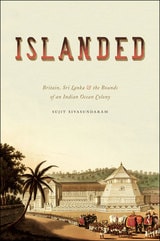
Islanded
Britain, Sri Lanka, and the Bounds of an Indian Ocean ColonySujit Sivasundaram
University of Chicago Press, 2013
How did the modern nation of Sri Lanka come to be? In search of an answer to this question, Islanded returns us to the late eighteenth and early nineteenth centuries and to the advance of the British on the kingdom of Kandy. This advance saw the fall of the last foothold of kingly rule, centered in the highlands of the island. The British undertook a process of “islanding” and “partitioning,” which cast the island, its nature and geography, its religious and ethnic character, and its historical traditions and maritime culture as separate from British domains in mainland India and elsewhere.
Kings had seen themselves as rightful rulers of the whole territory of the island. Now, this right was violently extended by British colonists through the application of a model of crown rule and modern bureaucracy that tied ethnicity to language and religion, employing essentialized but not fully realized patterns that would continue to trouble the modern nation. Picking up a range of unusual themes, from migration, orientalism, and ethnography to botany, medicine, and education, Islanded is a groundbreaking text in Sri Lankan history writing, shaping discussions of the imperial transition in South Asia.

Islands and Empires
Western Impact on the Pacific and East AsiaErnest S. Dodge
University of Minnesota Press, 1978
Islands and Empires was first published in 1976. Minnesota Archive Editions uses digital technology to make long-unavailable books once again accessible, and are published unaltered from the original University of Minnesota Press editions.
This is the first one-volume account of the massive impact of Western civilization on the Pacific Islands and the Far East, principally China and Japan. The effects on the two areas were very different since, in the case of the islands, contact was with peoples who were still in the Stone Age, while in the Far East Westerners came up against sophisticated civilizations more ancient and mature than their own. Because of these differences, the book is divided into two sections, the first dealing with the Pacific Islands and the second with the East Asian mainland. Reverse influences—those of the Eastern cultures on the West—are also discussed.
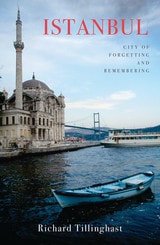
Istanbul
City of Forgetting and RememberingRichard Tillinghast
Haus Publishing, 2017
Istanbul was known in Byzantine times as the “Queen of Cities” and to the Ottoman Turks as the “Abode of Felicity.” Steeped in Istanbul’s history, Tillinghast takes his readers on a voyage of discovery through this storied cultural hub, and he is as comfortable talking about Byzantine mosaics and dervish ceremonies as Iznik ceramics and the imperial mosques. His lyrical writing brings Istanbul alive on the page as he accompanies readers to cafés, palaces, and taverns, perfectly conjuring the atmospheric delights, sounds, and senses of the city. Illuminating Istanbul’s great buildings with tales that bring Ottoman and Byzantine history to life, Tillinghast is adept at discovering both what the city remembers and what it chooses to forget.
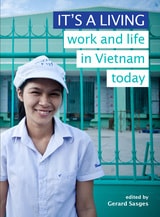
It's a Living
Work and Life in Vietnam TodayEdited by Gerard Sasges
National University of Singapore Press, 2013
Based on frank and freewheeling interviews conducted by students, the book engages a broad range of Vietnamese, both living in Vietnam and abroad, on their feelings about work, life and getting ahead. By providing a ground-level view of the texture of daily working life in the midst of rapid and unsettling change, the book reveals Vietnam today as a place where ordinary people are leveraging whatever assets they have, not just to survive, but to make a better life for themselves.