Results by title
208 books match the query 'Autobiography' and 8 start with i
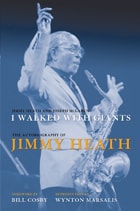
I Walked With Giants
The Autobiography of Jimmy HeathJimmy Heath and Joseph McLaren, foreword by Bill Cosby, introduction by Wynton Marsalis
Temple University Press, 2010
In this extraordinary autobiography, the legendary Heath creates a “dialogue” with musicians and family members. As in jazz, where improvisation by one performer prompts another to riff on the same theme, I Walked with Giants juxtaposes Heath’s account of his life and career with recollections from jazz giants about life on the road and making music on the world’s stages. His memories of playing with his equally legendary brothers Percy and Albert (aka “Tootie”) dovetail with their recollections.
Heath reminisces about a South Philadelphia home filled with music and a close-knit family that hosted musicians performing in the city’s then thriving jazz scene. Milt Jackson recalls, “I went to their house for dinner…Jimmy’s father put Charlie Parker records on and told everybody that we had to be quiet till dinner because he had Bird on…. When I [went] to Philly, I’d always go to their house.” Today Heath performs, composes, and works as a music educator and arranger. By turns funny, poignant, and extremely candid, Heath’s story captures the rhythms of a life in jazz.
Identity Technologies
Constructing the Self OnlineEdited by Anna Poletti and Julie Rak
University of Wisconsin Press, 2013

Infinity Net
The Autobiography of Yayoi KusamaYayoi Kusama
University of Chicago Press, 2011
In 1957, encouraged by Georgia O’Keeffe, artist Yayoi Kusama left Japan for New York City to become a star. By the time she returned to her home country in 1973, she had established herself as a leader of New York’s avant-garde movement, known for creating happenings and public orgies to protest the Vietnam War and for the polka dots that had become a trademark of her work. Her sculptures, videos, paintings, and installations are to this day included in major international exhibitions.
Interpreting the Self
Two Hundred Years of American AutobiographyDiane Bjorklund
University of Chicago Press, 1998
"A refreshingly welcome approach to this intriguing topic. . . . [Bjorklund's] extensive and systematic approach to her source material is impressive and enriches our understanding of this essential subject."—Virginia Quarterly Review
"Bjorklund studies both famous and obscure writers, and her clear prose style and copious quotations provide insight into the many aspects of the changing American self." —Library Journal
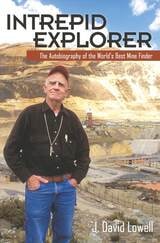
Intrepid Explorer
The Autobiography of the World's Best Mine FinderJ. David Lowell
University of Arizona Press, 2014
An Arizona native with family roots in territorial times, Lowell grew from modest beginnings on a ranch near Nogales to become a major world figure in the fields of minerals, mining, and economic geology. He has personally discovered more copper than anyone in history and has developed multibillion-dollar gold and copper mines that have changed the economies of nations. And although he has consulted for corporations in the field of mining, he has largely operated as an independent agent and explorer, the architect of his own path and success.
His life’s story unfolds in four stages: his early education in his field, on-the-job learning at sites in the United States and Mexico, development of exploration strategies, and finally, the launch of his own enterprises and companies. Recurring themes in Lowell’s life include the strict personal, ethical, and tactical policies he requires of his colleagues; his devotion to his family; and his distaste for being away from the field in a corporate office, even to this day. The magnitude of Lowell’s overall success is evident in his list of mine discoveries, as well as in his scientific achievements and the enormous respect his friends and colleagues have had for him throughout his lengthy career, which he continues to zealously pursue.
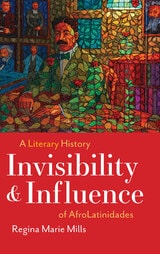
Invisibility and Influence
A Literary History of AfroLatinidadesRegina Marie Mills
University of Texas Press, 2024
2026 Honorable Mention, Latinx Studies Section, Social Sciences Category, Latin American Studies Association (LASA)
A rich literary study of AfroLatinx life writing, this book traces how AfroLatinxs have challenged their erasure in the United States and Latin America over the last century.
Invisibility and Influence demonstrates how a century of AfroLatinx writers in the United States shaped life writing, including memoir, collective autobiography, and other formats, through depictions of a wide range of “Afro-Latinidades.” Using a woman-of-color feminist approach, Regina Marie Mills examines the work of writers and creators often excluded from Latinx literary criticism. She explores the tensions writers experienced in being viewed by others as only either Latinx or Black, rather than as part of their own distinctive communities. Beginning with Arturo (Arthur) Schomburg, who contributed to wider conversations about autobiographical technique, Invisibility and Influence examines a breadth of writers, including Jesús Colón; members of the Young Lords; Piri Thomas; Lukumi santera and scholar Marta Moreno Vega; and Black Mexican American poet Ariana Brown. Mills traces how these writers confront the distorted visions of AfroLatinxs in the United States, Latin America, and the Caribbean, and how they created and expressed AfroLatinx spirituality, politics, and self-identity, often amidst violence. Mapping how AfroLatinx writers create their own literary history, Mills reveals how AfroLatinx life writing shapes and complicates discourses on race and colorism in the Western Hemisphere.
Dialogues in AfroLatinidad Podcast:https://www.youtube.com/watch?v=FIhF-pdeW3A
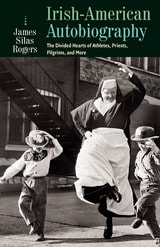
Irish-American Autobiography
James Silas Rogers
Catholic University of America Press, 2016
Italian Signs, American Streets
The Evolution of Italian American NarrativeFred L. Gardaphé
Duke University Press, 1996
Gardaphé draws on Vico’s concept of history, as well as the work of Gramsci, to establish a culture-specific approach to reading Italian American literature. He begins his historical reading with narratives informed by oral traditions, primarily autobiography and autobiographical fiction written by immigrants. From these earliest social–realist narratives, Gardaphé traces the evolution of this literature through tales of “the godfather” and the mafia; the “reinvention of ethnicity” in works by Helen Barolini, Tina DeRosa, and Carole Maso; the move beyond ethnicity in fiction by Don DeLillo and Gilbert Sorrentino; to the short fiction of Mary Caponegro, which points to a new direction in Italian American writing.
The result is both an ethnography of Italian American narrative and a model for reading the signs that mark the “self-fashioning” inherent in literary and cultural production. Italian Signs, American Streets promises to become a landmark in the understanding of literature and culture produced by Italian Americans. It will be of interest not only to students, critics, and scholars of this ethnic experience, but also to those concerned with American literature in general and the place of immigrant and ethnic literatures within that wide framework.