Results by title
43 books match the query 'Song'
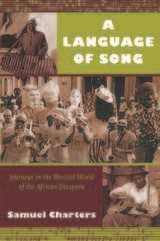
A Language of Song
Journeys in the Musical World of the African DiasporaSamuel Charters
Duke University Press, 2009
Each of the book’s fourteen chapters is a vivid rendering of a particular location that Charters visited. While music is always his focus, the book is filled with details about individuals, history, landscape, and culture. In first-person narratives, Charters relates voyages including a trip to the St. Louis home of the legendary ragtime composer Scott Joplin and the journey to West Africa, where he met a man who performed an hours-long song about the Europeans’ first colonial conquests in Gambia. Throughout the book, Charters traces the persistence of African musical culture despite slavery, as well as the influence of slaves’ songs on subsequent musical forms. In evocative prose, he relates a lifetime of travel and research, listening to brass bands in New Orleans; investigating the emergence of reggae, ska, and rock-steady music in Jamaica’s dancehalls; and exploring the history of Afro-Cuban music through the life of the jazz musician Bebo Valdés. A Language of Song is a unique expedition led by one of music’s most observant and well-traveled explorers.
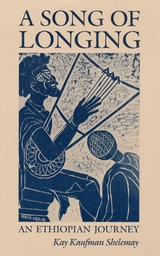
A Song of Longing
AN ETHIOPIAN JOURNEYKay Kaufman Shelemay
University of Illinois Press, 1992
-- Library Journal
"Highly recommended to generalists in music as well as to specialists interested in Ethiopia. . . . Also makes an excellent case study text for university-level courses examining fieldwork issues and conditions."
-- Notes
"Highly recommended for both undergraduate and graduate collections in ethnomusicology, anthropology, African, and Judaic studies."
-- Choice
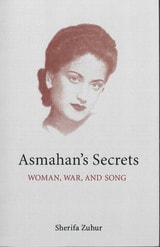
Asmahan's Secrets
Woman, War, and SongBy Sherifa Zuhur
University of Texas Press, 2001
The great Arab singer Asmahan was the toast of Cairo song and cinema in the late 1930s and early 1940s, as World War II approached. She remained a figure of glamour and intrigue throughout her life and lives on today in legend as one of the shaping forces in the development of Egyptian popular culture. In this biography, author Sherifa Zuhur does a thorough study of the music and film of Asmahan and her historical setting.
A Druze princess actually named Amal al-Atrash, Asmahan came from an important clan in the mountains of Syria but broke free from her traditional family background, left her husband, and became a public performer, a role frowned upon for women of the time.
This unique biography of the controversial Asmahan focuses on her public as well as her private life. She was a much sought-after guest in the homes of Egypt's rich and famous, but she was also rumored to be an agent for the Allied forces during World War II.
Through the story of Asmahan, the reader glimpses not only aspects of the cultural and political history of Egypt and Syria between the two world wars, but also the change in attitude in the Arab world toward women as public performers on stage. Life in wartime Cairo comes alive in this illustrated account of one of the great singers of the Arab world, a woman who played an important role in history.
Body as Landscape, Love as Intoxication
Conceptual Metaphors in the Song of SongsBrian P. Gault
SBL Press, 2019
Explore metaphors in the exquisite and enigmatic poetry of Song of Songs
One of the chief difficulties in interpreting the Song's lyrics is the unusual imagery used to depict the lovers' bodies. Why is the maiden's hair compared to a flock of goats (4:1), the man’s cheeks likened to garden beds of spice (5:13), and the eyes of both lovers described as doves (4:1; 5:12)? While scholars speculate on the significance of these images, a systematic inquiry into the Song's body metaphors is curiously absent. Based on insights from cognitive linguistics, this study incorporates biblical and comparative data to uncover the meaning of these metaphors surveying literature in the eastern Mediterranean (and beyond) that shares a similar form (poetry) and theme (love). Gault presents an interpretation of the Song's body imagery that sheds light on the perception of beauty in Israel and its relationship to surrounding cultures.
Features
- Exploration of the Song's use of universal themes and culturally specific variations
- Discussion of the Song's literary structure and unity
Broadway Rhythm
Imaging the City in SongDominic Symonds
University of Michigan Press, 2017
Through musicological analyses of works by Gershwin, Bernstein, Copland, Sondheim and others, the author proposes that performance cartography is a versatile methodology for urban theory, and establishes a methodological approach that uses the idea of the map in three ways: as an impetus, a metaphor, and a tool for exploring the city.

Conquered Conquerors
Love and War in the Song of SongsDanilo Verde
SBL Press, 2020
The first comprehensive study of the Song of Songs' use of military metaphors
Although love transcends historical and cultural boundaries, its conceptualizations, linguistic expressions, and literary representations vary from culture to culture. In this study, Danilo Verde examines love through the military imagery found throughout the Song’s eight chapters. Verde approaches the military metaphors, similes, and scenes of the Song using cognitive metaphor theory to explore the overlooked representation of love as war. Additionally, this book investigates how the Song conceptualizes both the male and the female characters, showing that the concepts of masculinity and femininity are tightly interconnected in the poem. Conquered Conquerors provides fresh insights into the Song's figurative language and the conceptualization of gender in biblical literature.
Distant Cycles
Schubert and the Conceiving of SongRichard Kramer
University of Chicago Press, 1994
Returning the songs to their original keys, Kramer reveals linkages among songs which were often obscured as Schubert readied his compositions for publication. His analysis thus conveys even familiar songs in fresh contexts that will affect performance, interpretation, and criticism. After addressing problems of multiple settings and revisions, Kramer presents a series of briefs for the reconfiguring of sets of songs to poems by Goethe, Rellstab, and Heine. He deconstructs Winterreise, using its convoluted origins to illuminate its textual contradictions. Finally, Kramer scrutinizes settings from the Abendrote cycle (on poems by Friedrich Schlegel) for signs of cyclic process. Probing the farthest reaches of Schubert's engagement with the poetics of lieder, Distant Cycles exposes tensions between Schubert the composer and Schubert the merchant-entrepreneur.
Entertaining History
The Civil War in Literature, Film, and SongEdited by Chris Mackowski
Southern Illinois University Press, 2020
From Ulysses S. Grant’s Memoirs to Abraham Lincoln: Vampire Hunter, from Roots to Ken Burns’s The Civil War, from “Dixie” to “Ashokan Farewell,” and from Civil War photography to the Gettysburg Cyclorama, trendy and well-loved depictions of the Civil War are the subjects of twenty contributors who tell how they and the general public have been influenced by them. Sarah Kay Bierle examines the eternal appeal of Gone with the Wind and asks how it is that a protagonist who so opposed the war has become such a figurehead for it. H. R. Gordon talks with New York Times–bestselling novelist Jeff Shaara to discuss the power of storytelling. Paul Ashdown explores ColdMountain’s value as a portrait of the war as national upheaval, and Kevin Pawlak traces a shift in cinema’s depiction of slavery epitomized by 12 Years a Slave. Tony Horwitz revisits his iconic Confederates in the Attic twenty years later.
The contributors’ fresh analysis articulates a shared passion for history’s representation in the popular media. The variety of voices and topics in this collection coalesces into a fascinating discussion of some of the most popular texts in the genres. In keeping with the innovative nature of this series, web-exclusive material extends the conversation beyond the book.

Flinch of Song
Jennifer Militello
Tupelo Press, 2009

For the Sake of the Song
Essays on Townes Van ZandtAnn Norton Holbrook
University of North Texas Press, 2022

I The Song
Jill M Soens
University of Utah Press, 1999
Built on early transcriptions of Native American “songs” and arranged by subject, these poems are informed by additional context that enables readers to appreciate more fully their imagery, their cultural basis, and the moment that produced them. They let us look at our continent through the eyes of a wide range of people: poets, hunters, farmers, holy men and women, and children. This poetry achieved its vividness, clarity, and intense emotional powers partly because the singers made their poems for active use as well as beauty, and also because they made them for singing or chanting rather than isolated reading.
Most striking, classical North American Indian poetry brings us flashes of timeless vision and absolute perception: a gull’s wing red over the dawn; snow-capped peaks in the moonlight; a death song. Flowing beneath them is a powerful current: the urge to achieve a selfless attention to the universe and a determination to see and delight in the universe on its own terms.
Jane Froman
Missouri's First Lady of SongIlene Stone
University of Missouri Press, 2003

Let Jasmine Rain Down
Song and Remembrance among Syrian JewsKay Kaufman Shelemay
University of Chicago Press, 1998
Shelemay views the intersection of music, individual remembrances, and collective memory through the pizmonim. Reconstructing a century of pizmon history in America based on research in New York, Mexico, and Israel, she explains how verbal and musical memories are embedded in individual songs and how these songs perform both what has been remembered and what otherwise would have been forgotten. In confronting issues of identity and meaning in a postmodern world, Shelemay moves ethnomusicology into the domain of memory studies.
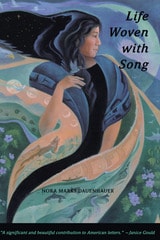
Life Woven with Song
Nora Marks Dauenhauer
University of Arizona Press, 2000
In prose, Dauenhauer presents stories such as "Egg Boat"--the tale of a twelve-year-old girl fishing the North Pacific for the first time alone--and an autobiographical piece that reveals much about Tlingit lifeways. Then in a section of short lyrical poems she offers crystalline tributes to her land and people. In a concluding selection of plays, Dauenhauer presents three Raven stories that were adapted as stage plays from oral versions told in Tlingit by three storytellers of her community. These plays were commissioned by the Naa Kahidi Theater and have been performed throughout America and Europe. They take the form of a storyteller delivering a narrative while other members of the cast act and dance in masks and costumes.
Collectively, Dauenhauer's writings form an "autoethnography," offering new insight into how the Tlingit have been affected by modernization and how Native American culture perseveres in the face of change. Despite the hardships her people have seen, this woman affirms the goodness of life as found in family and community, in daily work and play, and in tribal traditions.
Mary Austin
Song of a MaverickEsther F. Lanigan
University of Arizona Press, 1997
"[Lanigan] provides illuminating sociological background and lucidly marshals the existing biolgraphical data." —Choice
"Mary Hunter Austin was a well-known and respected author and activitst in her lifetime but is little known in ours. In this excellent biography...[Lanigan] chose to focus on a few central relationships in Austin's life, to explore in some depth a few central texts, and to understand the interior life of her subject. She has done a splendid job." —Ann J. Lane in the Journal of American History

Never without a Song
The Years and Songs of Jennie Devlin, 1865-1952Katharine D. Newman
University of Illinois Press, 1995
Oral Patterns of Performance
Story and SongBarre Toelken
Utah State University Press, 2003
To many Native American cultures, songs and stories are dramatic enactments of reality, and words bring reality into existence. In this chapter from his award-winning book, The Anguish of Snails, Toelken thoughtfully approaches a number of stories from Native American traditions, discussing how narratives can be touchstones of shared values among closely associated traditional people and how songs and stories go far beyond an evening's entertainment or "lessons” about life. A traditional narrative can be a culturally structured way of thinking and of experiencing the patterns that make culture real.
Putting a Song on Top of It
Expression and Identity on the San Carlos Apache ReservationDavid W. Samuels
University of Arizona Press, 2004
For many people on the San Carlos reservation, both the traditional calls of the Mountain Spirits and the hard edge of a country, rock, or reggae song can evoke the feeling of being Apache. Using insights gained from both linguistic and musical practices in the community—as well as from his own experience playing in an Apache country band—David W. Samuels explores the complex expressive lives of these people to offer new ways of thinking about cultural identity.
Samuels analyzes how people on the reservation make productive use of popular culture forms to create and transform contemporary expressions of Apache cultural identity. As Samuels learned, some popular songs—such as those by Bob Marley—are reminiscent of history and bring about an alignment of past and present for the Apache listener. Thinking about Geronimo, for instance, might mean one thing, but “putting a song on top of it” results in a richer meaning. Samuels also proposes that the concept of the pun, as both a cultural practice and a means of analysis, helps us understand the ways in which San Carlos Apaches are able to make cultural symbols point in multiple directions at once. Through these punning, layered expressions, people on the reservation express identities that resonate with the complicated social and political history of the Apache community.
This richly detailed study challenges essentialist notions of Native American tribal and ethnic identity by revealing the turbulent complexity of everyday life on the reservation. Samuels’s work is a multifaceted exploration of the complexities of sound, of language, and of the process of constructing and articulating identity in the twenty-first century.
Reading the Song of Songs with St. Thomas Aquinas
Serge-Thomas Bonino
Catholic University of America Press, 2022
Reimagining the Middle Passage
Black Resistance in Literature, Television, and SongTara T. Green
The Ohio State University Press, 2018
Exploring the presence of water and its impact on African descendants,Reimagining the Middle Passageoffers fresh analyses of Alex Haley’sRootsand the television adaptations; the history of flooding in Black communities in literature such as Jesmyn Ward’sSalvage the Bonesand Paule Marshall’sPraisesong for the Widow, in blues songs, and in television shows such asTreme; and stories of resistance found in myths associated with Marie Laveau and flying Africans.
Sex, Celibacy, and Deviance
The Victorians and the Song of SongsDuc Dau
The Ohio State University Press, 2024
Sex, Celibacy, and Deviance is the first major study to explore the Song of Songs (or Song of Solomon) in Victorian literature and art. As the Bible’s only erotic poem, the Song of Songs is the canonical Judeo-Christian book about love, furnishing the Victorians with an authoritative and literary language for love, marriage, sex, mourning, and religious celibacy.
Duc Dau adopts a queer and feminist lens to consider how Victorians employed and interpreted the Song of Songs in their work. How did writers and artists fashion and, most importantly, challenge the norms of gender, romantic love, and marriage? Spanning the early Victorian era through the first two decades of the twentieth century, Sex, Celibacy, and Deviance considers the works of Charlotte Brontë, Thomas Hardy, Christina Rossetti, John Gray, Michael Field, Edward Burne-Jones, and Simeon Solomon alongside two lesser-known figures: Irish-born Scottish artist Phoebe Anna Traquair and the Catholic religious leader Augusta Theodosia Drane. By addressing the relevance of the Song of Songs in light of shifting and conflicting religious and social contexts, Dau provides a fresh perspective on Victorian literature, religion, and culture.
Silence & Song
Melanie Rae Thon
University of Alabama Press, 2015
In “Translations,” the prose poem connecting the two longer fictions, child refugees at a multilingual literacy center in Salt Lake City discover the merciful “translation” of dance and pantomime.
The convergence of two disparate events—a random murder in Seattle and the nuclear accident at Chernobyl—catalyze the startling, eruptive form of the concluding piece,“requiem: home: and the rain, after.” Narrated in first person by the killer’s sister and plural first person by the “liquidators” who come to the Evacuation Zone to bury entire villages poisoned by radioactive fallout, “requiem” navigates the immediate trauma of murder and environmental disaster; personal and global devastation; and the remarkable recovery of the miraculously diverse more-than-human world.
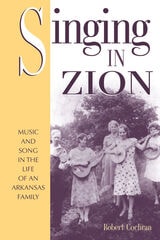
Singing in Zion
Music and Song in the Life of One Arkansas FamilyRobert Cochran
University of Arkansas Press, 1999
Song and Self
A Singer's Reflections on Music and PerformanceIan Bostridge
University of Chicago Press, 2023
Like so many performers, renowned tenor Ian Bostridge spent much of 2020 and 2021 unable to take part in live music. The enforced silence of the pandemic led him to question an identity that was previously defined by communicating directly with audiences in opera houses and concert halls. It also allowed him to delve deeper into many of the classical works he has encountered over the course of his career, such as Claudio Monteverdi’s seventeenth-century masterpiece Il Combattimento di Tancredi e Clorinda and Robert Schumann’s popular song cycle Frauenliebe und Leben. In lucid and compelling prose, Bostridge explores the ways Monteverdi, Schumann, and Britten employed and disrupted gender roles in their music; questions colonial power and hierarchy in Ravel’s Songs of Madagascar; and surveys Britten’s reckoning with death in works from the War Requiem to his final opera, Death in Venice.
As a performer reconciling his own identity and that of the musical text he delivers on stage, Bostridge unravels the complex history of each piece of music, showing how today’s performers can embody that complexity for their audiences. As readers become privy to Bostridge’s unique lines of inquiry, they are also primed for the searching intensity of his interpretations, in which the uncanny melding of song and self brings about moments of epiphany for both the singer and his audience.
Song in Tammuz
Avia Tadmor
Tupelo Press, 2026
Winner of the International Berkshire Prize, this collection draws from an incredible range of literary forms, from familiar couplets and tercets to footnotes, dictionary definitions, and luminous lyric fragments.
While stylistically daring, even virtuosic, Avia Tadmor’s stunning debut is unified by its enduring engagement with questions of language and alterity. What does it mean to be othered by and through language? What happens when grammar, syntax, and the concepts of identity housed within them are at odds? Does a revolutionary message demand new forms of discourse? “I can say it through the distance of this other tongue,” Tadmor writes.
Indeed, she considers the role of language—from conceptual framework to vast storehouse of history, culture, and inheritance—in shaping the self, ultimately revealing our agency within a grammar and syntax we did not choose. As Tadmor writes, “Her pen is a stronghold, a lighthouse / flickering late in July.”
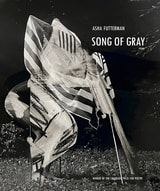
Song of Gray
Asha Futterman
University Press of Colorado, 2025
These poems build new logic systems. Futterman stands at her grandmother’s grave and proclaims, “how powerful how dense and naked how inaccurate.” With quiet, deadpan, and piercing language, Song of Gray offers earnest, felt relationships to race, empathy, pleasure, and nonsense.
“There wasn’t a sunrise / just gray / then brighter gray.” In Song of Gray, blackness is not definite—it is an ambivalent hole as much as an area of hope. Blackness is a song of gray
Song of Myself
With a Complete CommentaryWalt Whitman
University of Iowa Press, 2016
Song of Sampo Lake
William Durbin
University of Minnesota Press, 2011
Song of Tides
Tom Joseph
University of Alabama Press, 2008

Song of the Bamboo Spear
Poems, A Bilingual EditionNam-ju Kim (1945–1994)
Rutgers University Press, 2027
This book debuts selected poetry by Kim Nam-ju (1946–1994) in English translation, along with the original Korean. Referred to as the “Che Guevara of South Korea,” and self-described a “warrior poet,” Kim Nam-ju remains, to this day, an enduring voice of the 1970s and 80s cultures of anti-authoritarian resistance in South Korea. Kim was arrested in 1979 for his involvement with the “South Josǒn” National Liberation Front, a leftist underground group organizing against the Yushin regime. Kim wrote prolifically while in prison (1979-1988), at times by etching his poems into scraps of foil, milk carton, or cigarette packages. The work he produced in prison alone totals around 360 poems. This bilingual volume selects 65 poems from Kim's oeuvre, sampling across many different chapters of the poet’s career. Readers will find autobiographical reflections on his childhood, love poems, missives from the prison cell, commemorations of the Kwangju Uprising, the poet’s calls to arms, and more.
이 책은 김남주 시인(1946~1994)의 시 65편을 한국어 원문과 함께 영문 번역으로 처음 선보인다. ‘한국의 체 게바라’로 불리며 스스로를 ‘전사 시인’이라 칭했던 김남주는 오늘날까지도 한국의 1970·80년대 반독재 저항운동을 대표하는 사라지지 않는 목소리로 남아 있다. 김남주는 유신정권에 맞서 결성된 좌파 지하조직 ‘남조선민족해방전선준비위원회’에 가담한 혐의로 1979년에 체포되었다. 1979년부터 1988년에 이르는 수감 기간에도 꾸준히 창작 활동을 이어갔으며, 때로는 은박지 조각이나 우유곽, 담뱃갑 등에 시를 새겨 집필하기도 하였다. 이 시기에 쓴 작품만 해도 360여 편에 이른다. 이 영역시집은 시인의 전체 작품 중에서 65편의 시를 엄선하여 시인의 생애와 창작 활동의 다양한 시기를 아우르는 시적 여정을 한눈에 보여준다. 독자들은 시인의 어린 시절에 대한 자전적인 회고, 사랑의 시, 옥중 서한, 5·18 광주항쟁을 추모하는 시, 민중의 투쟁을 촉구하는 시 등 다양한 작품을 만나볼 수 있을 것이다.
English-Korean Bilingual Edition
영-한 이중언어판
This book is published with the support of the Literature Translation Institute of Korea (LTI Korea)
Song of the Cicadas
Anne Mong-Lan Pham
University of Massachusetts Press, 2001
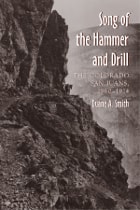
Song of the Hammer and Drill
The Colorado San Juans, 1860-1914Duane A. Smith
University Press of Colorado, 2000
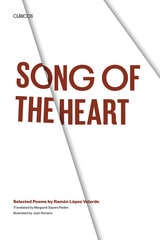
Song of the Heart
Selected Poems by Ramón López VelardeBy Ramón López Velarde
University of Texas Press, 1995
Ramón López Velarde (1888-1921) was one of the most Mexican of Mexican poets, whose sense of history found expression in many poems, including his best-known "La suave Patria" ("Sweet Land"). This bilingual collection, drawn primarily from Poesías completas y el minutero, offers English-language readers our first book-length introduction to his poetry.
Often called a "poet of the provinces," López Velarde gives us a glimpse into a slower and more gentle way of life. His poems present the contrast between city and hometown and between urban and pastoral landscapes. Through these contrasts runs the thread of religious faith, while urgency of language informs the entire body of his poetic production.
Original, specially commissioned drawings by noted contemporary Mexican artist Juan Soriano complement the poems. This combination of poetry and art speaks to universal emotions; indeed the poetry of López Velarde belongs to everyone who sings the Song of the Heart.
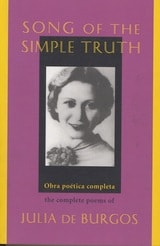
Song of the Simple Truth
The Complete Poems of Julia de BurgosJulia de Burgos
Northwestern University Press, 1995
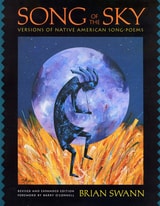
Song of the Sky
Versions of Native American Song-PoemsBrian Swann
University of Massachusetts Press, 1993
“Swann's ‘concrete’ renderings of the poems are visually striking and are meant to embody the notions of silence and cycle that are so important in Native American culture. . . . [He] does a fine job of encouraging readers to return to return to these original songs and poems from a culture that most latter-day Americans know far too little about.”—Anne Bromley, Georgia Review
Based on the work of anthropologist collectors, this compendium of more than 100 Native American chants and songs revises and updates a prior edition out of print since 1989. ‘These poems are not translations,’ argues Swann. They're versions that have gone through ‘a series of mediations and filters and exist somewhere between the individual lyric voice’ and a diverse, multileveled Native American imaginative-mystical identity. Whether versions, translations, or poems, whether sung at a Crazy Dance, potlatch, corn-grinding, or curative or marriage ceremony, whether celebrating buffalo, maize, red fox, or tobacco, these works capture the ‘otherness’ of the primeval spirit of the Native American fusion of natural and supernatural, animal and deity. Originally performed aloud, these ‘verbal artifacts’—which are sometimes breathtakingly pure, sometimes obscure—reveal that there can be no conventional or single notion of ‘the Indian.’”—Library Journal
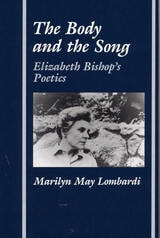
The Body and the Song
Elizabeth Bishop's PoeticsMarilyn May Lombardi
Southern Illinois University Press, 1995
In this original contribution to Elizabeth Bishop studies, Marilyn May Lombardi uses previously unpublished materials (letters, diaries, notebooks, and unfinished poems) to shed new light on the poet’s published work. She explores the ways Bishop’s lesbianism, alcoholism, allergic illnesses, and fear of mental instability affected her poetry—the ways she translated her bodily experiences into poetic form.
A cornerstone of The Body and the Song is the poet’s thirty-year correspondence with her physician, Dr. Anny Baumann, who was both friend and surrogate mother to Bishop. The letters reveal Bishop’s struggles to understand the relation between her physical and creative drives. "Dr. Anny" also helped Bishop unravel the connections in her life between psychosomatic illness and early maternal deprivation—her mother was declared incurably insane and institutionalized in 1916, when Bishop was five years old. Effectively an orphan, she spent the rest of her childhood with relatives.
In addition to these letters, Lombardi uses Bishop’s unpublished notebooks to demonstrate the poet’s resolve to "face the facts"—to confront her own emotional, intellectual, and physical frailties—and translate them into poetry that is clear-eyed and economical in its form.
Lombardi argues that in her subtle way, Bishop explores the same issues that preoccupy the current generation of women writers. A deeply private artist, Bishop never directly refers to her homosexuality in her published work, but the metaphors she draws from her carnal desires and aversions confront stifling cultural prescriptions for personal and erotic expression. In choosing restraint over confession, Bishop parted company with her friend Robert Lowell, but Lombardi shows that her reticence becomes a powerful artistic strategy resulting in poetry remarkable for its hermeneutic potential.
Informed by recent gender criticism, Lombardi’s lucid argument advances our understanding of the ways the material circumstances of life can be transformed into art.
The HOUSE OF SONG
POEMSDavid Wagoner
University of Illinois Press, 2002
In The House of Song, he offers a hundred new poems in six parts. At turns elegiac, comic, and nostalgic, these poems venture to the seemingly infinitesimal points where people, legends, and culture collide with nature, memory, and action.
With characteristic wit and brevity, Wagoner chronicles the material invasions of the natural world, reconsidering Thoreau amid ruminations on voyeurs and destroyers, slug watchers and moth collectors.
The House of Song asserts Wagoner's place among the finest of American poets, past and present.
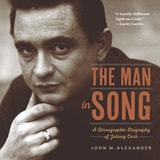
The Man in Song
A Discographic Biography of Johnny CashJohn M. Alexander
University of Arkansas Press, 2018
There have been many books written about Johnny Cash, but The Man in Song is the first to examine Cash’s incredible life through the lens of the songs he wrote and recorded. Music journalist and historian John Alexander has drawn on decades of studying Cash’s music and life, from his difficult depression-era Arkansas childhood through his death in 2003, to tell a life story through songs familiar and obscure. In discovering why Cash wrote a given song or chose to record it, Alexander introduces readers anew to a man whose primary consideration of any song was the difference music makes in people’s lives, and not whether the song would become a hit.
The hits came, of course. Johnny Cash sold more than fifty million albums in forty years, and he holds the distinction of being the only performer inducted into the Rock and Roll Hall of Fame, the Country Music Hall of Fame, the Songwriters Hall of Fame, and the Gospel Music Hall of Fame. The Man in Song connects treasured songs to an incredible life. It explores the intertwined experience and creativity of childhood trauma. It rifles through the discography of a life: Cash’s work with the Tennessee Two at Sam Phillips’s Sun Studios, the unique concept albums Cash recorded for Columbia Records, the spiritual songs, the albums recorded live at prisons, songs about the love of his life, June Carter Cash, songs about murder and death and addiction, songs about ramblers, and even silly songs.
Appropriate for both serious country and folk music enthusiasts and those just learning about this musical legend, The Man in Song will appeal to a fan base spanning generations. Here is a biography for those who first heard “I Walk the Line” in 1956, a younger generation who discovered Cash through songs like his cover of Trent Reznor’s “Hurt,” and everyone in between.
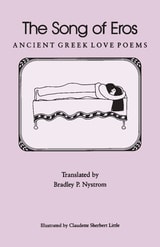
The Song of Eros
Ancient Greek Love PoemsTranslated by Bradley P. Nystrom Illustrated by Claudette Sherbert Little
Southern Illinois University Press, 1991
This collection of new translations of eighty poems provides a pleasant, thought-provoking reminder of love’s vagaries as captured through the wit, charm, and insight of the master poets of antiquity.
All the emotions and experiences associated with love—rejection, infatuation, ecstasy, desperation, loneliness—are rendered accessible to contemporary readers through this lively, modern, yet faithful English translation of works that date from the seventh century B.C.to the sixth century A.D.Illustrations accompany the poetry of Plato, Sappho, Stratto, Meleagros, and others, capturing both the flavor of the age and the theme of the texts.
The Song of Songs and the Ancient Egyptian Love Songs
Michael V. Fox
University of Wisconsin Press, 1985

The Song of Songs
Love Lyrics from the BibleMarcia Falk
Brandeis University Press, 2004
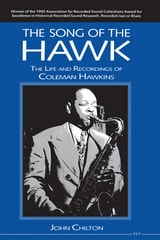
The Song of the Hawk
The Life and Recordings of Coleman HawkinsJohn Chilton
University of Michigan Press, 1993
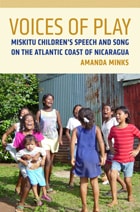
Voices of Play
Miskitu Children's Speech and Song on the Atlantic Coast of NicaraguaAmanda Minks
University of Arizona Press, 2013
Corn Island is historically home to Afro-Caribbean Creole people, but increasing numbers of Miskitu people began moving there from the mainland during the Contra War, and many Spanish-speaking mestizos from western Nicaragua have also settled there. Miskitu kids on Corn Island often gain some competence speaking Miskitu, Spanish, and Kriol English. As the children of migrants and the first generation of their families to grow up with television, they develop creative forms of expression that combine languages and genres, shaping intercultural senses of belonging.
Voices of Play is the first ethnography to focus on the interaction between music and language in children’s discourse. Minks skillfully weaves together Latin American, North American, and European theories of culture and communication, creating a transdisciplinary dialogue that moves across intellectual geographies. Her analysis shows how music and language involve a wide range of communicative resources that create new forms of belonging and enable dialogue across differences. Miskitu children’s voices reveal the intertwining of speech and song, the emergence of “self” and “other,” and the centrality of aesthetics to social struggle.