Results by title
235 books match the query 'Books and reading' and 7 start with i
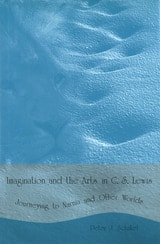
Imagination and the Arts in C.S. Lewis
Journeying to Narnia and Other WorldsPeter J. Schakel
University of Missouri Press, 2002
Imagination has long been regarded as central to C. S. Lewis's life and to his creative and critical works, but this is the first study to provide a thorough analysis of his theory of imagination, including the different ways he used the word and how those uses relate to each other. Peter Schakel begins by concentrating on the way reading or engaging with the other arts is an imaginative activity. He focuses on three books in which imagination is the central theme—Surprised by Joy, An Experiment in Criticism, and The Discarded Image—and shows the important role of imagination in Lewis's theory of education.
He then examines imagination and reading in Lewis's fiction, concentrating specifically on the Chronicles of Narnia, the most imaginative of his works. He looks at how the imaginative experience of reading the Chronicles is affected by the physical texture of the books, the illustrations, revisions of the texts, the order in which the books are read, and their narrative "voice," the "storyteller" who becomes almost a character in the stories.
Imagination and the Arts in C. S. Lewis also explores Lewis's ideas about imagination in the nonliterary arts. Although Lewis regarded engagement with the arts as essential to a well- rounded and satisfying life, critics of his work and even biographers have given little attention to this aspect of his life. Schakel reviews the place of music, dance, art, and architecture in Lewis's life, the ways in which he uses them as content in his poems and stories, and how he develops some of the deepest, most significant themes of his stories through them.
Schakel concludes by analyzing the uses and abuses of imagination. He looks first at "moral imagination." Although Lewis did not use this term, Schakel shows how Lewis developed the concept in That Hideous Strength and The Abolition of Man long before it became popularized in the 1980s and 1990s. While readers often concentrate on the Christian dimension of Lewis's works, equally or more important to him was their moral dimension.
Imagination and the Arts in C. S. Lewis will appeal to students and teachers of both children's literature and twentieth-century British writers. It will also be of value to readers who wish to compare Lewis's creations with more recent imaginative works such as the Harry Potter series.
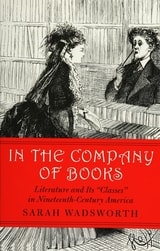
In the Company of Books
Literature and Its "Classes" in Nineteenth-Century AmericaSarah Wadsworth
University of Massachusetts Press, 2006
With sections focusing on segmentation by age, gender, and cultural status, In the Company of Books analyzes the ways authors and publishers carved up the field of literary production into a multitude of distinct submarkets, differentiated their products, and targeted specific groups of readers in order to guide their book-buying decisions. Combining innovative approaches to canonical authors such as Nathaniel Hawthorne, Louisa May Alcott, Mark Twain, and Henry James with engaging investigations into the careers of many lesser-known literary figures, Sarah Wadsworth reveals how American writers responded to—and contributed to—this diverse, and diversified, market.
In the Company of Books contends that specialized editorial and marketing tactics, in concert with the narrative strategies of authors and the reading practices of the book-buying public, transformed the literary landscape, leading to new roles for the book in American culture, the innovation of literary genres, and new relationships between books and readers. Both an exploration of a fragmented print culture through the lens of nineteenth-century American literature and an analysis of nineteenth-century American literature from the perspective of this subdivided marketplace, this wide-ranging study offers fresh insight into the impact of market forces on the development of American literature.

In the Words of the Winners
The Newbery and Caldecott Medals 2001-2010American Library Association, 2011
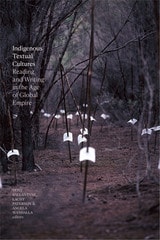
Indigenous Textual Cultures
Reading and Writing in the Age of Global EmpireTony Ballantyne, Lachy Paterson, and Angela Wanhalla, editors
Duke University Press, 2020
Contributors. Noelani Arista, Tony Ballantyne, Alban Bensa, Keith Thor Carlson, Evelyn Ellerman, Isabel Hofmeyr, Emma Hunter, Arini Loader, Adrian Muckle, Lachy Paterson, Laura Rademaker, Michael P. J. Reilly, Bruno Saura, Ivy T. Schweitzer, Angela Wanhalla
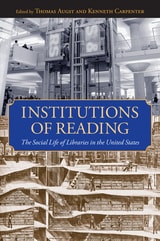
Institutions of Reading
The Social Life of Libraries in the United StatesThomas Augst
University of Massachusetts Press, 2007
Tracing the evolution of the library as a modern institution from the late eighteenth century to the digital era, this book explores the diverse practices by which Americans have shared reading matter for instruction, edification, and pleasure. Writing from a rich variety of perspectives, the contributors raise important questions about the material forms and social shapes of American culture. What is a library? How have libraries fostered communities of readers and influenced the practice of reading in particular communities? How did the development of modern libraries alter the boundaries of individual and social experience, and define new kinds of public culture? To what extent have libraries served as commercial enterprises, as centers of power, and as places of empowerment for African Americans, women, and immigrants? Institutions of Reading offers at once a social history of literacy and leisure, an intellectual history of institutional and technological innovations that facilitated the mass distribution and consumption of printed books and periodicals, and a cultural history of the symbolic meanings and practical uses of reading in American life. In addition to the editors, contributors include Elizabeth Amann, Michael Baenen, James Green, Elizabeth McHenry, Barbara Mitchell, Christine Pawley, Janice Radway, James Raven, Karin Roffman, and Roy Rosenzweig.

Intimate Practices
Literacy and Cultural Work in U.S. Women's Clubs, 1880-1920Anne Ruggles Gere
University of Illinois Press, 1997
Winner of the 1995 University of Illinois Press-National Women's Studies
Association manuscript prize
Women's clubs at the turn of the century were numerous, dedicated to
a number of issues, and crossed class, religious, and racial lines. Emphasizing
the intimacy engendered by shared reading and writing in these groups,
Anne Ruggles Gere contends that these literacy practices meant that club
members took an active part in reinventing the nation during a period
of major change. Gere uses archival material that documents club members'
perspectives and activities around such issues as Americanization, womanhood,
peace, consumerism, benevolence, taste, and literature--and offers a rare
depth of insight into the interests and lives of American women from the
fin de siècle through the beginning of the roaring twenties.
Intimate Practices is unique in its exploration of a range of
women's clubs--Mormon, Jewish, white middle-class, African American, and
working class--and paints a vast and colorful multicultural, multifaceted
canvas of these widely-divergent women's groups.
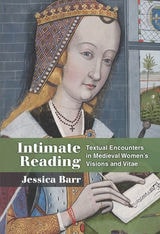
Intimate Reading
Textual Encounters in Medieval Women’s Visions and VitaeJessica Barr
University of Michigan Press, 2020
This new volume is structured around five case studies. Chapters consider the biographies of 13th-century holy women from Liège, the writings of Margery Kempe, Gertrude of Helfta, Mechthild of Magdeburg, Marguerite Porete, and Julian of Norwich. At the heart of Intimate Reading is the question of how reading works—what it means to enter imaginatively and intellectually into the words of another. The volume showcases the complexity of medieval understandings of the work of reading, deepening our perception of the written word’s capacity to signify something that lies even beyond rational comprehension.