475 books match the query 'Catholic' and 14 start with i
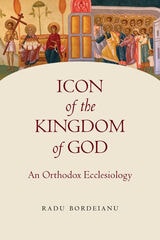
cover of Icon of the Kingdom of God: An Orthodox Ecclesiology

Icon of the Kingdom of God

An Orthodox Ecclesiology

Radu Bordeianu

Catholic University of America Press, 2023
What is the Church? Some would answer this question by studying the Scriptures, the history of the Church, and contemporary theologians, thus addressing the theological nature of the Church. Others would answer based on statistics, interviews, and personal observation, thus focusing on the experience of the Church. These theological and experiential perspectives are in tension, or at times even opposed. Whereas the first might speak about the local church as the diocese gathered in the Liturgy presided over by its bishop, the latter would describe the local church as the parish community celebrating the Liturgy together with the parish priest, never experiencing a sole liturgy that gathers an entire diocese around its bishop. Whereas a theologian might abstractly describe the Church as a reflection of the Trinity, a regular church-member might concretely experience the Church as a community that manifests the Kingdom of God in its outreach ministries. Radu Bordeianu attempts to bring these two perspectives together, starting from the concrete experience of the Church, engaging this experience with the theological tradition of the Church, extracting ecclesiological principles from this combined approach, and then highlighting concrete situations that reflect those standards or proposing correctives, when necessary. Without pretending to be a complete Orthodox ecclesiology, Icon of the Kingdom of God addresses the most important topics related to the Church. It progresses according to one’s experience of the Church from baptism, to the family, parish, Liturgy, and priesthood, followed by analyses of synodality and nationality. Arguing that the Church is an icon of the Kingdom of God, this volume brings together the past theological heritage and the present experience of the Church while having three methodological characteristics: experiential, Kingdom-centered, and ecumenical.
[more]
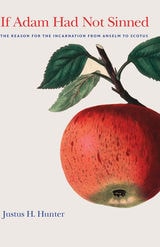
cover of If Adam Had Not Sinned: The Reason for the Incarnation from Anselm to Scotus

If Adam Had Not Sinned

The Reason for the Incarnation from Anselm to Scotus

Justus H. Hunter

Catholic University of America Press, 2020
Since the twelfth century, theologians have found a counterfactual question irresistible: “If Adam had not sinned, would the Son have become incarnate?” In the latter half of the twentieth century, Hans Urs von Balthasar, Hans Küng, Gerhard Ludwig Müller, Karl Rahner, Karl Barth, Wolfhart Pannenburg, Jürgen Moltmann, and Robert Jenson all considered this question on the reason, or motive, for the incarnation. Nearly every case refers to the classic disagreement between those who follow Thomas Aquinas and those who follow John Duns Scotus. Though it is common to claim Thomas or Scotus as one’s authority, the theological debates among which Thomas and Scotus developed their own positions remain largely neglected. This study fills that gap. If Adam Had Not Sinned is a study of the medieval debates over the motive for the incarnation from Anselm of Canterbury to John Duns Scotus. While the volume is primarily focused on thirteenth-century debates at the University of Paris, it also supplies necessary historical background to those debates. As a result, the larger context within which Thomas Aquinas and John Duns Scotus developed their influential responses is detailed. This larger context permits an analysis that leads to the surprising claim, against widespread assumptions, that the responses given by Thomas and Scotus are substantially reconcilable.
[more]
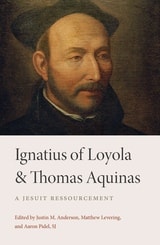
cover of Ignatius of Loyola and Thomas Aquinas: A Jesuit Ressourcement

Ignatius of Loyola and Thomas Aquinas

A Jesuit Ressourcement

Justin M. Anderson

Catholic University of America Press, 2023
Though the relationship between Jesuits and Dominicans has historically been marked by theological controversy, Ignatius of Loyola, the founder of the Jesuits, shows remarkable affinity for the Thomistic tradition, the tradition advanced above all by the Dominican order. When writing the Jesuit Constitutions, in fact, Ignatius made Thomas Aquinas’s Summa Theologiae the primary textbook for Jesuit theological formation. The contributions to this volume—originating from Jesuits, Dominicans, and lay scholars alike—explore different aspects of the complex yet illuminating relationship between Ignatius and Thomas. The themes range from the general relationship between the early Jesuits and scholastic theology to the attempts by Francisco de Toledo, the first Jesuit cardinal, to apply Thomistic reasoning to the religious and legal status of Jewish converts to Christianity. Other contributions compare Ignatius and Thomas on topics of significant interest for dogmatic, sacramental, and spiritual theology: spiritual experience, the ordering of the passions, the use of the imagination, prudence and discernment of spirits, frequent communion, Mariology, the “hierarchical church,” and the limits of obedience. Students of Ignatius of Loyola, Thomas Aquinas, second scholasticism, Christian-Jewish relations, and spiritual theology in general will find this volume an invaluable contribution.
[more]
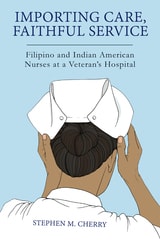
cover of Importing Care, Faithful Service: Filipino and Indian American Nurses at a Veterans Hospital

Importing Care, Faithful Service

Filipino and Indian American Nurses at a Veterans Hospital

Stephen M. Cherry

Rutgers University Press, 2022

Every year thousands of foreign-born Filipino and Indian nurses immigrate to the United States. Despite being well trained and desperately needed, they enter the country at a time, not unlike the past, when the American social and political climate is once again increasingly unwelcoming to them as immigrants. Drawing on rich ethnographic and survey data, collected over a four-year period, this study explores the role Catholicism plays in shaping the professional and community lives of foreign-born Filipino and Indian American nurses in the face of these challenges, while working at a Veterans hospital. Their stories provide unique insights into the often-unseen roles race, religion and gender play in the daily lives of new immigrants employed in American healthcare. In many ways, these nurses find themselves foreign in more ways than just their nativity. Seeing nursing as a religious calling, they care for their patients, both at the hospital and in the wider community, with a sense of divine purpose but must also confront the cultural tensions and disconnects between how they were raised and trained in another country and the legal separation of church and state. How they cope with and engage these tensions and disconnects plays an important role in not only shaping how they see themselves as Catholic nurses but their place in the new American story.
 
[more]
cover of In quibus visitabit nobis, oriens ex alto: Studies Offered in Honor of Father Robert J. Kaslyn, SJ (1956-2019)

In quibus visitabit nobis, oriens ex alto

Studies Offered in Honor of Father Robert J. Kaslyn, SJ (1956-2019)

Kurt Martens

Catholic University of America Press, 2025

On March 13, 2019, five years ago, Fr. Robert Kaslyn S.J., passed away. He was a dear friend, colleague, mentor and so much more to many. In honor of him, his colleagues, former students, and friends from the academy and beyond honor him and his legacy with a festschrift dedicated to him. Because his outreach went beyond the field of canon law, the contributions in this volume go also beyond the strict canon law and include contributions from other fields, such as law and social work. Each of the contributors have written an academic article on a topic of their choice in honor of their friend. The contributors are, in alphabetical order: Nancy Bauer, John Beal, Philip Brown, William Daniel, Zabrina Decker, Eileen Dombo, Sarah Duggin, Robert Geisinger, Eduard Giurgi, Mary Graw Leary, William King, John Chrysostom Kozlowski, Jeannine Marino, Kurt Martens, Rose McDermott, Robert Oliver, Ladislas Orsy, Roch Pagé, Kenneth Pennington, Sean Sheridan, Patrick Valdrini.
[more]
cover of Incarnate Meaning: Lonergan on Newman

Incarnate Meaning

Lonergan on Newman

Richard M. Liddy

Catholic University of America Press, 2027
How is our fundamental vision of the world rooted in our own self-knowledge? Excellent answers to this question can be found in these two great writers – John Henry Newman (1801-1890) and Bernard Lonergan (1904-1984). To a great extent Lonergan found the answer to his question in Newman’s 1870 Grammar of Assent – the most philosophical and psychologically oriented of Newman’s writings. He went on from Newman to subsequently study Plato, Augustine and especially Aquinas, and then the modern sciences in preparation for his 1957 Insight: A Study of Human Understanding. He subsequently went on to study modern historical consciousness in preparation his 1971 Method in Theology. Through it all, he called Newman “my fundamental mentor and guide.” Incarnate Meaning traces Newman’s influence throughout Lonergan’s life and suggests how that influence can be discerned in the general orientation of Lonergan’s thought as well as in specific areas. Lonergan’s concern for the basic structure of our knowing as well as its historical unfolding mirrored Newman’s interests in his Grammar of Assent and in his other writings. Lonergan’s concern for concrete history as distinct from abstract classsicist tendencies mirrored Newman’s interest in the concrete history of early Christianity. Eventually Lonergan would root the various concerns of the Second Vatican Council in Newman’s thought: a concern for preaching the Good News to the poor, a willingness to dialogue with all peoples and religions and even with atheism. In all of this he repeatedly calls attention to Newman’s brilliance in communication. He called him “a terrific rhetorician” and would often repeat Newman’s motto when made a Cardinal, cor ad cor loquitur – “heart speaks to heart.” All this provided much of the background for Lonergan’s own methodological and theological achievements in the twentieth century. Both writers together constitute a wonderful background for Christian and Catholic thought facing the future. In a world in which humanity is tempted to seek answers in AI, Newman and Lonergan represent humanity’s openness to the divine and what Lonergan called “the spark in our clod, our native orientation to the divine.”
[more]
cover of Indian Pilgrims: Indigenous Journeys of Activism and Healing with Saint Kateri Tekakwitha

Indian Pilgrims

Indigenous Journeys of Activism and Healing with Saint Kateri Tekakwitha

Michelle M. Jacob

University of Arizona Press, 2016

In 2012 Kateri Tekakwitha became the first North American Indian to be canonized as a saint by the Roman Catholic Church, an event that American Indian Catholics have awaited for generations. Saint Kateri, known as the patroness of the environment, was born in 1656 near present-day Albany, New York, to an Algonquin mother and a Mohawk father. Tekakwitha converted to Christianity at age nineteen and took a vow of perpetual virginity. Her devotees have advocated for her sainthood since her death in 1680. Within historical Catholic writings, Tekakwitha is portrayed as a model of pious, submissive femininity. Indian Pilgrims moves beyond mainstream narratives and shows that Saint Kateri is a powerful feminine figure who inspires decolonizing activism in contemporary Indigenous peoples’ lives.

Author Michelle M. Jacob examines Saint Kateri’s influence on and relation to three important themes—caring for the environment, building community, and reclaiming the Native feminine as sacred—and brings a Native feminist perspective to the story of Saint Kateri. The book demonstrates the power and potential of Indigenous decolonizing activism, as Saint Kateri’s devotees claim the space of the Catholic Church to revitalize traditional cultural practices, teach and learn Indigenous languages, and address critical issues such as protecting Indigenous homelands from environmental degradation. The book is based on ethnographic research at multiple sites, including Saint Kateri’s 2012 canonization festivities in Vatican City and Italy, the Akwesasne Mohawk Reservation (New York and Canada), the Yakama Reservation (Washington), and the National Tekakwitha Conferences in Texas, North Dakota, and Louisiana. Through narratives from these events, Jacob addresses issues of gender justice—such as respecting the autonomy of women while encouraging collectivist thinking and strategizing—and seeks collective remedies that challenge colonial and capitalist filters.
 
[more]
cover of Inquiry about the Monks in Egypt

Inquiry about the Monks in Egypt

Catholic University of America Press, 2020
From September 394 to early January 395, seven monks from Rufinus of Aquileia’s monastery on the Mount of Olives made a pilgrimage to Egypt to visit locally renowned monks and monastic communities. Shortly after their return to Jerusalem, one of the party, whose identity remains a mystery, wrote an engaging account of this trip. Although he cast it in the form of a first-person travelogue, it reads more like a book of miracles that depicts the great fourth-century Egyptian monks as prophets and apostles similar to those in the Bible. This work was composed in Greek, yet it is best known today as Historia monachorum in Aegypto (Inquiry about the Monks in Egypt), the title of the Latin translation of this work made by Rufinus, the pilgrim-monks’ abbot. The Historia monachorum is one of the most fascinating, fantastical, and enigmatic pieces of literature to survive from the patristic period. In both its Greek original and Rufinus’s Latin translation it was one of the most popular and widely disseminated works of monastic hagiography during Late Antiquity and the Middle Ages. Modern scholars value it not only for its intrinsic literary merits but also for its status, alongside Athanasius’s Life of Antony, the Pachomian dossier, and other texts of this ilk, as one of the most important primary sources for monasticism in fourth-century Egypt. Rufinus’s Historia monachorum is presented here in English translation in its entirety. The introduction and annotations situate the work in its literary, historical, religious, and theological contexts.
[more]
cover of Intersexual Persons and Theology of the Body: A Limit Case for John Paul II's Theological Anthropology

Intersexual Persons and Theology of the Body

A Limit Case for John Paul II's Theological Anthropology

Beth Zagrobelny Lofgren

Catholic University of America Press, 2026
Intersexual Persons and Theology of the Body offers an interpretation of John Paul II’s theology of the body that demonstrates how it can encompass intersexual bodies. Intersexuality has been used to challenge binary anthropologies, such as the late pope’s. Beth Zagrobelny Lofgren theorizes that John Paul II’s anthropology answers the “frequency dilemma,” by learning from male and female bodies while respecting the humanity of people with ambiguous bodies. To argue this, Intersexual Persons and Theology of the Body offers biological, psychological, and theological literature on intersexuality (focusing on the anthropologies of Susannah Cornwall and Megan DeFranza), followed by the late pope’s anthropology (focusing on original solitude, the spousal meaning of the body, and the semiotic meanings of the body). This volume demonstrate that intersexual bodies have a spousal meaning, although obscured, and use original solitude to show that John Paul II attributes to the human body meaning not dependent on sexual difference: the first man learns from his solitary body that he is relational. This relationality is fundamental to the imago Dei and undergirds the imago Dei found in communion. Intersexual bodies share human nature and thus the bodily call to relationship. Finally, Lofgren argues that John Paul II’s eschatology involves a transformation of humankind that fulfills the semiotic value of the body. The sign gives way to the mystery: the person fully realized as self-gift. Because the mystery does not depend on the sign, this vision includes intersexual bodies. This discussion leads to a brief consideration of celibacy and marriage for persons with intersexual conditions. This is currently the only application of John Paul II’s theology of the body to these complex situations.
[more]
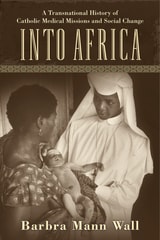
cover of Into Africa: A Transnational History of Catholic Medical Missions and Social Change

Into Africa

A Transnational History of Catholic Medical Missions and Social Change

Wall, Barbra Mann

Rutgers University Press, 2015

Winner of the 2016 Lavinia Dock Award from the American Association for the History of Nursing

 Awarded first place in the 2016 American Journal of Nursing Book of the Year Award in the History and Public Policy category


The most dramatic growth of Christianity in the late twentieth century has occurred in Africa, where Catholic missions have played major roles. But these missions did more than simply convert Africans. Catholic sisters became heavily involved in the Church’s health services and eventually in relief and social justice efforts. In Into Africa, Barbra Mann Wall offers a transnational history that reveals how Catholic medical and nursing sisters established relationships between local and international groups, sparking an exchange of ideas that crossed national, religious, gender, and political boundaries.
 
Both a nurse and a historian, Wall explores this intersection of religion, medicine, gender, race, and politics in sub-Saharan Africa, focusing on the years following World War II, a period when European colonial rule was ending and Africans were building new governments, health care institutions, and education systems. She focuses specifically on hospitals, clinics, and schools of nursing in Ghana and Uganda run by the Medical Mission Sisters of Philadelphia; in Nigeria and Uganda by the Irish Medical Missionaries of Mary; in Tanzania by the Maryknoll Sisters of New York; and in Nigeria by a local Nigerian congregation. Wall shows how, although initially somewhat ethnocentric, the sisters gradually developed a deeper understanding of the diverse populations they served. In the process, their medical and nursing work intersected with critical social, political, and cultural debates that continue in Africa today: debates about the role of women in their local societies, the relationship of women to the nursing and medical professions and to the Catholic Church, the obligations countries have to provide care for their citizens, and the role of women in human rights.
 
A groundbreaking contribution to the study of globalization and medicine, Into Africa highlights the importance of transnational partnerships, using the stories of these nuns to enhance the understanding of medical mission work and global change.
[more]
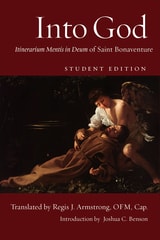
cover of Into God, student edition: Itinerarium Mentis in Deum of Saint Bonaventure

Into God, student edition

Itinerarium Mentis in Deum of Saint Bonaventure

Regis J. Armstrong

Catholic University of America Press, 0
[more]
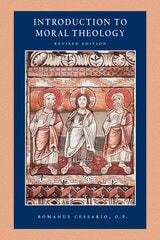
cover of Introduction to Moral Theology, revised edition

Introduction to Moral Theology, revised edition

Romanus Cessario

Catholic University of America Press, 2013
Originally published in 2001, Introduction to Moral Theology responded to the need for a new introduction to the basic and central elements of Catholic moral theology written in the light of Veritatis splendor. Since then, it has become a standard text for students and a reputable resource on such topics as moral theology and the good of the human person created in God's image; natural law; principles of human action; determination of the moral good through objects, ends, and circumstances; and the virtues, gifts of the Holy Spirit, and the Beatitudes.
[more]
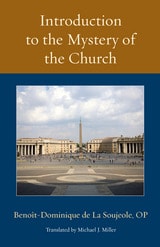
cover of Introduction to the Mystery of the Church

Introduction to the Mystery of the Church

Benoit-Dominique de La Soujeole, OP

Catholic University of America Press, 2014
An ecclesiological survey presenting a doctrinal synthesis of the church.
[more]
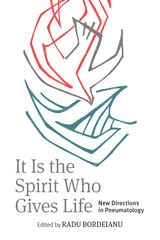
cover of It is the Spirit Who Gives Life: New Directions in Pneumatology

It is the Spirit Who Gives Life

New Directions in Pneumatology

Radu Bordeianu

Catholic University of America Press, 2022

Who is the Holy Spirit? What is the Holy Spirit? The answers to these questions were so obvious in the first centuries of Christian history, that the New Testament and the earliest Christian writers did not feel the need to deliberately address the identity of the Spirit. The more stringent question was this: what does the Spirit do in the Hebrew Scriptures, in the life of Jesus, in the community of disciples, in the Church, and in the world? These same questions, however, did not have the same obvious answers to subsequent generations. Writing in the fourth century, Gregory of Nazianzus observed a slow progress of better understanding the identity and mission of the Holy Spirit throughout the centuries; his opponents still referred to the Spirit as a “strange,” “unscriptural,” and “interpolated” God (Or. 31). One would expect that today, centuries later, pneumatology would be exponentially further developed than in the patristic era. And yet, contemporary theology only rarely asks who the Spirit is and what the Spirit does. That is where the present volume attempts to bring a contribution, by addressing early Pneumatologies reflected in the Scriptures and the age of the martyrs, historical developments in patristic literature and spiritual writings, and contemporary pneumatological themes, as they relate to ecumenism, ecology, science, ecclesiology, and missions. The present volume gathers essays authored by eleven world-renowned theologians. Each contribution originated as a public lecture addressed to theologians and an educated general audience, followed by a private colloquium in which the lecturers conferred with scholars who are experts in the field. Thus, the present volume offers a multifaceted approach to Pneumatology, in an ecumenical spirit.
[more]