Results by title
267 books match the query 'Children' and 12 start with i
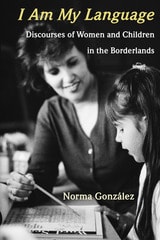
I Am My Language
Discourses of Women and Children in the BorderlandsNorma González
University of Arizona Press, 2001
“I am my language,” says the poet Gloria Anzaldúa, because language is at the heart of who we are. But what happens when a person has more than one language? Is there an overlay of language on identity, and do we shift identities as we shift languages? More important, what identities do children construct for themselves when they use different languages in particular ways?
In this book, Norma González uses language as a window on the multiple levels of identity construction in children—as well as on the complexities of life in the borderlands—to explore language practices and discourse patterns of Mexican-origin mothers and the language socialization of their children. She shows how the unique discourses that result from the interplay of two cultures shape perceptions of self and community, and how they influence the ways in which children learn and families engage with their children’s schools.
González demonstrates that the physical presence of the border profoundly affects the practices and ideologies of Mexican-origin women and children. She then argues that language and cultural background should be used as a basis for building academic competencies, and she demonstrates why the evocative/emotive dimension of language should play a major part in studies of discourse, language socialization, and language ideology.
Drawing on women’s own narratives of their experiences as both mothers and borderland residents, I Am My Language is firmly rooted in the words of common people in their everyday lives. It combines personal odyssey with cutting-edge ethnographic research, allowing us to hear voices that have been muted in the academic and public policy discussions of “what it means to be Latina/o” and showing us new ways to connect language to complex issues of education, political economy, and social identity.
Imagination and the Arts in C.S. Lewis
Journeying to Narnia and Other WorldsPeter J. Schakel
University of Missouri Press, 2002
Imagination has long been regarded as central to C. S. Lewis's life and to his creative and critical works, but this is the first study to provide a thorough analysis of his theory of imagination, including the different ways he used the word and how those uses relate to each other. Peter Schakel begins by concentrating on the way reading or engaging with the other arts is an imaginative activity. He focuses on three books in which imagination is the central theme—Surprised by Joy, An Experiment in Criticism, and The Discarded Image—and shows the important role of imagination in Lewis's theory of education.
He then examines imagination and reading in Lewis's fiction, concentrating specifically on the Chronicles of Narnia, the most imaginative of his works. He looks at how the imaginative experience of reading the Chronicles is affected by the physical texture of the books, the illustrations, revisions of the texts, the order in which the books are read, and their narrative "voice," the "storyteller" who becomes almost a character in the stories.
Imagination and the Arts in C. S. Lewis also explores Lewis's ideas about imagination in the nonliterary arts. Although Lewis regarded engagement with the arts as essential to a well- rounded and satisfying life, critics of his work and even biographers have given little attention to this aspect of his life. Schakel reviews the place of music, dance, art, and architecture in Lewis's life, the ways in which he uses them as content in his poems and stories, and how he develops some of the deepest, most significant themes of his stories through them.
Schakel concludes by analyzing the uses and abuses of imagination. He looks first at "moral imagination." Although Lewis did not use this term, Schakel shows how Lewis developed the concept in That Hideous Strength and The Abolition of Man long before it became popularized in the 1980s and 1990s. While readers often concentrate on the Christian dimension of Lewis's works, equally or more important to him was their moral dimension.
Imagination and the Arts in C. S. Lewis will appeal to students and teachers of both children's literature and twentieth-century British writers. It will also be of value to readers who wish to compare Lewis's creations with more recent imaginative works such as the Harry Potter series.
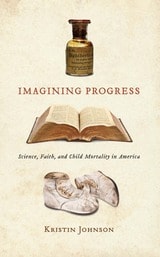
Imagining Progress
Science, Faith, and Child Mortality in AmericaKristin Johnson
University of Alabama Press, 2024
Explores the intellectual history of how Americans imagined science, faith, and human improvement through the most wrenching of experiences—the deaths of children.
Offering fascinating examples from the works of diverse writers and thinkers such as Benjamin Franklin, Frederick Douglass, Mark Twain, W. E. B. Du Bois, Elizabeth Cady Stanton, and Harriet Shelton Dover, Kristin Johnson traces the history of Americans’ complicated faith in science and the various triumphs and tragedies that faith has inspired. Imagining Progress reveals many of the complex factors involved in the polarized state of contemporary American attitudes toward science, scientists, public health, medicine, and science policy.
Humankind has always wrestled with the existence of suffering, how to respond to suffering, whom to care for, and in what ways. For two centuries, many American ministers, physicians, and scientists believed that an omnipotent and omniscient God created the world such that people might relieve suffering through ingenuity and learning. Others responded to the new worldview introduced by the scientific revolution as a threat to the divine order. In Imagining Progress, Johnson traces the history of Americans’ evolving relationship with science and religion at “one of its most dramatic places”—the bedsides of dying children. It’s here, in the crucible of parental despair, that she illuminates diverging assumptions about God, nature, and history.
From Cotton Mather’s campaign for smallpox inoculation to battles over teaching evolution in the 1920s, Johnson adroitly weaves an interdisciplinary history of medicine, science, theology, and activism. She follows a wide cast of characters from across theological, scientific, and political spectrums. What emerges is a kaleidoscopic portrait of diverse, often contradictory hopes and anxieties inspired by new theories of nature and human existence. Johnson also discerns a problematic pattern of invoking science both to ameliorate the suffering of some children while ignoring the suffering of others.
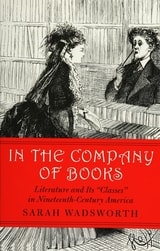
In the Company of Books
Literature and Its "Classes" in Nineteenth-Century AmericaSarah Wadsworth
University of Massachusetts Press, 2006
With sections focusing on segmentation by age, gender, and cultural status, In the Company of Books analyzes the ways authors and publishers carved up the field of literary production into a multitude of distinct submarkets, differentiated their products, and targeted specific groups of readers in order to guide their book-buying decisions. Combining innovative approaches to canonical authors such as Nathaniel Hawthorne, Louisa May Alcott, Mark Twain, and Henry James with engaging investigations into the careers of many lesser-known literary figures, Sarah Wadsworth reveals how American writers responded to—and contributed to—this diverse, and diversified, market.
In the Company of Books contends that specialized editorial and marketing tactics, in concert with the narrative strategies of authors and the reading practices of the book-buying public, transformed the literary landscape, leading to new roles for the book in American culture, the innovation of literary genres, and new relationships between books and readers. Both an exploration of a fragmented print culture through the lens of nineteenth-century American literature and an analysis of nineteenth-century American literature from the perspective of this subdivided marketplace, this wide-ranging study offers fresh insight into the impact of market forces on the development of American literature.

In the Words of the Winners
The Newbery and Caldecott Medals 2001-2010American Library Association, 2011
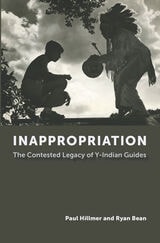
Inappropriation
The Contested Legacy of Y-Indian GuidesPaul Hillmer
University of Missouri Press, 2023
The Y-Indian Guides was a father-son (and later parent-child) program that encouraged real and enduring bonds through play and an authentic appreciation of family. While “playing Indian” seemed harmless to most participants during the program’s heyday, Paul Hillmer and Ryan Bean demonstrate the problematic nature of its methods. In the process of seeking to admire and emulate Indigenous Peoples, Y-Indian Guide participants often misrepresented American Indians and reinforced harmful stereotypes. Ultimately, this history demonstrates many ways in which American culture undermines and harms its Indigenous communities.
Including Families of Children with Special Needs
A How-To-Do-It Manual for LibrariansSandra Feinberg
American Library Association, 2013
Indicators of Children's Well-Being
Robert M. Hauser
Russell Sage Foundation, 1997
Infinitely Determinable
Children and Childhood in Modern LiteratureDavide Giuriato
Diaphanes, 2021
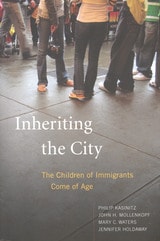
Inheriting the City
The Children of Immigrants Come of AgePhilip Kasinitz
Russell Sage Foundation, 2008
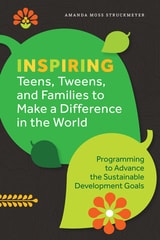
Inspiring Teens, Tweens, and Families to Make a Difference in the World
Programming to Advance the Sustainable Development GoalsAmanda Moss Struckmeyer
American Library Association, 2025
- programs and activities related to such topics as good health and well-being, ending poverty, peace and justice, responsible consumption and production, decent work, and clean water and sanitation;
- ideas perfect for multi-age audiences (families), tweens, and teens that can be tailored for different group sizes, programming spaces, budgets, and time frames;
- a plethora of flexible, cost-effective passive programs that patrons can engage in at any time;
- guidance on outreach opportunities for fostering partnerships with local experts and guest speakers; and
- pointers on additional and supporting resources including books, videos, and websites.
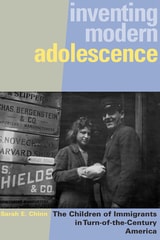
Inventing Modern Adolescence
The Children of Immigrants in Turn-of-the-Century AmericaSarah E. Chinn
Rutgers University Press, 2008