Results by title
808 books match the query 'Civilization' and 34 start with i

I Must Not Think Bad Thoughts
Drive-by Essays on American Dread, American DreamsMark Dery
University of Minnesota Press, 2014
From the cultural critic Wired called “provocative and cuttingly humorous” comes a viciously funny, joltingly insightful collection of drive-by critiques of contemporary America where chaos is the new normal. Exploring the darkest corners of the national psyche and the nethermost regions of the self—the gothic, the grotesque, and the carnivalesque—Mark Dery makes sense of the cultural dynamics of the American madhouse early in the twenty-first century.
Here are essays on the pornographic fantasies of Star Trek fans, Facebook as Limbo of the Lost, George W. Bush’s fear of his inner queer, the theme-parking of the Holocaust, the homoerotic subtext of the Super Bowl, the hidden agendas of IQ tests, Santa’s secret kinship with Satan, the sadism of dentists, Hitler’s afterlife on YouTube, the sexual identity of 2001’s HAL, the suicide note considered as a literary genre, the surrealist poetry of robot spam, the zombie apocalypse, Lady Gaga, the Church of Euthanasia, toy guns in the dream lives of American boys, and the polymorphous perversity of Madonna’s big toe.
Dery casts a critical eye on the accepted order of things, boldly crossing into the intellectual no-fly zones demarcated by cultural warriors on both sides of America’s ideological divide: controversy-phobic corporate media, blinkered academic elites, and middlebrow tastemakers. Intellectually omnivorous and promiscuously interdisciplinary, Dery’s writing is a generalist’s guilty pleasure in an age of nanospecialization and niche marketing. From Menckenesque polemics on American society and deft deconstructions of pop culture to unflinching personal essays in which Dery turns his scalpel-sharp wit on himself, I Must Not Think Bad Thoughts is a head-spinning intellectual ride through American dreams and American nightmares.
Ideas Have Consequences
Expanded EditionRichard M. Weaver
University of Chicago Press, 2013
In its pages, Richard M. Weaver argues that the decline of Western civilization resulted from the rising acceptance of relativism over absolute reality. In spite of increased knowledge, this retreat from the realist intellectual tradition has weakened the Western capacity to reason, with catastrophic consequences for social order and individual rights. But Weaver also offers a realistic remedy. These difficulties are the product not of necessity, but of intelligent choice. And, today, as decades ago, the remedy lies in the renewed acceptance of absolute reality and the recognition that ideas—like actions—have consequences.
This expanded edition of the classic work contains a foreword by New Criterion editor Roger Kimball that offers insight into the rich intellectual and historical contexts of Weaver and his work and an afterword by Ted J. Smith III that relates the remarkable story of the book’s writing and publication.

Identity Papers
Contested Nationhood in Twentieth-Century FranceSteven Ungar and Tom Conley, Editors
University of Minnesota Press, 1996
Identity Papers was first published in 1996. Minnesota Archive Editions uses digital technology to make long-unavailable books once again accessible, and are published unaltered from the original University of Minnesota Press editions.
What does citizenship mean? What is the process of "naturalization" one goes through in becoming a citizen, and what is its connection to assimilation? How do the issues of identity raised by this process manifest themselves in culture? These questions, and the way they arise in contemporary France, are the focus of this diverse collection.
The essays in this volume range in subject from fiction and essay to architecture and film. Among the topics discussed are the 1937 Exposition Universelle; films dealing with Vichy France; François Truffaut's Histoire d'Adèle H.; the war of Algerian independence; and nation building under François Mitterrand.
Contributors: Anne Donadey, Elizabeth Ezra, Richard J. Golsan, Lynn A. Higgins, T. Jefferson Kline, Panivong Norindr, Shanny Peer, Rosemarie Scullion, David H. Slavin, Philip H. Solomon; Florianne Wild, .
Steven Ungar is professor of cinema and comparative literature at the University of Iowa and author of Scandal and Aftereffect: Blanchot and France since 1930 (Minnesota, 1995). Tom Conley is professor of French at Harvard University.

If You've Seen One, You've Seen the Mall
EUROPEANS AND AMERICAN MASS CULTURERob Kroes
University of Illinois Press, 1996
continually fragmenting, disassembling, and reassembling itself--and in
the process creating something new. In a series of topical essays that
show why he is one of Europe's leading authorities on American culture,
Kroes probes trends in American advertising, the image of the Vietnam
war in American films, the implications of American vernacular culture as represented in rap music, and other topics.
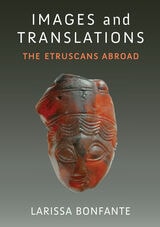
Images and Translations
The Etruscans AbroadLarissa Bonfante
University of Michigan Press, 2023
Professor Larissa Bonfante’s great gift was the ability to evoke, in a fresh, immediate, and convincing way, the experiences, beliefs, and thoughts of people living more than two thousand years ago. Her final publication, Images and Translations: The Etruscans Abroad, communicates the sensations of other times and places, from the day-to-day to the solemnly ritualistic.
The world of the Etruscans, sophisticated and pleasure-loving, radiated throughout a vast area of the ancient world – a world very different from our own. Relying on a wealth of creative works, Images and Translations examines the expertise and productions of the artists who made them, the tastes of those who used them, and the sometimes surprising results of the exchanges between creators and buyers. Just as the French demand for Chinese ceramics in the seventeenth century gave birth to the unprecedented famille colors, so the production of Greek ceramics for the Etruscan market produced singularly expressive depictions. Humorous, pious, or erotic to the buyers, they could be shocking to the culture that made them.
Images and Translations explores areas in much closer economic and cultural contact than is usually recognized. The volume finds threads of connection not only between Italy and Greece, but between Italy and northern Europe—today’s France and Germany—as well as between Italy and the Near East. Etruscan influence runs through Western history, into the Renaissance, and emerges in imagery still evocative today.
Images at War
Mexico From Columbus to Blade Runner (1492–2019)Serge Gruzinski
Duke University Press, 2001
Although the baroque image played a decisive role in many arenas, especially that of conquest and New World colonization, its powerful resonance in the sphere of religion is a focal point of Gruzinski’s study. In his analysis of how images conveyed meaning across linguistic barriers, he uncovers recurring themes of false images, less-than-perfect replicas, the uprooting of peoples and cultural memories, and the violence of iconoclastic destruction. He shows how various ethnic groups—Indians, blacks, Europeans—left their distinct marks on images of colonialism and religion, coopting them into expressions of identity or instruments of rebellion. As Gruzinski’s story unfolds, he tells of Aztec idols, the cult of the Virgin of Guadalupe, conquistadors, Franciscans, and neoclassical attempts to repress the baroque. In the final chapter he discusses the political and religious implications of contemporary imagery—such as that in Mexican soap operas—and speculates about the future of images in Latin America.
Originally written in French, this work makes available to an English audience a seminal study of Mexico and the role of the image in the New World.
Imagination, Emblems, and Expressions
Essays on Latin American, Carribean, and Continental Culture and IdentityHelen Ryan-Ranson
University of Wisconsin Press, 1993
This book of essays—carefully written by twenty-four authorities on their subjects—provides a deep understanding of and appreciation for the coherence, primacy, and importance of the search for identity in the divergent areas of Latin America, the Caribbean, and Europe.

Imagining Indonesia
Cultural Politics and Political CultureJim Schiller
Ohio University Press, 1997
The contributions presented here represent a wide range of disciplines, points of view, and ideological orientations. Taken together they convey the notion that much might be gained if the idea were abandoned that a single understanding of what constitutes Indonesian culture is possible or desirable.
Imagining Our Americas
Toward a Transnational FrameSandhya Shukla and Heidi Tinsman, eds.
Duke University Press, 2007
Scholars of literature, ethnic studies, and regional studies as well as of anthropology and history, the contributors focus on the Americas as a broadly conceived geographic, political, and cultural formation. Among the essays are explorations of the varied histories of African Americans’ presence in Mexican and Chicano communities, the different racial and class meanings that the Colombian musical genre cumbia assumes as it is absorbed across national borders, and the contrasting visions of anticolonial struggle embodied in the writings of two literary giants and national heroes: José Martí of Cuba and José Rizal of the Philippines. One contributor shows how a pidgin-language mixture of Japanese, Hawaiian, and English allowed second-generation Japanese immigrants to critique Hawaii’s plantation labor system as well as Japanese hierarchies of gender, generation, and race. Another examines the troubled history of U.S. gay and lesbian solidarity with the Cuban Revolution. Building on and moving beyond previous scholarship, this collection illuminates the productive intellectual and political lines of inquiry opened by a focus on the Americas.
Contributors. Rachel Adams, Victor Bascara, John D. Blanco, Alyosha Goldstein, Héctor Fernández L’Hoeste, Ian Lekus, Caroline F. Levander, Susan Y. Najita, Rebecca Schreiber, Sandhya Shukla, Harilaos Stecopoulos, Michelle Stephens, Heidi Tinsman, Nick Turse, Rob Wilson
Imagining the Atacama Desert
A Five-Hundred-Year Journey of DiscoveryRichard V. Francaviglia
University of Utah Press, 2018
Beginning with the indigenous Atacameño peoples at the southern edge of the Incan empire, the volume moves through five hundred years of history, sharing accounts written by Spanish, French, German, Dutch, British, American, and other travelers—pirates, scientists, explorers, and entrepreneurs among them. The Atacama’s austere landscape hides many secrets, including vast mineral wealth, the world's oldest mummies, and the more recent remains of dissidents murdered by the regime of former Chilean dictator Augusto Pinochet in the early 1970s. Today numerous observatories operate under the Atacama’s clear night skies, astronauts train on the rugged desert floor, and tourists flock there for inspiration.
In addition to a rich set of narratives, the book features 115 images—historical maps, photographs, and natural history illustrations, most in full color—to tell a more complete and compelling story. Imagining the Atacama Desert shows how what was once a wilderness at the edges of empire became one of South America's most iconic regions, one that continues to lure those seeking adventure and the unknown.
Imports and Immigrants
Near Eastern Contacts with Iron Age CreteGail L. Hoffman
University of Michigan Press, 1998
Drawing together all the evidence and arguments for Near Eastern immigrants in Crete, Hoffman demonstrates there are basic problems with the accepted interpretations. Evidence of continued technical expertise casts doubt on the necessity of reintroduction, while careful scrutiny of the evidence supporting immigrant craftsmen reveals many inadequacies in the currently accepted analyses.
Imports and Immigrants identifies the need for reassessing all dimensions of the question of artistic relationships between ancient Greece and other regions of the Aegean basin and suggests new avenues of inquiry in this important debate. The volume also reassesses arguments made for the presence of Near Eastern immigrants in Crete. This book includes a catalogue indispensable for future work on these issues and illustrations of most of the known imports to Crete.
Gail L. Hoffman is Associate Professor of Greek Art and Archaeology, Department of Classics, Yale University.

Impossible Purities
Blackness, Femininity, and Victorian CultureJennifer DeVere Brody
Duke University Press, 1998
Opening with a reading of Daniel Defoe’s “A True-Born Englishman,” which posits the mixed origins of English identity, Brody goes on to analyze mulattas typified by Rhoda Swartz in William Thackeray’s Vanity Fair, whose mixed-race status reveals the “unseemly origins of English imperial power.” Examining Victorian stage productions from blackface minstrel shows to performances of The Octoroon and Uncle Tom’s Cabin, she explains how such productions depended upon feminized, “black” figures in order to reproduce Englishmen as masculine white subjects. She also discusses H.G. Wells’s The Island of Dr. Moreau in the context of debates about the “new woman,” slavery, and fears of the monstrous degeneration of English gentleman. Impossible Purities concludes with a discussion of Bram Stoker’s novella, “The Lair of the White Worm,” which brings together the book’s concerns with changing racial representations on both sides of the Atlantic.
This book will be of interest to scholars in Victorian studies, literary theory, African American studies, and cultural criticism.

In Pursuit of Civility
Manners and Civilization in Early Modern EnglandKeith Thomas
Brandeis University Press, 2018

In Space We Read Time
On the History of Civilization and GeopoliticsKarl Schlögel
Bard Graduate Center, 2016
Here is both a model for thinking about history within physical space and a stimulating history of thought about space, as Schlögel reads historical periods and events within the context of their geographical location. Discussions range from the history of geography in France to what a town directory from 1930s Berlin can say about professional trades that have since disappeared. He takes a special interest in maps, which can serve many purposes—one poignant example being the German Jewish community’s 1938 atlas of emigration, which showed the few remaining possibilities for escape. Other topics include Thomas Jefferson’s map of the United States; the British survey of India; and the multiple cartographers with Woodrow Wilson at the Paris Peace Conference, where the aim was to redraw Europe’s boundaries on the basis of ethnicity. Moving deftly from the Austro-Hungarian Empire to 9/11 and from Vermeer’s paintings to the fall of the Berlin Wall, this intriguing book presents history from a completely new perspective.
In Times of Crisis
Essays on European Culture, Germans, and JewsSteven E. Aschheim
University of Wisconsin Press, 2001
The nineteenth- and twentieth-century relationship between European culture, German history, and the Jewish experience produced some of the West’s most powerful and enduring intellectual creations—and, perhaps in subtly paradoxical and interrelated ways, our century’s darkest genocidal moments. In Times of Crisis explores the flashpoints of this vexed relationship, mapping the coordinates of a complex triangular encounter of immense historical import.
In essays that range from the question of Nietzsche’s legacy to the controversy over Daniel Goldhagen’s Hitler’s Willing Executioners, the distinguished historian Steven E. Aschheim presents this encounter as an ongoing dialogue between two evolving cultural identities. He touches on past dimensions of this exchange (such as the politics of Weimar Germany) and on present dilemmas of grasping and representing it (such as the Israeli discourse on the Holocaust). His work inevitably traces the roots and ramifications of Nazism but at the same time brings into focus historical circumstances and contemporary issues often overshadowed or distorted by the Holocaust.
These essays reveal the ubiquitous charged inscriptions of Nazi genocide within our own culture and illuminate the projects of some later thinkers and historians—from Hannah Arendt to George Mosse to Saul Friedlander—who have wrestled with its problematics and sought to capture its essence. From the broadly historical to the personal, from the politics of Weimar Germany to the experience of growing up German Jewish in South Africa, the essays expand our understanding of German Jewish history in particular, but also of historical processes in general.

In and Of the Mediterranean
Medieval and Early Modern Iberian StudiesMichelle M. Hamilton
Vanderbilt University Press, 2014
In the Desert of Desire
Las Vegas and the Culture of SpectacleWilliam L. Fox
University of Nevada Press, 2007
Las Vegas, says William Fox, is a pay-as-you-play paradise that succeeds in satisfying our fantasies of wealth and the excesses of pleasure and consumption that go with it. In this context, Fox examines how Las Vegas’s culture of spectacle has obscured the boundaries between high art and entertainment extravaganza, nature and fantasy, for-profit and nonprofit enterprises. His purview ranges from casino art galleries—including Steve Wynn’s private collection and a branch of the famed Guggenheim Museum—to the underfunded Las Vegas Art Museum; from spectacular casino animal collections like those of magicians Siegfried and Roy and Mandalay Bay’s Shark Reef exhibit to the city’s lack of support for a viable public zoo; from the environmental and psychological impact of lavish water displays in the arid desert to the artistic ambiguities intrinsic to Las Vegas’s floating world of showgirls, lapdancers, and ballet divas. That Las Vegas represents one of the world’s most opulent displays of private material wealth in all its forms, while providing miserly funding for local public amenities like museums and zoos, is no accident, Fox maintains. Nor is it unintentional that the city’s most important collections of art and exotic fauna are presented in the context of casino entertainment, part of the feast of sensation and excitement that seduces millions of visitors each year. Instead, this phenomenon shows how our insatiable modern appetite for extravagance and spectacle has diminished the power of unembellished nature and the arts to teach and inspire us, and demonstrates the way our society privileges private benefit over public good. Given that Las Vegas has been a harbinger of national cultural trends, Fox’s commentary offers prescient insight into the increasing commercialization of nature and culture across America.

In the Mood for Texture
The Revival of Bangkok as a Chinese CityArnika Fuhrmann
Duke University Press, 2026

In the Nineties
John Stokes
University of Chicago Press, 1990
Spurning fixed boundaries, Stokes relates the controversial topics of the day—the status of the "New Journalism," the "degenerative" influence of Impressionist painting, the dubious morality of the music hall, the urgent need for prison reform, and the prevalence of suicide—to primary literary texts, such as The Ballad of Reading Gaol, The Importance of Being Earnest, Jude the Obscure, and Portrait of a Lady. And in the process, he explores crucial areas of sociological and psychological interest: criminality, sexuality, madness, and "morbidity."
Each of the book's six chapters opens with a look at the correspondence columns of daily newspapers and goes on, with a keen eye for the hidden link, to pursue a particular theme. Locations shift from Leicester Square and the Thames embankment to the Normandy coast and the Paris morgue and feature, along with famous names, a lesser known company of acrobats, convicts, aesthetes, "philistines," and mysterious suicides.
Nearly a century later, John Stokes's unrivalled knowledge of how the arts actually functioned in the nineties makes this book a major contribution to modern cultural studies.

In the Shadow of Cortés
Conversations Along the Route of ConquestKathleen Ann Myers
University of Arizona Press, 2015
Following the route of Hernán Cortés, In the Shadow of Cortés offers a visual and cultural history of the legacy of contact between Spaniards and indigenous civilizations. The book is a reflective journey that presents a diversity of voices, images, and ideas about history and conquest. Specialist in Mexican culture Kathleen Ann Myers teams up with prize-winning translators and photographers to offer a unique reading experience that combines accessible interpretative essays with beautifully translated interviews and dozens of historical and contemporary black-and-white and color images, including some by award-winner Steven Raymer. The result offers readers multiple perspectives on these pivotal events as imagined and re-envisioned today by Mexicans both in their homeland and in the United States.
In the Shadow of Cortés offers an extensive visual narrative about conquest and, ultimately, about Mexican history. It traces the symbolic geography of the conquest and shows how the historical memory of colonialism continues to shape lives today.

In the Shadow of the Giant
The Americanization of Modern MexicoJoseph Contreras
Rutgers University Press, 2009
In this first book to view modern Mexico in the era of NAFTA and globalization, In the Shadow of the Giant offers insight into the land on our southern border.
What we find is a nation that looks more like the United States than even Mexicans themselves could have imagined a decade ago: Rates of obesity are second only to the United States among the world's industrialized countries. Recreational drug use is soaring among young Mexicans, Citigroup owns the largest bank in Mexico Wal-Mart is the country's biggest private employer revealing a vastly different physical and cultural landscape from his days as a young journalist living in Mexico in the mid-1980s. Joseph Contreras tracks the relentless and ongoing Americanization of his ancestral home. Although these changes may seem a natural part of globalization, the country had long prided itself on the social, political, economic, and even spiritual differences that distinguished it from the United States. In addition to embracing our virtues and vices, Contreras argues that our southern neighbor has become a de facto economic colony of the United States.
At a time when immigration looms as a leading hot-button issue in American politics, the time is ripe for examining our influences, for better or worse, on our neighbor to the south.

In the Solitude of My Soul
The Diary of Genevieve Breton, 1867-1871James Smith Allen
Southern Illinois University Press, 1994
Originally published to glowing reviews and literary prizes in France in 1985, this revealing diary not only recounts the moving and tragic relationship of its author, Geneviève Bréton, with the rising young nineteenth-century artist Henri Regnault, it also serves as a valuable historical document concerning the social, cultural, and political life of the French Second Empire.
The young Geneviève Bréton began her journal in 1867 as a consolation for the death of her eldest brother, Antoine. She met Regnault soon after on a trip to Rome. Throughout the next four years of their relationship, Bréton eloquently describes the personal, cultural, and political turbulence that affected her life. Writing against the backdrop of France’s fateful conflict with Prussia and the hardships and dangers of the siege of Paris and the Commune, Bréton, with innate candor and lyricism, creates a text that beautifully illuminates French art, literature, family life, society, and politics of the time. Her poignant account of her love for and engagement to Regnault reveals special insight into the life and mind of an extraordinary, though little known, literary talent. At Regnault’s death in 1871 during the Franco–Prussian War, the expression of her anguish is as much testimony to the political and cultural disorder of the time as it is to her own personal tragedy.
Following Bréton’s own instructions that she left before her death in 1918, this English version of the diary reincorporates material that was deleted from the French edition. Graced by rare photographs of the Bréton family as well as Regnault’s paintings, the book contains a touching foreword by the author’s granddaughter, Daphné Doublet-Vaudoyer. In its first English translation, it is a book for lovers of French life and culture, as well as students of French history; literature, and art.
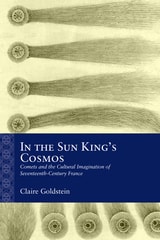
In the Sun King's Cosmos
Comets and the Cultural Imagination of Seventeenth-Century FranceClaire Goldstein
Northwestern University Press, 2025
Offering a new history of a formative cultural and political era through the cosmic phenomena that captured the public’s imagination
In the winters of 1664–65 and 1680–81, the French public was galvanized by two bright comets whose elliptical orbits could not be mapped with contemporary geometry and that thus seemed to appear in random and unpredictable locations. Bookending the period during which Louis XIV’s sun king mythology was created, these comets defied the heliocentric order to which French politics and culture aspired. As Claire Goldstein demonstrates, literary texts, cultural institutions, and architecture inspired by comets offer a different perspective on the relationship between sensory experience, ideology, and artistic form.
In the Sun King’s Cosmos: Comets and the Cultural Imagination of Seventeenth-Century France presents an alternative view of a formative era in cultural and political history, when distinctly modern forms of power and control were established through a regime of the spectacular. Goldstein shows how comets allow us to see the seventeenth century in ways that complicate the narrative of a race toward rationalization, classicism, and modernity, indexing instead a messy period in which the spectacular was sometimes also inscrutable.

Indian Nation
Native American Literature and Nineteenth-Century NationalismsCheryl Walker
Duke University Press, 1997
Walker examines the rhetoric and writings of nineteenth-century Native Americans, including William Apess, Black Hawk, George Copway, John Rollin Ridge, and Sarah Winnemucca. Demonstrating with unique detail how these authors worked to transform venerable myths and icons of American identity, Indian Nation chronicles Native American participation in the forming of an American nationalism in both published texts and speeches that were delivered throughout the United States. Pottawattomie Chief Simon Pokagon’s "The Red Man’s Rebuke," an important document of Indian oratory, is published here in its entirety for the first time since 1893.
By looking at this writing through the lens of the best theoretical work on nationality, postcoloniality, and the subaltern, Walker creates a new and encompassing picture of the relationship between Native Americans and whites. She shows that, contrary to previous studies, America in the nineteenth century was intercultural in significant ways.

Indigenous Intellectuals
Knowledge, Power, and Colonial Culture in Mexico and the AndesGabriela Ramos and Yanna Yannakakis, eds.
Duke University Press, 2014
Contributors. Elizabeth Hill Boone, Kathryn Burns, John Charles, Alan Durston, María Elena Martínez, Tristan Platt, Gabriela Ramos, Susan Schroeder, John F. Schwaller, Camilla Townsend, Eleanor Wake, Yanna Yannakakis
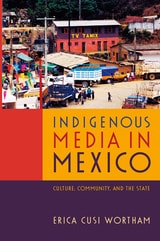
Indigenous Media in Mexico
Culture, Community, and the StateErica Cusi Wortham
Duke University Press, 2013
Drawing on her in-depth ethnographic research among indigenous mediamakers in Mexico, Wortham traces their shifting relationship with Mexican cultural agencies; situates their work within a broader, hemispheric network of indigenous media producers; and complicates the notion of a unified, homogeneous indigenous identity. Her analysis of projects from community-based media initiatives in Oaxaca to the transnational Chiapas Media Project highlights variations in cultural identity and autonomy based on specific histories of marginalization, accommodation, and resistance.
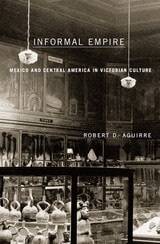
Informal Empire
Mexico And Central America In Victorian CultureRobert D. Aguirre
University of Minnesota Press, 2004
Behind the ancient artifacts exhibited in our museums lies a secret past—of travel, desire, the quest for knowledge, and even theft. Such is the case with the objects of Mesoamerican culture so avidly collected, cataloged, and displayed by the British in the nineteenth century. Informal Empire recaptures the history of those artifacts from Mexico and Central America that stirred Victorian interest—a history that reveals how such objects and the cultures they embodied were incorporated into British museum collections, panoramas, freak shows, adventure novels, and records of imperial administrators.
Robert D. Aguirre draws on a wealth of previously untapped historical information to show how the British colonial experience in Africa and the Near East gave rise to an “informal imperialism” in Mexico and Central America. Aguirre’s work helps us to understand what motivated the British to beg, borrow, buy, and steal from peripheral cultures they did not govern. With its original insights, Informal Empire points to a new way of thinking about British imperialism and, more generally, about the styles and forms of imperialism itself.

Insurance Era
Risk, Governance, and the Privatization of Security in Postwar AmericaCaley Horan
University of Chicago Press, 2021
Actuarial thinking is everywhere in contemporary America, an often unnoticed byproduct of the postwar insurance industry’s political and economic influence. Calculations of risk permeate our institutions, influencing how we understand and manage crime, education, medicine, finance, and other social issues. Caley Horan’s remarkable book charts the social and economic power of private insurers since 1945, arguing that these institutions’ actuarial practices played a crucial and unexplored role in insinuating the social, political, and economic frameworks of neoliberalism into everyday life.
Analyzing insurance marketing, consumption, investment, and regulation, Horan asserts that postwar America’s obsession with safety and security fueled the exponential expansion of the insurance industry and the growing importance of risk management in other fields. Horan shows that the rise and dissemination of neoliberal values did not happen on its own: they were the result of a project to unsocialize risk, shrinking the state’s commitment to providing support, and heaping burdens upon the people often least capable of bearing them. Insurance Era is a sharply researched and fiercely written account of how and why private insurance and its actuarial market logic came to be so deeply lodged in American visions of social welfare.

Intimate Subjects
Touch and Tangibility in Britain's Cerebral AgeSimeon Koole
University of Chicago Press, 2024
When, where, and who gets to touch and be touched, and who decides? What do we learn through touch? How does touch bring us closer together or push us apart? These are urgent contemporary questions, but they have their origins in late nineteenth- and early twentieth-century Britain, when new urban encounters compelled intense discussion of what touch was, and why it mattered. In this vividly written book, Simeon Koole excavates the history of these concerns and reveals how they continue to shape ideas about “touch” in the present.
Intimate Subjects takes us to the bustling railway stations, shady massage parlors, all-night coffee stalls, and other shared spaces where passengers, customers, vagrants, and others came into contact, leading to new understandings of touch. We travel in crammed subway cars, where strangers negotiated the boundaries of personal space. We visit tea shops where waitresses made difficult choices about autonomy and consent. We enter classrooms in which teachers wondered whether blind children could truly grasp the world and labs in which neurologists experimented on themselves and others to unlock the secrets of touch. We tiptoe through London’s ink-black fogs, in which disoriented travelers became newly conscious of their bodies and feared being accosted by criminals. Across myriad forgotten encounters such as these, Koole shows, touch remade what it meant to be embodied—as well as the meanings of disability, personal boundaries, and scientific knowledge.
With imagination and verve, Intimate Subjects offers a new way of theorizing the body and the senses, as well as a new way of thinking about embodiment and vulnerability today.

Inventing Africa
History, Archaeology and IdeasRobin Derricourt
Pluto Press, 2011
Inventing Africa is a critical account of narratives which have selectively interpreted and misinterpreted the continent's deep past.
Writers have created alluring images of lost cities, vast prehistoric migrations and golden ages of past civilisations. Debates continue on the African origins of humankind, the contributions of ancient Egypt to the world and Africa's importance to global history.
Images of 'Africa', simplifying a complex and diverse continent, have existed from ancient Mediterranean worlds, slave trading nations and colonial powers to today's political elites, ecotourists and aid-givers. Robin Derricourt draws on his background as publisher and practitioner in archaeology and history to explore the limits and the dangers of simplifications, arguing - as with Said's concept of 'Orientalism' - that ambitious ideas can delude or oppress as well as inform.
Defending Africa against some of the grand narratives that have been imposed upon its peoples, Inventing Africa will spark new debates in the history of Africa and of archaeology.
Island Lives
Historical Archaeologies of the CaribbeanEdited by Paul Farnsworth
University of Alabama Press, 2001
Historical archaeology and the making of Caribbean cultures and nations.
Long before the founding of Jamestown in 1607, there were Spanish forts, bustling towns, sugar plantations, and sea trade flourishing in the Caribbean. While richer nations, particularly the United States, may view the Caribbean today as merely a place for sun and fun, the island colonies were at one time far more important and lucrative to their European empire countries than their North American counterparts. From the 15th to the 19th centuries, as competing colonial powers vied with each other for military and economic advantage in the Western Hemisphere, events in the Caribbean directly influenced the American mainland.
This is one rationale for the close study of historical archaeology in the Caribbean. Another is the growing recognition of how archaeological research can support the defining of national identities for the islands, many of them young independent states struggling to establish themselves economically and politically. By looking at cases in the French West Indies, specifically on Guadeloupe, in the Dutch Antilles and Aruba, in the British Bahamas, on Montserrat and St. Eustatius, on Barbados, and the within the U.S. Virgin Islands, the contributors to Island Lives have produced a broad overview of Caribbean historical archaeology.
Island Lives makes clear that historical archaeology in the Caribbean will continue to grow and diversify due to the interest Caribbean peoples have in recording, preserving, and promoting their culture and heritage; the value it adds to their "heritage tourism"; and the connection it has to African American history and archaeology. In addition, the contributors point to the future by suggesting different trajectories that historical archaeology and its practitioners may take in the Caribbean arena. In so doing, they elucidate the problems and issues faced worldwide by researchers working in colonial and post-colonial societies.

Island at the End of the World
The Turbulent History of Easter IslandSteven Roger Fischer
Reaktion Books, 2005
A small canoe with Polynesians brought the first humans to Easter Island in 700 CE, and when boat travel in the South Pacific drastically decreased around 1500, the Easter Islanders were forced to adapt in order to survive their isolation. Adaptation, Fischer asserts, was a continuous thread in the life of Easter Island: the first European visitors, who viewed the awe-inspiring monolithic busts in 1722, set off hundreds of years of violent warfare, trade, and disease—from the smallpox, wars, and Great Death that decimated the island to the late nineteenth-century Catholic missionaries who tried to "save" it to a despotic Frenchman who declared sole claim of the island and was soon killed by the remaining 111 islanders. The rituals, leaders, and religions of the Easter Islanders evolved with all of these events, and Fischer is just as attentive to the island's cultural developments as he is to its foreign invasions.
Bringing his history into the modern era, Fischer examines the colonization and annexation of Easter Island by Chile, including the Rapanui people's push for civil rights in 1964 and 1965, by which they gained full citizenship and freedom of movement on the island. As travel to and interest in the island rapidly expand, Island at the End of the World is an essential history of this mysterious site.

Islands of History
Marshall Sahlins
University of Chicago Press, 1985
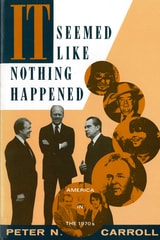
It Seemed Like Nothing Happened
America in the 1970sPeter N. Carroll
Rutgers University Press, 1990
"This is the single best book on the 1970s." -- Leo Ribuffo, George Washington University