Results by title
289 books match the query 'Dance' and 12 start with i
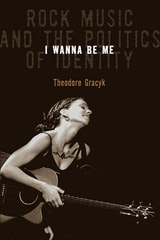
I Wanna Be Me
Rock Music And The Politics Of IdentityTheodore Gracyk
Temple University Press, 2001
Gracyk sees rock as a mass art, open-ended and open to diverse (but not unlimited) interpretations. Recordings reach millions, drawing people together in communities of listeners who respond viscerally to its sound and intellectually to its messages. As an art form that proclaims its emotional authenticity and resistance to convention, rock music constitutes part of the cultural apparatus from which individuals mold personal and political identities. Going to the heart of this relationship between the music's role in its performers' and fans' self-construction, Gracyk probes questions of gender and appropriation. How can a feminist be a Stones fan or a straight man enjoy the Indigo Girls? Does borrowing music that carries a "racial identity" always add up to exploitation, a charge leveled at Paul Simon's Graceland?
Ranging through forty years of rock history and offering a trove of anecdotes and examples, I Wanna Be Me, like Gracyk's earlier book, "should be cherished, and read, by rockers everywhere" (Salon).
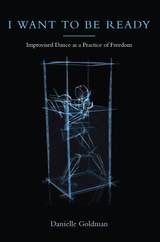
I Want to Be Ready
Improvised Dance as a Practice of FreedomDanielle Goldman
University of Michigan Press, 2010
"Danielle Goldman's contribution to the theory and history of improvisation in dance is rich, beautiful and extraordinary. In her careful, rigorously imaginative analysis of the discipline of choreography in real time, Goldman both compels and allows us to become initiates in the mysteries of flight and preparation. She studies the massive volitional resources that one unleashes in giving oneself over to being unleashed. It is customary to say of such a text that it is 'long-awaited' or 'much anticipated'; because of Goldman's work we now know something about the potenza, the kinetic explosion, those terms carry. Reader, get ready to move and be moved."
---Fred Moten, Duke University
"In this careful, intelligent, and theoretically rigorous book, Danielle Goldman attends to the 'tight spaces' within which improvised dance explores both its limitations and its capacity to press back against them. While doing this, Goldman also allows herself---and us---to be moved by dance itself. The poignant conclusion, evoking specific moments of embodied elegance, vulnerability, and courage, asks the reader: 'Does it make you feel like dancing?' Whether taken literally or figuratively, I can't imagine any other response to this beautiful book."
---Barbara Browning, New York University
"This book will become the single most important reflection on the question of improvisation, a question which has become foundational to dance itself. The achievement of I Want to Be Ready lies not simply in its mastery of the relevant literature within dance, but in its capacity to engage dance in a deep and abiding dialogue with other expressive forms, to think improvisation through myriad sites and a rich vein of cultural diversity, and to join improvisation in dance with its manifestations in life so as to consider what constitutes dance's own politics."
---Randy Martin, Tisch School of Arts at New York University
I Want To Be Ready draws on original archival research, careful readings of individual performances, and a thorough knowledge of dance scholarship to offer an understanding of the "freedom" of improvisational dance. While scholars often celebrate the freedom of improvised performances, they are generally focusing on freedom from formal constraints. Drawing on the work of Michel Foucault and Houston Baker, among others, Danielle Goldman argues that this negative idea of freedom elides improvisation's greatest power. Far from representing an escape from the necessities of genre, gender, class, and race, the most skillful improvisations negotiate an ever shifting landscape of constraints. This work will appeal to those interested in dance history and criticism and also interdisciplinary audiences in the fields of American and cultural studies.
Danielle Goldman is Assistant Professor of Dance at The New School and a professional dancer in New York City, where she recently has danced for DD Dorvillier and Beth Gill.
Cover art: Still from Ghostcatching, 1999, by Bill T. Jones, Paul Kaiser, and Shelley Eshkar. Image courtesy of Kaiser/Eshkar.
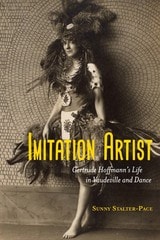
Imitation Artist
Gertrude Hoffmann’s Life in Vaudeville and DanceSunny Stalter-Pace
Northwestern University Press, 2020
Gertrude Hoffmann made her name in the early twentieth century as an imitator, copying highbrow performances staged in Europe and popularizing them for a broader American audience. Born in San Francisco, Hoffmann started working as a ballet girl in pantomime spectacles during the Gay Nineties. She performed through the heyday of vaudeville and later taught dancers and choreographed nightclub revues. After her career ended, she reflected on how vaudeville’s history was represented in film and television.
Drawn from extensive archival research, Imitation Artist shows how Hoffmann’s life intersected with those of central figures in twentieth-century popular culture and dance, including Florenz Ziegfeld, George M. Cohan, Isadora Duncan, and Ruth St. Denis. Sunny Stalter-Pace discusses the ways in which Hoffmann navigated the complexities of performing gender, race, and national identity at the dawn of contemporary celebrity culture. This book is essential reading for those interested in the history of theater and dance, modernism, women’s history, and copyright.
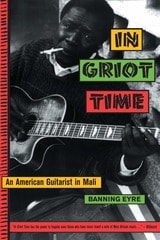
In Griot Time
Banning Eyre
Temple University Press, 2000
Djelimady Tounkara is only one of the memorable people you will meet in this dramatic narrative of life among the griot musicians of Mali. Born into families where music and the tradition of griot story-telling is a heritage and a privilege, Djelimady and his fellow griots -- both men and women -- live their lives at the intersection of ancient traditions and the modern entertainment industry. During the seven months he spent living and studying with Djelimady, Banning Eyre immersed himself in a world that will fascinate you as it did him.
Eyre creates a range of unforgettable portraits. Some of the people who stride through his pages are internationally known, musicians like Salif Keita, Oumou Sangare, and Grammy winner Ali Farka Toure. But the lesser-known characters are equally fascinating: Adama Kouyate, Djelimady's dynamic wife; Moussa Kouyate, the Tounkara family's own griot; Yayi Kanoute, the flamboyant jelimuso (female griot) who failed to take America by storm; Foutanga Babani Sissoko, the mysterious millionaire who rebuilt an entire town and whose patronage is much sought after by the griots of Bamako.
But the picture Eyre draws is not just a series of portraits. Out of their interactions comes a perceptive panorama of life in Mali in the late twentieth century. The narrative gives us a street-level view of the transformation of musical taste and social customs, the impact of technology and the pressures of poverty, at a crucial time in Mali's history. In individual after individual, family after family, we see the subtle conflicts of heritage and change. Even the complications of democracy -- with democracy, mango vendors think they can charge anything they want, Djelimady points out -- are woven into an unforgettable saga of one man, his family, his profession, and the world of Malian music.
In Step with the Times
Mapiko Masquerades of MozambiquePaolo Israel
Ohio University Press, 2014
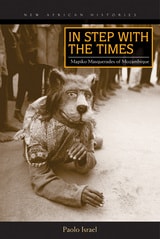
The helmet-shaped mapiko masks of Mozambique have garnered admiration from African art scholars and collectors alike, due to their striking aesthetics and their grotesque allure. This book restores to mapiko its historic and artistic context, charting in detail the transformations of this masquerading tradition throughout the twentieth century.
Based on field research spanning seven years, this study shows how mapiko has undergone continuous reinvention by visionary individuals, has diversified into genres with broad generational appeal, and has enacted historical events and political engagements. This dense history of creativity and change has been sustained by a culture of competition deeply ingrained within the logic of ritual itself. The desire to outshine rivals on the dance ground drives performers to search for the new, the astonishing, and the topical. It is this spirit of rivalry and one-upmanship that keeps mapiko attuned to the times that it traverses.
In Step with the Times is illustrated with vibrant photographs of mapiko masks and performances. It marks the most radical attempt to date to historicize an African performative tradition.

Inclusive Dance
The Story of Touchdown DanceKaty Dymoke
Intellect Books, 2023
Inclusive Dance offers a concise ethnography of disability arts and a historiographic overview of the field in the 1980s when many new disability arts groups emerged in the UK. It focuses in particular on the inclusive teaching modalities of Touchdown Dance, which was the work of dancer Steve Paxton and theater-maker and psychotherapist Anne Kilcoyne. It involved visually impaired and sighted adults in a dyadic movement form called Contact Improvisation. Katy Dymoke took over Touchdown Dance in 1994, and this book draws on archives, participant accounts, and personal experience to detail the work of Touchdown Dance and its effects on its participants since its founding. Three guests from Touchdown Dance contribute eyewitness accounts of the methods and performance projects.
Indigenous Dance and Dancing Indian
Contested Representation in the Global EraMatthew Krystal
University Press of Colorado, 2020
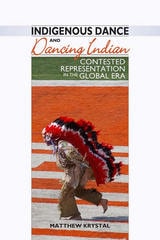
Considering four genres of dance in which indigenous people are represented--K'iche Maya traditional dance, powwow, folkloric dance, and dancing sports mascots--the book addresses both the ideational and behavioral dimensions of identity. Each dance is examined as a unique cultural expression in individual chapters, and then all are compared in the conclusion, where striking parallels and important divergences are revealed. Ultimately, Krystal describes how dancers and audiences work to construct and consume satisfying and meaningful identities through dance by either challenging social inequality or reinforcing the present social order.
Detailed ethnographic work, thorough case studies, and an insightful narrative voice make Indigenous Dance and Dancing Indian a substantial addition to scholarly literature on dance in the Americas. It will be of interest to scholars of Native American studies, social sciences, and performing arts.
Infinite Repertoire
On Dance and Urban Possibility in Postsocialist GuineaAdrienne J. Cohen
University of Chicago Press, 2021

Inhabiting the Impossible
Dance and Experimentation in Puerto RicoSusan Homar and nibia pastrana santiago, Editors
University of Michigan Press, 2023
Irina Baronova and the Ballets Russes de Monte Carlo
Victoria Tennant
University of Chicago Press, 2014
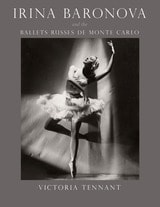
Drawing on letters, correspondence, oral histories, and interviews, Baronova’s daughter, the actress Victoria Tennant, warmly recounts Baronova’s dramatic life, from her earliest aspirations to her grueling time on tour to her later years in Australia as a pioneer of the art. She begins with the Baronov family’s flight from Russia during the Revolution, which led them to Romania and later Paris, where at the age of thirteen, Baronova became a star, chosen by the legendary George Balanchine to join the Ballets Russes, where she danced the lead in Swan Lake. Tennant provides an intimate account of Baronova’s life as a dancer and rare behind-the-scenes stories of life on the road with the stars of the company. Spectacular photographs, a mix of archival images and family snapshots, offer many rare views of rehearsals, costumes, set designs, and the dancers themselves both at their most dazzling and in their most everyday.
The story of Irina Baronova is also the story of the rise of ballet in America thanks to the Ballets Russes, who brought the magisterial beauty and star power of dance to big cities and small towns alike. Irina Baronova and the Ballet Russes de Monte Carlo offers a unique perspective on this history, sure to be treasured by dance patrons and aspiring stars.
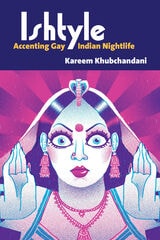
Ishtyle
Accenting Gay Indian NightlifeKareem Khubchandani
University of Michigan Press, 2020
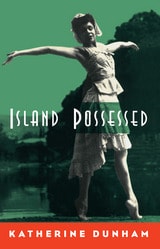
Island Possessed
Katherine Dunham
University of Chicago Press, 1994