Results by title
55 books match the query 'Documentary films' and 4 start with i
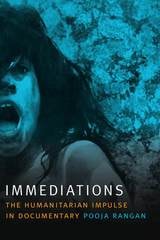
Immediations
The Humanitarian Impulse in DocumentaryPooja Rangan
Duke University Press, 2017
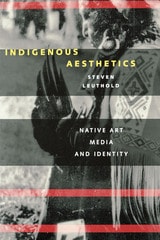
Indigenous Aesthetics
Native Art, Media, and IdentityBy Steven Leuthold
University of Texas Press, 1998
What happens when a Native or indigenous person turns a video camera on his or her own culture? Are the resulting images different from what a Westernized filmmaker would create, and, if so, in what ways? How does the use of a non-Native art-making medium, specifically video or film, affect the aesthetics of the Native culture?
These are some of the questions that underlie this rich study of Native American aesthetics, art, media, and identity. Steven Leuthold opens with a theoretically informed discussion of the core concepts of aesthetics and indigenous culture and then turns to detailed examination of the work of American Indian documentary filmmakers, including George Burdeau and Victor Masayesva, Jr. He shows how Native filmmaking incorporates traditional concepts such as the connection to place, to the sacred, and to the cycles of nature. While these concepts now find expression through Westernized media, they also maintain continuity with earlier aesthetic productions. In this way, Native filmmaking serves to create and preserve a sense of identity for indigenous people.
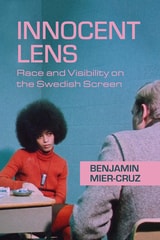
Innocent Lens
Race and Visibility on the Swedish ScreenBenjamin Mier-Cruz
University of Wisconsin Press, 2027
Sweden, like other Nordic countries, prides itself on being “colorblind” or immune to the kinds of racism found in, for example, the United States. In the 1960s and 1970s, white Swedish documentarians, in the fashion of early anthropologists, recorded racial tensions amid the US civil rights movement. More recently, in the twenty-first century, short films produced by Swedes of color have tackled racism and bigotry within Sweden.
Benjamin Mier-Cruz offers a comparative study of these two periods of Swedish documentary filmmaking. “Racially innocent” white documentarians of the mid-twentieth century developed an “aesthetics of altruism” predicated on Sweden’s assumed racial equalitarianism—a notion that their documentaries in turn helped create and maintain. In contemporary films, on the other hand, Swedes of color use the same filmic format to challenge not only their predecessors’ reductionist, pseudo-anthropological presentations but also Sweden’s purportedly colorblind ideology. Mier-Cruz’s close readings of films from both eras demonstrate the possibilities and limitations of the documentary form and the ways in which it is motivated by politics and activism.
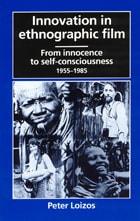
Innovation in Ethnographic Film
From Innocence to Self-Consciousness, 1955-1985Peter Loizos
University of Chicago Press, 1993
Loizos begins by reviewing works of John Marshall and Timothy Asch in the 1950s and moves through those of Jean Rouch, Robert Gardner, and many more recent filmmakers. He reveals a steady course of innovations along four dimensions: production technology, subject matter, strategies of argument, and ethnographic authentication. His analyses of individual films address questions of realism, authenticity, genre, authorial and subjective voice, and representation of the films' creators as well as their subjects.
Innovation in Ethnographic Film, as a systematic and iluminating review of developments in ethnographic film, will be an important resource for the growing number of anthropologists and other scholars who use such films as tools for research and teaching.