Results by title
542 books match the query 'Emigration and immigration' and 44 start with i

I Know It’s Dangerous
Why Mexicans Risk Their Lives to Cross the BorderLynnaire M. Sheridan
University of Arizona Press, 2009
As an Australian national, Lynnaire Sheridan brings a refreshingly neutral voice to this hot-button topic. With data gathered over two years of living in Baja California, Mexico, Sheridan draws out individual stories, motivations, and conceptions of risk that ultimately allow us a deeper understanding of migration. Sheridan enriches the migrants’ stories with examinations of popular songs, graffiti art on the border, analyses of newspaper articles, and in-depth interviews with migrants. Together these narratives show us that risk has become a strong motivating factor for migrants and that stricter border policies have not necessarily stemmed the rates of migration; they have merely changed how people migrate.
Sheridan’s findings have broad implications for both those interested in migration from Mexico to the United States and international migration scholars. This book will appeal to a range of disciplines in the humanities, from anthropology and criminology to art and ethnic studies. It will also resonate among legal professionals, policy makers, and social workers.
While numerous books have focused on the act of migration and its ripples across both the United States and Mexico, this book is unique in its attention to migrants in Mexico and its ability to draw out their individual stories.
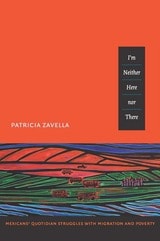
I'm Neither Here nor There
Mexicans' Quotidian Struggles with Migration and PovertyPatricia Zavella
Duke University Press, 2011
Drawing on close interactions with Mexicans on both sides of the border, Zavella examines migrant journeys to and within the United States, gendered racialization, and exploitation at workplaces, and the challenges that migrants face in forming and maintaining families. As she demonstrates, the desires of migrants to express their identities publicly and to establish a sense of cultural memory are realized partly through Latin American and Chicano protest music, and Mexican and indigenous folks songs played by musicians and cultural activists.

If They Don't Bring Their Women Here
Chinese Female Immigration before ExclusionGeorge Anthony Peffer
University of Illinois Press, 1999
Seven years before the Chinese Exclusion Act of 1882, the Page Law sought to stem the tide of Chinese prostitutes entering the United States. Yet during these seven years, it was not just prostitutes but all Chinese females who encountered at best hostility and at worst expulsion when they reached the "Golden Door."
George Anthony Peffer looks at enforcement of immigration laws to provide the first detailed account of Chinese American women's lives in the pre-exclusion era. Peffer documents the habeas corpus trials in which the wives and daughters of Chinese laborers were required to prove their status as legal immigrants or return to China. He also surveys the virulently anti-Chinese coverage of these trials and the issue of Chinese immigration received in California newspapers, confirming that Chinatown's prostitution industry so dominated the popular imagination as to render other classes of female immigrants all but invisible.
Insightful and groundbreaking, If They Don't Bring Their Women Here amplifies the voices of Chinese immigrant women and establishes a place for them within the historiographic framework of Chinese American studies.
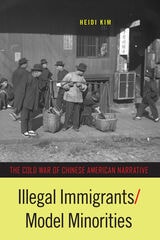
Illegal Immigrants/Model Minorities
The Cold War of Chinese American NarrativeHeidi Kim
Temple University Press, 2021
In the Cold War era, Chinese Americans were caught in a double-bind. The widespread stigma of illegal immigration, as it was often called, was most easily countered with the model minority, assimilating and forming nuclear families, but that in turn led to further stereotypes. In Illegal Immigrants/Model Minorities, Heidi Kim investigates how Chinese American writers navigated a strategy to normalize and justify the Chinese presence during a time when fears of Communism ran high.
Kim explores how writers like Maxine Hong Kingston, Jade Snow Wong, and C. Y. Lee, among others, addressed issues of history, family, blood purity, and law through then-groundbreaking novels and memoirs. Illegal Immigrants/Model Minorities also uses legal cases, immigration documents, and law as well as mass media coverage to illustrate how writers constructed stories in relation to the political structures that allowed or disallowed their presence, their citizenship, and their blended identity.
Kim illuminates the rapidly shifting political and social pressures on Chinese American authors who selectively concealed, revealed, and reconstructed issues of citizenship, belonging, and inclusion in their writing.
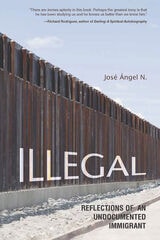
Illegal
Reflections of an Undocumented ImmigrantJose Angel N.
University of Illinois Press, 2014
Arriving in the 1990s with a ninth grade education, N. traveled to Chicago where he found access to ESL and GED classes. He eventually attended college and graduate school and became a professional translator.
Despite having a well-paying job, N. was isolated by a lack of legal documentation. Travel concerns made promotions impossible. The simple act of purchasing his girlfriend a beer at a Cubs baseball game caused embarrassment and shame when N. couldn't produce a valid ID. A frustrating contradiction, N. lived in a luxury high-rise condo but couldn't fully live the American dream. He did, however, find solace in the one gift America gave him–-his education. Ultimately, N.'s is the story of the triumph of education over adversity. In Illegal, he debunks the stereotype that undocumented immigrants are freeloaders without access to education or opportunity for advancement. With bravery and honesty, N. details the constraints, deceptions, and humiliations that characterize alien life "amid the shadows."
Imaginary Lines
Border Enforcement and the Origins of Undocumented Immigration, 1882-1930By Patrick Ettinger
University of Texas Press, 2009
Southwest Book Award, Border Regional Library Association, 2011
Although popularly conceived as a relatively recent phenomenon, patterns of immigrant smuggling and undocumented entry across American land borders first emerged in the late nineteenth century. Ingenious smugglers and immigrants, long and remote boundary lines, and strong push-and-pull factors created porous borders then, much as they do now.
Historian Patrick Ettinger offers the first comprehensive historical study of evolving border enforcement efforts on American land borders at the turn of the twentieth century. He traces the origins of widespread immigrant smuggling and illicit entry on the northern and southern United States borders at a time when English, Irish, Chinese, Italian, Russian, Lebanese, Japanese, Greek, and, later, Mexican migrants created various "backdoors" into the United States. No other work looks so closely at the sweeping, if often ineffectual, innovations in federal border enforcement practices designed to stem these flows.
From upstate Maine to Puget Sound, from San Diego to the Lower Rio Grande Valley in Texas, federal officials struggled to adapt national immigration policies to challenging local conditions, all the while battling wits with resourceful smugglers and determined immigrants. In effect, the period saw the simultaneous "drawing" and "erasing" of the official border, and its gradual articulation and elaboration in the midst of consistently successful efforts to undermine it.
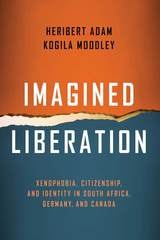
Imagined Liberation
Xenophobia, Citizenship, and Identity in South Africa, Germany, and CanadaHeribert Adam
Temple University Press, 2015
Why would a society that liberated itself in the name of human rights turn against people who escaped human rights violations or unlivable conditions at home? What happened to the expected African solidarity? Why do former victims become victimizers?
With porous borders, South Africa is incapable of upholding the blurred distinction between endangered refugees and economic migrants. Imagined Liberation asks what xenophobic societies can learn from other immigrant societies, such as Canada, that avoided the backlash against multiculturalism in Europe. Heribert Adam and Kogila Moodley stress an innovative teaching of political literacy that makes citizens aware as to why they hate.
Immigrant Identity and the Politics of Citizenship
A Collection of Articles from the Journal of American Ethnic HistoryJohn J Bukowczyk
University of Illinois Press, 2016
Immigrant Minds, American Identities
Making the United States Home, 1870-1930Orm Overland
University of Illinois Press, 2000
Devised by middle-class ethnic leaders and spread through ethnic media, banquets, and rallies, homemaking myths uncovered a role for immigrants in the nation's founding, a place of honor in the nation's wars, and traces of American democratic political ideology in the immigrants' ethnic past. These stories proclaim that immigrants, in the person of their ancestors, disembarked from Christopher Columbus's ships, fought for victory over the Axis, and brought American values of freedom and democracy from their native lands. By virtue of their ethnic group's contributions, these myths maintain, non-Anglo European immigrants came to America not as foreigners but as ready-made ideal citizens of the Republic.
Øverland shows that the plots and themes of homemaking myths share so many characteristics that they must be considered an American phenomenon rather than one peculiar to an individual ethnic group. As a symbol of the immigrant's insider status, these stories have played a crucial role in forming American ethnic identities and in carving out a place for immigrants in an Anglo-dominated society.
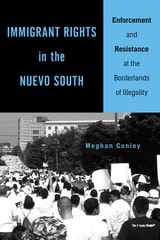
Immigrant Rights in the Nuevo South
Enforcement and Resistance at the Borderlands of IllegalityMeghan Conley
Temple University Press, 2020
Every day, undocumented immigrants are rendered vulnerable through policies and practices that illegalize them. Moreover, they are socially constructed into dangerous criminals and taxpayer burdens who are undeserving of rights, dignity, and respect. Meghan Conley’s timely book, Immigrant Rights in the Nuevo South, seeks to expose and challenge these dehumanizing ideas and practices byexamining the connections between repression and resistance for unauthorized immigrants in communities across the American Southeast.
Conley uses on-the-ground interviews to describe fear and resistance from the perspective of those most affected by it. She shows how, for example, the Illegal Immigration Reform and Enforcement Act in Georgia prompted marches and an action that became “a day of non-compliance.” Likewise, an “enforcement lottery” that created unpredictable threats of arrest and deportation in the region mobilized immigrants to organize and demonstrate. However, as immigrant rights activists mobilize in opposition to the criminalization of undocumented people, they may unintentionally embrace stories of who deserves to be in the United States and who does not. Immigrant Rights in the Nuevo South explores these paradoxes while offering keen observations about the nature and power of Latinx resistance.
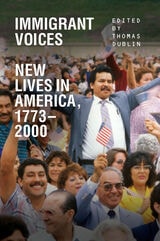
Immigrant Voices
New Lives in America, 1773-2000Edited by Thomas Dublin
University of Illinois Press, 2014
A classroom staple, Immigrant Voices: New Lives in America, 1773-2000 has been updated with writings that reflect trends in immigration to the United States through the turn of the twenty-first century. New chapters include a selection of letters from Irish immigrants fleeing the famine of the 1840s, writings from an immigrant who escaped the civil war in Liberia during the 1980s, and letters that crossed the U.S.-Mexico border during the late 1980s and early '90s. With each addition editor Thomas Dublin has kept to his original goals, which was to show the commonalities of the U.S. immigrant experience across lines of gender, nation of origin, race, and even time.
Immigrants Raising Citizens
Undocumented Parents and Their ChildrenHirokazu Yoshikawa
Russell Sage Foundation, 2011
Immigrants and Boomers
Forging a New Social Contract for the Future of AmericaDowell Myers
Russell Sage Foundation, 2007
Immigrants in the Far West
Historical Identities and ExperiencesJessie L. Embry
University of Utah Press, 2014
Immigration Research for a New Century
Multidisciplinary PerspectivesNancy Foner
Russell Sage Foundation, 2000
Immigration and Nationalism
Argentina and Chile, 1890–1914By Carl Solberg
University of Texas Press, 1970
“Dirtier than the dogs of Constantinople.” “Waves of human scum thrown upon our beaches by other countries.” Such was the vitriolic abuse directed against immigrant groups in Chile and Argentina early in the twentieth century. Yet only twenty-five years earlier, immigrants had encountered a warm welcome. This dramatic change in attitudes during the quarter century preceding World War I is the subject of Carl Solberg’s study. He examines in detail the responses of native-born writers and politicians to immigration, pointing out both the similarities and the significant differences between the situations in Argentina and Chile.
As attitudes toward immigration became increasingly nationalistic, the European was no longer pictured as a thrifty, industrious farmer or as an intellectual of superior taste and learning. Instead, the newcomer commonly was regarded as a subversive element, out to destroy traditional creole social and cultural values. Cultural phenomena as diverse as the emergence of the tango and the supposed corruption of the Spanish language were attributed to the demoralizing effects of immigration.
Drawing his material primarily from writers of the pre–World War I period, Solberg documents the rise of certain forms of nationalism in Argentina and Chile by examining the contemporary press, journals, literature, and drama. The conclusions that emerge from this study also have obvious application to the situation in other countries struggling with the problems of assimilating minority groups.
Immigration and Opportuntity
Race, Ethnicity, and Employment in the United StatesFrank D. Bean
Russell Sage Foundation, 1999
Immigration and the Law
Race, Citizenship, and Social ControlEdited by Sofía Espinoza Álvarez and Martin Guevara Urbina
University of Arizona Press, 2018
In today’s highly charged atmosphere, Immigration and the Law gives readers a grounded and broad overview of U.S. immigration law in a single book. Encompassing issues such as shifting demographics, a changing criminal justice system, and volatile political climate, the book is critically significant for academic, political, legal, and social arenas.
The contributors offer sound evidence to expose the historical legacy of violence, brutality, manipulation, oppression, marginalization, prejudice, discrimination, power, and control. Demystifying the ways that current ideas of ethnicity, race, gender, and class govern immigration and uphold the functioning and legitimacy of the criminal justice system, Immigration and the Law presents a variety of studies and perspectives that offer a pathway toward addressing long-neglected but vital topics in the discourse on immigration and the law.
Contributors
Sofía Espinoza Álvarez
Steven W. Bender
Leo R. Chávez
Arnoldo De León
Daniel Justino Delgado
Roxanne Lynn Doty
Brenda I. Gill
Ruth Gomberg-Muñoz
Peter Laufer
Lupe S. Salinas
Mary C. Sengstock
Martin Guevara Urbina
Claudio G. Vera Sánchez
Immigration and the Politics of American Sovereignty, 1890-1990
Cheryl Shanks
University of Michigan Press, 2001
Immigration, Poverty, and Socioeconomic Inequality
David Card
Russell Sage Foundation, 2013

Impossible Citizens
Dubai's Indian DiasporaNeha Vora
Duke University Press, 2013
While their legal status defines them as perpetual outsiders, Indians are integral to the Emirati nation-state and its economy. At the same time, Indians—even those who have established thriving diasporic neighborhoods in the emirate—disavow any interest in formally belonging to Dubai and instead consider India their home. Vora shows how these multiple and conflicting logics of citizenship and belonging contribute to new understandings of contemporary citizenship, migration, and national identity, ones that differ from liberal democratic models and that highlight how Indians, rather than Emiratis, are the quintessential—yet impossible—citizens of Dubai.
Impure Migration
Jews and Sex Work in Golden Age ArgentinaMir Yarfitz
Rutgers University Press, 2019
In And Out Of Morocco
Smuggling and Migration in a Frontier BoomtownDavid Mcmurray
University of Minnesota Press, 2001
A revealing inquiry into how global culture is lived locally.
Every summer for almost forty years, tens of thousands of Moroccan emigrants from as far away as Norway and Germany descend on the duty-free smugglers’ cove/migrant frontier boomtown of Nador, Morocco. David McMurray investigates the local effects of the multiple linkages between Nador and international commodity circuits, and analyzes the profound effect on everyday life of the free flow of bodies, ideas, and commodities into and out of the region.
Combining immigration and population statistics with street-level ethnography, In and Out of Morocco covers a wide range of topics, including the origin and nature of immigrant nostalgia, the historical evolution of the music of migration in the region, and the influence of migrant wealth on social distinctions in Nador. Groundbreaking in its attention to the performative aspects of life in a smuggling border zone, the book also analyzes the way in which both migration and smuggling have affected local structures of feeling by contributing to the spread of hyperconsumption. The result is a rare and revealing inquiry into how the global culture is lived locally.
In Lady Liberty's Shadow
The Politics of Race and Immigration in New JerseyRobyn Magalit Rodriguez
Rutgers University Press, 2017
In Lady Liberty’s Shadow examines popular white perceptions of danger represented by immigrants and their children, as well the specter that lurks at the edges of suburbs in the shape of black and Latino urban underclasses and the ever more nebulous hazard of (presumed-Islamic) terrorism that threatening to undermine “life as we know it.” Robyn Magalit Rodriguez explores the impact of anti-immigrant municipal ordinances on a range of immigrant groups living in varied suburban communities, from undocumented Latinos in predominantly white suburbs to long-established Asian immigrants in “majority-minority” suburbs. The “American Dream” that suburban life is supposed to represent is shown to rest on a racialized, segregated social order meant to be enjoyed only by whites. Although it is a case study of New Jersey, In Lady Liberty’s Shadow offers crucial insights that can shed fresh light on the national immigration debate.
For more information, go to: https://www.facebook.com/inlibertysshadow
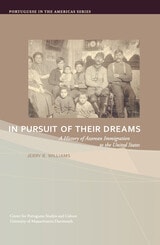
In Pursuit of Their Dreams
A History of Azorean Immigration to the United StatesJerry R. Williams
Tagus Press, 2007
Jerry Williams' history of Azorean immigration to the United States offers us valuable insight into the experience and culture of Portuguese immigrants and their descendants. This account fills a major gap in American immigration history and gives us a comprehensive overview of how Portuguese-Americans—now numbering close to a million people—have come to constitute a vibrant and highly visible presence within southeastern New England, the areas around San Francisco and San Diego, Hawaii, and the New Jersey/New York metropolitan area. Even though Azorean immigrants all came from similar cultural and social backgrounds, Williams shows how regionally specific opportunity structures and social hierarchies have contributed to significant differences within the Portuguese-American experience.
Starting with the whaling routes that first connected the mid-Atlantic archipelago with the ports of call in New England and California in the early 1800s, Williams lays out the complex relationship between the Azores and the US that has continued into the present. We learn how particular patterns of poverty, overpopulation and social inequality in the Azores pushed large numbers of the islands' inhabitants to leave their homes in search of better opportunities for themselves and their children. He tells the story of how the early whalers who jumped ship in New Bedford, San Francisco, or Hawaii were followed by kin and fellow villagers who had heard of plentiful jobs in New England's textile mills, gold and land in California, or agricultural work on Hawaiian plantations. Williams' account allows us to understand the importance of family and community connections throughout the immigrants' arduous transition from peasant life to industrial society.
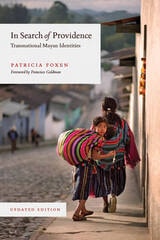
In Search of Providence
Transnational Mayan Identities, Updated EditionPatricia Foxen
Vanderbilt University Press, 2020
In the mid-1990s, Patricia Foxen traveled back and forth between the Guatemalan highlands and Providence, Rhode Island, to understand the migration paths of K'iche' Mayan Indians who had fled the Guatemalan civil war to work in the factories and fisheries of New England. More than two decades later, many Mayans are still migrating to the US. As Foxen argues, the recent surge in Mayan border crossings must be contextualized within both the longer history of violence, marginality, and exclusion that has long led Guatemala's Indigenous populations to be "survivors on the move," as well as contemporary push factors such as climate change and growing inequality that have forced people from their communities.
And yet one of the most significant drivers of continued emigration today, ironically, is the very culture of migration (described in the book) that has accelerated social change within many Indigenous communities, setting in motion a complex series of economic and cultural shifts that have compelled a continuous movement of people and generations to the US. Reading this story in 2020—at a time of massive growth in flows of irregular migrations around the world—can help us better understand the highly complex set of factors that propel long-term migrations and that shape transnational communities on both sides of the border.
In Search of Providence offers a layered, historically grounded perspective that speaks to the local specificity behind the migration experience in order to point to the universal themes and contradictions of contemporary global displacements.
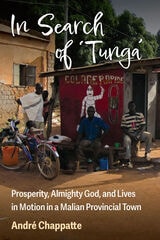
In Search of Tunga
Prosperity, Almighty God, and Lives in Motion in a Malian Provincial TownAndré Chappatte
University of Michigan Press, 2022
In the context of the current global war on terrorism, most studies of Muslim life have focused on the politics of piety of reformist movements, their leaders, and members. By contrast, In Search of “Tunga” takes a perspective from below. It opens piety up to “simply Muslims,” although the religious elites have always claimed authority and legitimacy over piety. Is piety an exclusive field of experiences for those who claim to strive for it? What does piety involve for the majority of Muslims, the non-elite and unaffiliated Muslims? This volume “democratizes” piety by documenting its practice as going beyond sharply defined religious affiliations and Islamic scholarship, and by showing it is both alive and normative, existential and prescriptive. As opposed to studies that build on the classic historical connections between the Maghreb and the Sahel, the southbound migration from the Sahel documented in this book stresses the overlooked historical connections between the southern shores of the Sahara and the lands south of those shores. It demonstrates how the Malian savanna, this former buffer-zone between ancient Mande kingdoms and thereafter remote areas of French Sudan, is increasingly becoming central in today’s Sahel contexts of desiccation and insecurity.

In the Name of Women's Rights
The Rise of FemonationalismSara R. Farris
Duke University Press, 2017
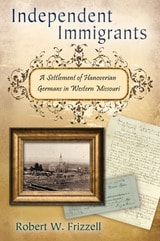
Independent Immigrants
A Settlement of Hanoverian Germans in Western MissouriRobert W. Frizzell
University of Missouri Press, 2007
Between 1838 and the early 1890s, German peasant farmers from the Kingdom of Hanover made their way to Lafayette County, Missouri, to form a new community centered on the town of Concordia. Their story has much to tell us about the American immigrant experience—and about how newcomers were caught up in the violence that swept through their adoptive home.
Robert Frizzell grew up near Concordia, and in this first book-length history of the German settlement, he chronicles its life and times during those formative years. Founded by Hanoverian Friedrich Dierking—known as “Dierking the Comforter” for the aid he gave his countrymen—the Concordia settlement blossomed from 72 households in 1850 to 375 over the course of twenty years. Frizzell traces that growth as he examines the success of early agricultural efforts, but he also tells how the community strayed from the cultural path set by its freethinker founder to become a center of religious conservatism.
Drawing on archival material from both sides of the Atlantic, Frizzell offers a compelling account for scholars and general readers alike, showing how Concordia differed from other German immigrant communities in America. He also explores the conditions in Hanover—particularly the village of Esperke, from which many of the settlers hailed—that caused people to leave, shedding new light on theological, political, and economic circumstances in both the Old World and the New.
When the Civil War came, the antislavery Hanoverians found themselves in the Missouri county with the greatest number of slaves, and the Germans supported the Union while most of their neighbors sympathized with Confederate guerrillas. Frizzell tells how the notorious “Bloody Bill” Anderson attacked the community three times, committing atrocities as gruesome as any recorded in the state—then how the community flourished after the war and even bought out the farmsteads of former slaveholders.
Frizzell’s account challenges many historians’ assumptions about German motives for immigration and includes portraits of families and individuals that show the high price in toil and blood required to meet the challenges of making a home in a new land. Independent Immigrants reveals the untold story of these newcomers as it reveals a little-known aspect of the Civil War in Missouri.
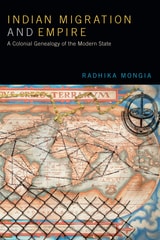
Indian Migration and Empire
A Colonial Genealogy of the Modern StateRadhika Mongia
Duke University Press, 2018
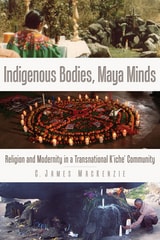
Indigenous Bodies, Maya Minds
Religion and Modernity in a Transnational K'iche' CommunityC. James MacKenzie
University Press of Colorado, 2016
Indigenous Bodies, Maya Minds examines tension and conflict over ethnic and religious identity in the K’iche’ Maya community of San Andrés Xecul in the Guatemalan Highlands and considers how religious and ethnic attachments are sustained and transformed through the transnational experiences of locals who have migrated to the United States.
Author C. James MacKenzie explores the relationship among four coexisting religious communities within Highland Maya villages in contemporary Guatemala—costumbre, traditionalist religion with a shamanic substrate; “Enthusiastic Christianity,” versions of Charismaticism and Pentecostalism; an “inculturated” and Mayanized version of Catholicism; and a purified and antisyncretic Maya Spirituality—with attention to the modern and nonmodern worldviews that sustain them. He introduces a sophisticated set of theories to interpret both traditional religion and its relationship to other contemporary religious options, analyzing the relation among these various worldviews in terms of the indigenization of modernity and the various ways modernity can be apprehended as an intellectual project or an embodied experience.
Indigenous Bodies, Maya Minds investigates the way an increasingly plural religious landscape intersects with ethnic and other identities. It will be of interest to Mesoamerican and Mayan ethnographers, as well as students and scholars of cultural anthropology, indigenous cultures, globalization, and religion.
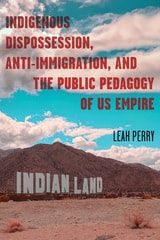
Indigenous Dispossession, Anti-Immigration, and the Public Pedagogy of US Empire
Leah Perry
The Ohio State University Press, 2024
From the founding of the United States, enduringly consequential debates over Indigeneity and immigration have occurred on the battlefield and in Congress, in courtrooms, at territorial borders, and in mainstream culture. In Indigenous Dispossession, Anti-Immigration, and the Public Pedagogy of US Empire, Leah Perry traces the ways that the US created its empire through public pedagogies—which she defines as policy and media discourses—surrounding Indigenous dispossession, gendered state violence, and racialized immigration. These pedagogies have propelled the expansion of US empire, including the redrawing of the US as a neoliberal democracy. Perry argues that by changing the discourse around gender, race, immigration, and Indigeneity, the United States has continued its imperial project through different eras, always predicated on Indigenous dispossession.
In exploring crucial components of empire, such as welfare, eugenics, disability, sexual violence, foodways, queerness, and policing, Perry interrogates violence against Indigenous peoples and against immigrants, examining these not independently—as is so often the case—but as co-constitutive. Indigenous Dispossession, Anti-Immigration, and the Public Pedagogy of US Empire thus intervenes in and fills a gap in immigration studies, Indigenous studies, race and ethnic studies, gender and sexuality studies, and US history.
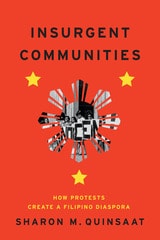
Insurgent Communities
How Protests Create a Filipino DiasporaSharon M. Quinsaat
University of Chicago Press, 2024
When people migrate and settle in other countries, do they automatically form a diaspora? In Insurgent Communities, Sharon M. Quinsaat explains the dynamic process through which a diaspora is strategically constructed. Quinsaat looks to Filipinos in the United States and the Netherlands—examining their resistance against the dictatorship of Ferdinand Marcos, their mobilization for migrants’ rights, and the construction of a collective memory of the Marcos regime—to argue that diasporas emerge through political activism. Social movements provide an essential space for addressing migrants’ diverse experiences and relationships with their homeland and its history. A significant contribution to the interdisciplinary field of migration and social movements studies, Insurgent Communities illuminates how people develop collective identities in times of social upheaval.

Interrogating Integration
Sport, Celebrity, and Scandal in the Making of New GermanyKate Zambon
University of Michigan Press, 2025
Using touchstones of public memory, including events surrounding men’s World Cup soccer and the record-breaking success of a book blaming Muslims for Germany’s decline, Zambon examines persistent problems in European conceptions of race, where racializing projects take place under an “ideology of racelessness” and the atrocities of historical and transnational racisms are used to deny current local forms of racism.
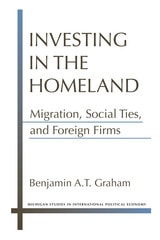
Investing in the Homeland
Migration, Social Ties, and Foreign FirmsBenjamin A.T. Graham
University of Michigan Press, 2019
Graham’s analysis draws on new data from face-to-face interviews with the managers of over 450 foreign firms operating in two developing countries: Georgia and the Philippines. Diaspora-owned and diaspora-managed firms are better connected than other foreign firms and they use social ties to resolve disputes and influence government policy. At the same time, Graham shows that diaspora-affiliated firms are no more socially responsible than their purely foreign peers—at root, they are profit-seeking enterprises, not development NGOs. Graham identifies implications for policymakers seeking to capture the development potential of diaspora investment and for managers of multinational firms who want to harness diasporans as a source of sustained competitive advantage.

Irish in Wisconsin
David G. Holmes
Wisconsin Historical Society Press, 2004
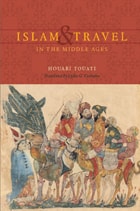
Islam and Travel in the Middle Ages
Houari Touati
University of Chicago Press, 2010
In the Middle Ages, Muslim travelers embarked on a rihla, or world tour, as surveyors, emissaries, and educators. On these journeys, voyagers not only interacted with foreign cultures—touring Greek civilization, exploring the Middle East and North Africa, and seeing parts of Europe—they also established both philosophical and geographic boundaries between the faithful and the heathen. These voyages thus gave the Islamic world, which at the time extended from the Maghreb to the Indus Valley, a coherent identity.
Islam and Travel in the Middle Ages assesses both the religious and philosophical aspects of travel, as well as the economic and cultural conditions that made the rihla possible. Houari Touati tracks the compilers of the hadith who culled oral traditions linked to the prophet, the linguists and lexicologists who journeyed to the desert to learn Bedouin Arabic, the geographers who mapped the Muslim world, and the students who ventured to study with holy men and scholars. Travel, with its costs, discomforts, and dangers, emerges in this study as both a means of spiritual growth and a metaphor for progress. Touati’s book will interest a broad range of scholars in history, literature, and anthropology.
Island Paradox
Puerto Rico in the 1990sFrancisco Rivera-Batiz
Russell Sage Foundation, 1996
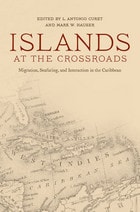
Islands at the Crossroads
Migration, Seafaring, and Interaction in the CaribbeanL. Antonio Curet
University of Alabama Press, 2011
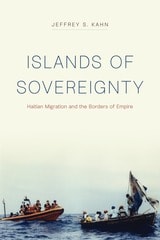
Islands of Sovereignty
Haitian Migration and the Borders of EmpireJeffrey S. Kahn
University of Chicago Press, 2018
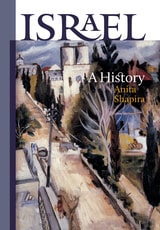
Israel
A HistoryAnita Shapira
Brandeis University Press, 2014
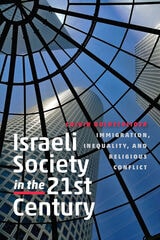
Israeli Society in the Twenty-First Century
Immigration, Inequality, and Religious ConflictCalvin Goldscheider
Brandeis University Press, 2015
Issues in the Economics of Immigration
Edited by George J. Borjas
University of Chicago Press, 2000
This collection offers new insights into the kinds of economic opportunities and outcomes that immigrant populations might expect for themselves and future generations.
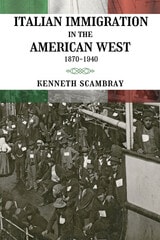
Italian Immigration in the American West
1870-1940Kenneth Scambray
University of Nevada Press, 2021
The lives of immigrants in the West differed greatly from those of their counterparts on the East Coast in many ways. The development of the West—with its cheap land and mining, forestry, and agriculture industries\--created a demand for labor that enabled newcomers to achieve stability and success. Moreover, female immigrants had many more opportunities to contribute materially to their family’s well-being, either by overseeing new revenue streams for their farms and small businesses, or as paid workers outside the home.
Despite this success, Italian immigrants in the West could not escape the era’s xenophobia. Scambray also discusses the ways that Italians, perceived by many as non-White, interacted with other Euro-Americans, other immigrant groups, and Native Americans and African Americans.
By placing the Italian immigrant experience within the context of other immigrant narratives, Italian Immigration in the American West provides rich insights into the lives and contributions of individuals and families who sought to build new lives in the West. This unique study reveals the impact of Italian immigration and the immense diversity of the immigrant experience outside the East’s urban centers.