Results by title
271 books match the query 'Employment' and 12 start with i
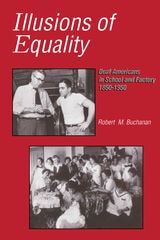
Illusions of Equality
Deaf Americans in School and Factory, 1850-1950Robert M. Buchanan
Gallaudet University Press, 1999
The working lives of Deaf Americans from the mid-1850s to the post-World War II era depended upon strategies created by Deaf community leaders to win and keep jobs through periods of low national employment as well as high. Deaf people typically sought to de-emphasize their identity as sign language users to be better integrated into the workforce. But in his absorbing new book Illusions of Equality, Robert Buchanan shows that events during the next century would thwart these efforts.
The residential schools for deaf students established in the 19th century favored a bilingual approach to education that stressed the use of American Sign Language while also recognizing the value of learning English. But the success of this system was disrupted by the rise of oralism, with its commitment to teaching deaf children speech and its ban of sign language. Buchanan depicts the subsequent ramifications in sobering terms: most deaf students left school with limited educations and abilities that qualified them for only marginal jobs. He also describes the insistence of the male hierarchy in the Deaf community on defending the tactics of individual responsibility through the end of World War II, a policy that continually failed to earn job security for Deaf workers. Illusions of Equality is an original, edifying work that will be appreciated by scholars and students for years to come.
Immigration and Opportuntity
Race, Ethnicity, and Employment in the United StatesFrank D. Bean
Russell Sage Foundation, 1999

Immigration, Poverty, and Socioeconomic Inequality
David Card
Russell Sage Foundation, 2013

In the Company of Diamonds
De Beers, Kleinzee, and the Control of a TownPeter Carstens
Ohio University Press, 2001
After the 1925 discovery of diamonds in the semi-desert of the northwest coast of South Africa, De Beers Consolidated Mines Ltd. virtually proclaimed its dominion over the whole region. In the town of Kleinzee, the company owns all the real estate and infrastructure, and controls and administers both the town and the industry.
Peter Carstens’s In the Company of Diamonds draws a stark and startling portrait of this closed community, one that analyzes the power and hegemonic techniques used to acquire that power and maintain it.
As a prototypical company town, Kleinzee is subordinated to the industry and will of the owners. Employees and workers are variously differentiated and ordered according to occupation, ethnic variation, and other social criteria, a pattern reflected most markedly in the allocation of housing. Managers live in large, ranch-style houses, while contract workers are lodged in single-sex compounds.
As a community type, company towns like Kleinzee are not entirely unique, and Professor Carstens successfully draws a number of structural parallels with other closed and incomplete social formations such as Indian reservations, military bases, colleges, prisons, and mental hospitals.

In the Name of Women's Rights
The Rise of FemonationalismSara R. Farris
Duke University Press, 2017
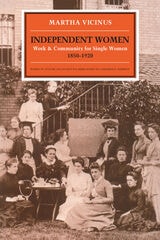
Independent Women
Work and Community for Single Women, 1850-1920Martha Vicinus
University of Chicago Press, 1985
"Feminist insight combines with vast research to produce a dramatic narrative. Independent Women chronicles the energetic lives and imaginative communal structures invented by women who 'pioneered new occupations, new living conditions, and new public roles.'"—Lee R. Edwards, Ms.
"Vicinus is to be congratulated for her brave and unflinching portraits of twisted spinsters as well as stolid saints. That she stretches her net up into the '20s and covers the women's suffrage momement is a brilliant stroke, for one may see clearly how it was possible for women to mount such an enormous and successful political campaign."—Jane Marcus, Chicago Tribune Book World
"Vicinus' beautifully written book abounds in rich historical detail and in subtle psychological insights in the character of its protagonists. The author understands the complexities of the interplay between economic and social conditions, cultural values, and the aims and aspirations of individual personalities who act in history. . . . A superb achievement."—Gerda Lerner, Reviews in American History
"Martha Vicinus has with intelligence and energy paved and landscaped the road on which scholars and students of activist women all travel for many years."—Blanche Wiesen Cook, Women's Review of Books
"Independent Women can be read by anyone with an interest in women's history. But for all contemporary women, unconsciously enjoying privileges and freedoms once bought so dearly, this book should be required reading."—Catharine E. Boyd, History
Indigenous Women and Work
From Labor to ActivismEdited by Carol Williams
University of Illinois Press, 2012
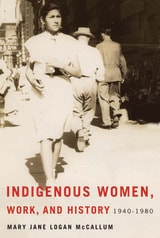
Indigenous Women, Work, and History
Mary Jane Logan McCallum
University of Manitoba Press, 2014
Information Services to Diverse Populations
Competent Humility for Library ProfessionalsNicole A. Cooke
American Library Association, 2026
Foreword by Cynthia Sturgis Landrum
The development of cultural competency skills and social awareness benefits LIS students, their future employers, and the library profession at large―not to mention library customers and society as a whole. Cooke's freshly updated text introduces readers to the contexts and situations that promote the development of empathy and build cultural competence. It marshals cutting edge research and relevant best practices to give readers a strong grasp of the political, social, economic, and technological divides among library patrons. It also covers outreach and library services to diverse populations, how to evaluate such services, and many other key topics. Complete with an updated syllabus, lesson plans, and exercises ready-made for course use, Cooke’s text
- demonstrates why social responsibility is a foundational value of librarianship;
- considers library services to members of marginalized racial or ethnic groups, older adults, people with mental health or physical disabilities, neurodiverse library users, refugees and immigrants, people experiencing homelessness or hunger, those growing up in or experiencing poverty, members of the LGBTQIA+ communities, and people who are incarcerated;
- features a myriad of testimonials drawn from a wide variety of settings that highlight the experiences of library and museum practitioners who are working with diverse populations;
- introduces a new model of cultural competence and cultural humility;
- authoritatively covers such essential concepts as intersectionality, privilege, marginalization, cultural competence, cultural humility, and counter-storytelling along with discussions of how they interplay in the communities that libraries serve;
- explores the impact of overwhelming whiteness of the library profession and what can be done to recruit, welcome, mentor, and retain racially and ethnically diverse library workers; and
- identifies potential employment and networking opportunities related to diversity and social justice in librarianship.

Inside Jobs
Prison Work in the Making of the American Labor Marketreich
Russell Sage Foundation, 2026
From the stone quarries of Sing Sing that supplied marble for early New York City landmarks, to twenty-first-century construction projects staffed by formerly incarcerated workers, Inside Jobs traces the relationship between prison work and the labor market over the past two hundred years. Sociologist Adam Reich demonstrates how prison labor has repeatedly been used to solve economic problems—disciplining workers, lowering labor costs, managing unemployment—revealing unexpected connections that challenge our assumptions about freedom, coercion, and labor itself.
Reich examines the history of work in prisons to understand how it has related to the free labor market. He finds that the organization of prison work, and debates over it, have changed dramatically over time. In the mid to late nineteenth century, prisons helped shape the emerging factory system as the apprentice-based labor market gave way to industrial production. Labor unions opposed prison labor as immoral, and in the early to mid-twentieth century, the moral character of the workforce became central to economic life within the prison and without. Therapeutic professionals worked in prisons to rehabilitate the incarcerated and determine what motivated them to work. Following prison uprisings in the late twentieth century, prison work became a tool of population control. Yet, paradoxically, work programs were remodeled to mirror the free labor market, requiring applications and hiring processes.
Blending archival research, political economy, and sociological theory, Inside Jobs offers a powerful new framework for understanding mass incarceration and reentry today. Reich examines how the dynamics of mass incarceration have begun to shift. He explores how the "mark of a criminal record"—the stigma traditionally associated with felony convictions—has given way to a "market" for criminal records, as employers discover advantages in hiring disadvantaged, dependent, and disciplined workers recently released from prison. Looking toward the future, Reich focuses on promising efforts to transform this system.
Inside Jobs is an illuminating examination of prison work's history, its relationship to work outside prison walls, and how the criminal justice system disempowers workers both behind bars and beyond.
Internships in the Private Sector
How You Can Find, Prepare for, and Thrive in ThemCharles A. Fishkin
University of Chicago Press, 2026
Every year, college students across the country seek internships to build experience in their chosen fields. In this highly competitive job market, students and recent graduates need to seek out every possible opportunity to differentiate themselves and demonstrate that they are ready to roll up their sleeves and get to work. One important way to do so is an internship in the private sector, which can lead to a full-time job with a well-regarded organization. Yet the process of finding an internship can appear challenging. This book can make it easier.
For more than a decade, finance professional Charles Fishkin has been preparing students to thrive in internship programs. In this book, he shares his advice for those who are seeking a private-sector internship. With insights relevant to a variety of fields—from finance to the tech sector—he covers the process from start to finish, beginning with exploring the range of internship opportunities available. Several chapters offer advice on best practices for crafting effective resumes, networking, and interviewing to get the position. Fishkin offers checklists, action items, real-life scenarios, and practical suggestions, each arising from the experiences of former interns and hiring managers. The heart of the book focuses on the nine to twelve weeks of the internship itself, with tips on how to interact with supervisors and colleagues, how to learn and apply new skills, and how to solve problems and address challenges that arise.
Internships in the Private Sector is the first full-length guide to securing and making the most of an internship. This book will help level the playing field, providing students with the tools and support they need to perform to the fullest extent of their abilities and lay the foundation for a strong start to their careers.
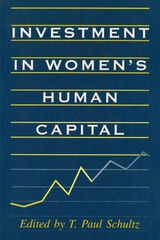
Investment in Women's Human Capital
Edited by T. Paul Schultz
University of Chicago Press, 1995
Section I considers the experiences of high-income countries, examining the limitations of industrialization for the advancement of women; returns to secondary education for women; and state control of women's education and labor market productivity through the design of tax systems and the public subsidy of children.
The remaining four sections investigate health, education, household structure and labor markets, and measurement issues in low-income countries, including the effect of technological change on transfers of wealth to and from children in India; women's and men's responses to the costs of medical care in Kenya; the effects of birth order and sex on educational attainment in Taiwan; wage returns to schooling in Indonesia and in Cote d'Ivoire; and the increasing prevalence of female-headed households and the correlates of gender differences in wages in Brazil.