Results by title
403 books match the query 'Environmental Science' and 11 start with i
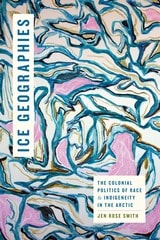
Ice Geographies
The Colonial Politics of Race and Indigeneity in the ArcticJen Rose Smith
Duke University Press, 2025
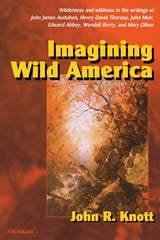
Imagining Wild America
John Knott
University of Michigan Press, 2002
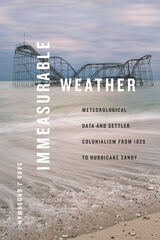
Immeasurable Weather
Meteorological Data and Settler Colonialism from 1820 to Hurricane SandySara J. Grossman
Duke University Press, 2023
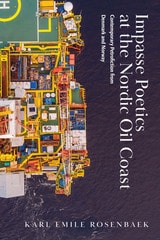
Impasse Poetics at the Nordic Oil Coast
Contemporary Petrofiction from Denmark and NorwayKarl Emil Rosenbaek Reetz
West Virginia University Press, 2026

In Search of the Amazon
Brazil, the United States, and the Nature of a RegionSeth Garfield
Duke University Press, 2013
In Search of the Rain Forest
Candace Slater, ed.
Duke University Press, 2004
From diverse disciplines—history, archaeology, sociology, literature, law, and cultural anthropology—the contributors provide case studies from Latin America, Asia, and Africa. They point the way toward a search for a rain forest that is both a natural entity and a social history, an inhabited place and a shifting set of ideas. The essayists demonstrate how the single image of a wild and yet fragile forest became fixed in the popular mind in the late twentieth century, thereby influencing the policies of corporations, environmental groups, and governments. Such simplistic conceptions, In Search of the Rain Forest shows, might lead companies to tout their “green” technologies even as they try to downplay the dissenting voices of native populations. Or they might cause a government to create a tiger reserve that displaces peaceful peasants while opening the doors to poachers and bandits. By encouraging a nuanced understanding of distinctive, constantly evolving forests with different social and natural histories, this volume provides an important impetus for protection efforts that take into account the rain forest in all of its complexity.
Contributors. Scott Fedick, Alex Greene, Paul Greenough, Nancy Peluso, Suzana Sawyer, Candace Slater, Charles Zerner

In the Shadow of the Palms
More-Than-Human Becomings in West PapuaSophie Chao
Duke University Press, 2022
International Environmental Policy
From the Twentieth to the Twenty-First CenturyLynton Keith Caldwell
Duke University Press, 1996

International Law, Sustainable Development and Water Management
Antoinette Hildering
Eburon Academic Publishers, 2005
Inventing Global Ecology
Tracking the Biodiversity Ideal in India, 1947–1997Michael L. Lewis
Ohio University Press, 2004
Blue jeans, MTV, Coca-Cola, and… ecology? We don't often think of conservation sciences as a U.S. export, but in the second half of the twentieth century an astounding array of scientists and ideas flowed out from the United States into the world, preaching the gospel of conservation-oriented ecology.
Inventing Global Ecology grapples with how we should understand the development of global ecology in the twentieth century—a science that is held responsible for, literally, saving the world. Is the spread of ecology throughout the globe a subtle form of cultural imperialism, as some claim? Or is it a manifestation of an increasingly globalized world, where ideas, people, and things move about with greater freedom than ever before?
Using India as the case study, Professor Michael Lewis considers the development of conservation policies and conservation sciences since the end of World War II and the role of United States scientists, ideas, and institutions in this process. Was India subject to a subtle form of Americanization, or did Indian ecologists develop their own agenda, their own science, and their own way of understanding (and saving) the natural world? Does nationality even matter when doing ecology?
This readable narrative will carry you through the first fifty years of independent India, from the meadows of the Himalayan Mountains to the rainforests of southern India, from Gandhi and Nehru to Project Tiger. Of equal interest to the general reader, to scientists, and to scholars of history and globalization, Inventing Global Ecology combines ethnographic fieldwork and oral history conducted in India and the United States, as well as traditional archival research.
Inventing Pollution
Coal, Smoke, and Culture in Britain since 1800Peter Thorsheim
Ohio University Press, 2006
Britain's supremacy in the nineteenth century depended in large part on its vast deposits of coal. This coal not only powered steam engines in factories, ships, and railway locomotives but also warmed homes and cooked food. As coal consumption skyrocketed, the air in Britain's cities and towns became filled with ever-greater and denser clouds of smoke.
In this far-reaching study, Peter Thorsheim explains that, for much of the nineteenth century, few people in Britain even considered coal smoke to be pollution. To them, pollution meant miasma: invisible gases generated by decomposing plant and animal matter. Far from viewing coal smoke as pollution, most people considered smoke to be a valuable disinfectant, for its carbon and sulfur were thought capable of rendering miasma harmless.
Inventing Pollution examines the radically new understanding of pollution that emerged in the late nineteenth century, one that centered not on organic decay but on coal combustion. This change, as Peter Thorsheim argues, gave birth to the smoke-abatement movement and to new ways of thinking about the relationships among humanity, technology, and the environment.