Results by title
23 books match the query 'Intersections'
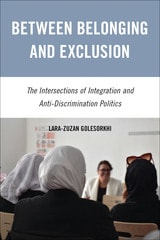
Between Belonging and Exclusion
The Intersections of Integration and Anti-Discrimination PoliticsLara-Zuzan Golesorkhi
Temple University Press, 2026
Integration and discrimination are two of the most salient yet contradictory forces shaping contemporary European politics. In Between Belonging and Exclusion Lara-Zuzan Golesorkhi asserts that this tension exists because integration politics do not facilitate non-discrimination, nor do they address experiences of discrimination. She draws on interviews with refugees and other key actors in integration politics to examine the barriers hindering refugee women’s labor market participation in Germany.
Golesorkhi introduces four explanatory tropes that reveal how and why integration efforts have often fallen short. She examines the power relations and limitations in migration governance as well as the identity narratives of Germanness/Europeanness, and the gendered and racialized mechanisms of “othering” that contribute to discrimination.
Between Belonging and Exclusion delineates what Germany and the EU “get wrong” about integration and anti-discrimination as it outlines conceptual and practical suggestions for expanding the terms of inclusion.
Contemporary Asian American Communities
Intersections And Divergencesedited by Linda Trinh Võ and Rick Bonus
Temple University Press, 2002
Feminist Digital Humanities
Intersections in PracticeEdited by Lisa Marie Rhody and Susan Schreibman
University of Illinois Press, 2025
The editors divide the works into three categories. In the first section, contributors offer readings that demonstrate how feminist thought can be put into operation through digital practice or via analytical approaches, methodologies, and interpretations. A second section structured around infrastructure considers how technologies of knowledge creation, publication, access, and sharing can be formed or reformed through feminist values. The final section focuses on pedagogies and proposes feminist strategies for preparing students to become critical and confident readers with and against technologies.
Aimed at readers in and out of the classroom, Feminist Digital Humanities reveals the many ways scholars have pushed beyond critique to practice digital humanities in new ways.
Contributors: Daniela Agostinho, Monika Barget, Jenny Bergenmar, Susan Brown, Tanya E Clement, Katrine Dirckinck-Holmfeld, Jaime Lee Kirtz, Cecilia Lindhé, Laura Mandell, Lisa Marie Rhody, Mark Sample, Susan Schreibman, Andie Silva, Nikki L. Stevens, Ravynn K. Stringfield, Dhanashree Thorat, Nanna Bonde Thylstrup, Kristin Veel, Astrid von Rosen, and Jacqueline Wernimont

Freud in Oz
At the Intersections of Psychoanalysis and Children’s LiteratureKenneth B. Kidd
University of Minnesota Press, 2011
Children’s literature has spent decades on the psychiatrist’s couch, submitting to psychoanalysis by scores of scholars and popular writers alike. Freud in Oz turns the tables, suggesting that psychoanalysts owe a significant and largely unacknowledged debt to books ostensibly written for children. In fact, Kenneth B. Kidd argues, children’s literature and psychoanalysis have influenced and interacted with each other since Freud published his first case studies.
In Freud in Oz, Kidd shows how psychoanalysis developed in part through its engagement with children’s literature, which it used to articulate and dramatize its themes and methods, turning first to folklore and fairy tales, then to materials from psychoanalysis of children, and thence to children’s literary texts, especially such classic fantasies as Peter Pan and Alice’s Adventures in Wonderland. He traces how children’s literature, and critical response to it, aided the popularization of psychoanalytic theory. With increasing acceptance of psychoanalysis came two new genres of children’s literature—known today as picture books and young adult novels—that were frequently fashioned as psychological in their forms and functions.
Freud in Oz offers a history of reigning theories in the study of children’s literature and psychoanalysis, providing fresh insights on a diversity of topics, including the view that Maurice Sendak and Bruno Bettelheim can be thought of as rivals, that Sendak’s makeover of monstrosity helped lead to the likes of the Muppets, and that “Poohology” is its own kind of literary criticism—serving up Winnie the Pooh as the poster bear for theorists of widely varying stripes.
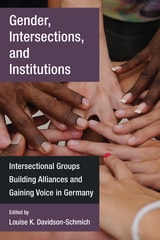
Gender, Intersections, and Institutions
Intersectional Groups Building Alliances and Gaining Voice in GermanyEdited by Louise K. Davidson-Schmich
University of Michigan Press, 2017
Going North Thinking West
The Intersections of Social Class, Critical Thinking, and Politicized Writing InstructionIrvin Peckham
Utah State University Press, 2010
Health Equity in Brazil
Intersections of Gender, Race, and PolicyKia Lilly Caldwell
University of Illinois Press, 2017
Indians on Indian Lands
Intersections of Race, Caste, and IndigeneityNishant Upadhyay
University of Illinois Press, 2024
Winner of a NWSA/University of Illinois Press First Book Prize
Nishant Upadhyay unravels Indian diasporic complicity in its ongoing colonialist relationship with Indigenous peoples, lands, and nations in Canada. Upadhyay examines the interwoven and simultaneous areas of dominant Indian caste complicity in processes of settler colonialism, antiblackness, capitalism, brahminical supremacy, Hindu nationalism, and heteropatriarchy. Resource extraction in British Columbia in the 1970s–90s and in present-day Alberta offer examples of spaces that illuminate the dispossession of Indigenous peoples and simultaneously reveal racialized, gendered, and casted labor formations. Upadhyay juxtaposes these extraction sites with examples of anticolonial activism and solidarities from Tkaronto. Analyzing silence on settler colonialism and brahminical caste supremacy, Upadhyay upends the idea of dominant caste Indian diasporas as racially victimized and shows that claiming victimhood denies a very real complicity in enforcing other power structures. Exploring stories of quotidian proximity and intimacy between Indigenous and South Asian communities, Upadhyay offers meditations on anticolonial and anti-casteist ways of knowledge production, ethical relationalities, and solidarities.Groundbreaking and ambitious, Indians on Indian Lands presents the case for holding Indian diasporas accountable for acts of violence within a colonial settler nation.
Intersections in Turkish Literature
Essays in Honor of James Stewart-RobinsonWalter G. Andrews, Editor
University of Michigan Press, 2001
Intersections in Turkish Literature is a collection of essays on Turkish literature by former students of James Stewart-Robinson. The topics and methods cover a broad range--from a careful thematic analysis of a traditional Turkish folktale, which reveals its resemblance to well-known Western tales; to an analysis of the "saint tales" recounted by present-day Albanian Bektasi adepts; to a study of narrative rhythm in Nazim Hikhmet's rendition of an account of a fifteenth-century popular uprising.
Walter G. Andrews has assembled the writings of a number of scholars who bridge traditional chasms, inviting us to rethink our approaches to the study of Turkish and Ottoman literature. This collection forms a nucleus that clearly demonstrates the great potential now existing for study in this area, the essays displaying a variety of unusual approaches that bring together seemingly disparate materials: the Turkish story "The Pomegranate Seed" and Disney's "Snow White"; a fifteenth-century chronicle and the poetry of a modern socialist poet; Albanian dervishes in Detroit; a modern Turkish novel; Virginia Woolf; a Yale critic; traditional Japanese poetry; and Ottoman lyrics.
Intersections in Turkish Literature will provide an important stimulus to work that reaches beyond the limits of area studies, intersecting with the interests of scholars and students of literary theory, folklore studies, anthropology, French, Japanese, and Persian.
Walter G. Andrews is Affiliate Professor of Near Eastern Languages and Civilization, University of Washington.
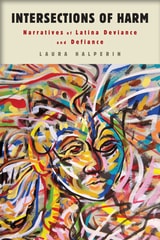
Intersections of Harm
Narratives of Latina Deviance and DefianceHalperin, Laura
Rutgers University Press, 0

Intersections
Fantasy and Science FictionEdited by George E. Slusser and Eric S. Rabkin
Southern Illinois University Press, 1987
These 17 essays from the seventh annual J. Lloyd Eaton Conference examine the relationship between fantasy and science fiction.
They propose that fantasy and science fiction are not isolated commercial literary forms, but instead are literary forms worthy of the recognition reserved for traditional literature. Discussion of genre identification ranges from the standard forms of literary criticism embodied in Aristotle’s mimesis and poesis to innovative and possibly controversial points of view such as a theory of humor, a philosophy of time, and a detailed analysis of Dr. Seuss’s Cat in the Hat.
The essays provide not only a detailed study of literary elements but also the historical treatment of the material, its commercial use, and its relationship to similar literary forms such as the gothic tale and horror fiction. While few of the essayists agree with one another, they all contribute creative insights to the debate.

Intersections
Issues in Contemporary Art, Volume 12Joan Kee , ed.
Duke University Press, 0
Contributors. Thomas J. Berghuis, Lee Weng Choy, Patrick Flores, Joan Kee, Alice Ming Wai Jim, Sheldon Lu, Gao Minglu, Reiko Tomii
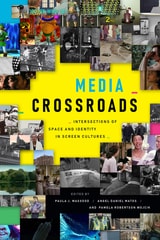
Media Crossroads
Intersections of Space and Identity in Screen CulturesPaula J. Massood, Angel Daniel Matos, and Pamela Robertson Wojcik, editors
Duke University Press, 2021
Contributors. Amy Corbin, Desirée J. Garcia, Joshua Glick, Noelle Griffis, Malini Guha, Ina Rae Hark, Peter C. Kunze, Paula J. Massood, Angel Daniel Matos, Nicole Erin Morse, Elizabeth Patton, Matthew Thomas Payne, Merrill Schleier, Jacqueline Sheean, Sarah Louise Smyth, Erica Stein, Kirsten Moana Thompson, John Vanderhoef, Pamela Robertson Wojcik
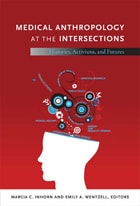
Medical Anthropology at the Intersections
Histories, Activisms, and FuturesMarcia C. Inhorn and Emily A. Wentzell, eds.
Duke University Press, 2012
Contributors. Lawrence Cohen, Didier Fassin, Faye Ginsburg, Marcia C. Inhorn, Arthur Kleinman, Margaret Lock, Emily Martin, Lynn M. Morgan, Richard Parker, Rayna Rapp, Merrill Singer, Emily A. Wentzell
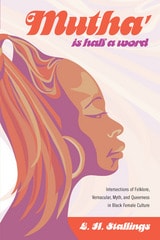
Mutha’ Is Half a Word
Intersections of Folklore, Vernacular, Myth, and Queerness in Black Female CultureL. H. Stallings
The Ohio State University Press, 2007
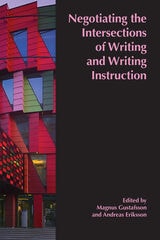
Negotiating the Intersections of Writing and Writing Instruction
Proceedings from the 2019 Conference of the European Association for the Teaching of Academic Writingedited by Magnus Gustafsson and Andreas Eriksson
University Press of Colorado, 2022
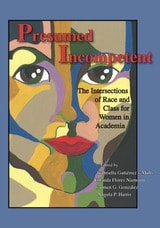
Presumed Incompetent
The Intersections of Race and Class for Women in Academiaedited by Gabriella Gutiérrez y Muhs, Yolanda Flores Niemann, Carmen G. González, and Angela P. Harris
Utah State University Press, 2012
Presumed Incompetent is a pathbreaking account of the intersecting roles of race, gender, and class in the working lives of women faculty of color. Through personal narratives and qualitative empirical studies, more than 40 authors expose the daunting challenges faced by academic women of color as they navigate the often hostile terrain of higher education, including hiring, promotion, tenure, and relations with students, colleagues, and administrators. The narratives are filled with wit, wisdom, and concrete recommendations, and provide a window into the struggles of professional women in a racially stratified but increasingly multicultural America.
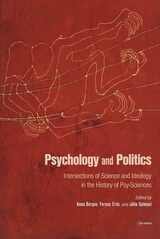
Psychology and Politics
Intersections of Science and Ideology in the History of Psy-SciencesFerenc Eros
Central European University Press, 2019
Psy-sciences (psychology, psychiatry, psychoanalysis, pedagogy, criminology, special education, etc.) have been connected to politics in different ways since the early twentieth century. Here in twenty-two essays scholars address a variety of these intersections from a historical perspective.
The chapters include such diverse topics as the cultural history of psychoanalysis, the complicated relationship between psychoanalysis and the occult, and the struggles for dominance between the various schools of psychology. They show the ambivalent positions of the "psy" sciences in the dictatorships and authoritarian regimes of Nazi Germany, East European communism, Latin-American military dictatorships, and South African apartheid, revealing the crucial role of psychology in legitimating and "normalizing" these regimes.
The authors also discuss the ideological and political aspects of mental health and illness in Hungary, Germany, post-WW1 Transylvania, and Russia. Other chapters describe the attempt by critical psychology to understand the production of academic, therapeutic, and everyday psychological knowledge in the context of the power relations of modern capitalist societies.
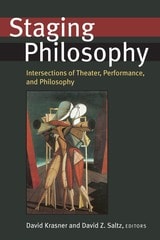
Staging Philosophy
Intersections of Theater, Performance, and PhilosophyDavid Krasner and David Z. Saltz, Editors
University of Michigan Press, 2010
Staging Philosophy raises issues of critical importance by providing case studies of various philosophical movements and schools of thought, including aesthetics, analytic philosophy, phenomenology, deconstruction, critical realism, and cognitive science. The essays, which are organized into three sections—history and method, presence, and reception—take up fundamental issues such as spectatorship, empathy, ethics, theater as literature, and the essence of live performance. While some essays challenge assertions made by critics and historians of theater and performance, others analyze the assumptions of manifestos that prescribe how practitioners should go about creating texts and performances. The first book to bridge the disciplines of theater and philosophy, Staging Philosophy will provoke, stimulate, engage, and ultimately bring theater to the foreground of intellectual inquiry while it inspires further philosophical investigation into theater and performance.
David Krasner is Associate Professor of Theater Studies, African American Studies, and English at Yale University. His books include A Beautiful Pageant: African American Theatre, Drama, and Performance in the Harlem Renaissance, 1910-1920 and Renaissance, Parody, and Double Consciousness in African American Theatre, 1895-1910. He is co-editor of the series Theater: Theory/Text/Performance.
David Z. Saltz is Professor of Theatre Studies and Head of the Department of Theatre and Film Studies at the University of Georgia. He is coeditor of Theater Journal and is the principal investigator of the innovative Virtual Vaudeville project at the University of Georgia.
The Practice of U.S. Women's History
Narratives, Intersections, and DialoguesEdited by S. Jay Kleinberg, Eileen Boris, and Vicki L. Ruiz
Rutgers University Press, 2008
In the last several decades, U.S. women’s history has come of age. Not only have historians challenged the national narrative on the basis of their rich explorations of the personal, the social, the economic, and the political, but they have also entered into dialogues with each other over the meaning of women’s history itself.
In this collection of seventeen original essays on women’s lives from the colonial period to the present, contributors take the competing forces of race, gender, class, sexuality, religion, and region into account. Among many other examples, they examine how conceptions of gender shaped government officials’ attitudes towards East Asian immigrants; how race and gender inequality pervaded the welfare state; and how color and class shaped Mexican American women’s mobilization for civil and labor rights.
Unlimited Players
The Intersections of Writing Center and Game StudiesHolly Ryan
Utah State University Press, 2021
The collection opens with theoretically driven chapters that approach writing center work through the lens of games and play. These chapters cover a range of topics, including considerations of identity, empathy, and power; productive language play during tutoring sessions; and writing center heuristics. The last section of the book includes games, written in the form of tabletop game directions, that directors can use for staff development or tutors can play with writers to help them develop their skills and practices.
No other text offers a theoretical and practical approach to theorizing and using games in the writing center. Unlimited Players provides a new perspective on the long-standing challenges facing writing center scholars and offers insight into the complex questions raised in issues of multimodality, emerging technologies, tutor education, identity construction, and many more. It will be significant to writing center directors and administrators and those who teach tutor training courses.
Whose Beloved Community?
The Intersections of Black and LGBTQ Civil RightsEdited by Dwight A. McBride, Beverly Guy-Sheftall, and Justin A. Joyce
University of Illinois Press, 2026
Martin Luther King Jr.’s idea of “the beloved community” focused on the hoped-for new relationship between the oppressor and the oppressed after the success of a nonviolent movement. But the vision excluded, and sometimes still excludes, LGBTQIA+ people and Black women.
The editors curate essays that see beloved community as a generative space that centers justice. Taking inspiration from the radical moral vision of figures like Bayard Rustin and Audre Lorde, the contributors look at how Black queer, feminist, and trans thought and practice can cultivate belonging across lines of race, gender, sexuality, class, and region. Essayists use a variety of disciplinary and methodological perspectives that includes archival recovery, institutional critique, cultural analysis, ethnography, and political theory. The contributors define beloved community for themselves while offering entry points—through art, culture, activism, policy, pedagogy, and theory—for exploring what it means to belong, to resist, and to build.
Expansive and interdisciplinary, <i>Whose Beloved Community?</i> begins the process of advancing toward truly inclusive communities that are more honest, more complex, and more loving.

Wilfrid Sellars and Phenomenology
Intersections, Encounters, OppositionsDaniele De Santis
Ohio University Press, 2023
Wilfrid Sellars tackled the difficult problems of reconciling Pittsburgh school–style analytic thought, Husserlian phenomenology, and the Myth of the Given.
This collection of essays brings into dialogue the analytic philosophy of Wilfrid Sellars—founder of the Pittsburgh school of thought—and phenomenology, with a special focus on the work of Edmund Husserl. The book’s wide-ranging discussions include the famous Myth of the Given but also more traditional problems in the philosophy of mind and phenomenology such as the
- status of perception and imagination
- nature of intentionality
- concept of motivation
- relationship between linguistic and nonlinguistic experiences
- relationship between conceptual and preconceptual experiences
Moreover, the volume addresses the conflicts between Sellars’s manifest and scientific images of the world and Husserl’s ontology of the life-world. The volume takes as a point of departure Sellars’s criticism of the Myth of the Given, but only to show the many problems that label obscures. Contributors explain aspects of Sellars’s philosophy vis-à-vis Husserl’s phenomenology, articulating the central problems and solutions of each. The book is a must-read for scholars and students interested in learning more about Sellars and for those comparing Continental and analytic philosophical thought.
Contributors
Walter Hopp
Wolfgang Huemer
Roberta Lanfredini
Danilo Manca
Karl Mertens
Antonio Nunziante
Jacob Rump
Daniele De Santis
Michela Summa