Results by title
230 books match the query 'Ethnicity' and 12 start with i
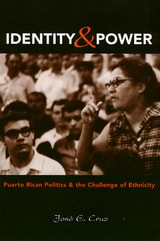
Identity And Power
Puerto Rican Politics and the Challenge of EthnicityJosé E. Cruz
Temple University Press, 1998
The activities of the Puerto Rican Political Action Committee from 1983 to 1991 illustrate the power of ethnic mobilization and strategy in an urban setting. Cruz examines their insistence on their right to be included in the political process in the context of both a typical mid-sized American city and the unique attributes of Hartford's predominantly white-collar population. At the same time, this study acknowledges the limitations of the exercise of such power in the political process.
Through extensive interviews Cruz brings to light the variety of ways in which politicians and political activists themselves view their own activities and achievements. This group of Puerto Rican activists attempted to penetrate the power structure of Hartford. Though their success was limited, their work constitutes a springboard for further change.

Identity Papers
Contested Nationhood in Twentieth-Century FranceSteven Ungar and Tom Conley, Editors
University of Minnesota Press, 1996
Identity Papers was first published in 1996. Minnesota Archive Editions uses digital technology to make long-unavailable books once again accessible, and are published unaltered from the original University of Minnesota Press editions.
What does citizenship mean? What is the process of "naturalization" one goes through in becoming a citizen, and what is its connection to assimilation? How do the issues of identity raised by this process manifest themselves in culture? These questions, and the way they arise in contemporary France, are the focus of this diverse collection.
The essays in this volume range in subject from fiction and essay to architecture and film. Among the topics discussed are the 1937 Exposition Universelle; films dealing with Vichy France; François Truffaut's Histoire d'Adèle H.; the war of Algerian independence; and nation building under François Mitterrand.
Contributors: Anne Donadey, Elizabeth Ezra, Richard J. Golsan, Lynn A. Higgins, T. Jefferson Kline, Panivong Norindr, Shanny Peer, Rosemarie Scullion, David H. Slavin, Philip H. Solomon; Florianne Wild, .
Steven Ungar is professor of cinema and comparative literature at the University of Iowa and author of Scandal and Aftereffect: Blanchot and France since 1930 (Minnesota, 1995). Tom Conley is professor of French at Harvard University.

Identity and Ethnicity in the Rural South
A Sociolinguistic View through Past and Present Be, Volume 74Kirk Hazen
Duke University Press, 0
Identity and Ethnicity in the Rural South investigates the interaction of cultural and ethnic identity as realized in language variation. Through the quantitative and qualitative analysis of sociolinguistic data on the past tense of the verb be and on its absence, this work explains the synchronic and diachronic trends of language variation and several important social factors, including ethnicity, sex, and cultural identity. This volume also informs the debates about the origins and contemporary synchronic relations of African American Vernacular English to other ethnic varieties.
Imagined States
Nationalism, Utopia, and Longing in Oral Culturesedited by Luisa Del Giudice & Gerald Porter
Utah State University Press, 2003
Imperial White
Race, Diaspora, and the British EmpireRadhika Mohanram
University of Minnesota Press, 2007
Radhika Mohanram shows not just how British imperial culture shaped the colonies, but how the imperial rule of colonies shifted—and gave new meanings to—what it meant to be British.
Imperial White looks at literary, social, and cultural texts on the racialization of the British body and investigates British whiteness in the colonies to address such questions as: How was the whiteness in Britishness constructed by the presence of Empire? How was whiteness incorporated into the idea of masculinity? Does heterosexuality have a color? And does domestic race differ from colonial race? In addition to these inquiries on the issues of race, class, and sexuality, Mohanram effectively applies the methods of whiteness studies to British imperial material culture to critically racialize the relationship between the metropole and the peripheral colonies.
Considering whether whiteness, like theory, can travel, Mohanram also provides a new perspective on white diaspora, a phenomenon of the nineteenth century that has been largely absent in diaspora studies, ultimately rereading—and rethinking—British imperial whiteness.
Radhika Mohanram teaches postcolonial cultural studies in the School of English, Communication and Philosophy at Cardiff University, Wales. She is the author of Black Body: Women, Colonialism, Space (Minnesota, 1999) and edits the journal Social Semiotics.
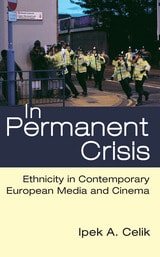
In Permanent Crisis
Ethnicity in Contemporary European Media and CinemaIpek A. Celik
University of Michigan Press, 2015
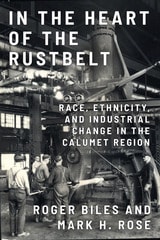
In the Heart of the Rustbelt
Race, Ethnicity, and Industrial Change in the Calumet RegionRoger Biles and Mark H. Rose
Temple University Press, 2027
The Calumet Region around Lake Michigan’s southern rim once housed massive steel mills, workshops, and railroads. Capitalists like Elbert Gary built factories and dominated local governments. During its heyday in the twentieth century, the Calumet Region was also a thriving district for immigrants who worked dangerous jobs.
But even before the area’s decline started in the 1970s, intense racial, ethnic, and political strife determined job and housing prospects. In the Heart of the Rustbelt details how people struggled as factory rules and local politics failed to protect residents from health hazards and sabotaged workers’ rights.
Roger Biles and Mark Rose describe how workers organized (or didn’t), the ethnic neighborhoods where they lived, and the distinct foodstuffs, such as Hungarian goulash, that both bonded and excluded immigrants. The authors also showcase individuals including Gary, IN Mayor Richard G. Hatcher, who fought for equality. Chapters also explore the lives of steelworkers Eddie Sadlowski, who sought to democratize the union, and Mexican American Jesse Villalpando, who experienced union and management’s hostility in hiring and job assignments.
In the Heart of the Rustbelt provides a fascinating history about industrial growth and why race and ethnicity mattered as the Calumet Region rose and fell.
In the Shadow of Race
Jews, Latinos, and Immigrant Politics in the United StatesVictoria Hattam
University of Chicago Press, 2007
Victoria Hattam locates the origins of ethnicity in the New York Zionist movement of the early 1900s. In a major revision of widely held assumptions, she argues that Jewish activists identified as ethnics not as a means of assimilating and becoming white, but rather as a way of defending immigrant difference as distinct from race—rooted in culture rather than body and blood. Eventually, Hattam shows, the Immigration and Naturalization Service and the Census Bureau institutionalized this distinction by classifying Latinos as an ethnic group and not a race. But immigration and the resulting population shifts of the last half century have created a political opening for reimagining the relationship between immigration and race. How to do so is the question at hand.
In the Shadow of Race concludes by examining the recent New York and Los Angeles elections and the 2006 immigrant rallies across the country to assess the possibilities of forging a more robust alliance between immigrants and African Americans. Such an alliance is needed, Hattam argues, to more effectively redress the persistent inequalities in American life.

Inauthentic
The Anxiety over Culture and IdentityVincent J. Cheng
Rutgers University Press, 2004
Modern and contemporary cultures are increasingly marked by an anxiety over a perceived loss of authentic cultural identity. In this book, Vincent J. Cheng examines why we still cling to notions of authenticity in an increasingly globalized world that has exploded notions of authentic essences and absolute differences.
Who is “authentic” and who is “other” in a given culture? Who can speak for the “other?” What do we mean by authenticity? These are critical questions that today’s world––brought closer together and yet pulled farther apart by globalism and neocolonialism––has been unable to answer. Inauthentic compellingly probes these issues through revealing case studies on the pursuit of authenticity and identity.
Each chapter explores the ways in which we construct “authenticity” in order to replace seemingly vacated identities, including: the place of minorities in academia; mixed-race dynamics; the popularity of Irish culture in America; the Good Friday agreement in Northern Ireland; Jewish American identity; the status of Jewish America in relation to Israel and Palestine; the cultural problems of international adoptions; and the rapidly changing nature of the Asian American population in the United States.
Inauthentic combines the scholarly and the personal, informed argument and human interest. It will undoubtedly appeal to academic scholars, as well as to a broader reading audience.
Inventing Stereotype
Race, Representation, and Interwar AmericaMartin A. Berger
University of Chicago Press, 2025
Upending a century of scholarly and popular thinking about stereotype, Martin A. Berger traces our current understanding of it to the 1920s, when American journalist and public intellectual Walter Lippmann borrowed the term from printmaking techniques and defined it as a shared mental picture that simplified a person, event, group, or thing so it could be easily grasped. Berger uncovers stereotype’s intellectual debts to philosophy, psychology, political science, and, in particular, art history and interwar racial theories.
Inventing Stereotype analyzes a series of plays, novels, and paintings from the 1920s and 1930s that sparked fierce debate about whether they employed racial stereotypes in the depiction of Black, Jewish, and other characters. Through careful attention to audience responses—parsed by race, political leanings, religion, and class—the book illustrates how artistic depictions are categorized as either stereotyped or not, relative to current representational norms, rather than to their success in conveying the authentic identities of individuals or racial groups.
Italian Irish Filmmakers
Lee Lourdeaux
Temple University Press, 1993
I’ll Samba Someplace Else
A Spatial History of Race, Ethnicity, and Displacement in São PauloAndrew G. Britt
Duke University Press, 2026