Results by title
107 books match the query 'Form' and 3 start with i
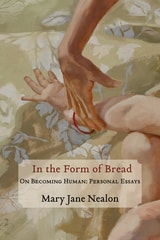
In the Form of Bread
On Becoming HumanMary Jane Nealon
Four Way Books, 2026
In this collection of vignettes—heartbreaking and often humorous—Nealon explores caregiving as both sacred practice and human risk.
She looks back to her relationship with a father devastated by the early death of her brother; to tending men—some with AIDS, some drunk, some sober—living in Bowery flophouses; to confronting racism; to the quiet instruction of a dog who teaches attention by gazing back.
The essays ask what price we pay when we offer ourselves wholeheartedly to one another, and what it means to remain open to being more than human in a fractured world.
Interrogative Investigations
The Form, Meaning, and Use of English InterrogativesJonathan Ginzburg and Ivan A. Sag
CSLI, 2001
This book closes the gap in research on this subject. By developing the frameworks of Head Driven Phrase Structure Grammar and Situation Semantics, the authors provide an account that rigorously integrates syntactic, semantic, and contextual dimensions of interrogatives. The challenge of providing exhaustive coverage of the interrogative constructions of English, including various constructions that occur solely in dialogue interaction, leads to new insights about a variety of contentious theoretical issues. These include matters of semantic ontology, the quantificational status of wh-phrases, the semantic effect of wh-fronting, the status of constructions in grammatical theory, the integration of illocutionary information in the grammar, and the nature of ellipsis resolution in dialogue. The account is stated with sufficient rigor to enable fairly direct computational implementation.
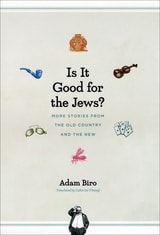
Is It Good for the Jews?
More Stories from the Old Country and the NewAdam Biro
University of Chicago Press, 2009
“Jewish stories,” writes Adam Biro, “resemble every people’s stories.” Yet at the same time there is no better way to understand the soul, history, millennial suffering, or, crucially, the joys of the Jewish people than through such tales—“There’s nothing,” writes Biro, “more revelatory of the Jewish being.”
With Is It Good for the Jews? Biro offers a sequel to his acclaimed collection of stories Two Jews on a Train. Through twenty-nine tales—some new, some old, but all finely wrought and rich in humor—Biro spins stories of characters coping with the vicissitudes and reverses of daily life, while simultaneously painting a poignant portrait of a world of unassimilated Jewish life that has largely been lost to the years. From rabbis competing to see who is the most humble, to the father who uses suicide threats to pressure his children into visiting, to three men berated by the Almighty himself for playing poker, Biro populates his stories with memorable characters and absurd—yet familiar—situations, all related with a dry wit and spry prose style redolent of the long tradition of Jewish storytelling.
A collection simultaneously of foibles and fables, adversity and affection, Is It Good for the Jews? reminds us that if in the beginning was the word, then we can surely be forgiven for expecting a punch line to follow one of these days.