82 books match the query 'Hermeneutics' and 7 start with i
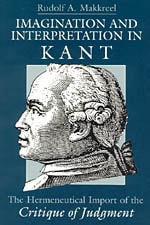
cover of Imagination and Interpretation in Kant: The Hermeneutical Import of the Critique of Judgment

Imagination and Interpretation in Kant

The Hermeneutical Import of the Critique of Judgment

Rudolf A. Makkreel

University of Chicago Press, 1990
In this illuminating study of Kant's theory of imagination and its role in interpretation, Rudolf A. Makkreel argues against the commonly held notion that Kant's transcendental philosophy is incompatible with hermeneutics. The charge that Kant's foundational philosophy is inadequate to the task of interpretation can be rebutted, explains Makkreel, if we fully understand the role of imagination in his work. In identifying this role, Makkreel also reevaluates the relationship among Kant's discussions of the feeling of life, common sense, and the purposiveness of history.
[more]
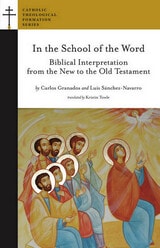
cover of In the School of the Word: Biblical Interpretation from the New to the Old Testament

In the School of the Word

Biblical Interpretation from the New to the Old Testament

Carlos Granados

Saint Paul Seminary Press, 2021
Carlos Granados and Luis Sánchez-Navarro propose reading the Bible with Christian faith, not as one approach among many, but as a disposition demanded by the New Testament for proper interpretation of both the Old and the New. Even so, the authors’ faith never leads them to dismiss history or to discard the tools of the historical-critical method. On the contrary, these sciences allow the faithful reader to take a holistic approach to biblical truth. When the reader also takes full account of the ecclesial reality in which the Bible was formed and transmitted, and in which it must be read still today, he or she encounters the word proclaimed by the text. Indeed, the words of Holy Writ ultimately proclaim the Word (Logos), Jesus Christ, in whose Spirit they were written. This book’s thirteen essays are grouped into three parts. Part I, “The Church, Living Subject of Sacred Scripture,” takes up a foundational theme of the whole book: sacred Scripture calls for a reading within the community of the People of God under the guidance of the Holy Spirit, and the same People constitute the living subject of Scripture. In Part II, “Christ, Exegete of the Fulfillment,” the authors focus on the relationship between the two biblical testaments. They argue that the Christian can both respect and venerate the Old Testament on its own terms, even as they find in Jesus, as presented in the New Testament and encountered in faith, the key for unlocking the Old Testament’s deepest meaning. The third and final part of this book, “The Teaching in Benedict XVI’s Verbum Domini,” examines Pope Benedict XVI’s 2010 post-synodal apostolic exhortation on the word of God in the life and mission of the Church. The authors’ years of shared prayer, study, conversation, and ministry have led to this coauthored book bearing witness to that ongoing unity that they live as confreres. Not surprisingly, they frequently reference the same theologians, especially Brevard Childs, Paul Beauchamp, SJ, and Pope Benedict XVI.
[more]
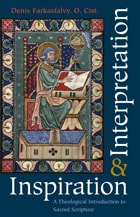
cover of Inspiration and Interpretation: A Theological Introduction to Sacred Scripture

Inspiration and Interpretation

A Theological Introduction to Sacred Scripture

Denis Farkasfalvy

Catholic University of America Press, 2010
Inspiration and Interpretation provides readers with a much needed general theological introduction to the study of Sacred Scripture.
[more]
cover of Intellectual Sacrifice and Other Mimetic Paradoxes

Intellectual Sacrifice and Other Mimetic Paradoxes

Paolo Diego Bubbio

Michigan State University Press, 2018
Intellectual Sacrifice and Other Mimetic Paradoxes is an account of Paolo Diego Bubbio’s twenty-year intellectual journey through the twists and turns of Girard’s mimetic theory. The author analyzes philosophy and religion as “enemy sisters” engaged in an endless competitive struggle and identifies the intellectual space where this rivalry can either be perpetuated or come to a paradoxical resolution. He goes on to explore topics ranging from arguments for the existence of God to mimetic theory’s post-Kantian legacy, political implications, and capacity for identifying epochal phenomena, such as the crisis of the self, in popular culture. Bubbio concludes by advocating for an encounter between mimetic theory and contemporary philosophical hermeneutics—an encounter in which each approach benefits and is enriched by the resources of the other. The volume features a previously unpublished letter by René Girard on the relationship between philosophy and religion.
 
[more]
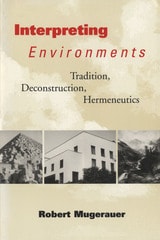
cover of Interpreting Environments: Tradition, Deconstruction,  Hermeneutics

Interpreting Environments

Tradition, Deconstruction, Hermeneutics

By Robert Mugerauer

University of Texas Press, 1995

In this pioneering book, Robert Mugerauer seeks to make deconstruction and hermeneutics accessible to people in the environmental disciplines, including architecture, planning, urban studies, environmental studies, and cultural geography.

Mugerauer demonstrates each methodology through a case study. The first study uses the traditional approach to recover the meaning of Jung's and Wittgenstein's houses by analyzing their historical, intentional contexts. The second case study utilizes deconstruction to explore Egyptian, French neoclassical, and postmodern attempts to use pyramids to constitute a sense of lasting presence. And the third case study employs hermeneutics to reveal how the American understanding of the natural landscape has evolved from religious to secular to ecological since the nineteenth century.
[more]
cover of Interpreting Law and Literature: A Hermeneutic Reader

Interpreting Law and Literature

A Hermeneutic Reader

Sanford Levinson and Steven Mailloux

Northwestern University Press, 1988

From the Preface:

"Contemporary theory has usefully analyzed how alternative modes of interpretation produce different meanings, how reading itself is constituted by the variable perspectives of readers, and how these perspectives are in turn defined by prejudices, ideologies, interests, and so forth. Some theorists gave argued persuasively that textual meaning, in literature and in literary interpretation, is structured by repression and forgetting, by what the literary or critical text does not say as much as by what it does. All these claims are directly relevant to legal hermeneutics, and thus it is no surprise that legal theorists have recently been turning to literary theory for potential insight into the interpretation of law. This collection of essays is designed to represent the especially rich interactive that has taken place between legal and literary hermeneutics during the past ten years."
[more]
cover of Islam and Modernity: Transformation of an Intellectual Tradition

Islam and Modernity

Transformation of an Intellectual Tradition

Fazlur Rahman

University of Chicago Press, 1984

"As Professor Fazlur Rahman shows in the latest of a series of important contributions to Islamic intellectual history, the characteristic problems of the Muslim modernists—the adaptation to the needs of the contemporary situation of a holy book which draws its specific examples from the conditions of the seventh century and earlier—are by no means new. . . . In Professor Rahman's view the intellectual and therefore the social development of Islam has been impeded and distorted by two interrelated errors. The first was committed by those who, in reading the Koran, failed to recognize the differences between general principles and specific responses to 'concrete and particular historical situations.' . . . This very rigidity gave rise to the second major error, that of the secularists. By teaching and interpreting the Koran in such a way as to admit of no change or development, the dogmatists had created a situation in which Muslim societies, faced with the imperative need to educate their people for life in the modern world, were forced to make a painful and self-defeating choice—either to abandon Koranic Islam, or to turn their backs on the modern world."—Bernard Lewis, New York Review of Books

"In this work, Professor Fazlur Rahman presents a positively ambitious blueprint for the transformation of the intellectual tradition of Islam: theology, ethics, philosophy and jurisprudence. Over the voices advocating a return to Islam or the reestablishment of the Sharia, the guide for action, he astutely and soberly asks: What and which Islam? More importantly, how does one get to 'normative' Islam? The author counsels, and passionately demonstrates, that for Islam to be actually what Muslims claim it to be—comprehensive in scope and efficacious for every age and place—Muslim scholars and educationists must reevaluate their methodology and hermeneutics. In spelling out the necessary and sound methodology, he is at once courageous, serious and profound."—Wadi Z. Haddad, American-Arab Affairs
[more]