Results by title
425 books match the query 'Human rights' and 22 start with i

I Remember Julia
Voices of the DisappearedEric Carlson
Temple University Press, 1996
Identities, Politics, and Rights
Austin Sarat and Thomas R. Kearns, Editors
University of Michigan Press, 1997
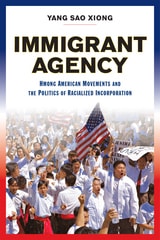
Immigrant Agency
Hmong American Movements and the Politics of Racialized IncorporationYang Sao Xiong
Rutgers University Press, 2022
Implementing Inequality
The Invisible Labor of International DevelopmentRebecca Warne Peters
Rutgers University Press, 2020
Imprisoned Minds
Lost Boys, Trapped Men, and Solutions from Within the PrisonErik S. Maloney
Rutgers University Press, 2025
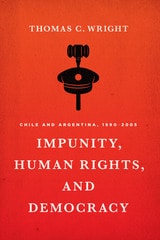
Impunity, Human Rights, and Democracy
Chile and Argentina, 1990-2005By Thomas C. Wright
University of Texas Press, 2014
Universal human rights standards were adopted in 1948, but in the 1970s and 1980s, violent dictatorships in Argentina and Chile flagrantly defied the new protocols. Chilean general Augusto Pinochet and the Argentine military employed state terrorism in their quest to eradicate Marxism and other forms of “subversion.” Pinochet constructed an iron shield of impunity for himself and the military in Chile, while in Argentina, military pressure resulted in laws preventing prosecution for past human rights violations. When democracy was reestablished in both countries by 1990, justice for crimes against humanity seemed beyond reach.
Thomas C. Wright examines how persistent advocacy by domestic and international human rights groups, evolving legal environments, unanticipated events that impacted public opinion, and eventual changes in military leadership led to a situation unique in the world—the stripping of impunity not only from a select number of commanders of the repression but from all those involved in state terrorism in Chile and Argentina. This has resulted in trials conducted by national courts, without United Nations or executive branch direction, in which hundreds of former repressors have been convicted and many more are indicted or undergoing trial.
Impunity, Human Rights, and Democracy draws on extensive research, including interviews, to trace the erosion and collapse of the former repressors’ impunity—a triumph for human rights advocates that has begun to inspire authorities in other Latin American countries, including Peru, Uruguay, Brazil, and Guatemala, to investigate past human rights violations and prosecute their perpetrators.
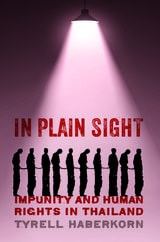
In Plain Sight
Impunity and Human Rights in ThailandTyrell Haberkorn
University of Wisconsin Press, 2019

In Protest
150 Poems for Human RightsEdited by Helle Abelvik-Lawson, Anthony Hett, and Laila Sumpton
University of London Press, 2013

In Pursuit of Peace in Israel and Palestine
Gershon Baskin
Vanderbilt University Press, 2017
Despite the atmosphere of fear, Baskin found he could talk with both Jews and Palestinians, and that very few others were engaged in efforts at mutual understanding. At his initiative, the Ministry of Education and the office of right-wing prime minister Menachem Begin created the Institute for Education for Jewish-Arab Coexistence with Baskin himself as director. Eight years later he founded and codirected the only joint Israeli-Palestinian public policy think-and-do tank in the world, the Israel/Palestine Center for Research and Information. For decades he continued to cross borders, often with a kaffiyeh (Arab headdress) on his dashboard to protect his car in Palestinian neighborhoods. Airport passport control became Kafkaesque as Israeli agents routinely identified him as a security threat.
During the many cycles of peace negotiations, Baskin has served both as an outside agitator for peace and as an advisor on the inside of secret talks—for example, during the prime ministership of Yitzhak Rabin and during the initiative led by Secretary of State John Kerry. Baskin ends the book with his own proposal, which includes establishing a peace education program and cabinet-level Ministries of Peace in both countries, in order to foster a culture of peace.

Individual Freedoms and State Security in the African Context
The Case of ZimbabweJohn Hatchard
Ohio University Press, 1993
In 1980 the ZANU/PF government of Robert Mugabe came to power after an extended war of liberation. They inherited a cluster of emergency laws similar to those available to the authorities in South Africa. It was also the beginning of the cynical South African state policy of destabilization of the frontline states. This led to a dangerous period of insurrection in Mashonaland and increased activity by Renamo.
Dr. Hatchard uses the case of Zimbabwe to ask questions about the use of authority in contemporary African states. He examines:
1. Whether and in what circumstances the declaration and retention of a state of emergency is justified;
2.The scope of emergency regulations and their impact on individual freedoms;
3.What safeguards are necessary in order to protect those freedoms during a state of emergency.
The relationship is studied from a political as well as a legal perspective. Dr. Hatchard examines the role law has played, is playing and may play. The author concludes that, even if the state of emergency is justified, this does not necessitate the curtailment of the exercise of individual freedoms.
There are many comparisons with the rest of Africa. The book is of practical importance for members of the judiciary, legal practitioners, politicians and human rights organizations. The difficult questions it poses make stimulating teaching material for students of the Third World who want to understand the reality of the exercise of power in fragile situations.
Infrahumanisms
Science, Culture, and the Making of Modern Non/personhoodMegan H. Glick
Duke University Press, 2018
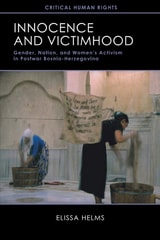
Innocence and Victimhood
Gender, Nation, and Women’s Activism in Postwar Bosnia-HerzegovinaElissa Helms
University of Wisconsin Press, 2013
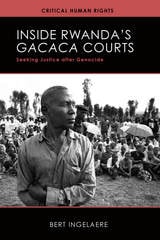
Inside Rwanda's /Gacaca/ Courts
Seeking Justice after GenocideBert Ingelaere
University of Wisconsin Press, 2018
Weaving together vivid firsthand recollections, interviews, and trial testimony with systematic analysis, Ingelaere documents how the gacaca shifted over time from confession to accusation, from restoration to retribution. He precisely articulates the importance of popular conceptions of what is true and just. Marked by methodological sophistication, extraordinary evidence, and deep knowledge of Rwanda, this is an authoritative, nuanced, and bittersweet account of one of the most important experiments in transitional justice after mass violence.
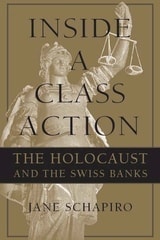
Inside a Class Action
The Holocaust and the Swiss BanksJane Schapiro
University of Wisconsin Press, 2003
On October 21, 1996, attorney Michael Hausfeld, with a team of lawyers, filed a class-action complaint against Union Bank of Switzerland, Swiss Bank Corporation, and Credit Suisse on behalf of Holocaust victims. The suit accused the banks of, among other things, acting as the chief financiers for Nazi Germany. Hausfeld wanted to use the suit to prove that the banks not only concealed and refused to return millions of dollars in dormant accounts, but that they acted as a conduit for looted assets and slave labor profits. Such behavior, he charged, violated the code of ethics known as customary international law. On August 12, 1998, the plaintiffs and banks reached a $1.25 billion settlement.
Through interviews with a wide range of people involved in the case and detailed research of documents and court transcripts, Jane Schapiro shows the ways that egos, personalities, and values clash in such a complex and emotionally charged case. Inside a Class Action provides an insider’s view of a major lawsuit from its inception to its conclusion, which will appeal to anyone interested in human rights, reparations, and international law.
Insider Histories of the Vietnam Era Underground Press, Part 1
Ken Wachsberger
Michigan State University Press, 2011
This enlightening book offers a collection of histories of underground papers from the Vietnam Era as written and told by key staff members of the time. Their stories (as well as those to be included in Part 2, forthcoming) represent a wide range of publications: counterculture, gay, lesbian, feminist, Puerto Rican, Native American, Black, socialist, Southern consciousness, prisoner's rights, New Age, rank-and-file, military, and more. The edition includes forewords by former Chicago Seed editor Abe Peck, radical attorney William M. Kunstler, and Markos Moulitsas, founder of the Daily Kos, along with an introductory essay by Ken Wachsberger.
Wachsberger notes that the underground press not only produce a few well-known papers but also was truly national and diverse in scope. His goal is to capture the essence of "the countercultural community."
A fundamental resource for anyone seeking a deeper understanding of a dramatic era in U.S. history.
Insider Histories of the Vietnam Era Underground Press, Part 2
Ken Wachsberger
Michigan State University Press, 2011
This enlightening book offers a collection of histories of underground papers from the Vietnam Era as written and told by key staff members of the time. Their stories, building on those presented in Part 1, represent a wide range of publications: countercultural, gay, lesbian, feminist, Puerto Rican, Native American, Black, socialist, Southern consciousness, prisoners’ rights, New Age, rank-and-file, military, and more. Wachsberger notes that the underground press not only produced a few well-known papers but also was truly national and diverse in scope. His goal is to capture the essence of “the countercultural community.” This book will be a fundamental resource for anyone seeking a deeper understanding of a dramatic era in U.S. history, as well as offering a younger readership a glimpse into a generation of idealists who rose up to challenge and improve government and society.
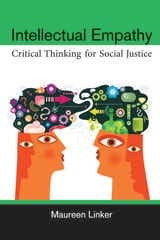
Intellectual Empathy
Critical Thinking for Social JusticeMaureen Linker
University of Michigan Press, 2014
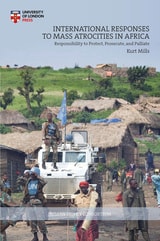
International Responses to Mass Atrocities in Africa
Responsibility to Protect, Prosecute, and PalliateKurt Mills
University of London Press, 2015
Parallel to this responsibility, two related responsibilities have developed: to prosecute those responsible for the crimes, and to provide humanitarian relief to the victims—what Kurt Mills in this book calls the “responsibility to palliate.” While this rhetoric of protection is well used by the international community, its application in practice has been erratic at best. In International Responses to Mass Atrocities in Africa, Mills develops a typology of responses to mass atrocities, considering four cases in Rwanda, the Democratic Republic of the Congo, Uganda, and Darfur. Putting the cases into historical context and analyzing them according to this typology, Mills investigates the limitations of these responses and calls for such responses to be implemented in a more timely and thoughtful manner. Mills provides critical analysis of the possibilities for the international community to respond to humanitarian crises in the future.

International Trade and Human Rights
Foundations and Conceptual Issues (World Trade Forum, Volume 5)Frederick M. Abbott, Christine Breining-Kaufmann and Thomas Cottier, Editors
University of Michigan Press, 2005
The missing link between the international trade regime and human rights has become one of the key concerns of critics of the WTO. The World Trade Forum 2001 at the World Trade Institute in Berne provided a unique framework for considering the manifold issues relevant to this topic. This book goes beyond listing the different arguments in favor of or against globalization and offers recommendations to the international community for possible reforms so as to better account for the human rights interests affected by the process of globalization.
Frederick M. Abbott is the Edward Ball Eminent Scholar Professor of International Law at Florida State University College of Law. He is the editor of China in the World Trading System: Defining the Principles of Engagement (1998) and author of The International Intellectual Property System: Commentary and Materials (with Thomas Cottier and Francis Gurry, 1999).
Christine Breining-Kaufmann is Professor of Law at the University of Zurich and Senior Research Fellow as well as a member of the Board of the World Trade Institute in Berne. Her publications include Hunger als Rechtsproblem: Völkerrechtliche Aspekte eines Rechtes auf Nahrung (1991) and Globalization and Labour Rights: The Conflicting Relationship between Core Labour Rights and International Economic Institutions (2006).
Thomas Cottier is Managing Director of the World Trade Institute and Professor of Law at the University of Berne. He has co-edited the previous four volumes of the World Trade Forum series.

Israel/Palestine and the Queer International
Sarah Schulman
Duke University Press, 2012
As Schulman learns more, she questions the contradiction between Israel's investment in presenting itself as gay friendly—financially sponsoring gay film festivals and parades—and its denial of the rights of Palestinians. At the same time, she talks with straight Palestinian activists about their position in relation to homosexuality and gay rights in Palestine and internationally. Back in the United States, Schulman draws on her extensive activist experience to organize a speaking tour for some of the Palestinian queer leaders whom she had met and trusted. Dubbed "Al-Tour," it takes the activists to LGBT community centers, conferences, and universities throughout the United States. Its success solidifies her commitment to working to end Israel's occupation of Palestine, and it kindles her larger hope that a new "queer international" will emerge and join other movements demanding human rights across the globe.
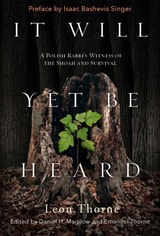
It Will Yet Be Heard
A Polish Rabbi's Witness of the Shoah and SurvivalIsaac Bashevis Singer
Rutgers University Press, 2019
Rabbi Thorne composed his memoir under extraordinary conditions, confined to a small underground bunker below a Polish peasant’s pigsty. But, It Will Yet Be Heard is remarkable not only for the story of its composition, but also for its moral clarity and complexity. A deeply religious man, Rabbi Thorne bore witness to forced labor camps, human degradation, and the murders of entire communities. And once he emerged from hiding, he grappled not only with survivor’s guilt, but also with the lingering antisemitism and anti-Jewish violence in Poland even after the war ended. Harrowing, moving, and deeply insightful, Rabbi Thorne’s firsthand account offers a rediscovered perspective on the twentieth century’s greatest tragedy.