Results by title
456 books match the query 'India' and 27 start with i

Illiterate Heart
PoemsMeena Alexander
Northwestern University Press, 2002
Recipient, 2008 Guggenheim Fellowship
Meena Alexander's poetry emerges as a consciousness moving between the worlds of memory and the present, enhanced by multiple languages. Her experience of exile is translated into the intimate exploration of her connections to both India and America. In one poem the thirteenth-century Persian poet Rumi visits with her while she speaks on the phone in her New York apartment, and in another she evokes fellow-poet Allen Ginsberg in the India she herself has left behind. Drawing on the fascinating images and languages of her dual life, Alexander deftly weaves together contradictory geographies, thoughts, and feelings.

Imaging Sound
An Ethnomusicological Study of Music, Art, and Culture in Mughal IndiaBonnie C. Wade
University of Chicago Press, 1998
Combining ethnomusicological and art historical methods with history and lore, Wade focuses first on paintings for Akbar, showing how political and cultural agendas intertwined in the portrayal of his life and that of his grandfather Babur and father, Humayun. Wade then follows the depictions of music-making through paintings for Akbar's successors, Jahangir and Shah Jahan, to trace the gradual synthesis of Persian and Indian culture. Richly illustrated with reproductions of rare Mughal paintings, this work will appeal broadly to anyone interested in Indian history, ethnomusicology, and art history.

Imperial Science, the Organic Movement and the Path to Shangri La, 1900–1969
Ashok Malhotra
University College London, 2026
A global history project that examines the diffusion of scientific and environmental discourses from India to Britain and the US.
This book examines how imperial agendas and colonial stereotyping shaped dietary and agricultural research carried out in the 1920s in British India, from soil protection initiatives to studies of diet and healthy living. It also discusses how a selective interpretation of this research, which focused on the supposed vigor of one community, the Hunzas, influenced the organic and lifestyles movements that later emerged in Britain and the US from the 1940s to the 1960s.
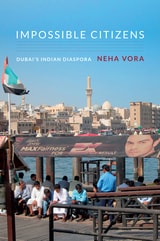
Impossible Citizens
Dubai's Indian DiasporaNeha Vora
Duke University Press, 2013
While their legal status defines them as perpetual outsiders, Indians are integral to the Emirati nation-state and its economy. At the same time, Indians—even those who have established thriving diasporic neighborhoods in the emirate—disavow any interest in formally belonging to Dubai and instead consider India their home. Vora shows how these multiple and conflicting logics of citizenship and belonging contribute to new understandings of contemporary citizenship, migration, and national identity, ones that differ from liberal democratic models and that highlight how Indians, rather than Emiratis, are the quintessential—yet impossible—citizens of Dubai.
In Pursuit of Lakshmi
The Political Economy of the Indian StateLloyd I. Rudolph and Susanne Hoeber Rudolph
University of Chicago Press, 1987
India occupies a paradoxical plane among nation states: it is both developed and underdeveloped, rich and poor, strong and weak. These contrasts locate India in the international order. The Rudolphs' theory of demand and command polities provides a general framework for explaining the special circumstances of the Indian experience.
Contrary to what one might expect in a country with great disparities of wealth, no national party, right or left, pursues the politics of class. Instead, the Rudolphs argue, private capital and organized labor in India face a "third actor"—the state. Because of the dominance of the state makes class politics marginal, the state is itself an element in the creation of the centrist-oriented social pluralism that has characterized Indian politics since independence.
In analyzing the relationship between India's politics and its economy, the Rudolphs maintain that India's economic performance has been only marginally affected by the type of regime in power—authoritarian or democratic. More important, they show that rising levels of social mobilization and personalistic rule have contributed to declining state capacity and autonomy. At the same time, social mobilization has led to a more equitable distribution of economic benefits and political power, which has enhanced the state's legitimacy among its citizens.
The scope and explanatory power of In Pursuit of Lakshmi will make it essential for all those interested in political economy, comparative politics, Asian studies and India.
In the Shadows of the State
Indigenous Politics, Environmentalism, and Insurgency in Jharkhand, IndiaAlpa Shah
Duke University Press, 2010
Indebted Mobilities
Indian Youth, Migration, and the Internationalizing UniversitySusan Thomas
University of Chicago Press, 2024
As states have reduced funding to public universities, many of those institutions have turned to overseas students as a vital, alternative source of revenue. Students from India have especially been seen as among the most desirable populations, as they’re typically fluent in English and overwhelmingly enroll in professional fields deemed critical to the knowledge economy. The large numbers of these youth migrating for their education tend to be viewed as a shining example of the value of the contemporary global university and how it enables ambitious people to secure opportunities not available to them in their home nation.
However, a deeper examination of these young people’s encounters reveals a more complicated story than glossy brochures and paeans to American higher education would suggest. Indebted Mobilities draws on Susan Thomas’s close shadowing of a group of middle-class Indian migrant men who attended a public university in New York just as the institution sought to “internationalize” its campus in the wake of ongoing withdrawal of state funding. Thomas takes the reader along with the young men as they study, work, and socialize, pursuing the successful futures they believed to be promised when they migrated for an American education. All the while, they must face their marginalization as they become enmeshed in the fraught inclusion politics of contemporary university life in the United States. At the heart of these encounters is these students’ relationship to debt—not just material ones that include student loans, but moral and affective debts as well. This indebtedness, which keeps them tied to both India and the United States, is meaningful to how Indian middle-class men make sense of their experiences as student-migrants. These youth long to be modern “men of the world.” Yet Thomas illuminates how the complex realities that arise for them, informed by the logic of US exceptionalism, force a reckoning with their anxieties about successful masculinities and the precarity of being drawn into the global knowledge economy as indebted migrants.
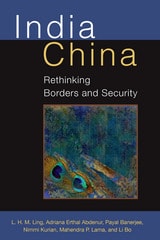
India China
Rethinking Borders and SecurityL.H.M. Ling, Adriana Erthal Abdenur, Payal Banerjee, Nimmi Kurian, Mahendra P. Lama, and Li Bo
University of Michigan Press, 2016
Challenging the Westphalian view of international relations, which focuses on the sovereignty of states and the inevitable potential for conflict, the authors from the Borderlands Study Group reconceive borders as capillaries enabling the flow of material, cultural, and social benefits through local communities, nation-states, and entire regions. By emphasizing local agency and regional interdependencies, this metaphor reconfigures current narratives about the China India border and opens a new perspective on the long history of the Silk Roads, the modern BCIM Initiative, and dam construction along the Nu River in China and the Teesta River in India.
Together, the authors show that positive interaction among people on both sides of a border generates larger, cross-border communities, which can pressure for cooperation and development. India China offers the hope that people divided by arbitrary geo-political boundaries can circumvent race, gender, class, religion, and other social barriers, to form more inclusive institutions and forms of governance.
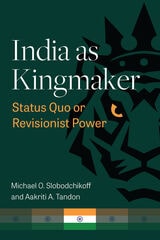
India as Kingmaker
Status Quo or Revisionist PowerMichael O. Slobodchikoff and Aakriti A. Tandon
University of Michigan Press, 2022
As India finds itself in the envious position of kingmaker, both the status quo and revisionist major powers are jockeying for India’s support for either upholding or revising the current world order. Using India’s bilateral treaties as a proxy measure of the strength of its relationship with other major powers, Slobodchikoff and Tandon determine whether India will remain neutral in its foreign policy approach or adopt a more assertive role in shaping the future global order. This book provides an in-depth analysis of India’s bilateral ties with major powers that include the United States, Russia, China, Japan, as well as the European Union (including the United Kingdom, France, and Germany) and uses network analysis to study India’s foreign policy positions with other major powers.

India in the Eyes of Europeans
Conceptualization of Religion in Theology and Oriental StudiesMartin Fárek
Karolinum Press, 2022
In India in the Eyes of Europeans, Martin Fárek argues that when Western scholars interpret Indian traditions, they actually present distorted reflections of their own European culture, despite their attempts at unbiased objectivity. This distortion is clearest in the way India is viewed primarily through a religious lens—a lens fashioned from an implicitly Christian design. While discussing the current international dialogue on the topic and the work of such scholars as S. N. Balagangadhara, Fárek’s study presents the results of original research on several key topics: the problems in assigning religious significance to the Indian traditions that gave rise to Hinduism and Buddhism; Europeans’ questioning of Indians’ historical consciousness; the current debate surrounding the arrival of the Aryans in India; and controversial interpretations of the work of the reformer Rammohan Raj. The result is a provocative study that should prove fascinating to Indologists, theologians, anthropologists, and anyone interested in the history of thought.
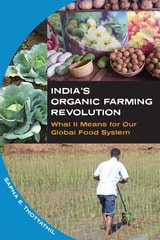
India's Organic Farming Revolution
What It Means for Our Global Food SystemSapna E. Thottathil
University of Iowa Press, 2014
Sapna Thottathil calls on us to rethink the politics of organic food by focusing on what it means for the people who grow and sell it—what it means for their health, the health of their environment, and also their economic and political well-being. Taking readers to the state of Kerala in southern India, she shows us a place where the so-called “Green Revolution” program of hybrid seeds, synthetic fertilizers, and rising pesticide use had failed to reduce hunger while it caused a cascade of economic, medical, and environmental problems. Farmers burdened with huge debts from buying the new seeds and chemicals were committing suicide in troubling numbers. Farm laborers suffered from pesticide poisoning and rising rates of birth defects. A sharp fall in biodiversity worried environmental activists, and everyone was anxious about declining yields of key export crops like black pepper and coffee.
In their debates about how to solve these problems, farmers, environmentalists, and policymakers drew on Kerala’s history of and continuing commitment to grassroots democracy. In 2010, they took the unprecedented step of enacting a policy that requires all Kerala growers to farm organically by 2020. How this policy came to be and its immediate economic, political, and physical effects on the state’s residents offer lessons for everyone interested in agriculture, the environment, and what to eat for dinner. Kerala’s example shows that when done right, this kind of agriculture can be good for everyone in our global food system.
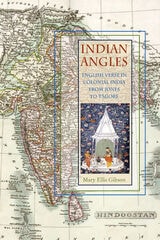
Indian Angles
English Verse in Colonial India from Jones to TagoreMary Ellis Gibson
Ohio University Press, 2011
A 2012 CHOICE “Outstanding Academic Title“
A new historical approach to Indian English literature
Mary Ellis Gibson shows that poetry, not fiction, was the dominant literary genre of Indian writing in English until 1860 and that poetry written in colonial situations can tell us as much or even more about figuration, multilingual literacies, and histories of nationalism than novels can. Gibson re-creates the historical webs of affiliation and resistance that were experienced by writers in colonial India—writers of British, Indian, and mixed ethnicities.
Advancing new theoretical and historical paradigms for reading colonial literatures, Indian Angles makes accessible many writers heretofore neglected or virtually unknown. Gibson recovers texts by British women, by nonelite British men, and by persons who would, in the nineteenth century, have been called Eurasian. Her work traces the mutually constitutive history of English-language poets from Sir William Jones to Toru Dutt and Rabindranath Tagore. Drawing on contemporary postcolonial theory, her work also provides new ways of thinking about British internal colonialism as its results were exported to South Asia.
In lucid and accessible prose, Gibson presents a new theoretical approach to colonial and postcolonial literatures.
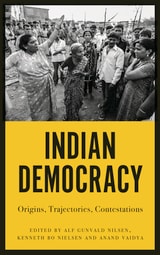
Indian Democracy
Origins, Trajectories, ContestationsEdited by Alf Gunvald Nilsen, Kenneth Bo Nielsen, and Anand Vaidya
Pluto Press, 2019
India’s pluralism has always posed a formidable challenge to its democracy, with many believing that a clash of identities based on region, language, caste, religion, ethnicity, and tribe would bring about its demise. With the meteoric rise to power of the Bharatiya Janata Party, the nation’s solidity is once again called into question: is Modi’s Hindu majoritarianism an anti-democratic attempt to transform India into a monolithic Hindu nation from which minorities and dissidents are forcibly excluded?
With examinations of the way that class and caste power shaped the making of India’s postcolonial democracy, the role of feminism, the media, and the public sphere in sustaining and challenging democracy, this book interrogates the contradictions at the heart of the Indian democratic project, examining its origins, trajectories, and contestations.
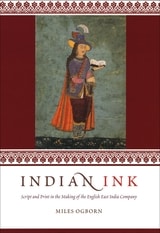
Indian Ink
Script and Print in the Making of the English East India CompanyMiles Ogborn
University of Chicago Press, 2007
A commercial company established in 1600 to monopolize trade between England and the Far East, the East India Company grew to govern an Indian empire. Exploring the relationship between power and knowledge in European engagement with Asia, Indian Ink examines the Company at work and reveals how writing and print shaped authority on a global scale in the seventeenth and eighteenth centuries.
Tracing the history of the Company from its first tentative trading voyages in the early seventeenth century to the foundation of an empire in Bengal in the late eighteenth century, Miles Ogborn takes readers into the scriptoria, ships, offices, print shops, coffeehouses, and palaces to investigate the forms of writing needed to exert power and extract profit in the mercantile and imperial worlds. Interpreting the making and use of a variety of forms of writing in script and print, Ogborn argues that material and political circumstances always undermined attempts at domination through the power of the written word.
Navigating the juncture of imperial history and the history of the book, Indian Ink uncovers the intellectual and political legacies of early modern trade and empire and charts a new understanding of the geography of print culture.
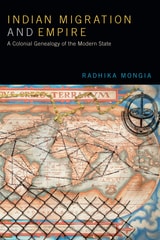
Indian Migration and Empire
A Colonial Genealogy of the Modern StateRadhika Mongia
Duke University Press, 2018
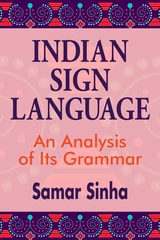
Indian Sign Language
A Linguistic Analysis of Its GrammarSamar Sinha
Gallaudet University Press, 2017
Samar Sinha presents pioneering research into the grammatical properties of Indian Sign Language (ISL), a language used by members of the Deaf community in India. This detailed and well-illustrated study describes the grammar of ISL and is supplemented by comparative and theoretical analyses in the core areas of sublexical structure, morphology, and syntax. Sinha offers a field-based, comprehensive analysis that covers topics such as
o sign formation parameters
o syllable structure
o sonority hierarchy
o semantics of space
o pluralization strategies
o phi-features
o indexing and localization
o agreement
o word order
He provides a description of the Indian Deaf community that serves to frame his analysis of ISL and highlights the need for greater awareness and acknowledgment of the language and its users. The lack of research on ISL in Indian academia has slowed efforts toward the standardization of ISL and the development of pedagogical materials. This work adds to the growing understanding of natural human language in general and ISL in particular. It also contributes to the empowerment of the Deaf community in India and will strengthen the efforts carried out by d/Deaf activists and researchers.
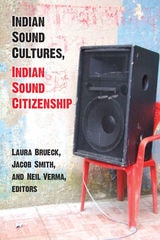
Indian Sound Cultures, Indian Sound Citizenship
Laura Brueck, Jacob Smith, and Neil Verma, editors
University of Michigan Press, 2020
Indian Sound Cultures, Indian Sound Citizenship addresses the multifaceted roles sound plays in Indian cultures and media, and enacts a sonic turn in South Asian Studies by understanding sound in its own social and cultural contexts. “Scapes, Sites, and Circulations” considers the spatial and circulatory ways in which sound “happens” in and around Indian sound cultures, including diasporic cultures. “Voice” emphasizes voices that embody a variety of struggles and ambiguities, particularly around gender and performance. Finally, “Cinema Sound” make specific arguments about film sound in the Indian context, from the earliest days of talkie technology to contemporary Hindi films and experimental art installations.
Integrating interdisciplinary scholarship at the nexus of sound studies and South Asian Studies by questions of nation/nationalism, postcolonialism, cinema, and popular culture in India, Indian Sound Cultures, Indian Sound Citizenship offers fresh and sophisticated approaches to the sonic world of the subcontinent.
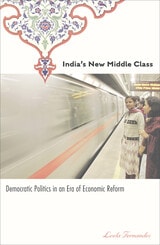
India’s New Middle Class
Democratic Politics in an Era of Economic ReformLeela Fernandes
University of Minnesota Press, 2006

Indifference
On the Praxis of Interspecies BeingNaisargi N. Davé
Duke University Press, 2023
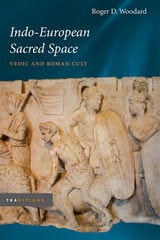
Indo-European Sacred Space
Vedic and Roman CultRoger D. Woodard
University of Illinois Press, 2006
Looking closely at the organization of Roman religious activity, especially as regards sacrifices, festivals, and the hierarchy of priests, Woodard sheds new light on issues including the presence of the god Terminus in Jupiter's Capitoline temple, the nature of the Roman suovetaurilia, the Ambarvalia and its relationship to the rites of the Fratres Arvales, and the identification of the "Sabine" god Semo Sancus. Perhaps most significantly, this work also presents a novel and persuasive resolution to the long standing problem of "agrarian Mars."
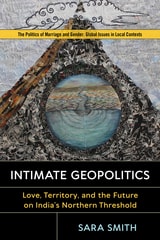
Intimate Geopolitics
Love, Territory, and the Future on India’s Northern ThresholdSara Smith
Rutgers University Press, 2020
2021 Foreword Indies Finalist - Politics and Social Sciences
Intimate Geopolitics begins with a love story set in the Himalayan region of Ladakh, in India’s Jammu and Kashmir State, but this is also a story about territory, and the ways that love, marriage, and young people are caught up in contemporary global processes. In Ladakh, children grow up to adopt a religious identity in part to be counted in the census, and to vote in elections. Religion, population, and voting blocs are implicitly tied to territorial sovereignty and marriage across religious boundaries becomes a geopolitical problem in an area that seeks to define insiders and outsiders in relation to borders and national identity. This book populates territory, a conventionally abstract rendering of space, with the stories of those who live through territorial struggle at marriage and birth ceremonies, in the kitchen and in the bazaar, in heartbreak and in joy. Intimate Geopolitics argues for the incorporation of the role of time–temporality–into our understanding of territory.
Intimate Relations
Exploring Indian SexualitySudhir Kakar
University of Chicago Press, 1990
Kakar's sources are primarily textual, celebrating the primacy of the story in Indian life. He practices a cultural psychology that distills the psyches of individuals from the literary products and social institutions of Indian culture. These include examples of lurid contemporary Hindi novels; folktales; Sanskrit, Tamil, and Hindi proverbs; hits of the Indian cinema; Gandhi's autobiography; interviews with women from the slums of Delhi; and case studies from his own psychoanalytic practice. His attentive readings of these varied narratives from a vivid portrait of sexual fantasies and realities, reflecting the universality of sexuality as well as cultural nuances specific to India.
Moving from genre to genre, Kakar offers a brilliant reading of verses from the Laws of Manu, the original source of Hindu religious laws, to uncover their psychological foundations—male terror of the female sexual appetite that shields itself by idealizing women's maternal role. Kakar also examines the psychosexual history of Gandhi at length, though his near-lifelong celibacy makes him an atypical subject. Gandhi's story is universal, Kakar says, because "we all wage war on our wants."
In India's lore and tradition, complex symbols abound—snakes that take the shape of sensual women or handsome men, celibates sleep with naked women, gods rape their daughters, and a goddess fries a king in oil. With the analyst's "third ear," Kakar listens, decodes, and translates the psychological longings that find expression in Indian sexual relations.
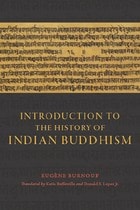
Introduction to the History of Indian Buddhism
Eugène Burnouf
University of Chicago Press, 2010
The most influential work on Buddhism to be published in the nineteenth century, Introduction à l’histoire du Buddhisme indien, by the great French scholar of Sanskrit Eugène Burnouf, set the course for the academic study of Buddhism—and Indian Buddhism in particular—for the next hundred years. First published in 1844, the masterwork was read by some of the most important thinkers of the time, including Schopenhauer and Nietzsche in Germany and Emerson and Thoreau in America.
Katia Buffetrille and Donald S. Lopez Jr.’s expert English translation, Introduction to the History of Indian Buddhism, provides a clear view of how the religion was understood in the early decades of the nineteenth century. Burnouf was an impeccable scholar, and his vision, especially of the Buddha, continues to profoundly shape our modern understanding of Buddhism. In reintroducing Burnouf to a new generation of Buddhologists, Buffetrille and Lopez have revived a seminal text in the history of Orientalism.
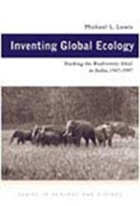
Inventing Global Ecology
Tracking the Biodiversity Ideal in India, 1947–1997Michael L. Lewis
Ohio University Press, 2004
Blue jeans, MTV, Coca-Cola, and… ecology? We don't often think of conservation sciences as a U.S. export, but in the second half of the twentieth century an astounding array of scientists and ideas flowed out from the United States into the world, preaching the gospel of conservation-oriented ecology.
Inventing Global Ecology grapples with how we should understand the development of global ecology in the twentieth century—a science that is held responsible for, literally, saving the world. Is the spread of ecology throughout the globe a subtle form of cultural imperialism, as some claim? Or is it a manifestation of an increasingly globalized world, where ideas, people, and things move about with greater freedom than ever before?
Using India as the case study, Professor Michael Lewis considers the development of conservation policies and conservation sciences since the end of World War II and the role of United States scientists, ideas, and institutions in this process. Was India subject to a subtle form of Americanization, or did Indian ecologists develop their own agenda, their own science, and their own way of understanding (and saving) the natural world? Does nationality even matter when doing ecology?
This readable narrative will carry you through the first fifty years of independent India, from the meadows of the Himalayan Mountains to the rainforests of southern India, from Gandhi and Nehru to Project Tiger. Of equal interest to the general reader, to scientists, and to scholars of history and globalization, Inventing Global Ecology combines ethnographic fieldwork and oral history conducted in India and the United States, as well as traditional archival research.

Iron Will
Global Extractivism and Mining Resistance in Brazil and IndiaMarkus Kröger
University of Michigan Press, 2020
By drawing on a detailed field research and other sources, this book explains precisely which resistance strategies are able to influence both political and economic outcomes. Kröger expands the focus of traditionally Latin American extractivism research to other contexts such as India and the growing extractivist movement in the Global North. In addition, as the book is a multi-sited political ethnography, it will appeal to sociologists, political scientists, anthropologists, geographers, and others using field research among other methods to understand globalization and global political interactions. It is the most comprehensive book on the political economy and ecology of iron ore and steel. This is astonishing, given the fact that iron ore is the second-most important commodity in the world after oil.

Ishtyle
Accenting Gay Indian NightlifeKareem Khubchandani
University of Michigan Press, 2020
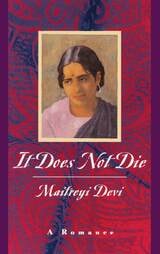
It Does Not Die
A RomanceMaitreyi Devi
University of Chicago Press, 1994
Proud of her intelligence, Maitreyi Devi's father had provided her with a fine and, for that time, remarkably liberal education — and encouraged his brilliant foreign student, Eliade, to study with her. "We were two good exhibits in his museum," Devi writes. They were also, as it turned out, deeply taken with each other. When their secret romance was discovered, Devi's father banished the young Eliade from their home.
Against a rich backdrop of life in an upper-caste Hindu household, Devi powerfully recreates the confusion of an over-educated child simultaneously confronting sex and the differences, not only between European and Indian cultures, but also between her mother's and father's view of what was right. Amid a tangle of misunderstandings, between a European man and an Indian girl, between student and teacher, husband and wife, father and daughter, she describes a romance unfolding in the face of cultural differences but finally succumbing to cultural constraints. On its own, It Does Not Die is a fascinating story of cultural conflict and thwarted love. Read together with Eliade's Bengal Nights, Devi's "romance" is a powerful study of what happens when the oppositions between innocence and experience, enchantment and disillusion, and cultural difference and colonial arrogance collide.
"In two novels written forty years apart, a man and a woman tell stories of their love. . . . Taken together they provide an unusually touching story of young love unable to prevail against an opposition whose strength was tragically buttressed by the uncertainties of a cultural divide."—Isabel Colegate, New York Times Book Review
"Recreates, with extraordinary vividness, the 16-year-old in love that she had been. . . . Maitreyi is entirely, disarmingly open about her emotions. . . . An impassioned plea for truth."—Anita Desai, New Republic
"Something between a reunion and a duel. Together they detonate the classic bipolarities: East-West, life-art, woman-man."—Richard Eder, New York Newsday
"One good confession deserves another. . . . Both books gracefully trace the authors' doomed love affair and its emotional aftermath."—Nina Mehta, Chicago Tribune