Results by title
102 books match the query 'Indians' and 16 start with i
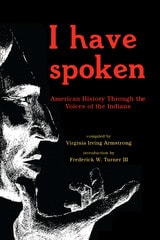
I Have Spoken
American History Through The Voices Of The IndiansVirginia I. Armstrong
Ohio University Press, 1971
I Have Spoken is a collection of American Indian oratory from the 17th to the 20th century, concentrating on speeches focusing around Indian-white relationships, especially treaty-making negotiations. A few letters and other writings are also included.
Here, in their own words, is the Indian’s story told with integrity, with drama, with caustic wit, with statesmanship, with poetic impact; a story of proffered friendship, of broken promises, of hope, of disillusionment, of pride, of a whole land and life gone sour.
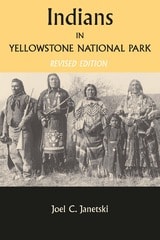
Indians In Yellowstone National Park
Joel Janetski
University of Utah Press, 1987
The vast, pine-covered plateau now known as Yellowstone National Park has been lived in, traveled through, and exploited by humans for thousands of years. It is still possible to see the remnants of old camps and deep-rutted trails over which ancient peoples crossed the Park to reach the bison-rich plains.
When did humans first visit the area we now call Yellowstone?
Who lived there when the first Europeans entered the region?
What happened to the last of the early inhabitants?
How did the Nez Perce, fleeing across the northen of the newly established Park in 1877, escape U.S. troops?
How did Indians perceive the Park's geysers and hot springs?
These and other questions are answered in this popular history of the Park written by a professional archaeologist who is also a seasonal resident of West Yellowstone. Joel Janetski reconstructs past human events from archaeological evidence and historical sources to provide an engrossing story of the people who knew the area hundreds, even thousands, of years ago and who left their traces amidst the grandeur that is today's Yellowstone National Park.
Indians and Anthropologists
Vine Deloria, Jr., and the Critique of AnthropologyThomas Biolsi
University of Arizona Press, 1997
CONTENTS
Introduction: What's Changed, What Hasn't, Thomas Biolsi & Larry J. Zimmerman
Part One--Deloria Writes Back
Vine Deloria, Jr., in American Historiography, Herbert T. Hoover
Growing Up on Deloria: The Impact of His Work on a New Generation of Anthropologists, Elizabeth S. Grobsmith
Educating an Anthro: The Influence of Vine Deloria, Jr., Murray L. Wax
Part Two--Archaeology and American Indians
Why Have Archaeologists Thought That the Real Indians Were Dead and What Can We Do about It?, Randall H. McGuire
Anthropology and Responses to the Reburial Issue, Larry J. Zimmerman
Part Three-Ethnography and Colonialism
Here Come the Anthros, Cecil King
Beyond Ethics: Science, Friendship and Privacy, Marilyn Bentz
The Anthropological Construction of Indians: Haviland Scudder Mekeel and the Search for the Primitive in Lakota Country, Thomas Biolsi
Informant as Critic: Conducting Research on a Dispute between Iroquoianist Scholars and Traditional Iroquois, Gail Landsman
The End of Anthropology (at Hopi)?, Peter Whiteley
Conclusion: Anthros, Indians and Planetary Reality, Vine Deloria, Jr.
Indians and Archaeology of Missouri, Revised Edition
Carl H. Chapman & Eleanor F. Chapman
University of Missouri Press, 1983
This expanded edition of Indians and Archaeology of Missouri gives an excellent introduction to the cultural development of Missouri’s Indians during the past twelve thousand years. Providing a new chapter on the Hunter Foragers of the Dalton period and substantial revision of other chapters to incorporate recent discoveries, the Chapmans present knowledge based upon decades of experience with archaeological excavations in an understandable and fascinating form.
The first edition of Indians and Archaeology of Missouri has been recognized in Missouri and nationally as one of the best books of its kind. The Missouri Historical Review called it “simply indispensable.” The Plains Anthropologist added similar praise: “Clearly written and exceptionally well illustrated…it is the answer to the amateur’s prayers.” Archaeology described it as “a boon to Missouri’s many amateur archaeologists, a useful source of information for professionals and interesting reading for the layman.”
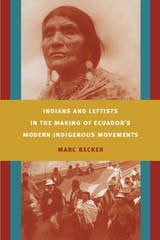
Indians and Leftists in the Making of Ecuador's Modern Indigenous Movements
Marc Becker
Duke University Press, 2008
Becker explains how rural laborers and urban activists worked together in Ecuador, merging ethnic and class-based struggles for social justice. Socialists were often the first to defend Indigenous languages, cultures, and social organizations. They introduced rural activists to new tactics, including demonstrations and strikes. Drawing on leftist influences, Indigenous peoples became adept at reacting to immediate, local forms of exploitation while at the same time addressing broader underlying structural inequities. Through an examination of strike activity in the 1930s, the establishment of a national-level Ecuadorian Federation of Indians in 1944, and agitation for agrarian reform in the 1960s, Becker shows that the history of Indigenous mobilizations in Ecuador is longer and deeper than many contemporary observers have recognized.
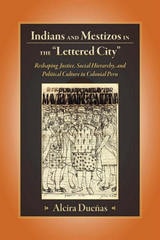
Indians and Mestizos in the "Lettered City"
Reshaping Justice, Social Hierarchy, and Political Culture in Colonial PeruAlcira Duenas
University Press of Colorado, 2010
Scholars have long assumed that Spanish rule remained largely undisputed in Peru between the 1570s and 1780s, but educated elite Indians and mestizos challenged the legitimacy of Spanish rule, criticized colonial injustice and exclusion, and articulated the ideas that would later be embraced in the Great Rebellion in 1781. Their movement extended across the Atlantic as the scholars visited the seat of the Spanish empire to negotiate with the king and his advisors for social reform, lobbied diverse networks of supporters in Madrid and Peru, and struggled for admission to religious orders, schools and universities, and positions in ecclesiastic and civil administration.
Indians and Mestizos in the "Lettered City" explores how scholars contributed to social change and transformation of colonial culture through legal, cultural, and political activism, and how, ultimately, their significant colonial critiques and campaigns redefined colonial public life and discourse. It will be of interest to scholars and students of colonial history, colonial literature, Hispanic studies, and Latin American studies.
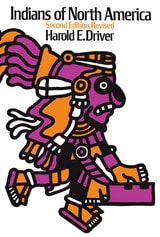
Indians of North America
Harold E. Driver
University of Chicago Press, 1969
For this second edition, Harold Driver made extensive revisions in chapter content and organization, incorporating many new discoveries and interpretations in archeology and related fields. He also revised several of the maps and added more than 100 bibliographical items. Since the publication of the first edition, there has been an increased interest in the activities of Indians in the twentieth century; accordingly, the author placed much more emphasis on this period.
Indians of the Rio Grande Delta
Their Role in the History of Southern Texas and Northeastern MexicoBy Martín Salinas
University of Texas Press, 1990
Indians of the Rio Grande Delta is the first single-volume source on these little-known peoples. Working from innumerable primary documents in various Texan and Mexican archives, Martin Salinas has compiled data on more than six dozen named groups that inhabited the area in the sixteenth through the eighteenth centuries. Depending on available information, he reconstructs something of their history, geographical range and migrations, demography, language, and culture. He also offers general information on various unnamed groups of Indians, on the lifeways of the indigenous peoples, and on the relations between the Indian groups and the colonial Spanish missions in the region.
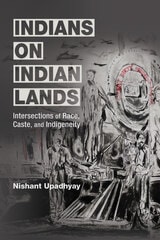
Indians on Indian Lands
Intersections of Race, Caste, and IndigeneityNishant Upadhyay
University of Illinois Press, 2024
Winner of a NWSA/University of Illinois Press First Book Prize
Nishant Upadhyay unravels Indian diasporic complicity in its ongoing colonialist relationship with Indigenous peoples, lands, and nations in Canada. Upadhyay examines the interwoven and simultaneous areas of dominant Indian caste complicity in processes of settler colonialism, antiblackness, capitalism, brahminical supremacy, Hindu nationalism, and heteropatriarchy. Resource extraction in British Columbia in the 1970s–90s and in present-day Alberta offer examples of spaces that illuminate the dispossession of Indigenous peoples and simultaneously reveal racialized, gendered, and casted labor formations. Upadhyay juxtaposes these extraction sites with examples of anticolonial activism and solidarities from Tkaronto. Analyzing silence on settler colonialism and brahminical caste supremacy, Upadhyay upends the idea of dominant caste Indian diasporas as racially victimized and shows that claiming victimhood denies a very real complicity in enforcing other power structures. Exploring stories of quotidian proximity and intimacy between Indigenous and South Asian communities, Upadhyay offers meditations on anticolonial and anti-casteist ways of knowledge production, ethical relationalities, and solidarities.Groundbreaking and ambitious, Indians on Indian Lands presents the case for holding Indian diasporas accountable for acts of violence within a colonial settler nation.
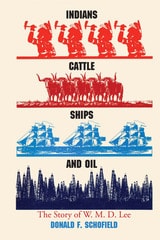
Indians, Cattle, Ships, and Oil
The Story of W. M. D. LeeBy Donald F. Schofield
University of Texas Press, 1985
Indian trader, rancher, harbor developer, oil impresario—these are the many worlds of one of the least chronicled but most fascinating characters of the American West. In the early, bustling years of the frontier, a brazen young man named William McDole Lee moved from Wisconsin to Kansas and then to Texas to forge a life for himself. Becoming a driving entrepreneurial force in Texas's development, Lee soon garnered the alliances and resources necessary to shape the financial destinies of disparate groups throughout the state. His story is expertly told in Donald F. Schofield's Indians, Cattle, Ships, and Oil.
Beginning in 1869 as a trader to the southern Cheyenne and Arapaho tribes and fort provisioner to troops garrisoned at Camp Supply, Indian Territory, Lee gained a partner and amassed a fortune in short order from trading buffalo hides and robes. Vast herds of buffalo grazing on the southern plains were killed largely on his order. When buffalo were no longer a profitable commodity, Lee tackled his next challenge—the cattle trade.
He began with herds branded LR that grazed on pastures near Fort Supply. Then came his LE herd in the Texas Panhandle. Another partnership, with noted cattle rancher Lucien Scott, resulted in the vast LS ranch, one of the most successful operations of its day. Lee even introduced a new breed of cattle, the Aberdeen-Angus, to the western range. But as his partnership faded, Lee moved on to his next undertaking—the development of Texas' first deep-water harbor.
In 1888, Lee and other financiers put up one million dollars to finance a dream: opening international trade from the waters of the Gulf of Mexico to the mainland at the mouth of the Brazos River. Their Brazos River Channel and Dock Company was to construct, own, and operate a deep-water harbor at Velasco, with a railroad link to Houston. Though threats of financial disaster loomed large, the Velasco facility was to welcome, in its day, tugs, barges, and three-masted schooners and to provide impetus for Houston's boom. Yet with success, the mercurial Lee turned to yet another challenge—oil.
Starting still another partnership, Lee committed himself to prospecting for oil on the West Columbia Ridge in Brazoria County. Lee and crew struck oil in 1907, developing one of the first producing wells of Brazoria County, but inadequate drilling equipment hampered further fruitful exploration. Lee moved his rigs to the famed Spindletop, where he perfected the technique of shallow drilling. Though spectacular success in the oil business eluded him, Lee's accomplishments set him squarely among the great entrepreneurs of the Texas oil industry.
Lee's exploits led him to roles in some of the most dramatic moments in Texas and the West—Indian uprisings, buffalo hunts, political scandals, cowboy strikes and shoot-outs, railroad promotions, oil-well blow-outs and gushers. The people he encountered are the famous and infamous of western history: Cheyenne Chief Little Robe and the outlaw "Hurricane Bill" Martin; Indian Agent John D. Miles and Major General John Pope; outlaws Tom Harris and William Bonney, and Sheriff Pat Garrett. Altogether, Lee's biography vividly shows one man's manipulation of people and events during the settlement of the American frontier.
Indians, Fire, and the Land in the Pacific Northwest
Robert Boyd
Oregon State University Press, 1999
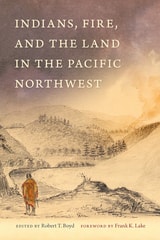
Indians, Fire, and the Land in the Pacific Northwest
Robert Boyd
Oregon State University Press, 2021
Instead of discovering a land blanketed by dense forests, early explorers of the Pacific Northwest encountered a varied landscape including open woods, meadows, and prairies. Far from a pristine wilderness, much of the Northwest was actively managed and shaped by the hands of its Native American inhabitants. Their primary tool was fire.
This volume takes an interdisciplinary approach to one of the most important issues concerning Native Americans and their relationship to the land. Over more than 10,000 years, Native Americans in the Northwest learned the intricacies of their local environments and how to use fire to create desired effects, mostly in the quest for food.
Drawing on historical journals, Native American informants, and ethnobotanical and forestry studies, this book’s contributors describe local patterns of fire use in eight ecoregions, representing all parts of the Native Northwest, from southwest Oregon to British Columbia and from Puget Sound to the Northern Rockies. Their essays provide glimpses into a unique understanding of the environment, one that draws on traditional ecological knowledge. Together, these writings also offer historical perspective on the contemporary debate over “prescribed burning” and management of public lands.
This updated edition includes a foreword by Frank K. Lake and a new epilogue by editor Robert T. Boyd. Contributors include Stephen Arno, Stephen Barrett, Theresa Ferguson, David French, Eugene Hunn, Leslie Johnson, Jeff LaLande, Estella Leopold, Henry Lewis, Helen H. Norton, Reg Pullen, William Robbins, John Ross, Nancy Turner, and Richard White.
Indigenous Aesthetics
Native Art, Media, and IdentityBy Steven Leuthold
University of Texas Press, 1998
What happens when a Native or indigenous person turns a video camera on his or her own culture? Are the resulting images different from what a Westernized filmmaker would create, and, if so, in what ways? How does the use of a non-Native art-making medium, specifically video or film, affect the aesthetics of the Native culture?
These are some of the questions that underlie this rich study of Native American aesthetics, art, media, and identity. Steven Leuthold opens with a theoretically informed discussion of the core concepts of aesthetics and indigenous culture and then turns to detailed examination of the work of American Indian documentary filmmakers, including George Burdeau and Victor Masayesva, Jr. He shows how Native filmmaking incorporates traditional concepts such as the connection to place, to the sacred, and to the cycles of nature. While these concepts now find expression through Westernized media, they also maintain continuity with earlier aesthetic productions. In this way, Native filmmaking serves to create and preserve a sense of identity for indigenous people.
Indigenous Movements, Self-Representation, and the State in Latin America
Edited by Kay B. Warren and Jean E. Jackson
University of Texas Press, 2003
Throughout Latin America, indigenous peoples are responding to state violence and pro-democracy social movements by asserting their rights to a greater measure of cultural autonomy and self-determination. This volume's rich case studies of movements in Colombia, Guatemala, and Brazil weigh the degree of success achieved by indigenous leaders in influencing national agendas when governments display highly ambivalent attitudes about strengthening ethnic diversity.
The contributors to this volume are leading anthropologists and indigenous activists from the United States and Latin America. They address the double binds of indigenous organizing and "working within the system" as well as the flexibility of political tactics used to achieve cultural goals outside the scope of state politics. The contributors answer questions about who speaks for indigenous communities, how indigenous movements relate to the popular left, and how conflicts between the national indigenous leadership and local communities play out in specific cultural and political contexts. The volume sheds new light on the realities of asymmetrical power relations and on the ways in which indigenous communities and their representatives employ Western constructions of subjectivity, alterity, and authentic versus counterfeit identity, as well as how they manipulate bureaucratic structures, international organizations, and the mass media to advance goals that involve distinctive visions of an indigenous future.
Individuality Incorporated
Indians and the Multicultural ModernJoel Pfister
Duke University Press, 2004
Inside Ancient Kitchens
New Directions in the Study of Daily Meals and FeastsElizabeth A. Klarich
University Press of Colorado, 2010