130 books match the query 'Indonesia' and 10 start with i

cover of If I Get Out Alive: The World War II Letters and Diaries of William H McDougall Jr

If I Get Out Alive

The World War II Letters and Diaries of William H McDougall Jr

Gary Topping

University of Utah Press, 2007

In 1939, William H. McDougall was a newspaperman from Salt Lake City who quit his job and went to work for the Japan Times, an English-language newspaper in Tokyo, and later for the United Press, for which he covered the Japanese occupation of Shanghai and the fall of the Dutch East Indies (Indonesia). When the ship on which he had escaped from Java was sunk, he reached the island of Sumatra, where he was captured and imprisoned by the Japanese until 1945. 

McDougall’s letters to his family offer a rare and detailed look at daily life in Tokyo and in Japanese-occupied Shanghai during the months leading up to the Pearl Harbor attack. After his imprisonment in Sumatra, he began keeping a daily journal of his experiences as a POW. Published here for the first time are the journals he retrieved at the end of World War II.

Written by an articulate and perceptive professional reporter, McDougall's letters and diaries offer an intimate, personal narrative of conditions in wartime East Asia. 
[more]
cover of Imagining Indonesia: Cultural Politics and Political Culture

Imagining Indonesia

Cultural Politics and Political Culture

Jim Schiller

Ohio University Press, 1997

Increased interest in Indonesian culture and politics is reflected in this work's effort to advance and reject various notions of what it means to be Indonesian. It also addresses perceptions of how Indonesia's citizens and state officials should interact. Because, in recent times, the Indonesian state has been so strong, much of the book is about state-sanctioned and state-supported notions of Indonesian identity and culture and efforts to come to terms with—or sometimes to challenge these official or dominant notions.

The contributions presented here represent a wide range of disciplines, points of view, and ideological orientations. Taken together they convey the notion that much might be gained if the idea were abandoned that a single understanding of what constitutes Indonesian culture is possible or desirable.
[more]
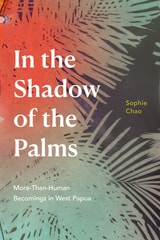
cover of In the Shadow of the Palms: More-Than-Human Becomings in West Papua

In the Shadow of the Palms

More-Than-Human Becomings in West Papua

Sophie Chao

Duke University Press, 2022

With In the Shadow of the Palms, Sophie Chao examines the multispecies entanglements of oil palm plantations in West Papua, Indonesia, showing how Indigenous Marind communities understand and navigate the social, political, and environmental demands of the oil palm plant. As Chao notes, it is no secret that the palm oil sector has destructive environmental impacts: it greatly contributes to tropical deforestation and is a major driver of global warming. Situating the plant and the transformations it has brought within the context of West Papua’s volatile history of colonization, ethnic domination, and capitalist incursion, Chao traces how Marind attribute environmental destruction not just to humans, technologies, and capitalism but also to the volition and actions of the oil palm plant itself. By approaching cash crops as both drivers of destruction and subjects of human exploitation, Chao rethinks capitalist violence as a multispecies act. In the process, Chao centers how Marind fashion their own changing worlds and foreground Indigenous creativity and decolonial approaches to anthropology.
[more]
cover of Indonesia: Archipelago of Fear

Indonesia

Archipelago of Fear

Andre Vltchek

Pluto Press, 2012

Indonesia: Archipelago of Fear is a fascinating and at times unsettling journey into the world's most populous Muslim nation as it struggles to emerge from decades of dictatorship and the plunder of its natural resources.

Andre Vltchek brings together more than a decade of investigative journalism in and around Indonesia to chart the recent history of the country, from the revolution which overthrew General Suharto's genocidal dictatorship in 1998 to the present day. He covers the full breadth of the country from Islamic Aceh to mostly Catholic East Timor.

Tracing Indonesia's current problems back to Suharto's coup and the genocide of 1965 – and the support given by the West to Suharto – Vltchek provides an intimate and deeply humane insight into the hopes and fears of Indonesia's people.
[more]
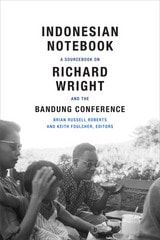
cover of Indonesian Notebook: A Sourcebook on Richard Wright and the Bandung Conference

Indonesian Notebook

A Sourcebook on Richard Wright and the Bandung Conference

Brian Russell Roberts and Keith Foulcher, editors

Duke University Press, 2016
While Richard Wright's account of the 1955 Bandung Conference has been key to shaping Afro-Asian historical narratives, Indonesian accounts of Wright and his conference attendance have been largely overlooked. Indonesian Notebook contains myriad documents by Indonesian writers, intellectuals, and reporters, as well as a newly recovered lecture by Wright, previously published only in Indonesian. Brian Russell Roberts and Keith Foulcher introduce and contextualize these documents with extensive background information and analysis, showcasing the heterogeneity of postcolonial modernity and underscoring the need to consider non-English language perspectives in transnational cultural exchanges. This collection of primary sources and scholarly histories is a crucial companion volume to Wright'sThe Color Curtain.


[more]
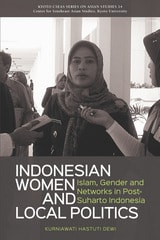
cover of Indonesian Women and Local Politics: Islam, Gender and Networks in Post-Suharto Indonesia

Indonesian Women and Local Politics

Islam, Gender and Networks in Post-Suharto Indonesia

Kurniawati Hastuti Dewi

National University of Singapore Press, 2015
In an important social change, female Muslim political leaders in Java have enjoyed considerable success in direct local elections following the fall of Suharto in Indonesia. Indonesian Women and Local Politics shows that Islam, gender, and social networks have been decisive in their political victories. Islamic ideas concerning female leadership provide a strong religious foundation for their political campaigns. However, their approach to women's issues shows that female leaders do not necessarily adopt a woman's perspectives when formulating policies. This new trend of Muslim women in politics will continue to shape the growth and direction of democratization in local politics in post-Suharto Indonesia and will color future discourse on gender, politics, and Islam in contemporary Southeast Asia.
[more]
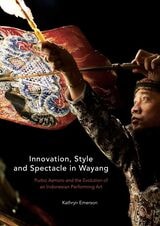
cover of Innovation, Style and Spectacle in Wayang: Purbo Asmoro and the Evolution of an Indonesian Performing Art

Innovation, Style and Spectacle in Wayang

Purbo Asmoro and the Evolution of an Indonesian Performing Art

Kathryn Emerson

National University of Singapore Press, 2022

A richly illustrated study of wayang, the traditional puppet theater form of Java, based on unprecedented decades-long participatory research.
 
Wayang, the traditional puppet theater form of Java, fascinates and endures thanks to the many ways it works as a medium—bearing the weight of Javanese culture and tradition as a key component of rites of passage, as a medium of ritual and spiritual practice, as public spectacle, and as entertainment of the broadest sort, performed live, broadcast, or streamed. Over the past forty years, the form has been subject to a great deal of experimentation and innovation, pulled in many directions within an ever-changing media landscape. In this book, Kathryn Anne Emerson outlines both significant contributions by a number of key figures and the social and political influences propelling such innovations. She also describes deeper and more lasting changes in wayang, based on what the art form's most accomplished practitioners have to say about it. At the core of the book is one pivotal figure, Purbo Asmoro of the Indonesian Institute of the Arts in Surakarta, who, Emerson argues, has taken the individual and singular innovations of the era and integrated them into a new system of performance practice, one that has shaped the key Surakarta school of performance. Grounded in an unprecedented, decades-long participatory research project involving hundreds of interlocutors, the book is beautifully illustrated and will be of considerable interest in Indonesian studies.
 
[more]
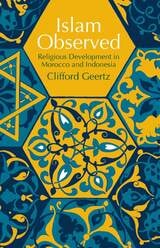
cover of Islam Observed: Religious Development in Morocco and Indonesia

Islam Observed

Religious Development in Morocco and Indonesia

Clifford Geertz

University of Chicago Press, 1971

"In four brief chapters," writes Clifford Geertz in his preface, "I have attempted both to lay out a general framework for the comparative analysis of religion and to apply it to a study of the development of a supposedly single creed, Islam, in two quite contrasting civilizations, the Indonesian and the Moroccan."

Mr. Geertz begins his argument by outlining the problem conceptually and providing an overview of the two countries. He then traces the evolution of their classical religious styles which, with disparate settings and unique histories, produced strikingly different spiritual climates. So in Morocco, the Islamic conception of life came to mean activism, moralism, and intense individuality, while in Indonesia the same concept emphasized aestheticism, inwardness, and the radical dissolution of personality. In order to assess the significance of these interesting developments, Mr. Geertz sets forth a series of theoretical observations concerning the social role of religion.
[more]
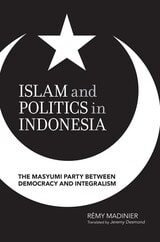
cover of Islam and Politics in Indonesia: The Masyumi Party between Democracy and Integralism

Islam and Politics in Indonesia

The Masyumi Party between Democracy and Integralism

Rémy Madinier

National University of Singapore Press, 2015

The Masyumi Party, which was active in Indonesia from 1945 to 1960, constitutes the boldest attempt to date at reconciling Islam and democracy. Masyumi proposed a vision of society and government which was not bound by a literalist application of Islamic doctrine but rather inspired by the values of Islam. It set out moderate policies which were both favourable to the West and tolerant towards other religious communities in Indonesia. Although the party made significant strides towards the elaboration of a Muslim democracy, its achievements were nonetheless precarious: it was eventually outlawed in 1960 for having resisted Sukarno’s slide towards authoritarianism, and the refusal of Suharto’s regime to reinstate the party left its leaders disenchanted and marginalised. Many of those leaders subsequently turned to a form of Islam known as integralism, a radical doctrine echoing certain characteristics of 19th-century Catholic integralism, which contributed to the advent of Muslim neo-fundamentalism in Indonesia.


This book examines the Masyumi Party from its roots in early 20th-century Muslim reformism to its contemporary legacy, and offers a perspective on political Islam which provides an alternative to the more widely-studied model of Middle-Eastern Islam. The party’s experience teaches us much about the fine line separating a moderate form of Islam open to democracy and a certain degree of secularisation from the sort of religious intransigence which can threaten the country’s denominational coexistence.
[more]
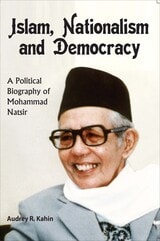
cover of Islam, Nationalism and Democracy: a Political Biography of Mohammad Natsir

Islam, Nationalism and Democracy

a Political Biography of Mohammad Natsir

Audrey R. Kahin

National University of Singapore Press, 2012

As Indonesia's leading Muslim politician in the second half of the 20th century, Mohammad Natsir (1908-1993) went from heading the country's first post-independence government and largest Islamic political party to spending years in rebellion and in prison. After initially welcoming Soekarno's overthrow in 1965, he became one of the most outspoken critics of the successor Suharto government's increasingly autocratic rule. Natsir's copious writings stretch from his student days in the late colonial period, when his debates with Soekarno over the character of Indonesian nationalism first attracted public attention, to the years immediately preceding his death when his trenchant criticisms brought him the enmity of the Suharto regime. They reveal a man struggling to harmonize his deep Islamic faith with his equally firm belief in national independence and democracy. Drawing from a wide range of materials, including these writings and extensive interviews with the subject, this political biography of Natsir positions an important Muslim politician and thinker in the context of a critical period of Indonesia's history, and describes his vision of how a newly independent country could embrace religion without sacrificing its democratic values.
[more]