Results by title
167 books match the query 'Iowa' and 19 start with i

In for the Long Haul
The Life of John RuanWilliam B. Friedricks
University of Iowa Press, 2003
Driven by grit and determination during the Depression, John Ruan parlayed a one-truck business into Ruan Transportation Management Systems, one of the nation’s leading trucking, leasing, and logistics companies. The trucking business made John Ruan one of the wealthiest and most influential people in Iowa and was the foundation for his vast fortune which included interests in insurance, banking, financial services, international trade, and real estate.
In the 1970s and 80s, Ruan led Des Moines’s renaissance with the construction of the 36-story original Ruan Center, the Marriott Hotel tower, and the Two Ruan Center office complex. But his contributions reached far beyond the confines of Iowa. As a philanthropist, Ruan was a long-time sponsor of the World Food Prize, which recognizes the importance of a nutritious and sustainable food supply for all people.
Based on extensive interviews with Ruan, family members, business associates, friends, and colleagues, as well as privately held papers and archives, In for the Long Haul presents a discerning portrait of this hard-charging yet compassionate businessman.

Intimacy Across Borders
Race, Religion, and Migration in the U.S. MidwestJane Juffer
Temple University Press, 2013
Examining how encounters produced by migration lead to intimacies-ranging from sexual, spiritual, and neighborly to hateful and violent, Jane Juffer considers the significant changes that have occurred in small towns following an influx of Latinos to the Midwest.
Intimacy across Borders situates the story of the Dutch Reformed Church in Iowa and South Africa within a larger analysis of race, religion, and globalization. Drawing on personal narrative, ethnography, and sociopolitical critique, Juffer shows how migration to rural areas can disrupt even the most thoroughly entrenched religious beliefs and transform the schools, churches, and businesses that form the heart of small-town America. Conversely, such face-to-face encounters can also generate hatred, as illustrated in the increasing number of hate crimes against Latinos and the passage of numerous anti-immigrant ordinances.
Juffer demonstrates how Latino migration to new areas of the U.S. threatens certain groups because it creates the potential for new kinds of families—mixed race, mixed legal status, and transnational—that challenge the conservative definition of community based on the racially homogeneous, coupled, citizen family.
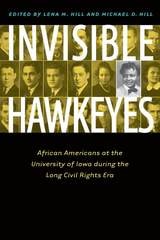
Invisible Hawkeyes
African Americans at the University of Iowa during the Long Civil Rights EraLena M. Hill and Michael D. Hill
University of Iowa Press, 2016
By examining the quieter collisions between Iowa’s polite midwestern progressivism and African American students’ determined ambition, Invisible Hawkeyes focuses attention on both local stories and their national implications. By looking at the University of Iowa and a smaller midwestern college town like Iowa City, this collection reveals how fraught moments of interracial collaboration, meritocratic advancement, and institutional insensitivity deepen our understanding of America’s painful conversion into a diverse republic committed to racial equality.
SUBJECTS COVERED
Edison Holmes Anderson, George Overall Caldwell, Elizabeth Catlett, Fanny Ellison, Oscar Anderson Fuller, Michael Harper, James Alan McPherson, Herbert Franklin Mells, Herbert Nipson, Thomas Pawley, William Oscar Smith, Mitchell Southall, Margaret Walker
CONTRIBUTORS
Dora Martin Berry, Richard M. Breaux, Kathleen A. Edwards, Lois Eichaker, Brian Hallstoos, Lena M. Hill, Michael D. Hill, Dianna Penny, Donald W. Tucker, Ted Wheeler

Iowa Birdlife
Gladys Black
University of Iowa Press, 1992

Iowa Breeding Bird Atlas
Laura Spess Jackson
University of Iowa Press, 1996
The Iowa Breeding Bird Atlas—the first comprehensive statewide survey of Iowa's breeding birds—provides a detailed record of the composition and distribution of the avifauna of the Hawkeye State. The atlas documents the presence of 199 species, 158 of which were confirmed breeding. This landmark volume will alert Iowans to the limited distribution of numerous species and serve as a guide to the management practices—such as forest and wetland management, set-aside programs, reduction in farm chemical use, and crop diversity—which could help insure that many future changes are positive ones. The Iowa Breeding Bird Atlas provides a welcome and much-needed baseline for future comparisons of changes in Iowa's birdlife and, by extension, the lives of all animals in the state.
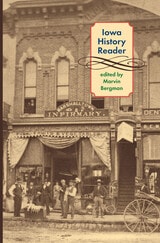
Iowa History Reader
Marvin Bergman
University of Iowa Press, 1996
Marvin Bergman has drawn upon his years of editing the Annals of Iowa to gather contributors who cross disciplines, model the craft of writing a historical essay, cover more than one significant topic, and above all interpret history rather than recite it. In his preface to this new printing, he calls attention to publications that begin to fill the gaps noted in the 1996 edition.
Rather than survey the basic facts, the essayists engage readers in the actual making of Iowa’s history by trying to understand the meaning of its past. By providing comprehensive accounts of topics in Iowa history that embrace the broader historiographical issues in American history, such as the nature of Progressivism and Populism, the debate over whether women’s expanded roles in wartime carried over to postwar periods, and the place of quantification in history, the essayists contribute substantially to debates at the national level at the same time that they interpret Iowa’s distinctive culture.
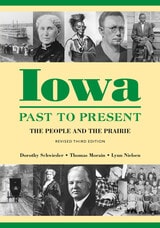
Iowa Past to Present
The People and the Prairie, Revised Third EditionDorothy Schwieder
University of Iowa Press, 2011

Iowa Pharmacy, 1880-1905
Experiment In ProfessionalismLee Anderson
University of Iowa Press, 1989
Popular culture remembers the settling of the Midwest as a golden era of unbounded opportunity, a time when every farm was a family farm and every farmer glowed with health. Pioneers in nineteenth-century Iowa, however, had to battle a formidable host of diseases during this golden era—malaria was endemic, smallpox and dysentery occurred in widespread epidemics, and typhoid, cholera, scarlet fever, and diphtheria had their seasons. Physicians in the growing Hawkeye State had little of the status and skill they command today, and herbalists, hydropaths, eclectics, Thomsonians, and homeopaths competed with purveyors of home remedies and patent medicines for their services.
The druggists of pioneer Iowa were artisan producers who compounded and prescribed botanical and chemical medicines, sold a variety of other merchandise from perfumes to paints, and dispensed the secret concoctions known as patent medicines, guaranteed to cure any condition, however alarming. In this compelling study, Lee Anderson tells the story of these early pharmacists and their hard-fought quest to legitimize their profession. While he confronts the politics of professionalism and the purpose of the pharmaceutical science and education, he also illuminates the mutual role of physicians and pharmacists in frontier health care.
With skill and humor, Anderson recreates an exciting time in midwestern history and provides insights into national issues of professionalism in medicine. His study will appeal to scholars in the history of medicine, pharmacy, and professionalism and to everyone interested in the history of the Midwest.
Iowa Place Names Of Indian Origin
Virgil J. Vogel
University of Iowa Press, 1983
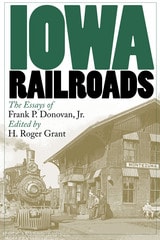
Iowa Railroads
The Essays of Frank P. Donovan, Jr.H. Roger Grant
University of Iowa Press, 2000
What began as a study of the Minneapolis & St. Louis Railway stretched into more than a dozen contributions on Hawkeye state railroad topics. By 1969 Donovan had examined Iowa's “Little Three”: Chicago Great Western, Illinois Central, and Minneapolis & St. Paul as well as the state's “Big Four”: Chicago & North Western; Chicago, Burlington & Quincy; Chicago, Milwaukee, St. Paul & Pacific; and Chicago, Rock Island & Pacific. In addition to these seven core carriers, Donovan covered the state's less prominent railroads: Atchison, Topeka & Santa Fe; Great Northern; and Union Pacific and Wabash. Moreover, he contributed an issue on Iowa's principal interurbans, most of which survived into the 1950s as electric-powered freight-only short lines. In uniting Donovan's articles into a single volume, Iowa Railroads provides the most complete history of Iowa's rail heritage.
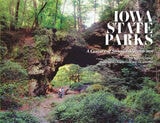
Iowa State Parks
A Century of Stewardship, 1920-2020Rebecca Conard, Angela Corio, and Jim Scheffler
University of Iowa Press, 2020
The photo essays at the heart of this book feature the artistry of well-known nature photographers such as Carl Kurtz, Brian Gibbs, Don Poggensee, and Larry Stone. The images help tell the stories of Iowa’s state parks, recreation areas, preserves, and forests. A historical overview sets the stage, followed by essays on key aspects of our park system.
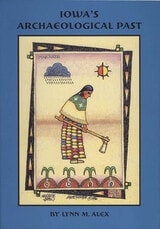
Iowa's Archaeological Past
Lynn M. Alex
University of Iowa Press, 2000
The core of this book—which includes many historic photographs and maps as well as numerous new maps and drawings and a generous selection of color photos—explores in detail what archaeologists have learned from studying the state's material remains and their contexts. Examining the projectile points, potsherds, and patterns that make up the archaeological record, Alex describes the nature of the earliest settlements in Iowa, the development of farming cultures, the role of the environment and environmental change, geomorphology and the burial of sites, interaction among native societies, tribal affiliation of early historic groups, and the arrival and impact of Euro-Americans. In a final chapter, she examines the question of stewardship and the protection of Iowa's many archaeological resources.
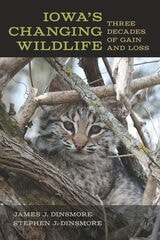
Iowa's Changing Wildlife
Three Decades of Gain and LossJames J. Dinsmore
University of Iowa Press, 2023
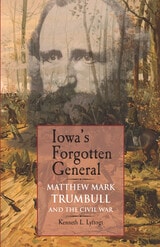
Iowa's Forgotten General
Matthew Mark Trumbull and the Civil WarKenneth L. Lyftogt
University of Iowa Press, 2005
Matthew Mark Trumbull was a Londoner who immigrated at the age of twenty. Within ten years of his arrival in America, he had become a lawyer in Butler County, Iowa; two years later a member of the state legislature; and two years after that a captain in the Union Army. By the end of the Civil War, he was a brevet brigadier general, and in his later years he was an author and lecturer. Kenneth Lyftogt’s biography details the amazing life of this remarkable man, also shedding light on the histories of the Third Iowa Volunteer Infantry and the Ninth Iowa Volunteer Cavalry.
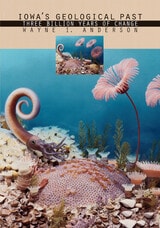
Iowa's Geological Past
Three Billion Years Of ChangeWayne I. Anderson
University of Iowa Press, 1998
Iowa's rock record is the product of more than three billion years of geological processes. The state endured multiple episodes of continental glaciation during the Pleistocene Ice Age, and the last glacier retreated from Iowa a mere (geologically speaking) twelve thousand years ago. Prior to that, dozens of seas came and went, leaving behind limestone beds with rich fossil records. Lush coal swamps, salty lagoons, briny basins, enormous alluvial plains, ancient rifts, and rugged Precambrian mountain belts all left their mark. In Iowa's Geological Past, Wayne Anderson gives us an up-to-date and well-informed account of the state's vast geological history from the Precambrian through the end of the Great Ice Age.
Anderson takes us on a journey backward into time to explore Iowa's rock-and-sediment record. In the distant past, prehistoric Iowa was covered with shallow seas; coniferous forests flourished in areas beyond the continental glaciers; and a wide variety of animals existed, including mastodon, mammoth, musk ox, giant beaver, camel, and giant sloth.
The presence of humans can be traced back to the Paleo-Indian interval, 9,500 to 7,500 years ago. Iowa in Paleozoic time experienced numerous coastal plain and shallow marine environments. Early in the Precambrian, Iowa was part of ancient mountain belts in which granite and other rocks were formed well below the earth's surface.
The hills and valleys of the Hawkeye State are not everlasting when viewed from the perspective of geologic time. Overall, Iowa's geologic column records an extraordinary transformation over more than three billion years. Wayne Anderson's profusely illustrated volume provides a comprehensive and accessible survey of the state's remarkable geological past.
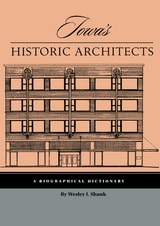
Iowa's Historic Architects
A Biographical DictionaryWesley I. Shank
University of Iowa Press, 1998
Among the prominent Iowa architects of the late nineteenth and early twentieth centuries were a remarkable few who had little training in architecture; their natural talents and their capacity for hard work made up for their lack of experience. Beginning in 1927, however, an Iowa architect had to meet state requirements of experience and training in order to practice. Shank includes an introduction to the history of the profession in Iowa: the development of professional education and training, the founding of professional societies and their roles, the different personalities and talents of the architects, the demography of architectural offices in the state, and the relative importance of Iowa architects both statewide and nationally.
Iowa's Minerals
Their Occurance, Origins, Industries and LorePaul Garvin
University of Iowa Press, 1998
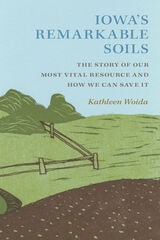
Iowa's Remarkable Soils
The Story of Our Most Vital Resource and How We Can Save ItKathleen Woida
University of Iowa Press, 2021
Its soils are what make Iowa a premier agricultural state, both in terms of acres planted and bushels harvested. But in the last hundred years, large-scale intensive agriculture and urban development have severely degraded most of our soils. However, as Woida documents, some innovative Iowans are beginning to repair and regenerate their soils by treating them as the living ecosystem and vast carbon store that they are. To paraphrase Aldo Leopold, these new pioneers are beginning to see their soils as part of a community to which they and their descendants belong, rather than commodities belonging to them.

Iowa
The Middle LandDorothy Schwieder
University of Iowa Press, 1996