Results by title
220 books match the query 'Israel' and 34 start with i
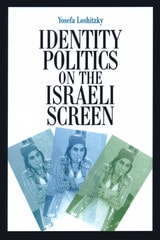
Identity Politics on the Israeli Screen
By Yosefa Loshitzky
University of Texas Press, 2002
2002 — A Choice Outstanding Academic Book
The struggle to forge a collective national identity at the expense of competing plural identities has preoccupied Israeli society since the founding of the state of Israel. In this book, Yosefa Loshitzky explores how major Israeli films of the 1980s and 1990s have contributed significantly to the process of identity formation by reflecting, projecting, and constructing debates around Israeli national identity.
Loshitzky focuses on three major foundational sites of the struggle over Israeli identity: the Holocaust, the question of the Orient, and the so-called (in an ironic historical twist of the "Jewish question") Palestinian question. The films she discusses raise fundamental questions about the identity of Jewish Holocaust survivors and their children (the "second generation"), Jewish immigrants from Muslim countries or Mizrahim (particularly the second generation of Israeli Mizrahim), and Palestinians. Recognizing that victimhood marks all the identities represented in the films under discussion, Loshitzky does not treat each identity group as a separate and coherent entity, but rather attempts to see the conflation, interplay, and conflict among them.

Identity, Place, and Subversion in Contemporary Mizrahi Cinema in Israel
Yaron Shemer
University of Michigan Press, 2013
In Identity, Place, and Subversion in Contemporary Mizrahi Cinema in Israel, Yaron Shemer presents the most comprehensive and systematic study to date of Mizrahi (Oriental-Jewish or Arab-Jewish) films produced in Israel in the last several decades. Through an analysis of dozens of films the book illustrates how narratives, characters, and space have been employed to give expression to Mizrahi ethnic identity and to situate the Mizrahi within the broader context of the Israeli societal fabric. The struggle over identity and the effort to redraw ethnic boundaries have taken place against the backdrop of a long-standing Zionist view of the Mizrahi as an inferior other whose “Levantine” culture posed a threat to the Western-oriented Zionist enterprise.
In its examination of the nature and dynamics of Mizrahi cinema (defined by subject-matter), the book engages the sensitive topic of Mizrahi ethnicity head-on, confronting the conventional notion of Israeli society as a melting pot and the widespread dismissal of ethnic divisions in the country. Shemer explores the continuous marginalization of the Mizrahi in contemporary Israeli cinema and the challenge some Mizrahi films offer to the subjugation of this ethnic group. He also studies the role cultural policies and institutional power in Israel have played in shaping Mizrahi cinema and the creation of a Mizrahi niche in cinema. In a broader sense, this pioneering work is a probing exploration of Israeli culture and society through the prism of film and cinematic expression. It sheds light on the play of ethnicity, class, gender, and religion in contemporary Israel, and on the heated debates surrounding Zionist ideology and identity politics. By charting a new territory of academic inquiry grounded in an interdisciplinary theoretical framework, the study contributes to the formation of “Mizrahi Cinema” as a recognized and vibrant scholarly field.

Imperial Israel and the Palestinians
The Politics of ExpansionNur Masalha
Pluto Press, 2000
Masalha argues that the heart of the conflict between Zionist immigrants/settlers and the native Palestinians has always been about land, territory, demography and water. He documents how Israeli policy has made it a priority to expel the Palestinians, either by war or peaceful measures. But these imperialist tendencies are not restricted to extremist zealots. The author uncovers the expansionist policies found in Labour Zionism and Kookist ideology.
Chapters cover the Whole Land of Israel Movement, Zionist Revisionism and the Likud Party, Gush Emunim and the religious fundamentalists, parties and movements of the far right and the evolution of Israeli Jewish public attitudes since 1967.
In Pursuit of Peace in Israel and Palestine
Gershon Baskin
Vanderbilt University Press, 2017
Despite the atmosphere of fear, Baskin found he could talk with both Jews and Palestinians, and that very few others were engaged in efforts at mutual understanding. At his initiative, the Ministry of Education and the office of right-wing prime minister Menachem Begin created the Institute for Education for Jewish-Arab Coexistence with Baskin himself as director. Eight years later he founded and codirected the only joint Israeli-Palestinian public policy think-and-do tank in the world, the Israel/Palestine Center for Research and Information. For decades he continued to cross borders, often with a kaffiyeh (Arab headdress) on his dashboard to protect his car in Palestinian neighborhoods. Airport passport control became Kafkaesque as Israeli agents routinely identified him as a security threat.
During the many cycles of peace negotiations, Baskin has served both as an outside agitator for peace and as an advisor on the inside of secret talks—for example, during the prime ministership of Yitzhak Rabin and during the initiative led by Secretary of State John Kerry. Baskin ends the book with his own proposal, which includes establishing a peace education program and cabinet-level Ministries of Peace in both countries, in order to foster a culture of peace.
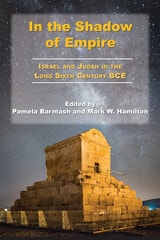
In the Shadow of Empire
Israel and Judah in the Long Sixth Century BCEPamela Barmash
SBL Press, 2021
Empires Come and Go, Homelands Never
Readers of the Hebrew Bible know the basic story line: during the early sixth century BCE the Babylonian ruler Nebuchadnezzar sacked Jerusalem, deported a portion of the population to Mesopotamia, and triggered a crisis of faith in the minds of prophets, priests, and liturgists that still echoes through the centuries. Though many Judahites chose to make their way home under Persian imperial control, the straightforward biblical story of exile and return masks many complex issues of evidence and fact. Unlike previous studies that focused narrowly on the Babylonian exile of the Judahite elites, this volume widens the geographical and temporal scope to include the Assyrian, Babylonian, and Persian Empires. Improved access to and understanding of relevant texts, iconography, and material culture provide an opportunity for scholars to reappraise methods of imperial control and the responses of those in exile and under occupation. Contributors Pamela Barmash, Ryan P. Bonfiglio, Caralie Cooke, Lisbeth S. Fried, Martien A. Halvorson-Taylor, Mark W. Hamilton, Matt Waters, and Ian D. Wilson lay a firm foundation for future work on the long sixth century.
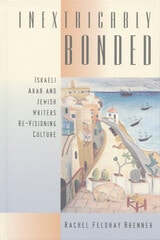
Inextricably Bonded
Israeli Arab and Jewish Writers Re-Visioning CultureRachel Feldhay Brenner
University of Wisconsin Press, 2003
Despite the tragic reality of the continuing Israeli-Arab conflict and deep-rooted beliefs that the chasm between Israeli Jews and Israeli Arabs is unbridgeable, this book affirms the bonds between the two communities. Rachel Feldhay Brenner demonstrates that the literatures of both ethnic groups defy the ideologies that have obstructed dialogue between the two peoples.
Brenner argues that literary critics have ignored the variety and the dissent in the novels of both Arab and Jewish writers in Israel, giving them interpretations that embrace the politics of exclusion and conform with Zionist ideology. Brenner offers insightful new readings that compare fiction by Jewish writers Amos Oz, A.B. Yehoshua, David Grossman, and others with fiction written in Hebrew by such Arab-Israeli writers as Atallah Mansour, Emile Habiby, and Anton Shammas. This parallel analysis highlights the moral and psychological dilemmas faced by both the Jewish victors and the Arab vanquished, and Brenner suggests that the hope for release from the historical trauma lies—on both sides—in reaching an understanding with and of the adversary.
Drawing upon the theories of Walter Benjamin, Jacques Lacan, Sigmund Freud, Emanuel Levinas, and others, Inextricably Bonded is an innovative and illuminating examination of literary dissent from dominant ideology.

Inflation and Disinflation
The Israeli ExperimentLeonardo Leiderman
University of Chicago Press, 1993
Even though standard economic models predict that output will drop and unemployment will rise during disinflation, Israel saw a boom in private consumption and large increases in real wages that lasted for about three years. To understand how the effects of Israeli disinflation policies defied typical expectations, Leiderman investigates how monetary fiscal policy determined Israel's runaway inflation and how the country brought its economy abruptly under control. He finds that rates of inflation and consumption depend on the public's expectations about future fiscal adjustments and that foreign trade shocks do not inevitably lead to a long-term rise in the inflation rate. His illumination of international trade and domestic policies, past and present, will interest academic economists and policymakers alike.
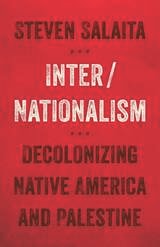
Inter/Nationalism
Decolonizing Native America and PalestineSteven Salaita
University of Minnesota Press, 2016
“The age of transnational humanities has arrived.” According to Steven Salaita, the seemingly disparate fields of Palestinian Studses and American Indian studies have more in common than one may think. In Inter/Nationalism, Salaita argues that American Indian and Indigenous studies must be more central to the scholarship and activism focusing on Palestine.
Salaita offers a fascinating inside account of the Boycott, Divestment, and Sanctions (BDS) movement—which, among other things, aims to end Israel’s occupation of Palestinian land. In doing so, he emphasizes BDS’s significant potential as an organizing entity as well as its importance in the creation of intellectual and political communities that put Natives and other colonized peoples such as Palestinians into conversation. His discussion includes readings of a wide range of Native poetry that invokes Palestine as a theme or symbol; the speeches of U.S. President Andrew Jackson and early Zionist thinker Ze’ev Jabotinsky; and the discourses of “shared values” between the United States and Israel.
Inter/Nationalism seeks to lay conceptual ground between American Indian and Indigenous studies and Palestinian studies through concepts of settler colonialism, indigeneity, and state violence. By establishing Palestine as an indigenous nation under colonial occupation, this book draws crucial connections between the scholarship and activism of Indigenous America and Palestine.

Into the Fire
A Post-9/11 American in Tel AvivCharles T. Salmon
Michigan State University Press, 2003
In the fall of 2001 Charles Salmon had a Fulbright fellowship in Israel. He was due to depart on September 12. Arriving in Israel a few weeks later, speaking no Hebrew and largely unfamiliar with Judaism and Israeli customs, he immersed himself in Israeli culture.
This collection of correspondence began as a weekly report to friends and was designed to offer an alternative to mainstream media. With the excitement of a tourist and the eagerness of an anthropologist, Salmon emerges as a modern Candide. He describes historical sites and a supermarket in Tel Aviv, discusses the differences between university students in Israel and America, and negotiates the purchase of food and the vagaries of the weather with humor and passion. The letters also discuss Israeli–Palestinian relations, and details terrorist events and responses to them.
This unique book focuses on how everyday hopes and fears transcend geopolitical boundaries and provides valuable lessons on how to thrive in these new and uncertain times.
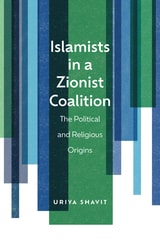
Islamists in a Zionist Coalition
The Political and Religious OriginsUriya Shavit
Rutgers University Press, 2025
Israel and Palestine
Competing HistoriesGreg Philo and Mike Berry
Pluto Press, 2006
Following on from their acclaimed book Bad News from Israel, Greg Philo and Mike Berry present a concise guide to the Israel-Palestine conflict. This uniquely accessible book will appeal to anyone looking for an approachable introduction. Uniquely, the authors show how there are many different, competing histories. They offer an overview of the wide range of contending viewpoints, and indicate those which are based on the most considered historical research.
The book covers key events in chronological order, in each case examining the varied historical accounts and presenting the beliefs of key thinkers across the ideological spectrum, from Edward Said to Binyamin Netanyahu. Starting the with emergence of the Zionist movement in the nineteenth century, and the figures who shaped it, the authors go on to cover the founding of Israel and its subsequent history, up to and including the 'roadmap for peace', the construction of the wall, the death of Arafat and the withdrawal from Gaza.
Israel and Settler Society
Lorenzo Veracini
Pluto Press, 2006
Veracini challenges two important myths: firstly, that the Israeli-Palestinian dispute is unique and defies comparative approaches; and secondly that the struggle is mainly based in nationality and religion and therefore different to typical colonial conflicts. On the contrary, Veracini shows how Israeli society is organised along apartheid lines -- and that apartheid was not unique to South Africa, but a common feature of colonisation. He examines wars of decolonization, and conflicts where whole native populations were all but eradicated -- as in Australia. Comparing and contrasting these with the more recent history of Israel and Palestine, he offers a critical perspective on colonialism as well as important new insights into patterns of imperialism today.

Israel and the American National Interest
A Critical ExaminationCheryl A. Rubenberg
University of Illinois Press, 1986
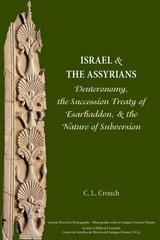
Israel and the Assyrians
Deuteronomy, the Succession Treaty of Esarhaddon, and the Nature of SubversC. L. Crouch
SBL Press, 2014
Was Deuteronomy created to be a subversive text based on Assyian treaties?
In this new book Crouch focuses on Deuteronomy’s subversive intent, asking what would be required in order for Deuteronomy to successfully subvert either a specific Assyrian source or Assyrian ideology more generally. The book reconsiders the nature of the relationship between Deuteronomy and Assyria, Deuteronomy’s relationship to ancient Near Eastern and biblical treaty and loyalty oath traditions, and the relevance of Deuteronomy’s treaty affinities to discussions of its date.
Features:
- A thorough investigation of the nature and requirements of subversion
- A focused examination of the context in which Deuteronomy would have functioned
- An appendix focused on redactional questions related to Deuteronoy 13 and 28
Israel and the Clash of Civilisations
Iraq, Iran and the Plan to Remake the Middle EastJonathan Cook
Pluto Press, 2008
Journalist Jonathan Cook explores Israel’s key role in persuading the Bush administration to invade Iraq, as part of a plan to remake the Middle East, and their joint determination to isolate Iran and prevent it from acquiring nuclear weapons that might rival Israel’s own.
This concise and clearly argued book makes the case that Israel's desire to be the sole regional power in the Middle East neatly chimed with Bush’s objectives in the “war on terror”.
Examining a host of related issues, from the ethnic cleansing of Palestinians to the role of Big Oil and the demonisation of the Arab world, Cook argues that the current chaos in the Middle East is the objective of the Bush administration – a policy that is equally beneficial to Israel.

Israel as a Modern Architectural Experimental Lab, 1948-1978
Edited by Inbal Ben-Asher Gitler and Anat Geva
Intellect Books, 2019

Israel in Exile
Jewish Writing and the DesertRanen Omer-Sherman
University of Illinois Press, 2006
In contrast to other ethnic and national representations, Jewish writers since antiquity have not constructed a neat antithesis between the desert and the city or nation; rather, the desert becomes a symbol against which the values of the city or nation can be tested, measured, and sometimes found wanting. This book examines how the ethical tension between the clashing Mosaic and Davidic paradigms of the desert still reverberate in secular Jewish literature and produce fascinating literary rewards. Omer-Sherman ultimately argues that the ancient encounter with the desert acquires a renewed urgency in response to the crisis brought about by national identities and territorial conflicts.
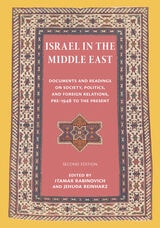
Israel in the Middle East
Documents and Readings on Society, Politics, and Foreign Relations, Pre-1948 to the PresentEdited by Itamar Rabinovich and Jehuda Reinharz
Brandeis University Press, 2007
Israel's Dead Soul
Authored by Steven Salaita
Temple University Press, 2011
In his courageous book, Israel's Dead Soul, Steven Salaita explores the failures of Zionism as a political and ethical discourse. He argues that endowing nation-states with souls is a dangerous phenomenon because it privileges institutions and corporations rather than human beings.
Asserting that Zionism has been normalized--rendered "benign" as an ideology of "multicultural conviviality"—Salaita critiques the idea that Zionism, as an exceptional ideology, leads to a lack of critical awareness of the effects of the Israeli occupation in Palestinian territory and to an unquestioning acceptance of Israel as an ethnocentric state.
Salaita's analysis targets the Anti-Defamation League, films such as Munich and Waltz with Bashir, intellectuals including Cornel West and Michael Eric Dyson, gay rights activists, and other public figures who mourn the decline of Israel's "soul." His pointed account shows how liberal notions of Zionism are harmful to various movements for justice.
Israel's Vicious Circle
Ten Years of Writings on Israel and PalestineUri Avnery
Pluto Press, 2008
Uri Avnery is one of the best-known peace activists in Israel and founder of the Gush Shalom peace movement. He has been involved in, and written about, all major events in Israel's history since its creation in 1948, and was the first Israeli to meet Yasser Arafat. This is a carefully selected collection of his articles from the last 10 years. Additionally, he has written a rigorous introduction that shows how peace can be achieved.
Avnery offers a unique perspective on the Middle-East conflict, drawing on his enormous experience of advocating Palestinian rights from within the system as a member of parliament and from outside as a peace activist. Written with passion and wit, his articles reveal and analyse the 'facts on the ground', always pointing out opportunities for reconciliation between the two sides and exposing those who exacerbate the conflict.
This book is a must-read for everyone who wants peace in the Middle East.
Israel's Years of Bogus Grandeur
From the Six-Day War to the First IntifadaBy Nissim Rejwan
University of Texas Press, 2006
On the eve of the Six-Day War in 1967, Israel was nineteen years old and as much an adolescent as the average nineteen-year-old person. Issues of identity and transition were the talk among Israeli intellectuals, including the writer Nissim Rejwan. Was Israel a Jewish state or a democratic state? And, most frustratingly, who was a Jew? As Nancy Berg's foreword makes clear, these issues became more critical and complex in the two decades after the war as Israel matured into a regional power. Rejwan, an Iraqi-born Jew whose own fate was tied to the answers, addresses the questions of those days in his letters, essays, and remembrances collected in Israel's Years of Bogus Grandeur.
Israel's overwhelming victory in 1967 brought control of the former Palestinian territories; at the same time, Oriental Jews (i.e., those not from Europe) became a majority in the Israeli population. The nation, already surrounded by hostile, recently humiliated Arab neighbors, now had an Arab majority (Jewish, Muslim, Druze, and Christian) within its borders—yet European Jews continued to run the country as their own. Rejwan wrote tirelessly about the second-class status of Arab Israelis (and especially of Arab Jews), encouraging a more inclusive attitude that might eventually help heal the wounds left by the Six-Day War. His studies in sociology at Tel Aviv University informed his work. For his cause, Rejwan lost his job and many of his friends but never his pen. Through Munich, Entebbe, political scandals, economic crises, and the beginning of the Intifada, Rejwan narrates Israel's growing pains with feisty wit and unwavering honesty.
Israel, Jordan, and Palestine
The Two-State ImperativeAsher Susser
Brandeis University Press, 2011
Israel/Palestine and the Queer International
Sarah Schulman
Duke University Press, 2012
As Schulman learns more, she questions the contradiction between Israel's investment in presenting itself as gay friendly—financially sponsoring gay film festivals and parades—and its denial of the rights of Palestinians. At the same time, she talks with straight Palestinian activists about their position in relation to homosexuality and gay rights in Palestine and internationally. Back in the United States, Schulman draws on her extensive activist experience to organize a speaking tour for some of the Palestinian queer leaders whom she had met and trusted. Dubbed "Al-Tour," it takes the activists to LGBT community centers, conferences, and universities throughout the United States. Its success solidifies her commitment to working to end Israel's occupation of Palestine, and it kindles her larger hope that a new "queer international" will emerge and join other movements demanding human rights across the globe.
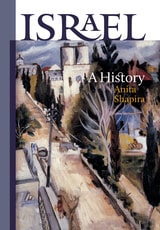
Israel
A HistoryAnita Shapira
Brandeis University Press, 2014
Israel
Politics, Myths and Identity CrisesAkiva Orr
Pluto Press, 1994
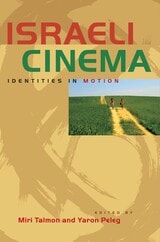
Israeli Cinema
Identities in MotionEdited by Miri Talmon and Yaron Peleg
University of Texas Press, 2011
With top billing at many film forums around the world, as well as a string of prestigious prizes, including consecutive nominations for the Best Foreign Film Oscar, Israeli films have become one of the most visible and promising cinemas in the first decade of the twenty-first century, an intriguing and vibrant site for the representation of Israeli realities. Yet two decades have passed since the last wide-ranging scholarly overview of Israeli cinema, creating a need for a new, state-of-the-art analysis of this exciting cinematic oeuvre.
The first anthology of its kind in English, Israeli Cinema: Identities in Motion presents a collection of specially commissioned articles in which leading Israeli film scholars examine Israeli cinema as a prism that refracts collective Israeli identities through the medium and art of motion pictures. The contributors address several broad themes: the nation imagined on film; war, conflict, and trauma; gender, sexuality, and ethnicity; religion and Judaism; discourses of place in the age of globalism; filming the Palestinian Other; and new cinematic discourses. The authors' illuminating readings of Israeli films reveal that Israeli cinema offers rare visual and narrative insights into the complex national, social, and multicultural Israeli universe, transcending the partial and superficial images of this culture in world media.

Israeli Culture between the Two Intifadas
A Brief RomanceBy Yaron Peleg
University of Texas Press, 2008
Over the past two decades, profound changes in Israel opened its society to powerful outside forces and the dominance of global capitalism. As a result, the centrality of Zionism as an organizing ideology waned, prompting expressions of anxiety in Israel about the coming of a post-Zionist age. The fears about the end of Zionism were quelled, however, by the Palestinian uprising in 2000, which spurred at least a partial return to more traditional perceptions of homeland. Looking at Israeli literature of the late twentieth century, Yaron Peleg shows how a young, urban class of Israelis felt alienated from the Zionist values of their forebears, and how they adopted a form of escapist romanticism as a defiant response that replaced traditional nationalism.
One of the first books in English to identify the end of the post-Zionist era through inspired readings of Hebrew literature and popular media, Israeli Culture between the Two Intifadas examines Israel's ambivalent relationship with Jewish nationalism at the end of the twentieth century.
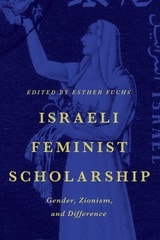
Israeli Feminist Scholarship
Gender, Zionism, and DifferenceEdited by Esther Fuchs
University of Texas Press, 2014
The last two decades have given rise to a proliferation of scholarship by Israeli feminists working in diverse fields, ranging from sociology to literature, anthropology, and history. As the Israeli feminist movement continually decentralizes and diversifies, it has become less Eurocentric and heterocentric, making way for pluralistic concerns. Collecting fifteen previously published essays that give voice to this diversity, Israeli Feminist Scholarship showcases articles on Ashkenazi, Mizrahi, Palestinian, and lesbian identities as well as on Israeli women’s roles as mothers, citizens and activists, and soldiers.
Citing evidence that these scholars have redefined their object of inquiry as an open site of contested and constructed identity, luminary Esther Fuchs traces the history of Israeli feminism. Among the essays are Jewish historian Margalit Shilo’s study of the New Hebrew Woman, sociologist Ronit Lentin’s analysis of gendered representations of the Holocaust in Israeli culture, peace activist Erella Shadmi on lesbianism as a nonissue in Israel, and cultural critic Nitza Berkovitch’s examination of womanhood as constructed in Israeli legal discourse.
Creating a space for a critical examination of the relationship between disparate yet analogous discourses within feminism and Zionism, this anthology reclaims the mobilizing, inclusive role of these multifaceted discourses beyond the postmodern paradigm.
Israeli Rejectionism
A Hidden Agenda in the Middle East Peace ProcessZalman Amit
Pluto Press, 2011
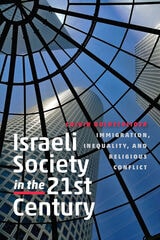
Israeli Society in the Twenty-First Century
Immigration, Inequality, and Religious ConflictCalvin Goldscheider
Brandeis University Press, 2015
Israeli Women's Studies
A ReaderEdited by Esther Fuchs
Rutgers University Press, 2005
Israeli women do not enjoy the equality, status, and power often attributed to them by the media and popular culture. Despite significant achievements and progress, as a whole they continue to earn less than their male counterparts, are less visible and influential in the political arena, do not share equal responsibilities or privileges in the military, have unequal rights and freedoms in family life and law, and are less influential in shaping the nation's self image and cultural orientation.
Bringing together classic essays by leading scholars of Israeli culture, this reader exposes the hidden causes of ongoing discrimination and links the restrictions that Israeli women experience to deeply entrenched structures, including colonial legacies, religious traditions, capitalism, nationalism, and ongoing political conflict. In contrast, the essays also explore how women act creatively to affect social change and shape public discourse in less ostensible ways.
Providing balanced perspectives from the social sciences and the humanities, this comprehensive reader reflects both an emerging consensus and exciting diversity in the field. It is the definitive text for courses in Israeli women's studies.
Israeli and Palestinian Postcards
Presentations of National SelfBy Tim Jon Semmerling
University of Texas Press, 2004
Searing images of suicide bombings and retaliatory strikes now define the Israeli-Palestinian conflict for many Westerners, but television and print media are not the only visual realms in which the conflict is playing out. Even tourist postcards and greeting cards have been pressed into service as vehicles through which Israelis and Palestinians present competing visions of national selfhood and conflicting claims to their common homeland.
In this book, Tim Jon Semmerling explores how Israelis and Palestinians have recently used postcards and greeting cards to present images of the national self, to build national awareness and reinforce nationalist ideologies, and to gain international acceptance. He discusses and displays the works of numerous postcard/greeting card manufacturers, artists, and photographers and identifies the symbolic choices in their postcards, how the choices are arranged into messages, what the messages convey and to whom, and who benefits and loses in these presentations of national self. Semmerling convincingly demonstrates that, far from being ephemeral, Israeli and Palestinian postcards constitute an important arena of struggle over visual signs and the power to produce reality.
Itineraries in Conflict
Israelis, Palestinians, and the Political Lives of TourismRebecca L. Stein
Duke University Press, 2008
Combining vivid ethnographic detail, postcolonial theory, and readings of Israeli and Palestinian popular texts, Stein considers a broad range of Israeli leisure cultures of the Oslo period with a focus on the Jewish desires for Arab things, landscapes, and people that regional diplomacy catalyzed. Moving beyond conventional accounts, she situates tourism within a broader field of “discrepant mobility,” foregrounding the relationship between histories of mobility and immobility, leisure and exile, consumption and militarism. She contends that the study of Israeli tourism must open into broader interrogations of the Israeli occupation, the history of Palestinian dispossession, and Israel’s future in the Arab Middle East. Itineraries in Conflict is both a cultural history of the Oslo process and a call to fellow scholars to rethink the contours of the Arab-Israeli conflict by considering the politics of popular culture in everyday Israeli and Palestinian lives.