Results by title
135 books match the query 'Israel & Palestine' and 16 start with i
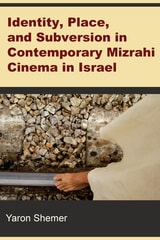
Identity, Place, and Subversion in Contemporary Mizrahi Cinema in Israel
Yaron Shemer
University of Michigan Press, 2013
In Identity, Place, and Subversion in Contemporary Mizrahi Cinema in Israel, Yaron Shemer presents the most comprehensive and systematic study to date of Mizrahi (Oriental-Jewish or Arab-Jewish) films produced in Israel in the last several decades. Through an analysis of dozens of films the book illustrates how narratives, characters, and space have been employed to give expression to Mizrahi ethnic identity and to situate the Mizrahi within the broader context of the Israeli societal fabric. The struggle over identity and the effort to redraw ethnic boundaries have taken place against the backdrop of a long-standing Zionist view of the Mizrahi as an inferior other whose “Levantine” culture posed a threat to the Western-oriented Zionist enterprise.
In its examination of the nature and dynamics of Mizrahi cinema (defined by subject-matter), the book engages the sensitive topic of Mizrahi ethnicity head-on, confronting the conventional notion of Israeli society as a melting pot and the widespread dismissal of ethnic divisions in the country. Shemer explores the continuous marginalization of the Mizrahi in contemporary Israeli cinema and the challenge some Mizrahi films offer to the subjugation of this ethnic group. He also studies the role cultural policies and institutional power in Israel have played in shaping Mizrahi cinema and the creation of a Mizrahi niche in cinema. In a broader sense, this pioneering work is a probing exploration of Israeli culture and society through the prism of film and cinematic expression. It sheds light on the play of ethnicity, class, gender, and religion in contemporary Israel, and on the heated debates surrounding Zionist ideology and identity politics. By charting a new territory of academic inquiry grounded in an interdisciplinary theoretical framework, the study contributes to the formation of “Mizrahi Cinema” as a recognized and vibrant scholarly field.

Imperial Israel and the Palestinians
The Politics of ExpansionNur Masalha
Pluto Press, 2000
Masalha argues that the heart of the conflict between Zionist immigrants/settlers and the native Palestinians has always been about land, territory, demography and water. He documents how Israeli policy has made it a priority to expel the Palestinians, either by war or peaceful measures. But these imperialist tendencies are not restricted to extremist zealots. The author uncovers the expansionist policies found in Labour Zionism and Kookist ideology.
Chapters cover the Whole Land of Israel Movement, Zionist Revisionism and the Likud Party, Gush Emunim and the religious fundamentalists, parties and movements of the far right and the evolution of Israeli Jewish public attitudes since 1967.
In Pursuit of Peace in Israel and Palestine
Gershon Baskin
Vanderbilt University Press, 2017
Despite the atmosphere of fear, Baskin found he could talk with both Jews and Palestinians, and that very few others were engaged in efforts at mutual understanding. At his initiative, the Ministry of Education and the office of right-wing prime minister Menachem Begin created the Institute for Education for Jewish-Arab Coexistence with Baskin himself as director. Eight years later he founded and codirected the only joint Israeli-Palestinian public policy think-and-do tank in the world, the Israel/Palestine Center for Research and Information. For decades he continued to cross borders, often with a kaffiyeh (Arab headdress) on his dashboard to protect his car in Palestinian neighborhoods. Airport passport control became Kafkaesque as Israeli agents routinely identified him as a security threat.
During the many cycles of peace negotiations, Baskin has served both as an outside agitator for peace and as an advisor on the inside of secret talks—for example, during the prime ministership of Yitzhak Rabin and during the initiative led by Secretary of State John Kerry. Baskin ends the book with his own proposal, which includes establishing a peace education program and cabinet-level Ministries of Peace in both countries, in order to foster a culture of peace.
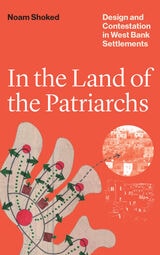
In the Land of the Patriarchs
Design and Contestation in West Bank SettlementsNoam Shoked
University of Texas Press, 2023
2024 On The Brinck Book Award and Lecture Series, University of New Mexico
2024 PROSE Award, Architecture–Urban Planning, Association of American Publishers
An on-the-ground account of the design and evolution of West Bank settlements, showing how one of the world’s most contested landscapes was produced by unexpected conflicts and collaborations among widely divergent actors.
Since capturing the West Bank in 1967, Israel has overseen the construction of scores of settlements across the territory’s rocky hilltops. The settlements are part of a fierce political conflict. But they are not just hotly contested political ventures. They are also something more everyday: residential architectural projects.
In the Land of the Patriarchs is an on-the-ground account of the design and evolution of West Bank settlements. Noam Shoked shows how settlements have been shaped not only by the decisions of military generals, high-profile politicians, and prominent architects but also by a wide range of actors, including real estate developers, environmental consultants, amateur archeologists, and Israelis who feel unserved by the country’s housing system. The patterns of design and construction they have inspired reflect competing worldviews and aesthetic visions, as well as everyday practices not typically associated with the politics of the Israeli occupation. Revealing the pragmatic choices and contingent circumstances that drive what appears to be a deliberately ideological landscape, Shoked demonstrates how unpredictable the transformation of political passion into brick and mortar can be.
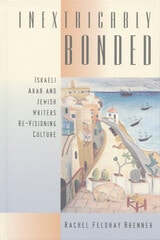
Inextricably Bonded
Israeli Arab and Jewish Writers Re-Visioning CultureRachel Feldhay Brenner
University of Wisconsin Press, 2003
Despite the tragic reality of the continuing Israeli-Arab conflict and deep-rooted beliefs that the chasm between Israeli Jews and Israeli Arabs is unbridgeable, this book affirms the bonds between the two communities. Rachel Feldhay Brenner demonstrates that the literatures of both ethnic groups defy the ideologies that have obstructed dialogue between the two peoples.
Brenner argues that literary critics have ignored the variety and the dissent in the novels of both Arab and Jewish writers in Israel, giving them interpretations that embrace the politics of exclusion and conform with Zionist ideology. Brenner offers insightful new readings that compare fiction by Jewish writers Amos Oz, A.B. Yehoshua, David Grossman, and others with fiction written in Hebrew by such Arab-Israeli writers as Atallah Mansour, Emile Habiby, and Anton Shammas. This parallel analysis highlights the moral and psychological dilemmas faced by both the Jewish victors and the Arab vanquished, and Brenner suggests that the hope for release from the historical trauma lies—on both sides—in reaching an understanding with and of the adversary.
Drawing upon the theories of Walter Benjamin, Jacques Lacan, Sigmund Freud, Emanuel Levinas, and others, Inextricably Bonded is an innovative and illuminating examination of literary dissent from dominant ideology.
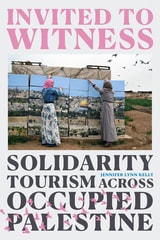
Invited to Witness
Solidarity Tourism across Occupied PalestineJennifer Lynn Kelly
Duke University Press, 2023
Israel and Settler Society
Lorenzo Veracini
Pluto Press, 2006
Veracini challenges two important myths: firstly, that the Israeli-Palestinian dispute is unique and defies comparative approaches; and secondly that the struggle is mainly based in nationality and religion and therefore different to typical colonial conflicts. On the contrary, Veracini shows how Israeli society is organised along apartheid lines -- and that apartheid was not unique to South Africa, but a common feature of colonisation. He examines wars of decolonization, and conflicts where whole native populations were all but eradicated -- as in Australia. Comparing and contrasting these with the more recent history of Israel and Palestine, he offers a critical perspective on colonialism as well as important new insights into patterns of imperialism today.

Israel and the American National Interest
A Critical ExaminationCheryl A. Rubenberg
University of Illinois Press, 1986
Israel in the Middle East
Documents and Readings on Society, Politics, and Foreign Relations, Pre-1948 to the PresentEdited by Itamar Rabinovich and Jehuda Reinharz
Brandeis University Press, 2007
Israel's Dead Soul
Authored by Steven Salaita
Temple University Press, 2011
In his courageous book, Israel's Dead Soul, Steven Salaita explores the failures of Zionism as a political and ethical discourse. He argues that endowing nation-states with souls is a dangerous phenomenon because it privileges institutions and corporations rather than human beings.
Asserting that Zionism has been normalized--rendered "benign" as an ideology of "multicultural conviviality"—Salaita critiques the idea that Zionism, as an exceptional ideology, leads to a lack of critical awareness of the effects of the Israeli occupation in Palestinian territory and to an unquestioning acceptance of Israel as an ethnocentric state.
Salaita's analysis targets the Anti-Defamation League, films such as Munich and Waltz with Bashir, intellectuals including Cornel West and Michael Eric Dyson, gay rights activists, and other public figures who mourn the decline of Israel's "soul." His pointed account shows how liberal notions of Zionism are harmful to various movements for justice.
Israel/Palestine and the Queer International
Sarah Schulman
Duke University Press, 2012
As Schulman learns more, she questions the contradiction between Israel's investment in presenting itself as gay friendly—financially sponsoring gay film festivals and parades—and its denial of the rights of Palestinians. At the same time, she talks with straight Palestinian activists about their position in relation to homosexuality and gay rights in Palestine and internationally. Back in the United States, Schulman draws on her extensive activist experience to organize a speaking tour for some of the Palestinian queer leaders whom she had met and trusted. Dubbed "Al-Tour," it takes the activists to LGBT community centers, conferences, and universities throughout the United States. Its success solidifies her commitment to working to end Israel's occupation of Palestine, and it kindles her larger hope that a new "queer international" will emerge and join other movements demanding human rights across the globe.
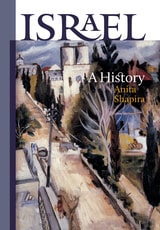
Israel
A HistoryAnita Shapira
Brandeis University Press, 2014
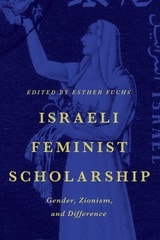
Israeli Feminist Scholarship
Gender, Zionism, and DifferenceEdited by Esther Fuchs
University of Texas Press, 2014
The last two decades have given rise to a proliferation of scholarship by Israeli feminists working in diverse fields, ranging from sociology to literature, anthropology, and history. As the Israeli feminist movement continually decentralizes and diversifies, it has become less Eurocentric and heterocentric, making way for pluralistic concerns. Collecting fifteen previously published essays that give voice to this diversity, Israeli Feminist Scholarship showcases articles on Ashkenazi, Mizrahi, Palestinian, and lesbian identities as well as on Israeli women’s roles as mothers, citizens and activists, and soldiers.
Citing evidence that these scholars have redefined their object of inquiry as an open site of contested and constructed identity, luminary Esther Fuchs traces the history of Israeli feminism. Among the essays are Jewish historian Margalit Shilo’s study of the New Hebrew Woman, sociologist Ronit Lentin’s analysis of gendered representations of the Holocaust in Israeli culture, peace activist Erella Shadmi on lesbianism as a nonissue in Israel, and cultural critic Nitza Berkovitch’s examination of womanhood as constructed in Israeli legal discourse.
Creating a space for a critical examination of the relationship between disparate yet analogous discourses within feminism and Zionism, this anthology reclaims the mobilizing, inclusive role of these multifaceted discourses beyond the postmodern paradigm.
Israeli Society in the Twenty-First Century
Immigration, Inequality, and Religious ConflictCalvin Goldscheider
Brandeis University Press, 2015
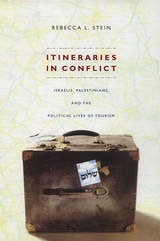
Itineraries in Conflict
Israelis, Palestinians, and the Political Lives of TourismRebecca L. Stein
Duke University Press, 2008
Combining vivid ethnographic detail, postcolonial theory, and readings of Israeli and Palestinian popular texts, Stein considers a broad range of Israeli leisure cultures of the Oslo period with a focus on the Jewish desires for Arab things, landscapes, and people that regional diplomacy catalyzed. Moving beyond conventional accounts, she situates tourism within a broader field of “discrepant mobility,” foregrounding the relationship between histories of mobility and immobility, leisure and exile, consumption and militarism. She contends that the study of Israeli tourism must open into broader interrogations of the Israeli occupation, the history of Palestinian dispossession, and Israel’s future in the Arab Middle East. Itineraries in Conflict is both a cultural history of the Oslo process and a call to fellow scholars to rethink the contours of the Arab-Israeli conflict by considering the politics of popular culture in everyday Israeli and Palestinian lives.