Results by title
412 books match the query 'Japan' and 24 start with i
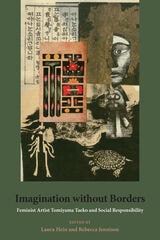
Imagination without Borders
Feminist Artist Tomiyama Taeko and Social ResponsibilityLaura Hein and Rebecca Jennison, Editors
University of Michigan Press, 2010
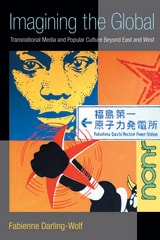
Imagining the Global
Transnational Media and Popular Culture Beyond East and WestFabienne Darling-Wolf
University of Michigan Press, 2014
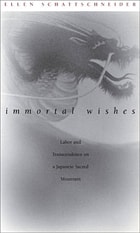
Immortal Wishes
Labor and Transcendence on a Japanese Sacred MountainEllen Schattschneider
Duke University Press, 2003
Schattschneider shows how, through dedicated work at the shrine including demanding ascents up the sacred mountain, the worshipers come to associate the rugged mountain landscape with their personal biographies, the life histories of certain exemplary predecessors and ancestors, and the collective biography of the extended congregation. She contends that this body of ritual practice presents worshipers with fields of imaginative possibilities through which they may dramatize or reflect upon the nature of their relations with loved ones, ancestors, and divinities. In some cases, worshipers significantly redress traumas in their own lives or in those of their families. In other instances, these ritualized processes lead to deepening crises of the self, the accelerated fragmentation of local households, and apprehension of possession by demons or ancestral forces. Immortal Wishes reveals how these varied practices and outcomes have over time been incorporated into the changing organization of ritual, space, and time on the mountainscape.
For more information about this book and to read an excerpt, please click here.
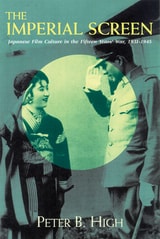
Imperial Screen
Japanese Film Culture In The Fifteen Years War,Peter B. High
University of Wisconsin Press, 2003

In Search of Identity
The Japanese Overseas Scholar in America and JapanJohn Bennett
University of Minnesota Press, 1958

In the Presence of Gods and Spirits
Hirata Atsutane and His CollaboratorsAnne Walthall
University of Michigan Press, 2025

In the Province of the Gods
Kenny Fries
University of Wisconsin Press, 2021
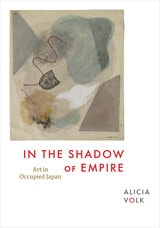
In the Shadow of Empire
Art in Occupied JapanAlicia Volk
University of Chicago Press, 2025
Alicia Volk brings to light a significant body of postwar Japanese art, exploring how it accommodated and resisted the workings of the American empire during the early Cold War. Volk’s groundbreaking account presents the points of view of Japanese artists and their audiences under American occupation and amid the ruins of war. Each chapter reveals how artists embraced new roles for art in the public sphere—at times by enacting radical critiques of established institutions, values, and practices—and situates a range of compelling art objects in their intersecting artistic and political worlds.
Centering on the diverse and divisive terrain of Japanese art between 1945 and 1952, In the Shadow of Empire creates a fluid map of relationality that brings multiple Cold War spheres into dialogue, stretching beyond US-occupied Japan to art from China, Europe, the Soviet Union, and the United States, and demonstrates the rich potential of this transnational site of artmaking for rethinking the history of Japanese and global postwar art.
Indecomposable Continuum
Topology and the Arts in JapanSteven C. Ridgely
University of Minnesota Press, 2027
Locating the diffusion of mathematical concepts into modern literature, experimental music, and critical theory in twentieth-century Japan
In Indecomposable Continuum, Steven C. Ridgely explores where theoretical mathematics meets culture in twentieth-century Japan, tracing how concepts from relativity theory and topology migrated into Japanese art and literature. Through readings of avant-garde fiction, experimental sound practices, and postmodern theory, Ridgely demonstrates how topology became a language for rethinking space and perception.
Ridgely focuses on abstract models such as the Klein bottle, non-Euclidean geometry, and the Lakes of Wada to reveal how Japanese artists and intellectuals like Yuasa Jōji, Inagaki Taruho, and Asada Akira transformed difficult mathematical ideas into powerful aesthetic and social imaginaries in surprising and clever ways. Rather than treating mathematics as separate from cultural studies, Ridgely positions topology itself as a cultural form whose abstractions generated new possibilities for artistic creation and theoretical inquiry in music, novels, and popular media.
Indecomposable Continuum demonstrates how Japanese artists made seemingly impossible abstractions accessible and compelling, revealing the unexpected creativity that emerged when modern mathematics entered the cultural sphere. In doing so, the book offers a fresh perspective on the relationship between scientific thought and artistic modernism in Japan.
Retail e-book files for this title are screen-reader friendly with images accompanied by short alt text and/or extended descriptions.

Indigenizing Japan
Ainu Past, Present, and FutureJoe E. Watkins
University of Arizona Press, 2025
Relaying the deep history of the islands of Japan, Watkins tells the archaeological story from the earliest arrivals some 40,000 years ago to 16,000 years ago when local cultures began utilizing pottery and stone tools. About 2,300 years ago, another group of people immigrated from the Korean peninsula into the Japanese archipelago, bringing wet rice agriculture with them. They intermarried with the people who were there, forming the basis of the contemporary Japanese majority culture. As the Japanese state developed on the central Islands of Honshu, Ryukyu, and Shikoku, the people of Hokkaido continued developing along a different trajectory with minimal interaction with the mainland until colonization in the mid-nineteenth century, when the people known as the Ainu came under Japanese governmental policy.
Watkins’s insightful analysis highlights the Ainu’s enduring spirit and their resurgence as part of the global Indigenous movement. Key events such as the 1997 Nibutani Dam case and the 2007 recognition of the Ainu as Japan’s Indigenous people are explored in depth, showcasing the Ainu’s ongoing fight for cultural preservation and self-determination. By situating the Ainu’s experiences within broader global colonial histories, Indigenizing Japan underscores the shared struggles and resilience of Indigenous communities worldwide.

Industry at the Crossroads
Robert E. Cole, Editor
University of Michigan Press, 1982

Infinity Net
The Autobiography of Yayoi KusamaYayoi Kusama
University of Chicago Press, 2011
In 1957, encouraged by Georgia O’Keeffe, artist Yayoi Kusama left Japan for New York City to become a star. By the time she returned to her home country in 1973, she had established herself as a leader of New York’s avant-garde movement, known for creating happenings and public orgies to protest the Vietnam War and for the polka dots that had become a trademark of her work. Her sculptures, videos, paintings, and installations are to this day included in major international exhibitions.

Inheritance of Loss
China, Japan, and the Political Economy of Redemption after EmpireYukiko Koga
University of Chicago Press, 2016
Inheritance of Loss chronicles these sites of colonial inheritance––tourist destinations, corporate zones, and mustard gas exposure sites––to illustrate attempts by ordinary Chinese and Japanese to reckon with their shared yet contested pasts. In her explorations of everyday life, Koga directs us to see how the violence and injustice that occurred after the demise of the Japanese Empire compound the losses that later generations must account for, and inevitably inherit.
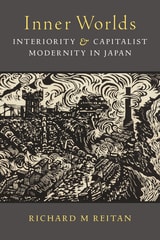
Inner Worlds
Interiority and Capitalist Modernity in JapanRichard M Reitan
University of Michigan Press, 2026
Inner Worlds examines the emergence and operation of representations of interiority—consciousness, “folk mind,” “spirit”—in Japan from its industrial revolution to the rise of fascism during the interwar period. These representations functioned to reproduce the capitalist system by containing its excesses. Thus, poverty in the 1880s was ostensibly the result of defects in one’s innate mental character. A degenerate “crowd mind” explained the strikes and riots of the early twentieth century. State subversion during the 1930s supposedly reflected an attenuated “folk spirit.” By locating the roots of capitalism’s excesses not within the socioeconomic order itself but within a defective interiority, ideologies of interiority operated to contain disruptions to Japan’s socioeconomic order, conceal its defects, and sustain the capitalist system. Inner Worlds reveals how interiority was constituted in ways consistent with both the demands of the emerging capitalist order of the late nineteenth century and the conditions that coalesced to form a fascist conjecture in the 1930s.

Insurgent Identities
Class, Community, and Protest in Paris from 1848 to the CommuneRoger V. Gould
University of Chicago Press, 1995
The difference was due to Baron Haussmann's massive urban renovation projects between 1852 and 1868, which dispersed workers from Paris's center to newly annexed districts on the outskirts of the city. In these areas, residence rather than occupation structured social relations. Drawing on evidence from trail documents, marriage records, reports of police spies, and the popular press, Gould demonstrates that this fundamental rearrangement in the patterns of social life made possible a neighborhood insurgent movement; whereas the insurgents of 1848 fought and died in defense of their status as workers, those in 1871 did so as members of a besieged urban community.
A valuable resource for historians and scholars of social movements, this work shows that collective identities vary with political circumstances but are nevertheless constrained by social networks. Gould extends this argument to make sense of other protest movements and to offer predictions about the dimensions of future social conflict.
Intermediate Technical Japanese, Volume 1
Readings and Grammatical PatternsJames L. Davis
University of Wisconsin Press, 2002
Learn how to read and translate technical manuals, research publications, and reference works. This two-volume set is designed to help the intermediate-level learner of Japanese build a technical vocabulary, reinforce understanding of frequently used grammatical patterns, improve reading comprehension, and practice translating technical passages. The glossary in volume 2 clarifies words and phrases that often puzzle beginning readers.
The sample readings on technical topics are drawn from a broad range of specialties, from mathematics and computer science to electronics and polymer science. The initial grammar lesson and the first nine field-specific lessons constitute the common core to be used by all instructors or students. Topics of interest from the remaining thirty-one field-specific lessons may be selected to produce a customized course of study. Intermediate Technical Japanese is designed to fulfill a typical two-semester sequence.
Volume 1 contains:
o information about 600 key kanji
o explanations of 100 important grammatical patterns
o more than 700 scientific or technical essays
o an index of the grammatical patterns.
Volume 2 contains:
o a complete glossary

Intermediate Technical Japanese, Volume 2
GlossaryJames L. Davis
University of Wisconsin Press, 2002
Learn how to read and translate technical manuals, research publications, and reference works. This two-volume set is designed to help the intermediate-level learner of Japanese build a technical vocabulary, reinforce understanding of frequently used grammatical patterns, improve reading comprehension, and practice translating technical passages. The glossary in volume 2 clarifies words and phrases that often puzzle beginning readers.
The sample readings on technical topics are drawn from a broad range of specialties, from mathematics and computer science to electronics and polymer science. The initial grammar lesson and the first nine field-specific lessons constitute the common core to be used by all instructors or students. Topics of interest from the remaining thirty-one field-specific lessons may be selected to produce a customized course of study. Intermediate Technical Japanese is designed to fulfill a typical two-semester sequence.
Volume 1 contains:
o information about 600 key kanji
o explanations of 100 important grammatical patterns
o more than 700 scientific or technical essays
o an index of the grammatical patterns.
Volume 2 contains:
o a complete glossary
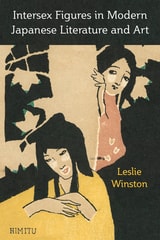
Intersex Figures in Modern Japanese Literature and Art
Leslie Winston
University of Michigan Press, 2025
Intersex Figures in Modern Japanese Literature and Art explores the history of intersex or futanari figures in modern Japanese literature and culture to examine the provocative discourses that defied a sexual regime as the modern nation-state of Japan advanced its national and imperial designs. As sexologists and medical practitioners continued reinforcing categories of “male” and “female,” “normal” and “pathological,” intersex literary figures garnered attention because the perceived subject was expected to be male or female—any variation was unintelligible. Many of the same century-old tropes and societal attitudes of needing to “cure” intersex persist. At the same time the 1991 novel Ringu by Suzuki Kōji testifies to a denial of futanari subjectivity, while the 1998 Japanese horror film (Ringu) and its 2002 American remake (The Ring) erase intersex all together.
Winston interrogates how the trope of the futanari is deployed for pragmatic or aesthetic purposes, thereby complicating the trajectory of the dominant sexological ideology of the time. Winston reads the figurative futanari in the works of Shimizu Shikin, Tanizaki Jun’ichirō, and Takabatake Kashō, and reveals how the artists’ different approaches to the futanari served their agendas and expressed views that challenged the dominant discourse on intersex.

Intimate Disconnections
Divorce and the Romance of Independence in Contemporary JapanAllison Alexy
University of Chicago Press, 2020
Relating the intensely personal stories from people experiencing different stages of divorce, Alexy provides a rich ethnography of Japan while also speaking more broadly to contemporary visions of love and marriage during an era in which neoliberal values are prompting wide-ranging transformations in homes across the globe.

Intimate Distance
Andean Music in JapanMichelle Bigenho
Duke University Press, 2012
Bolivians and Japanese involved in these musical practices often express narratives of intimacy and racial belonging that reference shared but unspecified indigenous ancestors. Along with revealing the story of Bolivian music's route to Japan and interpreting the transnational staging of indigenous worlds, Bigenho examines these stories of closeness, thereby unsettling the East-West binary that often structures many discussions of cultural difference and exotic fantasy.
Intimate Empire
Collaboration and Colonial Modernity in Korea and JapanNayoung Aimee Kwon
Duke University Press, 2015
Into Performance
Japanese Women Artists in New YorkYoshimoto, Midori
Rutgers University Press, 2005
The 1960s was a time of incredible freedom and exploration in the art world, particularly in New York City, which witnessed the explosion of New Music, Happenings, Fluxus, New Dance, pop art, and minimalist art. Also notable during this period, although often overlooked, is the inordinate amount of revolutionary art that was created by women.
Into Performance fills a critical gap in both American and Japanese art history as it brings to light the historical significance of five women artists-Yoko Ono, Yayoi Kusama, Takako Saito, Mieko Shiomi, and Shigeko Kubota. Unusually courageous and self-determined, they were among the first Japanese women to leave their country-and its male-dominated, conservative art world-to explore the artistic possibilities in New York. They not only benefited from the New York art scene, however, they played a major role in the development of international performance and intermedia art by bridging avant garde movements in Tokyo and New York.
This book traces the pioneering work of these five women artists and the socio-cultural issues that shaped their careers. Into Performance also explores the transformation of these artists' lifestyle from traditionally confined Japanese women to internationally active artists. Yoshimoto demonstrates how their work paved the way for younger Japanese women artists who continue to seek opportunities in the West today.

Invisibility by Design
Women and Labor in Japan's Digital EconomyGabriella Lukács
Duke University Press, 2020

Issues and Options for U.S.-Japan Trade Policies
Robert M. Stern, Editor
University of Michigan Press, 2002
The chapters represent a spectrum of approaches, including theoretical analysis, quantitative measurement, and evaluations of policies and institutions from economic and legal perspectives. The multi-lateral issues cover the analysis of the economic effects of a new WTO negotiating round and the range of issues that are to be addressed there, including reform of Japan's agricultural policies, services liberalization, antidumping, intellectual property rights, and trade and the environment. The regional issues include theoretical and simulation analysis of the benefits of preferential trading arrangements and the policy of open regionalism that is being sought by APEC members. U.S.-Japan bilateral relations are studied by analyzing the major actions and positions taken by the two nations in the context of their national trade laws and policies, how trade policies are implemented, the effects of bilateral trade agreements on the United States and Japan, and the interplay of legal decisions reached in WTO actions with bilateral and unilateral measures undertaken by the two nations.
The book is designed for a broad audience consisting of academic economists, lawyers, policymakers, and students interested in U.S.-Japan international economic relations.
Robert M. Stern is Professor Emeritus of Economics and Public Policy, University of Michigan.