Results by title
645 books match the query 'Judaism' and 10 start with i
Imagining Judeo-Christian America
Religion, Secularism, and the Redefinition of DemocracyK. Healan Gaston
University of Chicago Press, 2019
Imagining Religion
From Babylon to JonestownJonathan Z. Smith
University of Chicago Press, 1982
Making use of examples as apparently diverse and exotic as the Maori cults in nineteenth-century New Zealand and the events of Jonestown, Smith shows that religion must be construed as conventional, anthropological, historical, and as an exercise of imagination. In his analyses, religion emerges as the product of historically and geographically situated human ingenuity, cognition, and curiosity—simply put, as the result of human labor, one of the decisive but wholly ordinary ways human beings create the worlds in which they live and make sense of them.
"These seven essays . . . display the critical intelligence, creativity, and sheer common sense that make Smith one of the most methodologically sophisticated and suggestive historians of religion writing today. . . . Smith scrutinizes the fundamental problems of taxonomy and comparison in religious studies, suggestively redescribes such basic categories as canon and ritual, and shows how frequently studied myths may more likely reflect situational incongruities than vaunted mimetic congruities. His final essay, on Jonestown, demonstrates the interpretive power of the historian of religion to render intelligible that in our own day which seems most bizarre."—Richard S. Sarason, Religious Studies Review
Impurity and Purification in Early Judaism and the Jesus Tradition
Thomas Kazen
SBL Press, 2021
Inscribed
Encounters with the Ten CommandmentsRabbi Oren J. Hayon
Central Conference of American Rabbis, 2020
This anthology gives voice to the many diverse and contemporary perspectives about each of the Ten Commandments. Written by an impressive collection of rabbis and scholars, the volume allots multiple chapters for each of the commandments in order to engage with the ways in which these timeless utterances have inspired contemporary laws, ethics, and moral guidelines.
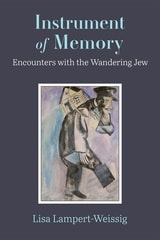
Instrument of Memory
Encounters with the Wandering JewLisa Lampert-Weissig
University of Michigan Press, 2024
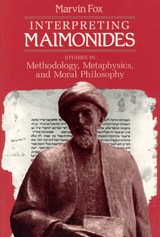
Interpreting Maimonides
Studies in Methodology, Metaphysics, and Moral PhilosophyMarvin Fox
University of Chicago Press, 1990
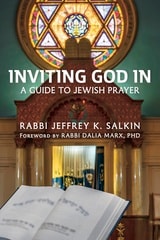
Inviting God In
A Guide to Jewish PrayerRabbi Jeffrey K. Salkin
Central Conference of American Rabbis, 2025
Inviting God In: A Guide to Jewish Prayer is an engaging and insightful commentary on the Shabbat evening and morning services by Rabbi Jeffrey K. Salkin, the author of Putting God on the Guest List. Designed for students of all ages, from bet mitzvah to adulthood, the book’s relatable tone and discussion questions meaningfully engage readers in the worship service they are leading or attending. Rabbi Salkin breaks down each prayer and ritual, helping learners connect to the service with fresh insight and knowledge. With a blend of humor and depth, Inviting God In shows how the ancient words of prayer still speak to the challenges and joys of contemporary life.
With new reflection questions, Inviting God In is a companion to Mishkan T'Filah Journal Edition
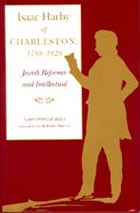
Isaac Harby of Charleston, 1788-1828
Jewish Reformer and IntellectualGary Phillip Zola
University of Alabama Press, 1994
The visionary voice who helped shape American Judaism—and Charleston’s cultural soul.
Isaac Harby of Charleston, 1788–1828 is a richly detailed biography that brings to life one of early America’s most fascinating and underappreciated Jewish intellectuals. Gary Phillip Zola offers a compelling portrait of Harby—a playwright, newspaper editor, drama critic, educator, and religious reformer—who emerged as a central figure in Charleston’s vibrant cultural scene during the early 19th century. At a time when Charleston was experiencing both economic prosperity and cultural efflorescence, Harby stood at the crossroads of literary ambition and religious innovation.
A descendant of Sephardic Jews, Harby was deeply engaged in the intellectual and civic life of his city. He founded a literary journal at just eighteen, established a private academy, and wrote prolifically on politics, education, and religion. But his most enduring legacy lies in his role as a pioneer of Reform Judaism in America. As a founding member of the Reformed Society of Israelites in 1825, Harby advocated for a rational, modernized approach to Jewish worship—one that emphasized universal ethics and intellectual engagement over ritual formalism. His efforts, though controversial in his time, laid the groundwork for the broader Reform movement that would flourish later in the century.
Drawing on newly uncovered archival materials, including Harby’s personal library and writings, Zola’s biography not only illuminates Harby’s life and thought but also offers a window into the broader cultural, religious, and political transformations of the early American republic. This book is essential reading for anyone interested in American Jewish history, Southern intellectual life, and the roots of religious reform in the United States.
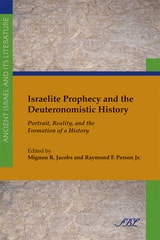
Israelite Prophecy and the Deuteronomistic History
Portrait, Reality, and the Formation of a HistoryMignon R. Jacobs
SBL Press, 2013
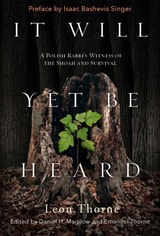
It Will Yet Be Heard
A Polish Rabbi's Witness of the Shoah and SurvivalIsaac Bashevis Singer
Rutgers University Press, 2019
Rabbi Thorne composed his memoir under extraordinary conditions, confined to a small underground bunker below a Polish peasant’s pigsty. But, It Will Yet Be Heard is remarkable not only for the story of its composition, but also for its moral clarity and complexity. A deeply religious man, Rabbi Thorne bore witness to forced labor camps, human degradation, and the murders of entire communities. And once he emerged from hiding, he grappled not only with survivor’s guilt, but also with the lingering antisemitism and anti-Jewish violence in Poland even after the war ended. Harrowing, moving, and deeply insightful, Rabbi Thorne’s firsthand account offers a rediscovered perspective on the twentieth century’s greatest tragedy.