Results by title

9 books match the query 'Czechs'
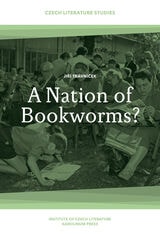
cover of A Nation of Bookworms?: Czechs as Readers

A Nation of Bookworms?

Czechs as Readers

Jirí Trávnícek

Karolinum Press, 2021

Nation of Bookworms takes an in-depth look at the reading culture of the Czech Republic--the country with the highest number of libraries per capita worldwide. Drawing on studies and oral interviews of Czech readers conducted by the National Library of the Czech Republic and the Institute of Czech Literature between 2007 and 2018, the book presents intriguing new research on Czech readership and society. Jiří Trávníček deftly sifts through hard data and first-person reportage, illuminating the myriad components that make up reading culture, such as print-reading, screen-reading, libraries, book sales, the social lives of readers, time spent reading, and reading preferences. Trávníček also takes a global look at literary love, exploring the parallels between the reading cultures of other countries and the Czechs’ unique fervor for the written word. Nation of Bookworms is essential reading for bibliophiles on every continent.
 
[more]
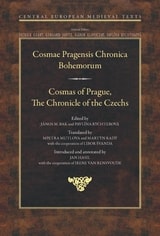
cover of Cosmas of Prague: The Chronicle of the Czechs

Cosmas of Prague

The Chronicle of the Czechs

Petra Mutlová

Central European University Press, 2020

The Latin-English bilingual volume presents the text of The Chronicle of the Czechs by Cosmas of Prague. Cosmas was born around 1045, educated in Liège, upon his return to Bohemia, he got married as well as became a priest. In 1086 he was appointed prebendary, a senior member of clergy in Prague. He completed the first book of the Chronicle in 1119, starting with the creation of the world and the earliest deeds of the Czechs up to Saint Adalbert. In the second and third books Cosmas presents the preceding century in the history of Bohemia, and succeeds in reporting about events up to 1125, the year when he died.


The English translation was done by Petra Mutlova and Martyn Rady with the cooperation of Libor Švanda. The introduction and the explanatory notes were written by Jan Hasil with the cooperation of Irene van Rensvoude.T

[more]
cover of Czech Refugees in Cold War Canada

Czech Refugees in Cold War Canada

Jan Raska

University of Manitoba Press, 2018
[more]
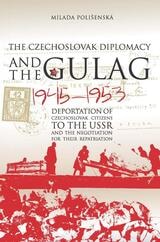
cover of Czechoslovak Diplomacy and the Gulag: Deportation of Czechoslovak Citizens to the USSR and the Negotiation for their Repatriation, 1945-1953

Czechoslovak Diplomacy and the Gulag

Deportation of Czechoslovak Citizens to the USSR and the Negotiation for their Repatriation, 1945-1953

Milada Polisenská

Central European University Press, 2016
After the entry of the Red Army into Czechoslovak territory in 1945, Red Army authorities began to arrest and deport Czechoslovak citizens to labor camps in the Soviet Union. The regions most affected were Eastern and South Slovakia and Prague. The Czechoslovak authorities repeatedly requested a halt to the deportations and that the deported Czechoslovaks be returned immediately. It took a long time before these protests generated any response. Czechoslovak Diplomacy and the Gulag focuses on the diplomatic and political aspects of the deportations. The author explains the steps taken by the Czechoslovak Government in the repatriation agenda from 1945 to 1953 and reconstructs the negotiations with the Soviets. The research tries to answer the question of why and how the Russians deported the civilian population from Czechoslovakia which was their allied country already during the war. Key words: 1. World War, 1939–1945—Deportations from Czechoslovakia. 2. Forced labor—Soviet Union—History. 3. Labor camps—Soviet Union—History. 4. Czechs—Soviet Union—History. 5. Slovaks—Soviet Union—History. 6. Czechoslovakia—Foreign relations—Soviet Union. 7. Soviet Union—Foreign relations—Czechoslovakia. 8. Czechoslovakia—Foreign relations—1945–1992. 9. Repatriation—Czechoslovakia—History.
[more]
cover of Czechs and Germans 1848-2004: The Sudeten Question and the Transformation of Central Europe

Czechs and Germans 1848-2004

The Sudeten Question and the Transformation of Central Europe

Václav Houzvicka

Karolinum Press, 2013

Václav Houžvicka describes the development of the Czech-German national controversies from the mid-nineteenth century, through the establishing of the Czechoslovak Republic in 1918, to the beginning of the twenty-first century. He focuses primarily on the tragic end of the nations’ coexistence in 1938–1945 and the differing Czech and German understandings of the reasons for the removal of Germans from the Czechoslovak Republic after 1945 in the latter part of the twentieth century. Houžvicka clarifies the relationships between Czech, German, and Sudeten-German identities within the international and social-economic context of the twentieth century.

[more]
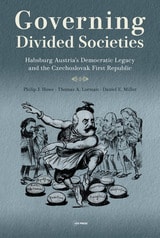
cover of Governing Divided Societies: Habsburg Austria’s Democratic Legacy and the Czechoslovak First Republic

Governing Divided Societies

Habsburg Austria’s Democratic Legacy and the Czechoslovak First Republic

Philip Howe

Central European University Press, 2026

The authors of this volume challenge conventional notions about Habsburg and Czechoslovak politics, arguing that they were more democratic than they often appear. They use the consociational model of democracy as a means of combining political science and history. The theory, associated with Arend Lijphart, asserts that consociationalism guarantees minorities a say in government and helps preserve democracy in societies that experience deep ideological, cultural, or ethnic divisions. Consociationalism enables the main segments to be isolated organizationally from each other, thus avoiding conflict but affording the leaders opportunities to make compromises for the good of the whole.
Consociationalism has proven its worth as a model for describing contemporary democracies and diagnosing their ills. By exploring the institutions and practices of the Habsburg Monarchy before 1918 and the Czechoslovak First Republic, Howe, Lorman, and Miller prove the value of the consociational theory in analyzing the past. They hold that a multitude of parties, frequent cabinet changes, and reliance on cabinets of experts do not necessarily signal flawed democracies. In fact, they are features of consociationalism. This volume challenges historians and social scientists to view the Austrian half of the Habsburg Monarchy before 1918 as evolving toward consociational democracy and the Czechoslovak First Republic as a fully consociational state.

[more]
cover of Radiant Daughter: A Novel

Radiant Daughter

A Novel

Patricia Grossman

Northwestern University Press, 2010

In Radiant Daughter, award-winning novelist Patricia Grossman follows a Czech-American family for twenty-seven years, beginning in suburban Chicago in 1969 and ending in Brooklyn, in seaside “Little Odessa,” in 1996. Though the novel begins as a traditional assimilation story—immigrant parents, “native” children, and the conflicts one might expect—it evolves into a highly particular and harrowing tale surrounding the descent of Elise Blazek, the family’s brightest star. Radiant Daughter is also a story of translation—between generations, from the Czech of Irena and Stepan, to the “American” of the children, and finally to the Russian that is Elise’s academic specialty.

 Radiant Daughter explores all that is human, from the most self-destructive behavior to the highest forms of commitment and self-sacrifice. Even at her lowest moments, Irena never loses her fierce love for the daughter who has traveled so utterly beyond her reach. For Elise, the future will always be complicated: a precarious balance between periods of insight, bursts of accomplishment, and the abyss of her illness.

Reminiscent, on the one hand, of the meticulously constructed mother-daughter dynamic in Carol Shields’s Unless and, on the other, of the anarchic real-life experience of Big and Little Edie Beale in Grey Gardens, Grossman’s moving narrative breaks new ground in exploring a dangerous turn in the complex bond between a mother and her adult child.
[more]
cover of The Chronicle of the Czechs

The Chronicle of the Czechs

Lisa Cosmas of Prague

Catholic University of America Press, 2009

The Chronicle of the Czechs by Cosmas of Prague (d. 1125) is a masterwork of medieval historical writing, deeply erudite, consciously researched, and narrated in high rhetorical style.
[more]
cover of Transnational Trajectories and Diaspora Policies: The Case of Czechia in Comparison to Poland, Hungary and Slovakia

Transnational Trajectories and Diaspora Policies

The Case of Czechia in Comparison to Poland, Hungary and Slovakia

Edited by Eva Janská

Karolinum Press, 2025

A fascinating examination of Central European diasporic policy bolstered by individual case studies of the new Czech diaspora.

The book examines diaspora policy in Central European countries in the context of changes following their accession to the EU, utilizing the Czech Republic, Slovakia, Poland, and Hungary as case studies. With a focus on the previously underexplored new Czech diaspora (i.e., the emigration of Czechs/Czechoslovaks after 1990), individual case studies provide a comprehensive description of the contemporary Czech diaspora while also elucidating key inquiries directed towards its current character and specific needs.
[more]