Cloth: 978-963-386-585-9 | eISBN: 978-963-386-586-6 (PDF)
Library of Congress Classification DB86.H68 2025
Dewey Decimal Classification 320.443609034
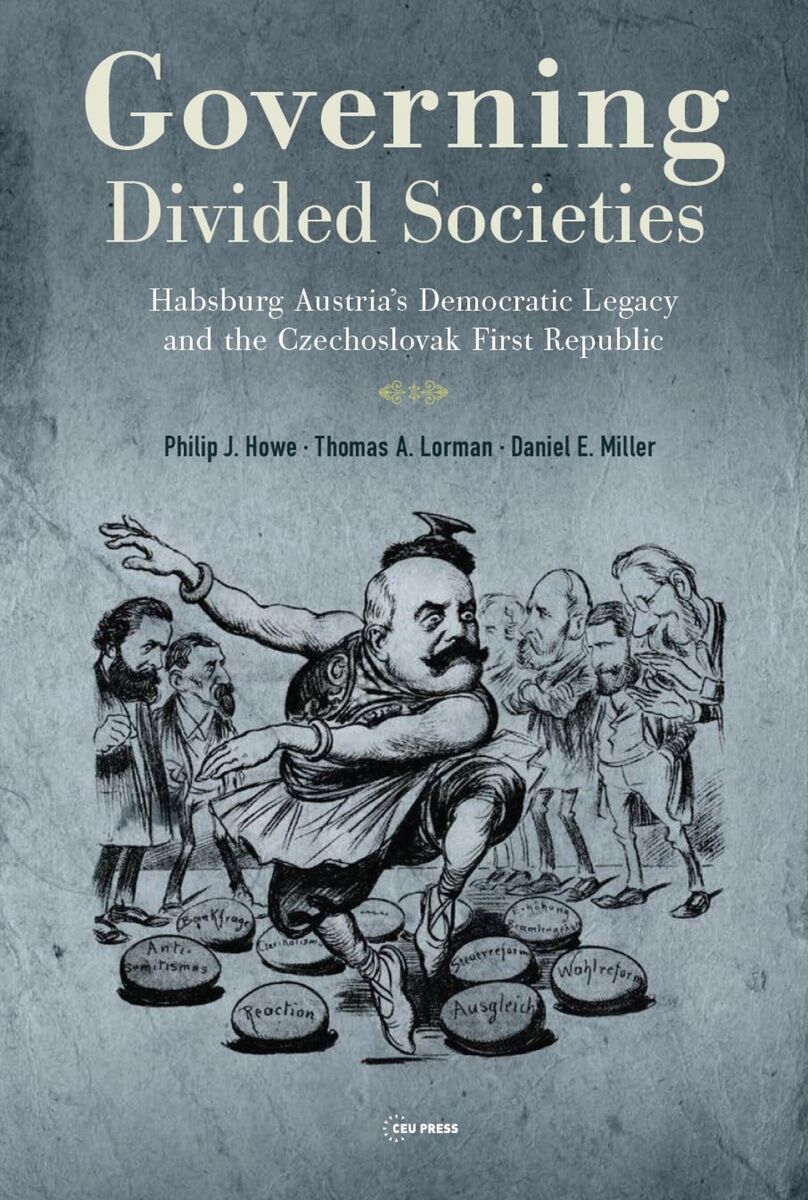
The authors of this volume challenge conventional notions about Habsburg and Czechoslovak politics, arguing that they were more democratic than they often appear. At combining political science and history, the authors’ guiding principle and means of analysis is the consociational model of democracy. This theory, linked best to Arend Lijphart, asserts that consociationalism guarantees minorities a say in government and helps preserve democracy in societies that experience deep ideological, cultural, or ethnic divisions. It enables the main segments to be isolated organizationally from each other, thus avoiding conflict, and affording the leaders to make compromises for the good of the whole.
Consociationalism has proven its worth as a model for describing contemporary democracies and diagnosing their ills. By exploring the institutions and practices of the Habsburg Monarchy before 1918 and the Czechoslovak First Republic, Howe, Lorman, and Miller prove the value of the consociational theory at analyzing the past. They hold that a multitude of parties, frequent cabinet changes, and reliance on circles of experts do not necessarily signal flawed democracies, when, in fact, they are features of consociationalism. This book is a call to specialists to view current politics not just in terms of majoritarian democracy but rather by the standard of the consociational democracies.
See other books on: 1918-1938 | Austria | Czechoslovakia | Polarization (Social sciences) | Representative government and representation
See other titles from Central European University Press