Results by title
187 books match the query 'Justice' and 7 start with i
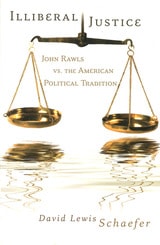
Illiberal Justice
John Rawls vs. the American Political TraditionDavid Lewis Schaefer
University of Missouri Press, 2007

In Defense of Justice
Joseph Kurihara and the Japanese American Struggle for EqualityEileen H. Tamura
University of Illinois Press, 2013

In Pursuit of Justice
The Life of John Albion AndrewStephen D. Engle
University of Massachusetts Press, 2023
Widely known as the “poor man’s lawyer” in antebellum Boston, John Albion Andrew (1818–1867) was involved in nearly every cause and case that advanced social and racial justice in Boston in the years preceding the Civil War. Inspired by the legacies of John Quincy Adams and Ralph Waldo Emerson, and mentored by Charles Sumner, Andrew devoted himself to the battle for equality. By day, he fought to protect those condemned to the death penalty, women seeking divorce, and fugitives ensnared by the Fugitive Slave Law. By night, he coordinated logistics and funding for the Underground Railroad as it ferried enslaved African Americans northward.
In this revealing and accessible biography, Stephen D. Engle traces Andrew’s life and legacy, giving this important, but largely forgotten, figure his due. Rising to national prominence during the Civil War years as the governor of Massachusetts, Andrew raised the African American regiment known as the Glorious 54th and rallied thousands of soldiers to the Union cause. Upon his sudden death in 1867, a correspondent for Harper’s Weekly wrote, “Not since the news came of Abraham Lincoln’s death were so many hearts truly smitten.”
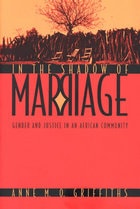
In the Shadow of Marriage
Gender and Justice in an African CommunityAnne M. O. Griffiths
University of Chicago Press, 1997
Griffiths's analysis is based on careful observation of how people actually experience the law as well as the more standard tools of statutes and cases familiar to Western legal scholars. She explains how women's access to law is determined by social relations over which they have little control. In this powerful feminist critique of law and anthropology, Griffiths shows how law and custom are inseparable for Kwena women. Both colonial common law and customary law pose comparable and constant challenges to Kwena women's attempts to improve their positions in society.
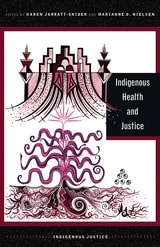
Indigenous Health and Justice
Edited by Karen Jarratt-Snider and Marianne O. Nielsen
University of Arizona Press, 2024
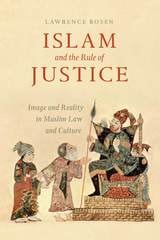
Islam and the Rule of Justice
Image and Reality in Muslim Law and CultureLawrence Rosen
University of Chicago Press, 2018
With Islam and the Rule of Justice, Lawrence Rosen analyzes a number of these misperceptions. Drawing on specific cases, he explores the application of Islamic law to the treatment of women (who win most of their cases), the relations between Muslims and Jews (which frequently involve close personal and financial ties), and the structure of widespread corruption (which played a key role in prompting the Arab Spring). From these case studie the role of informal mechanisms in the resolution of local disputes. The author also provides a close reading of the trial of Zacarias Moussaoui, who was charged in an American court with helping to carry out the 9/11 attacks, using insights into how Islamic justice works to explain the defendant’s actions during the trial. The book closes with an examination of how Islamic cultural concepts may come to bear on the constitutional structure and legal reforms many Muslim countries have been undertaking.
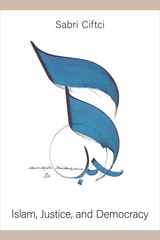
Islam, Justice, and Democracy
Sabri Ciftci
Temple University Press, 2022
Justice (al-‘adl) is one of the principal values of the Islamic faith. In Islam, Justice, and Democracy, Sabri Ciftci explores the historical, philosophical, and empirical foundations of justice to examine how religious values relate to Muslim political preferences and behavior. He focuses on Muslim agency and democracy to explain how ordinary Muslims use the conceptions of divine justice—either servitude to God or exercising free will against oppressors—to make sense of real-world problems.
Using ethnographic research, interviews, and public opinion surveys as well as the works of Islamist ideologues, archives of Islamist journals, and other sources, Ciftci shows that building contemporary incarnations of Islamist justice is, in essence, a highly practical political project that has formative effects on Muslim political attitudes. Islam, Justice, and Democracy compares the recent Arab Spring protests to the constitutionalist movements of the nineteenth and twentieth centuries in the Middle East to demonstrate the continuities and rifts a century apart.
By putting justice at the center of democratic thinking in the Muslim world, Ciftci reconsiders Islam's potential in engendering both democratic ideals and authoritarian preferences.