Results by title
99 books match the query 'Knowledge, Theory of' and 6 start with i
Immanuel Kant
The Very Idea of a Critique of Pure ReasonJ. Colin McQuillan
Northwestern University Press, 2016
Immanuel Kant: The Very Idea of a Critique of Pure Reason is a study of the background, development, exposition, and justification of Kant's Critique of Pure Reason. Instead of examining Kant's arguments for the transcendental ideality of space and time, his deduction of the pure concepts of the understanding, or his account of the dialectic of human reason, J. Colin McQuillan focuses on Kant's conception of critique. By surveying the different ways the concept of critique was used during the eighteenth century, the relationship between Kant's critique and his pre-critical experiments with different approaches to metaphysics, the varying definitions of a critique of pure reason Kant offers in the prefaces and introductions to the first Critique, and the way Kant responds to objections, McQuillan is able to highlight an aspect of Kant's critical philosophy that is too often overlooked—the reason that philosophy is critical.
[more]
Inference and Representation
A Study in Modeling ScienceMauricio Suárez
University of Chicago Press, 2024
The first comprehensive defense of an inferential conception of scientific representation with applications to art and epistemology.
Mauricio Suárez develops a conception of representation that delivers a compelling account of modeling practice. He begins by discussing the history and methodology of model building, charting the emergence of what he calls the modeling attitude, a nineteenth-century and fin de siècle development. Prominent cases of models, both historical and contemporary, are used as benchmarks for the accounts of representation considered throughout the book. After arguing against reductive naturalist theories of scientific representation, Suárez sets out his own account: a case for pluralism regarding the means of representation and minimalism regarding its constituents. He shows that scientists employ a variety of modeling relations in their representational practice—which helps them to assess the accuracy of their representations—while demonstrating that there is nothing metaphysically deep about the constituent relation that encompasses all these diverse means.
The book also probes the broad implications of Suárez’s inferential conception outside scientific modeling itself, covering analogies with debates about artistic representation and philosophical thought over the past several decades.
[more]

Information and Experimental Knowledge
James Mattingly
University of Chicago Press, 2021
An ambitious new model of experimentation that will reorient our understanding of the key features of experimental practice.
What is experimental knowledge, and how do we get it? While there is general agreement that experiment is a crucial source of scientific knowledge, how experiment generates that knowledge is far more contentious. In this book, philosopher of science James Mattingly explains how experiments function. Specifically, he discusses what it is about experimental practice that transforms observations of what may be very localized, particular, isolated systems into what may be global, general, integrated empirical knowledge. Mattingly argues that the purpose of experimentation is the same as the purpose of any other knowledge-generating enterprise—to change the state of information of the knower. This trivial-seeming point has a non-trivial consequence: to understand a knowledge-generating enterprise, we should follow the flow of information. Therefore, the account of experimental knowledge Mattingly provides is based on understanding how information flows in experiments: what facilitates that flow, what hinders it, and what characteristics allow it to flow from system to system, into the heads of researchers, and finally into our store of scientific knowledge.
What is experimental knowledge, and how do we get it? While there is general agreement that experiment is a crucial source of scientific knowledge, how experiment generates that knowledge is far more contentious. In this book, philosopher of science James Mattingly explains how experiments function. Specifically, he discusses what it is about experimental practice that transforms observations of what may be very localized, particular, isolated systems into what may be global, general, integrated empirical knowledge. Mattingly argues that the purpose of experimentation is the same as the purpose of any other knowledge-generating enterprise—to change the state of information of the knower. This trivial-seeming point has a non-trivial consequence: to understand a knowledge-generating enterprise, we should follow the flow of information. Therefore, the account of experimental knowledge Mattingly provides is based on understanding how information flows in experiments: what facilitates that flow, what hinders it, and what characteristics allow it to flow from system to system, into the heads of researchers, and finally into our store of scientific knowledge.
[more]
Information and Mind
The Philosophy of Fred DretskeEdited by Paul G. Skokowski
CSLI, 2020
Information and Mind explores questions of consciousness that Fred Dretske addressed in his philosophical career. Ranging from one of the earliest problems Dretske analyzed—the nature of seeing an object—to epistemological issues that he began working on mid-career, to matters he focused on in later years, including information, mental representation, and conscious experience, this volume investigates and engages with a spectrum of his prolific works. These papers, written by former colleagues and students from the University of Wisconsin and Stanford University, were inspired by talks given at the Center for the Explanation of Consciousness at Stanford in 2015 to celebrate Dretske’s life and work. In addition to scholarly essays, the authors also recount stories of personal interactions with Dretske that transformed their views or changed their professional trajectory. A bibliography of Dretske’s publications rounds out the volume. This generous volume includes contributions by Fred Adams, John A. Barker, John Perry, Paul Skokowski, and Dennis Stampe.
[more]
Interpretation and Social Knowledge
On the Use of Theory in the Human SciencesIsaac Ariail Reed
University of Chicago Press, 2011
For the past fifty years anxiety over naturalism has driven debates in social theory. One side sees social science as another kind of natural science, while the other rejects the possibility of objective and explanatory knowledge. Interpretation and Social Knowledge suggests a different route, offering a way forward for an antinaturalist sociology that overcomes the opposition between interpretation and explanation and uses theory to build concrete, historically specific causal explanations of social phenomena.
[more]
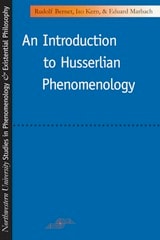
Introduction to Husserlian Phenomenology
Rudolf Bernet, Iso Kern, and Eduard Marbach
Northwestern University Press, 1993
This comprehensive study of Husserl's phenomenology concentrates on Husserl's emphasis on the theory of knowledge. The authors develop a synthetic overview of phenomenology and its relation to logic, mathematics, the natural and human sciences, and philosophy. The result is an example of philology at its best, avoiding technical language and making Husserl's thought accessible to a variety of readers.
[more]