Results by title
358 books match the query 'Labor & Industrial Relations' and 11 start with i

Identifying Talent, Institutionalizing Diversity
Race and Philanthropy in Post-Civil Rights AmericaJiannbin Lee Shiao
Duke University Press, 2005
Based on three years of research on the racial and ethnic priorities of the San Francisco Foundation and the Cleveland Foundation, Shiao demonstrates the geographically uneven impact of the national transition to diversification. The demographics of the regions served by the foundations in San Francisco and Cleveland are quite different, and paradoxically, the foundation in Cleveland—which serves an area with substantially fewer immigrants—has had greater institutional opportunities for implementing diversity policies. Shiao connects these regional histories with the national philanthropic field by underscoring the prominent role of the Ford Foundation, the third largest private foundation in the country, in shaping diversity policies. Identifying Talent, Institutionalizing Diversity reveals philanthropic diversity policy as a lens through which to focus on U.S. race relations and the role of the private sector in racial politics.
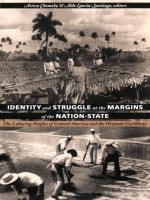
Identity and Struggle at the Margins of the Nation-State
The Laboring Peoples of Central America and the Hispanic CaribbeanAviva Chomsky and Aldo Lauria-Santiago, eds.
Duke University Press, 1998
Responding to the fact that the more common, elite-centered “national” histories distort or erase the importance of gender, race, ethnicity, popular consciousness, and identity, contributors to this volume correct this imbalance by moving these previously overlooked issues to the center of historical research and analysis. In so doing, they describe how these marginalized working peoples of the Hispanic Caribbean Basin managed to remain centered on not only class-based issues but on a sense of community, a desire for dignity, and a struggle for access to resources. Individual essays include discussions of plantation justice in Guatemala, highland Indians in Nicaragua, the effects of foreign corporations in Costa Rica, coffee production in El Salvador, banana workers in Honduras, sexuality and working-class feminism in Puerto Rico, the Cuban sugar industry, agrarian reform in the Dominican Republic, and finally, potential directions for future research and historiography on Central America and the Caribbean.
This collection will have a wide audience among Caribbeanists and Central Americanists, as well as students of gender studies, and labor, social, Latin American, and agrarian history.
Contributors. Patricia Alvarenga, Barry Carr, Julie A. Charlip, Aviva Chomsky, Dario Euraque, Eileen Findlay, Cindy Forster, Jeffrey L. Gould, Lowell Gudmundson, Aldo A. Lauria Santiago, Francisco Scarano, Richard Turits

Idiotism
Capitalism and the Privatisation of LifeNeal Curtis
Pluto Press, 2012
Constructing a new vocabulary with which to understand contemporary society, Curtis examines 'idiotism' across the spheres of economics, politics and culture, drawing on the philosophy and political theories of Martin Heidegger, Louis Althusser, Franco Berardi, Jacques Rancière and Cornelius Castoriadis.
Idiotism recasts our conception of the new neoliberal 'common sense', presenting it as not simply a case of false consciousness, but an ontological problem related to our being-in-the-world.
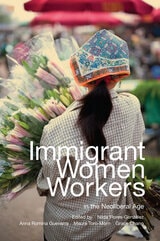
Immigrant Women Workers in the Neoliberal Age
Edited by Nilda Flores-Gonzalez, Anna Romina Guevarra, Maura Toro-Morn, and Grace Chang
University of Illinois Press, 2013

Immigrants against the State
Yiddish and Italian Anarchism in AmericaKenyon Zimmer
University of Illinois Press, 2015
Zimmer focuses on Italians and Eastern European Jews in San Francisco, New York City, and Paterson, New Jersey. Tracing the movement's changing fortunes from the pre–World War I era through the Spanish Civil War, Zimmer argues that anarchists, opposed to both American and Old World nationalism, severed all attachments to their nations of origin but also resisted assimilation into their host society. Their radical cosmopolitan outlook and identity instead embraced diversity and extended solidarity across national, ethnic, and racial divides. Though ultimately unable to withstand the onslaught of Americanism and other nationalisms, the anarchist movement nonetheless provided a shining example of a transnational collective identity delinked from the nation-state and racial hierarchies.
Immigration and the Work Force
Economic Consequences for the United States and Source AreasEdited by George J. Borjas and Richard B. Freeman
University of Chicago Press, 1992
This timely study is unique in presenting new data sets on the labor force, wage rates, and demographic conditions of both the U.S. and source-area economies through the 1980s. The contributors analyze the economic effects of immigration on the United States and selected source areas, with a focus on Puerto Rico and El Salvador. They examine the education and job performance of foreign-born workers; assimilation, fertility, and wage rates; and the impact of remittances by immigrants to family members on the overall gross domestic product of source areas.
A revealing and original examination of a topic of growing importance, this book will stand as a guide for further research on immigration and on the economies of developing countries.
Immigration, Trade, and the Labor Market
Edited by John M. Abowd and Richard B. Freeman
University of Chicago Press, 1991
Prompted by the growing internationalization of the U.S. labor market since the 1970s, contributors to Immigration, Trade, and the Labor Market provide an innovative and comprehensive analysis of the labor market impact of the international movements of people, goods, and capital. Their provocative findings are brought into perspective by studies of two other major immigrant-recipient countries, Canada and Australia. The differing experiences of each nation stress the degree to which labor market institutions and economic policies can condition the effect of immigration and trade on economic outcomes
Contributors trace the flow of immigrants by comparing the labor market and migration behavior of individual immigrants, explore the effects of immigration on wages and employment by comparing the composition of the work force in local labor markets, and analyze the impact of trade on labor markets in different industries. A unique data set was developed especially for this study—ranging from an effort to link exports/imports with wages and employment in manufacturing industries, to a survey of illegal Mexican immigrants in the San Diego area—which will prove enormously valuable for future research.
Indigenous Women and Work
From Labor to ActivismEdited by Carol Williams
University of Illinois Press, 2012
Informal Work in Europe, ca. 1870–1970
Sibylle Marti
Central European University Press, 2026

Investment in Women's Human Capital
Edited by T. Paul Schultz
University of Chicago Press, 1995
Section I considers the experiences of high-income countries, examining the limitations of industrialization for the advancement of women; returns to secondary education for women; and state control of women's education and labor market productivity through the design of tax systems and the public subsidy of children.
The remaining four sections investigate health, education, household structure and labor markets, and measurement issues in low-income countries, including the effect of technological change on transfers of wealth to and from children in India; women's and men's responses to the costs of medical care in Kenya; the effects of birth order and sex on educational attainment in Taiwan; wage returns to schooling in Indonesia and in Cote d'Ivoire; and the increasing prevalence of female-headed households and the correlates of gender differences in wages in Brazil.
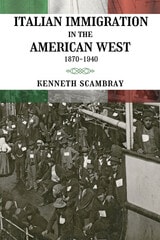
Italian Immigration in the American West
1870-1940Kenneth Scambray
University of Nevada Press, 2021
The lives of immigrants in the West differed greatly from those of their counterparts on the East Coast in many ways. The development of the West—with its cheap land and mining, forestry, and agriculture industries\--created a demand for labor that enabled newcomers to achieve stability and success. Moreover, female immigrants had many more opportunities to contribute materially to their family’s well-being, either by overseeing new revenue streams for their farms and small businesses, or as paid workers outside the home.
Despite this success, Italian immigrants in the West could not escape the era’s xenophobia. Scambray also discusses the ways that Italians, perceived by many as non-White, interacted with other Euro-Americans, other immigrant groups, and Native Americans and African Americans.
By placing the Italian immigrant experience within the context of other immigrant narratives, Italian Immigration in the American West provides rich insights into the lives and contributions of individuals and families who sought to build new lives in the West. This unique study reveals the impact of Italian immigration and the immense diversity of the immigrant experience outside the East’s urban centers.