Results by title
171 books match the query 'Labor unions' and 7 start with i

IN SEARCH OF WORKING CLASS
ESSAYS IN AMERICAN LABOR HISTORY AND POLITICAL CULTURELeon Fink
University of Illinois Press, 1994
"Fink places American labor history in the broader context of American political historiography better than any other historian I can think of." -- James R. Barrett, author of Work and Community in the Jungle: Chicago's Packinghouse Workers, 1894-1922
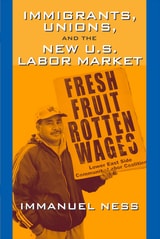
Immigrants Unions & The New Us Labor Mkt
Immanuel Ness
Temple University Press, 2005
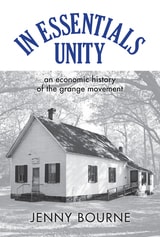
In Essentials, Unity
An Economic History of the Grange MovementJenny Bourne
Ohio University Press, 2017
The Patrons of Husbandry—or the Grange—is the longest-lived US agricultural society and, since its founding shortly after the Civil War, has had immeasurable influence on social change as enacted by ordinary Americans. The Grange sought to relieve the struggles of small farmers by encouraging collaboration. Pathbreaking for its inclusion of women, the Grange is also well known for its association with Gilded Age laws aimed at curbing the monopoly power of railroads.
In Essentials, Unity takes as its focus Grange founder Oliver Kelley and his home organization in Minnesota. Jenny Bourne draws upon numerous historical records to present a lively picture of a fraternal organization devoted to improving the lot of farmers but whose legacies extend far beyond agriculture. From struggles over minimum wage, birth control, and environmental regulation to the conflicts surrounding the Affordable Care Act, and from lunch-counter sit-ins to Occupy Wall Street, the Grange has shaped the very notion of collective action and how it is deployed even today. As this compact book so effectively illustrates, the history of the Patrons of Husbandry exposes the classic tension between the desires for achieving overall economic success and determining how the spoils are split.
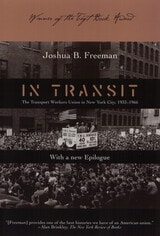
In Transit
Transport Workers Union In Nyc 1933-66Joshua Freeman
Temple University Press, 2001
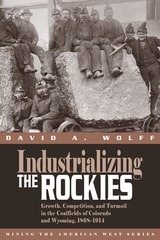
Industrializing the Rockies
Growth, Competition, and Turmoil in the Coalfields of Colorado and Wyoming, 1868-1914David A. Wolff
University Press of Colorado, 2014
In Industrializing the Rockies, David A. Wolff places these deadly conflicts and strikes in the context of the Western coal industry from its inception in 1868 to the age of maturity in the early twentieth century. The result is the first book-length study of the emergence of coalfield labor relations and a general overview of the role of coal mining in the American West.
Wolff examines the coal companies and the owners' initial motivations for investment and how these motivations changed over time. He documents the move from speculation to stability in the commodities market, and how this was reflected in the development of companies and company towns.
Industrializing the Rockies also examines the workers and their workplaces: how the miners and laborers struggled to maintain mining as a craft and how the workforce changed, ethnically and racially, eventually leading to the emergence of a strong national union. Wolff shines light on the business of coal mining detailing the market and economic forces that influenced companies and deeply affected the lives of the workers.

Iran on the Brink
Rising Workers and Threats of WarAndreas Malm and Shora Esmailian
Pluto Press, 2007
The authors offer a unique portrait of the social upheaval, why it is happening and where it may take the country. Following the fall of reformism, the rise of Ahmadinejad and the recent outbursts of ethnic violence, this book provides rare insights into the inner contradictions of the Islamic Republic.
The second part of the book deals with the international issues facing Iran - in particular the nuclear question, Iran's oil reserves and the serious threat of invasion. It is a sobering account of the realities of life in Iran, and the threat that war poses to the democratic aspirations of the Iranian people.
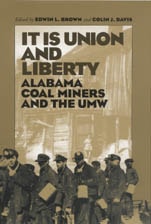
It is Union and Liberty
Alabama Coal Miners, 1898-1998Edwin L. Brown
University of Alabama Press, 1999
One union, many voices—Alabama coal miners and the century-long fight for justice.
Much of Alabama's labor history is written in its coal fields. This book records the critical contribution that District 20 of the United Mine Workers of America played in the state's labor movement through its strong stands on such issues as child labor, public education, and inter-racial unions.
Standing at the cutting edge of social and political history, these essays cover five periods over a century of union activity: the emergence of a militant labor force during mining's formative years; the World War I era, when mine operators tried to divide black and white labor; the increasing role of the state in labor relations during the interwar years; rapid changes in the union between 1942 and 1975; and the 1977-79 strike, the largest in the United Mine Workers' history.
Through historic photographs and depictions of living and working conditions, contributors Edwin L. Brown, Colin J. Davis, Daniel Letwin, Brian M. Kelly, Peter Alexander, Glenn Feldman, and Robert H. Woodrum portray the world that miners, both black and white, made. In a state where racial segregation was the norm,even the earliest District 20 contract proposals demanded equal pay for equal work regardless of color. It Is Union and Liberty shows that the UMW in Alabama stands apart from perceptions of southern trade unionism as exclusionary and racially fragmented. It sheds light on an important segment of the state's labor history and is a testament to District 20 on its centennial celebration.