Results by title
155 books match the query 'Legislators' and 4 start with i
Implementing Term Limits
The Case of the Michigan LegislatureMarjorie Sarbaugh-Thompson and Lyke Thompson
University of Michigan Press, 2017
In Implementing Term Limits, Marjorie Sarbaugh-Thompson and Lyke Thompson bring thirteen years of intensive research and 460 interviews to assess changes since Michigan’s implementation of term limits in 1993 and explore their implications. Paying special attention to term limits’ institutional effects, they also consider legislative representation, political accountability, and the role of the bureaucracy and interest groups in state legislatures.
Their thorough study suggests that legislators are less accessible to officials and that there is a larger gap between legislators and their voters. Moreover, legislators become much more politically ambitious after term limits and spend more time on political activities. The selection of top chamber leaders is complicated by newcomers’ lack of knowledge about and experience working with the leaders they elect before being sworn in. As a result, term limits in Michigan fail to deliver on many of the “good government” promises that appeal to citizens.
Implementing Term Limits makes a unique and valuable contribution to the debate over the best means by which to obtain truly democratic institutions.
Institutional Change in American Politics
The Case of Term LimitsEdited by Karl T. Kurtz, Bruce Cain, and Richard G. Niemi
University of Michigan Press, 2009
Legislative term limits adopted in the 1990s are in effect in fifteen states today. This reform is arguably the most significant institutional change in American government of recent decades. Most of the legislatures in these fifteen states have experienced a complete turnover of their membership; hundreds of experienced lawmakers have become ineligible for reelection, and their replacements must learn and perform their jobs in as few as six years.
Now that term limits have been in effect long enough for both their electoral and institutional effects to become apparent, their consequences can be gauged fully and with the benefit of hindsight. In the most comprehensive study of the subject, editors Kurtz, Cain, and Niemi and a team of experts offer their broad evaluation of the effects term limits have had on the national political landscape.
"The contributors to this excellent and comprehensive volume on legislative term limits come neither to praise the idea nor to bury it, but rather to speak dispassionately about its observed consequences. What they find is neither the horror story of inept legislators completely captive to strong governors and interest groups anticipated by the harshest critics, nor the idyll of renewed citizen democracy hypothesized by its more extreme advocates. Rather, effects have varied across states, mattering most in the states that were already most professionalized, but with countervailing factors mitigating against extreme consequences, such as a flight of former lower chamber members to the upper chamber that enhances legislative continuity. This book is must reading for anyone who wants to understand what happens to major institutional reforms after the dust has settled."
---Bernard Grofman, Professor of Political Science and Adjunct Professor of Economics, School of Social Sciences, University of California, Irvine
"A decade has passed since the first state legislators were term limited. The contributors to this volume, all well-regarded scholars, take full advantage of the distance afforded by this passage of time to explore new survey data on the institutional effects of term limits. Their book is the first major volume to exploit this superb opportunity."
---Peverill Squire, Professor, Department of Political Science, University of Iowa
Karl T. Kurtz is Director of the Trust for Representative Democracy at the National Conference of State Legislatures.
Bruce Cain is Heller Professor of Political Science and Director of the Institute of Governmental Studies at the University of California at Berkeley, and the Director of the University of California Washington Center.
Richard G. Niemi is Don Alonzo Watson Professor of Political Science at the University of Rochester.
Institutional Change, Discretion, and the Making of Modern Congress
An Economic InterpretationGlenn R. Parker
University of Michigan Press, 1992
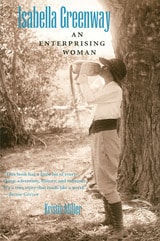
Isabella Greenway
An Enterprising WomanKristie Miller
University of Arizona Press, 2004
Isabella Greenway's life was linked with both Theodore Roosevelt and Franklin D. Roosevelt. Her infancy was spent on a snow-swept ranch in North Dakota, where young TR was a neighbor and a friend. In her teens, she captivated Edith Wharton's New York as a glamorous debutante. A bridesmaid in the wedding of Eleanor and Franklin Roosevelt, Isabella was the bride of Robert Ferguson, a Scottish nobleman and one of TR's Rough Riders. They went west when he developed tuberculosis; after his death, she married his fellow Rough Rider, Arizona copper magnate John Greenway.
In Tucson, the energetic Isabella ran an airline, worked with disabled veterans, and founded the world-famous Arizona Inn. When the Great Depression brought hard times, Eleanor Roosevelt recruited Isabella to work for the Democratic Party. Isabella played a decisive role in Franklin Roosevelt's nomination to the presidency in 1932; the New York Times called her "the most-talked-of woman at the National Democratic Convention." She was elected to Congress as Arizona's only US Representative, and again drew national media attention when she challenged FDR for not being sufficiently progressive.
Miller's meticulous biography captures a life of adventure and romance, from southern tobacco country to the ballrooms of New York, from western ranches to the dome of the US Capitol. She shows national politics played out behind the scenes, Isabella's lifelong friendship with Eleanor Roosevelt, and the drama of a loyal wife caring for a dying husband despite having fallen in love with a younger man. The book also shows Greenway's considerable influence on the development of Arizona's business and politics in the early decades of statehood. Although Isabella Greenway died in 1953, the Arizona Inn—a tribute to her enterprise—remains a premier resort hotel, celebrating its 75th anniversary in 2005. This book, too, celebrates Isabella's energy, vision, indomitable spirit, and love of life.