1445 books match the query 'Life Sciences' and 61 start with i
cover of Ignoring Nature No More: The Case for Compassionate Conservation

Ignoring Nature No More

The Case for Compassionate Conservation

Edited by Marc Bekoff

University of Chicago Press, 2013

For far too long humans have been ignoring nature. As the most dominant, overproducing, overconsuming, big-brained, big-footed, arrogant, and invasive species ever known, we are wrecking the planet at an unprecedented rate. And while science is important to our understanding of the impact we have on our environment, it alone does not hold the answers to the current crisis, nor does it get people to act. In Ignoring Nature No More, Marc Bekoff and a host of renowned contributors argue that we need a new mind-set about nature, one that centers on empathy, compassion, and being proactive.
           
This collection of diverse essays is the first book devoted to compassionate conservation, a growing global movement that translates discussions and concerns about the well-being of individuals, species, populations, and ecosystems into action. Written by leading scholars in a host of disciplines, including biology, psychology, sociology, social work, economics, political science, and philosophy, as well as by locals doing fieldwork in their own countries, the essays combine the most creative aspects of the current science of animal conservation with analyses of important psychological and sociocultural issues that encourage or vex stewardship. The contributors tackle topics including the costs and benefits of conservation, behavioral biology, media coverage of animal welfare, conservation psychology, and scales of conservation from the local to the global. Taken together, the essays make a strong case for why we must replace our habits of domination and exploitation with compassionate conservation if we are to make the world a better place for nonhuman and human animals alike.
[more]
cover of Imperial Nature: Joseph Hooker and the Practices of Victorian Science

Imperial Nature

Joseph Hooker and the Practices of Victorian Science

Jim Endersby

University of Chicago Press, 2008

Joseph Dalton Hooker (1817–1911) was an internationally renowned botanist, a close friend and early supporter of Charles Darwin, and one of the first—and most successful—British men of science to become a full-time professional. He was also, Jim Endersby argues, the perfect embodiment of Victorian science. A vivid picture of the complex interrelationships of scientific work and scientific ideas, Imperial Nature gracefully uses one individual’s career to illustrate the changing world of science in the Victorian era.
By analyzing Hooker’s career, Endersby offers vivid insights into the everyday activities of nineteenth-century naturalists, considering matters as diverse as botanical illustration and microscopy, classification, and specimen transportation and storage, to reveal what they actually did, how they earned a living, and what drove their scientific theories. What emerges is a rare glimpse of Victorian scientific practices in action. By focusing on science’s material practices and one of its foremost practitioners, Endersby ably links concerns about empire, professionalism, and philosophical practices to the forging of a nineteenth-century scientific identity.
[more]
cover of Impure Cultures: University Biology and the World of Commerce

Impure Cultures

University Biology and the World of Commerce

Daniel Lee Kleinman

University of Wisconsin Press, 2003

How are the worlds of university biology and commerce blurring? Many university leaders see the amalgamation of academic and commercial cultures as crucial to the future vitality of higher education in the United States. In Impure Cultures, Daniel Lee Kleinman questions the effect of this blending on the character of academic science.

Using data he gathered as an ethnographic observer in a plant pathology lab at the University of Wisconsin–Madison, Kleinman examines the infinite and inescapable influence of the commercial world on biology in academia today. Contrary to much of the existing literature and common policy practices, he argues that the direct and explicit relations between university scientists and industrial concerns are not the gravest threat to academic research. Rather, Kleinman points to the less direct, but more deeply-rooted effects of commercial factors on the practice of university biology. He shows that to truly understand research done at universities today, it is first necessary to explore the systematic, pervasive, and indirect effects of the commercial world on contemporary academic practice.
[more]
cover of In Quest of Great Lakes Ice Age Vertebrates

In Quest of Great Lakes Ice Age Vertebrates

J. Alan Holman

Michigan State University Press, 2001

The first book of its kind, In Quest of Great Lakes Ice Age Vertebrates details the Ice Age fishes, amphibians, reptiles, birds and mammals in the provinces and states surrounding the Great Lakes. Holman's work begins with definitions of concepts and terms for the general audience and a general discussion of how the last ice age, the Pleistocene Epoch, affected our physical and biological world. Methods employed and tools used in the collection of vertebrate fossils, as well as ethics and protocol in the maintenance of a useful collection follow, coupled with details of each animal's structure, habits, habitats, and ecological importance. The heart of the book is a species-by-species account of the Pleistocene vertebrates of the region, followed by an examination of the compelling problems of the Pleistocene relative to faunal interpretations, including overall ecological makeup of the region's fauna, vertebrate range adjustment that occurred in the region, Pleistocene extinction effects on the animals of the region, the aftermath of the Ice Age, and a look at what the future may hold for the region.

[more]
cover of In Search of Cell History: The Evolution of Life's Building Blocks

In Search of Cell History

The Evolution of Life's Building Blocks

Franklin M. Harold

University of Chicago Press, 2014

The origin of cells remains one of the most fundamental problems in biology, one that over the past two decades has spawned a large body of research and debate. With In Search of Cell History, Franklin M. Harold offers a comprehensive, impartial take on that research and the controversies that keep the field in turmoil.

Written in accessible language and complemented by a glossary for easy reference, this book investigates the full scope of cellular history. Assuming only a basic knowledge of cell biology, Harold examines such pivotal subjects as the relationship between cells and genes; the central role of bioenergetics in the origin of life; the status of the universal tree of life with its three stems and viral outliers; and the controversies surrounding the last universal common ancestor. He also delves deeply into the evolution of cellular organization, the origin of complex cells, and the incorporation of symbiotic organelles, and considers the fossil evidence for the earliest life on earth. In Search of Cell History shows us just how far we have come in understanding cell evolution—and the evolution of life in general—and how far we still have to go.

[more]
cover of In Search of Lost Roses

In Search of Lost Roses

Thomas Christopher

University of Chicago Press, 2002
Once upon a time—before the 1860s—people loved old roses like "Pearl of Gold," "Marchionesse of Lorne," or "Autumn Damask." Then along came the hybrid tea roses, which were easier to arrange, more dramatic, and longer-blooming, and the old roses were all but forgotten. Now the lovely, subtle-hued, richly perfumed old roses are making a comeback, thanks to the efforts of a stubborn band of eccentric characters who rescued them from back alleys, ramshackle cottages, and overgrown graveyards across the country. Thomas Christopher tells us the fascinating stories of the old roses—how they were created and made their way to America—and the unforgettable people who "rustle" them from abandoned lots and secret gardens today, revelling in the mystery of an "unknown yellow."
[more]
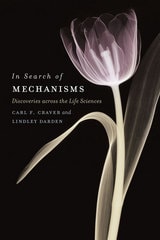
cover of In Search of Mechanisms: Discoveries across the Life Sciences

In Search of Mechanisms

Discoveries across the Life Sciences

Carl F. Craver and Lindley Darden

University of Chicago Press, 2013

Neuroscientists investigate the mechanisms of spatial memory. Molecular biologists study the mechanisms of protein synthesis and the myriad mechanisms of gene regulation. Ecologists study nutrient cycling mechanisms and their devastating imbalances in estuaries such as the Chesapeake Bay. In fact, much of biology and its history involves biologists constructing, evaluating, and revising their understanding of mechanisms.
           
With In Search of Mechanisms, Carl F. Craver and Lindley Darden offer both a descriptive and an instructional account of how biologists discover mechanisms. Drawing on examples from across the life sciences and through the centuries, Craver and Darden compile an impressive toolbox of strategies that biologists have used and will use again to reveal the mechanisms that produce, underlie, or maintain the phenomena characteristic of living things. They discuss the questions that figure in the search for mechanisms, characterizing the experimental, observational, and conceptual considerations used to answer them, all the while providing examples from the history of biology to highlight the kinds of evidence and reasoning strategies employed to assess mechanisms. At a deeper level, Craver and Darden pose a systematic view of what biology is, of how biology makes progress, of how biological discoveries are and might be made, and of why knowledge of biological mechanisms is important for the future of the human species.
[more]
cover of In Search of Swampland: A Wetland Sourcebook and Field Guide

In Search of Swampland

A Wetland Sourcebook and Field Guide

Ralph W. Tiner

Rutgers University Press, 2005
In the revised and expanded edition of this classic guide, Ralph W. Tiner introduces readers to the ecology and beauty of the wetlands in eastern North America. Topics include their formation and functions, wetland types, causes of loss and degradation, and recent efforts to protect them. The discussion now includes many examples from the Great Lakes region and information on best management practices for working in and around wetlands including vernal pools. A new chapter on classification and assessment further clarifies how the unique characteristics of these important natural resources serve specific functions.In Search of Swampland alsoprovides a field guide to wetland plants, soils, and animals. It includes detailed descriptions and illustrations—many of which are new to this edition—of more than 300 plants and 200 animals. Clear identification keys, information on how to distinguish typical hydric or “wet” soils from dryland soils, and general procedures for identifying wetlands in the field make this book an indispensable resource for readers with little or no training in wetland science, as well as for the scientist or amateur naturalist.
[more]
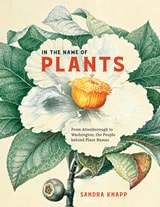
cover of In the Name of Plants: From Attenborough to Washington, the People behind Plant Names

In the Name of Plants

From Attenborough to Washington, the People behind Plant Names

Sandra Knapp

University of Chicago Press, 2022

A vividly illustrated meeting with thirty plants and their inspiring namesakes
 
Shakespeare famously asserted that “a rose by any other name would smell as sweet,” and that’s as true for common garden roses as it is for the Megacorax, a genus of evening primroses. Though it may not sound like it, the Megacorax was actually christened in honor of famed American botanist Peter Raven, its name a play on the Latin words for “great raven.”

In this lush and lively book, celebrated botanist Sandra Knapp explores the people whose names have been immortalized in plant genera, presenting little-known stories about both the featured plants and their eponyms alongside photographs and botanical drawings from the collections of London’s Natural History Museum. Readers will see familiar plants in a new light after learning the tales of heroism, inspiration, and notoriety that led to their naming. Take, for example, nineteenth-century American botanist Alice Eastwood, after whom the yellow aster—Eastwoodia elegans—is named. Eastwood was a pioneering plant collector who also singlehandedly saved irreplaceable specimens from the California Academy of Sciences during the 1906 San Francisco earthquake. Or more recently, the fern genus Gaga, named for the pop star and actress Lady Gaga, whose verdant heart-shaped ensemble at the 2010 Grammy Awards bore a striking resemblance to a giant fern gametophyte. Knapp’s subjects range from Charles Darwin’s grandfather, Erasmus Darwin (Darwinia), and legendary French botanist Pierre Magnol—who lends his name to the magnolia tree—to US founding figures like George Washington (Washingtonia) and Benjamin Franklin (Franklinia). Including granular details on the taxonomy and habitats for thirty plants alongside its vibrant illustrations, this book is sure to entertain and enlighten any plant fan.

[more]
cover of In the Rainforest: Report from a Strange, Beautiful, Imperiled World

In the Rainforest

Report from a Strange, Beautiful, Imperiled World

Catherine Caufield

University of Chicago Press, 1986

In the Rainforest takes us to Africa, Latin America, and Southeast Asia, revealing a colorful and bizarre world where fish live on fruit, spiders prey on birds, and violets grow to the size of apple trees.

"I recommend In the Rainforest as scientific journalism at its best, and [Caufield's] book as the one to read to become informed about the tropical crisis. Caufield traveled the world, went to the difficult places, sometimes beautiful and often dispiriting, mastered the important ideas, and talked to an impressive number of people on all sides of the issues. . . . There are villains in abundance: corrupt government agents who aid in the destruction of native tribes, greedy caballero landowners, and even the governmental planners who with the best of intentions rush heedlessly toward the environmental degradation of their own countries."—E. O. Wilson, Science

"The whole book is filled with amazing facts. . . . Moving and informative."—Ellen W. Chu, New York Times Book Review
[more]
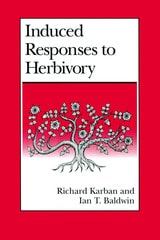
cover of Induced Responses to Herbivory

Induced Responses to Herbivory

Richard Karban and Ian T. Baldwin

University of Chicago Press, 1997

Plants face a daunting array of creatures that eat them, bore into them, and otherwise use virtually every plant part for food, shelter, or both. But although plants cannot flee from their attackers, they are far from defenseless. In addition to adaptations like thorns, which may be produced in response to attack, plants actively alter their chemistry and physiology in response to damage. For instance, young potato plant leaves being eaten by potato beetles respond by producing chemicals that inhibit beetle digestive enzymes.

Over the past fifteen years, research on these induced responses to herbivory has flourished, and here Richard Karban and Ian T. Baldwin present the first comprehensive evaluation and synthesis of this rapidly developing field. They provide state-of-the-discipline reviews and highlight areas where new research will be most productive. Their comprehensive overview will be welcomed by a wide variety of theoretical and applied researchers in ecology, evolutionary biology, plant biology, entomology, and agriculture.

[more]
cover of Infectious Disease: A Scientific American Reader

Infectious Disease

A Scientific American Reader

Edited by Scientific American

University of Chicago Press, 2008
The international public health scare that resulted last year when a man infected with multidrug-resistant tuberculosis flew overseas from the United States and back illustrates both the fear and the potential impact of highly infectious diseases in a global age. At a time when scientists warn of the potential for an influenza epidemic to rival the deadly outbreak of 1919 and newspapers feature alarming headlines about incidences of mad cow disease, infectious disease will be a critical area of concern and scientific study in the twenty-first century.     
Infectious Disease collects thirty of the most exciting, innovative, and significant articles on communicable illness published inthe pages of ScientificAmerican magazine since 1993. With sections devoted to viral infections, infectious disease, the immune system, and global management and treatment issues, Infectious Disease provides general readers and students with an excellent overview of recent research in the field. Roger I. Glass discusses a potential vaccine for the rotavirus—a leading cause of severe childhood diarrhea world wide and frequent killer of young children in developing nations. Jeffery K. Taubenberger and colleagues investigate the virulent strain of influenza that killed up to 40 million people in 1919 to suggest treatments and recommend preventative measures. And Paul R. Epstein looks into whether global warming could be harmful to our health, untangling research that suggests that many diseases will flourish as Earth’s atmosphere heats up.      
The prominence of disease in the ecology and evolution of human society has spurred investment in research and technology development, and, as a consequence, the topic is much discussed in the general and scientific media. Infectious Disease is the essential sourcebook for anyone looking for the solid science and compelling narrative behind the stories that make headlines.
[more]
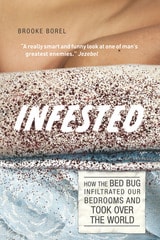
cover of Infested: How the Bed Bug Infiltrated Our Bedrooms and Took Over the World

Infested

How the Bed Bug Infiltrated Our Bedrooms and Took Over the World

Brooke Borel

University of Chicago Press, 2015

Bed bugs. Few words strike such fear in the minds of travelers. In cities around the world, lurking beneath the plush blankets of otherwise pristine-looking hotel beds are tiny bloodthirsty beasts just waiting for weary wanderers to surrender to a vulnerable slumber. Though bed bugs today have infested the globe, the common bed bug is not a new pest at all. Indeed, as Brooke Borel reveals in this unusual history, this most-reviled species may date back over 250,000 years, wreaking havoc on our collective psyche while even inspiring art, literature, and music—in addition to vexatious red welts.
 
In Infested, Borel introduces readers to the biological and cultural histories of these amazingly adaptive insects, and the myriad ways in which humans have responded to them. She travels to meet with scientists who are rearing bed bug colonies—even by feeding them with their own blood (ouch!)—and to the stages of musicals performed in honor of the pests. She explores the history of bed bugs and their apparent disappearance in the 1950s after the introduction of DDT, charting how current infestations have flourished in direct response to human chemical use as well as the ease of global travel. She also introduces us to the economics of bed bug infestations, from hotels to homes to office buildings, and the expansive industry that has arisen to combat them.

Hiding during the day in the nooks and seams of mattresses, box springs, bed frames, headboards, dresser tables, wallpaper, or any clutter around a bed, bed bugs are thriving and eager for their next victim. By providing fascinating details on bed bug science and behavior as well as a captivating look into the lives of those devoted to researching or eradicating them, Infested is sure to inspire at least a nibble of respect for these tenacious creatures—while also ensuring that you will peek beneath the sheets with prickly apprehension.
[more]
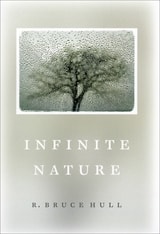
cover of Infinite Nature

Infinite Nature

R. Bruce Hull

University of Chicago Press, 2006

You would be hard-pressed to find someone who categorically opposes protecting the environment, yet most people would agree that the environmentalist movement has been ineffectual and even misguided. Some argue that its agenda is misplaced, oppressive, and misanthropic—a precursor to intrusive government, regulatory bungles, and economic stagnation. Others point out that its alarmist rhetoric and preservationist solutions are outdated and insufficient to the task of galvanizing support for true reform. 

In this impassioned and judicious work, R. Bruce Hull argues that environmentalism will never achieve its goals unless it sheds its fundamentalist logic. The movement is too bound up in polarizing ideologies that pit humans against nature, conservation against development, and government regulation against economic growth. Only when we acknowledge the infinite perspectives on how people should relate to nature will we forge solutions that are respectful to both humanity and the environment.

Infinite Nature explores some of these myriad perspectives, from the scientific understandings proffered by anthropology, evolution, and ecology, to the promise of environmental responsibility offered by technology and economics, to the designs of nature envisioned in philosophy, law, and religion. Along the way, Hull maintains that the idea of nature is social: in order to reach the common ground where sustainable and thriving communities are possible, we must accept that many natures can and do exist.

Incisive, heartfelt, and brimming with practical solutions, Infinite Nature brings a much-needed and refreshing voice to the table of environmental reform.
[more]
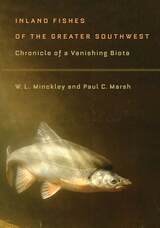
cover of Inland Fishes of the Greater Southwest: Chronicle of a Vanishing Biota

Inland Fishes of the Greater Southwest

Chronicle of a Vanishing Biota

W. L. Minckley and Paul C. Marsh

University of Arizona Press, 2009

This comprehensive new book replaces and substantially expands upon the landmark Fishes of Arizona, which has been the authoritative source since it was first published in 1973. Inland Fishes of the Greater Southwest is a one-volume guide to native and non-native fishes of the lower Colorado River basin, downstream from the Grand Canyon, and of the northern tributaries of the Sea of Cortez in the United States and Mexico. In all, there are in-depth accounts of more than 165 species representing 30 families. The book is not limited to the fish. It provides insights into their aquatic world with information on topography, drainage relations, climate, geology, vegetational history, aquatic habitats, human-made water systems, and conservation. A section of the book is devoted to fish identification, with keys to native and non-native families as well as family keys to species. The book is illustrated with more than 120 black-and-white illustrations, 47 full-color plates of native fishes, and nearly 40 maps and figures.

Many native fish species are unique to the Southwest. They possess interesting and unusual adaptations to the challenges of the region, able to survive silt-laden floods as well as extreme water temperatures and highly fluctuating water flows ranging from very low levels to flash floods. However, in spite of being well-adapted, many of the fish described here are threatened or endangered, often due to the acts of humans who have altered the natural habitat. For that reason, Inland Fishes of the Greater Southwest presents a vast amount of information about the ecological relationships between the fishes it describes and their environments, paying particular attention to the ways in which human interactions have modified aquatic ecosystems—and to how humans might work to ensure the survival of rapidly disappearing native species.
[more]
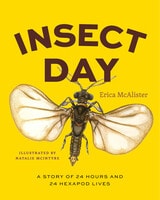
cover of Insect Day: A Story of 24 Hours and 24 Hexapod Lives

Insect Day

A Story of 24 Hours and 24 Hexapod Lives

Erica McAlister

University of Chicago Press, 2026

An hourly guide that follows twenty-four insects as they find food, mates, and safety from predators. 

In this short book, celebrated scientist and award-winning author Erica McAlister leads readers on a worldwide field trip in search of insects. Each chapter of Insect Day introduces a single insect during a single hour, highlighting how twenty-four different species spend their time. 

Early in our day, we meet a cold Arctic bumblebee, basking among poppy flower petals to warm itself. Even when the world around her is very cold, she keeps remarkably warm simply by vibrating. Near midday, there is enough sunlight for the blue-winged helicopter, a damselfly, to navigate the forests for her prey. When our insect spots a spider web, she looks for its creator—one vicious hunter eyeing up another. The giant damselfly reverses away from the web and then launches into an attack, grabbing onto the spider with her forelegs. If successful (many spiders are dropped), she perches while feasting. And then, like the most fastidious of diners, she cleans off any gossamer threads with a good preen. In the dark, the dung beetle also looks to the sky, using the Milky Way to orient itself as it rolls a ball of dung—a future home for its offspring. And, as our day closes, a tiger moth escapes bat hunters by fighting sound with sound—jamming bats’ sonar with ultrasonic clicking noises. 

For each chapter, artist Natalie McIntyre has depicted these insects in stunning illustrations, blending traditional scientific drawing methods with fine art techniques. Working together to narrate and illustrate these unique moments in time, McAlister and McIntyre have created an engaging read that is a perfect way to spend an hour or two—and a true gift for readers, amateur naturalists, and all insect lovers.
[more]
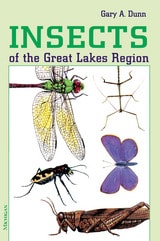
cover of Insects of the Great Lakes Region

Insects of the Great Lakes Region

Gary A. Dunn

University of Michigan Press, 1996

The insects are the world's most amazing animals and comprise over eighty-five percent of the known animal species. Insects of the Great Lakes Region is the first comprehensive guide to document the rich and diverse insect fauna of the Great Lakes region. In Insects of the Great Lakes Region, educators, insect enthusiasts, and the general public will find high-quality, well-presented, easy-to-understand information with over 250 illustrations of the insects found in yards, gardens, fields, and forests. Among the topics discussed are the geological, biological, and entomological history of the Great Lakes region, the distributional patterns of insects in the Great Lakes region, and insect classification and identification. Appendixes guide the reader to entomological organizations, entomological periodicals, public insect collections, regulations on collecting insects from public lands in the Great Lakes region, as well as rare, threatened, and endangered insects. This guide shows the amateur entomologist everything he needs to know, from where to collect milkweed bugs to how often to feed his pet tarantula.

Gary Dunn is Executive Director and Editor, Young Entomologists' Society, Inc., International Headquarters, Lansing, Michigan.
[more]
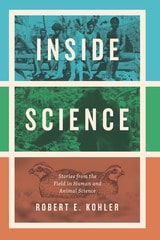
cover of Inside Science: Stories from the Field in Human and Animal Science

Inside Science

Stories from the Field in Human and Animal Science

Robert E. Kohler

University of Chicago Press, 2019

Context and situation always matter in both human and animal lives. Unique insights can be gleaned from conducting scientific studies from within human communities and animal habitats. Inside Science is a novel treatment of this distinctive mode of fieldwork. Robert E. Kohler illuminates these resident practices through close analyses of classic studies: of Trobriand Islanders, Chicago hobos, corner boys in Boston’s North End, Jane Goodall’s chimpanzees of the Gombe Stream Reserve, and more. Intensive firsthand observation; a preference for generalizing from observed particulars, rather than from universal principles; and an ultimate framing of their results in narrative form characterize these inside stories from the field.
 
Resident observing takes place across a range of sciences, from anthropology and sociology to primatology, wildlife ecology, and beyond. What makes it special, Kohler argues, is the direct access it affords scientists to the contexts in which their subjects live and act. These scientists understand their subjects not by keeping their distance but by living among them and engaging with them in ways large and small. This approach also demonstrates how science and everyday life—often assumed to be different and separate ways of knowing—are in fact overlapping aspects of the human experience. This story-driven exploration is perfect for historians, sociologists, and philosophers who want to know how scientists go about making robust knowledge of nature and society.

[more]
cover of Instrumental Biology, or The Disunity of Science

Instrumental Biology, or The Disunity of Science

Alexander Rosenberg

University of Chicago Press, 1994

Do the sciences aim to uncover the structure of nature, or are they ultimately a practical means of controlling our environment?

In Instrumental Biology, or the Disunity of Science, Alexander Rosenberg argues that while physics and chemistry can develop laws that reveal the structure of natural phenomena, biology is fated to be a practical, instrumental discipline. Because of the complexity produced by natural selection, and because of the limits on human cognition, scientists are prevented from uncovering the basic structure of biological phenomena. Consequently, biology and all of the disciplines that rest upon it—psychology and the other human sciences—must aim at most to provide practical tools for coping with the natural world rather than a complete theoretical understanding of it.

[more]
cover of Intelligently Designed: How Creationists Built the Campaign against Evolution

Intelligently Designed

How Creationists Built the Campaign against Evolution

Edward Caudill

University of Illinois Press, 2013
Tracing the growth of creationism in America as a political movement, this book explains why the particularly American phenomenon of anti-evolution has succeeded as a popular belief. Conceptualizing the history of creationism as a strategic public relations campaign, Edward Caudill examines why this movement has captured the imagination of the American public, from the explosive Scopes trial of 1925 to today's heated battles over public school curricula. Caudill shows how creationists have appealed to cultural values such as individual rights and admiration of the rebel spirit, thus spinning creationism as a viable, even preferable, alternative to evolution.
 
In particular, Caudill argues that the current anti-evolution campaign follows a template created by Clarence Darrow and William Jennings Bryan, the Scopes trial's primary combatants. Their celebrity status and dexterity with the press prefigured the Moral Majority's 1980s media blitz, more recent staunchly creationist politicians such as Sarah Palin and Mike Huckabee, and creationists' savvy use of the Internet and museums to publicize their cause. Drawing from trial transcripts, media sources, films, and archival documents, Intelligently Designed highlights the importance of historical myth in popular culture, religion, and politics and situates this nearly century-old debate in American cultural history.
[more]
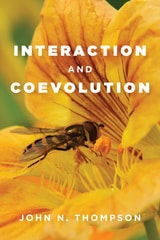
cover of Interaction and Coevolution

Interaction and Coevolution

John N. Thompson

University of Chicago Press, 1982
“It is not only the species that change evolutionarily through interactions . . . the interactions themselves also change.” Thus states John N. Thompson in the foreword to Interaction and Coevolution, the first title in his series of books exploring the relentless nature of evolution and the processes that shape the web of life. Originally published in 1982 more as an idea piece—an early attempt to synthesize then academically distinct but logically linked strands of ecological thought and to suggest avenues for further research—than as a data-driven monograph, Interaction and Coevolution would go on to be considered a landmark study that pointed to the beginning of a new discipline. Through chapters on antagonism, mutualism, and the effects of these interactions on populations, speciation, and community structure, Thompson seeks to explain not only how interactions differ in the selection pressures they exert on species, but also when interactions are most likely to lead to coevolution. In this era of climate change and swiftly transforming environments, the ideas Thompson puts forward in Interaction and Coevolution are more relevant than ever before.
[more]
cover of International Code of Nomenclature for algae, fungi, and plants (Madrid Code)

International Code of Nomenclature for algae, fungi, and plants (Madrid Code)

Editorial Committee of the Madrid Code

University of Chicago Press, 2025

The latest, updated edition of the essential, authoritative reference for botanical, mycological, and phycological names.
 
The International Code of Nomenclature for algae, fungi, and plants, known as “the Code,” is the set of internationally agreed rules and recommendations that govern the naming of these organisms. Scientific naming has deep historical roots. Indeed, the system of naming organisms is one of the first truly global scientific standards. This essential reference originates in Alphonse de Candolle’s 1867 Lois de la nomenclature botanique. This 2025 edition of the Code, the Madrid Code, reflects the decisions made at the Twentieth International Botanical Congress, which met in Madrid, Spain, in July 2024. The congress debated 447 proposals to amend the Code and accepted important new rules, including a mechanism for voluntary registration of plant and algal names, clarifications for naming fossil taxa, the option to reject a new name if it is derogatory to a group of people, and the replacement of an epithet that was considered particularly offensive (revising to afra, afrorum, and afrum).
[more]
cover of International Journal of Plant Sciences, volume 183 number 6 (July/August 2022)

International Journal of Plant Sciences, volume 183 number 6 (July/August 2022)

The University of Chicago Press

University of Chicago Press Journals, 2022

[more]
cover of International Journal of Plant Sciences, volume 183 number 7 (September 2022)

International Journal of Plant Sciences, volume 183 number 7 (September 2022)

The University of Chicago Press

University of Chicago Press Journals, 2022

[more]
cover of International Journal of Plant Sciences, volume 183 number 8 (October 2022)

International Journal of Plant Sciences, volume 183 number 8 (October 2022)

The University of Chicago Press

University of Chicago Press Journals, 2022
[more]
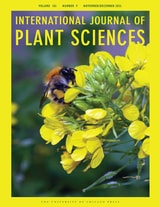
cover of International Journal of Plant Sciences, volume 183 number 9 (November/December 2022)

International Journal of Plant Sciences, volume 183 number 9 (November/December 2022)

The University of Chicago Press

University of Chicago Press Journals, 2022
This is volume 183 issue 9 of International Journal of Plant Sciences. Since 1875, the International Journal of Plant Sciences (IJPS) has presented high-quality, original, peer-reviewed research from laboratories around the world and in all areas of the plant sciences. Topics covered include genetics and genomics, developmental and cell biology, biochemistry and physiology, morphology and anatomy, systematics, evolution, paleobotany, plant-microbe interactions, and ecology. IJPS welcomes research articles that describe novel results and new perspectives on topics of interest to the international community of plant scientists. The journal also features reviews and special issues in growing areas of the field.
[more]
cover of International Journal of Plant Sciences, volume 184 number 1 (January 2023)

International Journal of Plant Sciences, volume 184 number 1 (January 2023)

The University of Chicago Press

University of Chicago Press Journals, 2023
This is volume 184 issue 1 of International Journal of Plant Sciences. Since 1875, the International Journal of Plant Sciences (IJPS) has presented high-quality, original, peer-reviewed research from laboratories around the world and in all areas of the plant sciences. Topics covered include genetics and genomics, developmental and cell biology, biochemistry and physiology, morphology and anatomy, systematics, evolution, paleobotany, plant-microbe interactions, and ecology. IJPS welcomes research articles that describe novel results and new perspectives on topics of interest to the international community of plant scientists. The journal also features reviews and special issues in growing areas of the field.
[more]
cover of International Journal of Plant Sciences, volume 184 number 2 (February 2023)

International Journal of Plant Sciences, volume 184 number 2 (February 2023)

The University of Chicago Press

University of Chicago Press Journals, 2023
This is volume 184 issue 2 of International Journal of Plant Sciences. Since 1875, the International Journal of Plant Sciences (IJPS) has presented high-quality, original, peer-reviewed research from laboratories around the world and in all areas of the plant sciences. Topics covered include genetics and genomics, developmental and cell biology, biochemistry and physiology, morphology and anatomy, systematics, evolution, paleobotany, plant-microbe interactions, and ecology. IJPS welcomes research articles that describe novel results and new perspectives on topics of interest to the international community of plant scientists. The journal also features reviews and special issues in growing areas of the field.
[more]
cover of International Journal of Plant Sciences, volume 184 number 3 (March/April 2023)

International Journal of Plant Sciences, volume 184 number 3 (March/April 2023)

The University of Chicago Press

University of Chicago Press Journals, 2023
This is volume 184 issue 3 of International Journal of Plant Sciences. Since 1875, the International Journal of Plant Sciences (IJPS) has presented high-quality, original, peer-reviewed research from laboratories around the world and in all areas of the plant sciences. Topics covered include genetics and genomics, developmental and cell biology, biochemistry and physiology, morphology and anatomy, systematics, evolution, paleobotany, plant-microbe interactions, and ecology. IJPS welcomes research articles that describe novel results and new perspectives on topics of interest to the international community of plant scientists. The journal also features reviews and special issues in growing areas of the field.
[more]
cover of International Journal of Plant Sciences, volume 184 number 4 (May 2023)

International Journal of Plant Sciences, volume 184 number 4 (May 2023)

The University of Chicago Press

University of Chicago Press Journals, 2023

This is volume 184 issue 4 of International Journal of Plant Sciences. Since 1875, the International Journal of Plant Sciences (IJPS) has presented high-quality, original, peer-reviewed research from laboratories around the world and in all areas of the plant sciences. Topics covered include genetics and genomics, developmental and cell biology, biochemistry and physiology, morphology and anatomy, systematics, evolution, paleobotany, plant-microbe interactions, and ecology. IJPS welcomes research articles that describe novel results and new perspectives on topics of interest to the international community of plant scientists. The journal also features reviews and special issues in growing areas of the field.
[more]
cover of International Journal of Plant Sciences, volume 184 number 5 (June 2023)

International Journal of Plant Sciences, volume 184 number 5 (June 2023)

The University of Chicago Press

University of Chicago Press Journals, 2023
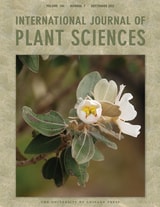
This is volume 184 issue 5 of International Journal of Plant Sciences. Since 1875, the International Journal of Plant Sciences (IJPS) has presented high-quality, original, peer-reviewed research from laboratories around the world and in all areas of the plant sciences. Topics covered include genetics and genomics, developmental and cell biology, biochemistry and physiology, morphology and anatomy, systematics, evolution, paleobotany, plant-microbe interactions, and ecology. IJPS welcomes research articles that describe novel results and new perspectives on topics of interest to the international community of plant scientists. The journal also features reviews and special issues in growing areas of the field.
[more]
cover of International Journal of Plant Sciences, volume 184 number 7 (September 2023)

International Journal of Plant Sciences, volume 184 number 7 (September 2023)

The University of Chicago Press

University of Chicago Press Journals, 2023
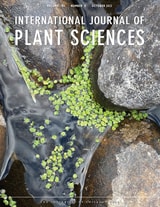
This is volume 184 issue 7 of International Journal of Plant Sciences. Since 1875, the International Journal of Plant Sciences (IJPS) has presented high-quality, original, peer-reviewed research from laboratories around the world and in all areas of the plant sciences. Topics covered include genetics and genomics, developmental and cell biology, biochemistry and physiology, morphology and anatomy, systematics, evolution, paleobotany, plant-microbe interactions, and ecology. IJPS welcomes research articles that describe novel results and new perspectives on topics of interest to the international community of plant scientists. The journal also features reviews and special issues in growing areas of the field.
[more]
cover of International Journal of Plant Sciences, volume 184 number 8 (October 2023)

International Journal of Plant Sciences, volume 184 number 8 (October 2023)

The University of Chicago Press

University of Chicago Press Journals, 2023
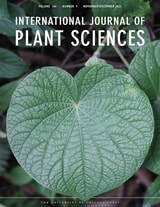
This is volume 184 issue 8 of International Journal of Plant Sciences. Since 1875, the International Journal of Plant Sciences (IJPS) has presented high-quality, original, peer-reviewed research from laboratories around the world and in all areas of the plant sciences. Topics covered include genetics and genomics, developmental and cell biology, biochemistry and physiology, morphology and anatomy, systematics, evolution, paleobotany, plant-microbe interactions, and ecology. IJPS welcomes research articles that describe novel results and new perspectives on topics of interest to the international community of plant scientists. The journal also features reviews and special issues in growing areas of the field.
[more]
cover of International Journal of Plant Sciences, volume 184 number 9 (November/December 2023)

International Journal of Plant Sciences, volume 184 number 9 (November/December 2023)

The University of Chicago Press

University of Chicago Press Journals, 2023
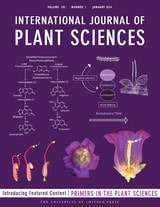
This is volume 184 issue 9 of International Journal of Plant Sciences. Since 1875, the International Journal of Plant Sciences (IJPS) has presented high-quality, original, peer-reviewed research from laboratories around the world and in all areas of the plant sciences. Topics covered include genetics and genomics, developmental and cell biology, biochemistry and physiology, morphology and anatomy, systematics, evolution, paleobotany, plant-microbe interactions, and ecology. IJPS welcomes research articles that describe novel results and new perspectives on topics of interest to the international community of plant scientists. The journal also features reviews and special issues in growing areas of the field.
[more]
cover of International Journal of Plant Sciences, volume 185 number 1 (January 2024)

International Journal of Plant Sciences, volume 185 number 1 (January 2024)

The University of Chicago Press

University of Chicago Press Journals, 2024
This is volume 185 issue 1 of International Journal of Plant Sciences. Since 1875, the International Journal of Plant Sciences (IJPS) has presented high-quality, original, peer-reviewed research from laboratories around the world and in all areas of the plant sciences. Topics covered include genetics and genomics, developmental and cell biology, biochemistry and physiology, morphology and anatomy, systematics, evolution, paleobotany, plant-microbe interactions, and ecology. IJPS welcomes research articles that describe novel results and new perspectives on topics of interest to the international community of plant scientists. The journal also features reviews and special issues in growing areas of the field.
[more]
cover of International Journal of Plant Sciences, volume 185 number 2 (March/April 2024)

International Journal of Plant Sciences, volume 185 number 2 (March/April 2024)

The University of Chicago Press

University of Chicago Press Journals, 2024
This is volume 185 issue 2 of International Journal of Plant Sciences. Since 1875, the International Journal of Plant Sciences (IJPS) has presented high-quality, original, peer-reviewed research from laboratories around the world and in all areas of the plant sciences. Topics covered include genetics and genomics, developmental and cell biology, biochemistry and physiology, morphology and anatomy, systematics, evolution, paleobotany, plant-microbe interactions, and ecology. IJPS welcomes research articles that describe novel results and new perspectives on topics of interest to the international community of plant scientists. The journal also features reviews and special issues in growing areas of the field.
[more]
cover of International Journal of Plant Sciences, volume 185 number 3 (May 2024)

International Journal of Plant Sciences, volume 185 number 3 (May 2024)

The University of Chicago Press

University of Chicago Press Journals, 2024
This is volume 185 issue 3 of International Journal of Plant Sciences. Since 1875, the International Journal of Plant Sciences (IJPS) has presented high-quality, original, peer-reviewed research from laboratories around the world and in all areas of the plant sciences. Topics covered include genetics and genomics, developmental and cell biology, biochemistry and physiology, morphology and anatomy, systematics, evolution, paleobotany, plant-microbe interactions, and ecology. IJPS welcomes research articles that describe novel results and new perspectives on topics of interest to the international community of plant scientists. The journal also features reviews and special issues in growing areas of the field.
[more]
cover of International Journal of Plant Sciences, volume 185 number 4 (July/August 2024)

International Journal of Plant Sciences, volume 185 number 4 (July/August 2024)

The University of Chicago Press

University of Chicago Press Journals, 2024
This is volume 185 issue 4 of International Journal of Plant Sciences. Since 1875, the International Journal of Plant Sciences (IJPS) has presented high-quality, original, peer-reviewed research from laboratories around the world and in all areas of the plant sciences. Topics covered include genetics and genomics, developmental and cell biology, biochemistry and physiology, morphology and anatomy, systematics, evolution, paleobotany, plant-microbe interactions, and ecology. IJPS welcomes research articles that describe novel results and new perspectives on topics of interest to the international community of plant scientists. The journal also features reviews and special issues in growing areas of the field.
[more]
cover of International Journal of Plant Sciences, volume 185 number 5 (September 2024)

International Journal of Plant Sciences, volume 185 number 5 (September 2024)

The University of Chicago Press

University of Chicago Press Journals, 2024
This is volume 185 issue 5 of International Journal of Plant Sciences. Since 1875, the International Journal of Plant Sciences (IJPS) has presented high-quality, original, peer-reviewed research from laboratories around the world and in all areas of the plant sciences. Topics covered include genetics and genomics, developmental and cell biology, biochemistry and physiology, morphology and anatomy, systematics, evolution, paleobotany, plant-microbe interactions, and ecology. IJPS welcomes research articles that describe novel results and new perspectives on topics of interest to the international community of plant scientists. The journal also features reviews and special issues in growing areas of the field.
[more]
cover of International Journal of Plant Sciences, volume 185 number 6 (November/December 2024)

International Journal of Plant Sciences, volume 185 number 6 (November/December 2024)

The University of Chicago Press

University of Chicago Press Journals, 2024
This is volume 185 issue 6 of International Journal of Plant Sciences. Since 1875, the International Journal of Plant Sciences (IJPS) has presented high-quality, original, peer-reviewed research from laboratories around the world and in all areas of the plant sciences. Topics covered include genetics and genomics, developmental and cell biology, biochemistry and physiology, morphology and anatomy, systematics, evolution, paleobotany, plant-microbe interactions, and ecology. IJPS welcomes research articles that describe novel results and new perspectives on topics of interest to the international community of plant scientists. The journal also features reviews and special issues in growing areas of the field.
[more]
cover of International Journal of Plant Sciences, volume 186 number 1 (January 2025)

International Journal of Plant Sciences, volume 186 number 1 (January 2025)

The University of Chicago Press

University of Chicago Press Journals, 2025
This is volume 186 issue 1 of International Journal of Plant Sciences. Since 1875, the International Journal of Plant Sciences (IJPS) has presented high-quality, original, peer-reviewed research from laboratories around the world and in all areas of the plant sciences. Topics covered include genetics and genomics, developmental and cell biology, biochemistry and physiology, morphology and anatomy, systematics, evolution, paleobotany, plant-microbe interactions, and ecology. IJPS welcomes research articles that describe novel results and new perspectives on topics of interest to the international community of plant scientists. The journal also features reviews and special issues in growing areas of the field.
[more]
cover of International Journal of Plant Sciences, volume 186 number 2 (March/April 2025)

International Journal of Plant Sciences, volume 186 number 2 (March/April 2025)

The University of Chicago Press

University of Chicago Press Journals, 2025
This is volume 186 issue 2 of International Journal of Plant Sciences. Since 1875, the International Journal of Plant Sciences (IJPS) has presented high-quality, original, peer-reviewed research from laboratories around the world and in all areas of the plant sciences. Topics covered include genetics and genomics, developmental and cell biology, biochemistry and physiology, morphology and anatomy, systematics, evolution, paleobotany, plant-microbe interactions, and ecology. IJPS welcomes research articles that describe novel results and new perspectives on topics of interest to the international community of plant scientists. The journal also features reviews and special issues in growing areas of the field.
[more]
cover of International Journal of Plant Sciences, volume 186 number 3 (May 2025)

International Journal of Plant Sciences, volume 186 number 3 (May 2025)

The University of Chicago Press

University of Chicago Press Journals, 2025
This is volume 186 issue 3 of International Journal of Plant Sciences. Since 1875, the International Journal of Plant Sciences (IJPS) has presented high-quality, original, peer-reviewed research from laboratories around the world and in all areas of the plant sciences. Topics covered include genetics and genomics, developmental and cell biology, biochemistry and physiology, morphology and anatomy, systematics, evolution, paleobotany, plant-microbe interactions, and ecology. IJPS welcomes research articles that describe novel results and new perspectives on topics of interest to the international community of plant scientists. The journal also features reviews and special issues in growing areas of the field.
[more]
cover of International Journal of Plant Sciences, volume 186 number 5 (September 2025)

International Journal of Plant Sciences, volume 186 number 5 (September 2025)

The University of Chicago Press

University of Chicago Press Journals, 2025
This is volume 186 issue 5 of International Journal of Plant Sciences. Since 1875, the International Journal of Plant Sciences (IJPS) has presented high-quality, original, peer-reviewed research from laboratories around the world and in all areas of the plant sciences. Topics covered include genetics and genomics, developmental and cell biology, biochemistry and physiology, morphology and anatomy, systematics, evolution, paleobotany, plant-microbe interactions, and ecology. IJPS welcomes research articles that describe novel results and new perspectives on topics of interest to the international community of plant scientists. The journal also features reviews and special issues in growing areas of the field.
[more]
cover of International Journal of Plant Sciences, volume 186 number 6 (November 2025)

International Journal of Plant Sciences, volume 186 number 6 (November 2025)

The University of Chicago Press

University of Chicago Press Journals, 2025
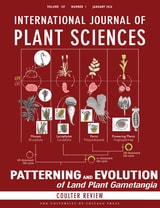
This is volume 186 issue 6 of International Journal of Plant Sciences. Since 1875, the International Journal of Plant Sciences (IJPS) has presented high-quality, original, peer-reviewed research from laboratories around the world and in all areas of the plant sciences. Topics covered include genetics and genomics, developmental and cell biology, biochemistry and physiology, morphology and anatomy, systematics, evolution, paleobotany, plant-microbe interactions, and ecology. IJPS welcomes research articles that describe novel results and new perspectives on topics of interest to the international community of plant scientists. The journal also features reviews and special issues in growing areas of the field.
[more]
cover of International Journal of Plant Sciences, volume 187 number 1 (January 2026)

International Journal of Plant Sciences, volume 187 number 1 (January 2026)

The University of Chicago Press

University of Chicago Press Journals, 2026
This is volume 187 issue 1 of International Journal of Plant Sciences. Since 1875, the International Journal of Plant Sciences (IJPS) has presented high-quality, original, peer-reviewed research from laboratories around the world and in all areas of the plant sciences. Topics covered include genetics and genomics, developmental and cell biology, biochemistry and physiology, morphology and anatomy, systematics, evolution, paleobotany, plant-microbe interactions, and ecology. IJPS welcomes research articles that describe novel results and new perspectives on topics of interest to the international community of plant scientists. The journal also features reviews and special issues in growing areas of the field.
[more]
cover of International Journal of Plant Sciences, volume 187 number 2 (March 2026)

International Journal of Plant Sciences, volume 187 number 2 (March 2026)

The University of Chicago Press

University of Chicago Press Journals, 2026
This is volume 187 issue 2 of International Journal of Plant Sciences. Since 1875, the International Journal of Plant Sciences (IJPS) has presented high-quality, original, peer-reviewed research from laboratories around the world and in all areas of the plant sciences. Topics covered include genetics and genomics, developmental and cell biology, biochemistry and physiology, morphology and anatomy, systematics, evolution, paleobotany, plant-microbe interactions, and ecology. IJPS welcomes research articles that describe novel results and new perspectives on topics of interest to the international community of plant scientists. The journal also features reviews and special issues in growing areas of the field.
[more]
cover of International Journal of Plant Sciences, volume 187 number 3 (May 2026)

International Journal of Plant Sciences, volume 187 number 3 (May 2026)

The University of Chicago Press

University of Chicago Press Journals, 2026
This is volume 187 issue 3 of International Journal of Plant Sciences. Since 1875, the International Journal of Plant Sciences (IJPS) has presented high-quality, original, peer-reviewed research from laboratories around the world and in all areas of the plant sciences. Topics covered include genetics and genomics, developmental and cell biology, biochemistry and physiology, morphology and anatomy, systematics, evolution, paleobotany, plant-microbe interactions, and ecology. IJPS welcomes research articles that describe novel results and new perspectives on topics of interest to the international community of plant scientists. The journal also features reviews and special issues in growing areas of the field.
[more]
cover of International Journal of Plant Sciences, volume 187 number 4 (July 2026)

International Journal of Plant Sciences, volume 187 number 4 (July 2026)

The University of Chicago Press

University of Chicago Press Journals, 2026
This is volume 187 issue 4 of International Journal of Plant Sciences. Since 1875, the International Journal of Plant Sciences (IJPS) has presented high-quality, original, peer-reviewed research from laboratories around the world and in all areas of the plant sciences. Topics covered include genetics and genomics, developmental and cell biology, biochemistry and physiology, morphology and anatomy, systematics, evolution, paleobotany, plant-microbe interactions, and ecology. IJPS welcomes research articles that describe novel results and new perspectives on topics of interest to the international community of plant scientists. The journal also features reviews and special issues in growing areas of the field.
[more]
cover of International Journal of Plant Sciences, volume 187 number 5 (September 2026)

International Journal of Plant Sciences, volume 187 number 5 (September 2026)

The University of Chicago Press

University of Chicago Press Journals, 2026

This is volume 187 issue 5 of International Journal of Plant Sciences. Since 1875, the International Journal of Plant Sciences (IJPS) has presented high-quality, original, peer-reviewed research from laboratories around the world and in all areas of the plant sciences. Topics covered include genetics and genomics, developmental and cell biology, biochemistry and physiology, morphology and anatomy, systematics, evolution, paleobotany, plant-microbe interactions, and ecology. IJPS welcomes research articles that describe novel results and new perspectives on topics of interest to the international community of plant scientists. The journal also features reviews and special issues in growing areas of the field.
[more]