Results by title
1488 books match the query 'Media Studies' and 67 start with i

I Wonder U
How Prince Went beyond Race and BackAdilifu Nama
Rutgers University Press, 2020
In 1993, Prince infamously changed his name to a unique, unpronounceable symbol. Yet this was only one of a long string of self-reinventions orchestrated by Prince as he refused to be typecast by the music industry’s limiting definitions of masculinity and femininity, of straightness and queerness, of authenticity and artifice, or of black music and white music.
Revealing how he continually subverted cultural expectations, I Wonder U examines the entirety of Prince’s diverse career as a singer, multi-instrumentalist, songwriter, producer, record label mogul, movie star, and director. It shows how, by blending elements of R&B, rock, and new wave into an extremely videogenic package, Prince was able to overcome the color barrier that kept black artists off of MTV. Yet even at his greatest crossover success, he still worked hard to retain his credibility among black music fans. In this way, Adilifu Nama suggests, Prince was able to assert a distinctly black political sensibility while still being perceived as a unique musical genius whose appeal transcended racial boundaries.

Ida Lupino, Director, 2nd edition
Her Art and Resilience in Times of TransitionTherese Grisham
Rutgers University Press, 2026
The updated edition of Ida Lupino, Director: Her Art and Resilience in Times of Transition, an in-depth exploration of Lupino’s film and television directing work, provides close readings of the films and TV episodes Lupino directed and accounts for the history of Lupino’s reception, continuing into the mid-2020s, in media and film scholarship. The book gives readers a fuller understanding of Lupino’s major contribution to the history of American cinema and media. The revisions update this book, the first on Lupino’s directing, to address recent scholarship on Lupino’s work and reinforce her abiding relevance for cinephiles and film scholars. It incorporates scholarly and popular culture references to Lupino in the last seven years. Updates include a foreword by writer and film critic Imogen Sara Smith, whose work in film scholarship and the public arena has drawn attention to Lupino and the importance of gender to film noir. Authors Therese Grisham and Julie Grossman have added a complete list of the TV episodes Lupino directed in the 1950s and '60s, as well as an updated epilogue.
This new edition addresses how our views of Lupino’s innovative cinema and her prodigious contributions to classic television have been taken up by others, proving that Lupino, whose reputation has waxed and waned since the middle of the twentieth century, is here to stay as a major figure in the history of American media.

Ida Lupino, Director
Her Art and Resilience in Times of TransitionGrisham, Therese
Rutgers University Press, 2017
The first in-depth study devoted to Lupino’s directorial work, this book makes a strong case for her as a trailblazing feminist auteur, a filmmaker with a clear signature style and an abiding interest in depicting the plights of postwar American women. Ida Lupino, Director not only examines her work as a cinematic auteur, but also offers a serious consideration of her diverse and long-ranging career, getting her start in Hollywood as an actress in her teens and twenties, directing her first films in her early thirties, and later working as an acclaimed director of television westerns, sitcoms, and suspense dramas. It also demonstrates how Lupino fused generic elements of film noir and the social problem film to create a distinctive directorial style that was both highly expressionistic and grittily realistic. Ida Lupino, Director thus shines a long-awaited spotlight on one of our greatest filmmakers.
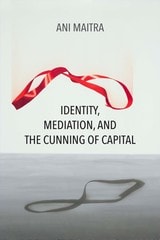
Identity, Mediation, and the Cunning of Capital
Ani Maitra
Northwestern University Press, 2020
Maitra’s archive is transnational and multimodal. Moving from anticolonial polemics to psychoanalysis to diasporic experimental literature to postcolonial feminist and queer media, he lays bare the cunning by which capitalism produces and fragments identity through an intermedial “aesthetic dissonance” with the commodity form. Maitra’s novel contribution to theories of identity and to the concept of mediation will interest a wide range of scholars in media studies, critical race and postcolonial studies, and critical aesthetics.

Illuminating Letters
Typography and Literary InterpretationPaul C. Gutjahr
University of Massachusetts Press, 2001
What do we read when we read a text? The author's words, of course, but is that all? The prevailing publishing ethic has insisted that typography—the selection and arrangement of type and other visual elements on a page—should be an invisible, silent, and deferential servant to the text it conveys.
This book contests that conventional point of view. Looking at texts ranging from the King James Bible to contemporary comic strips, the contributors to Illuminating Letters examine the seldom considered but richly revealing relationships between a text's typography and its literary interpretation. The essays assume no previous typographic knowledge or expertise; instead they invite readers primarily concerned with literary and cultural meanings to turn a more curious eye to the visual and physical forms of a specific text or genre. As the contributors show, closer inspection of those forms can yield fresh insights into the significance of a text's material presentation, leading readers to appreciate better how presentation shapes understandings of the text's meanings and values.
The case studies included in the volume amplify its two overarching themes: one set explores the roles of printers and publishers in manipulating, willingly or not, the meaning and reception of texts through typographic choices; the other group examines the efforts of authors to circumvent or subvert such mediation by directly controlling the typographic presentation of their texts. Together these essays demonstrate that choices about type selection and arrangement do indeed help to orchestrate textual meaning.
In addition to the editors, contributors include Sarah A. Kelen, Beth McCoy, Steven R. Price, Leon Jackson, and Gene Kannenberg Jr.
Image Ethics In The Digital Age
Larry Gross
University of Minnesota Press, 2003
Over the past quarter century, dramatic technological advances in the production, manipulation, and dissemination of images have transformed the practices of journalism, entertainment, and advertising as well as the visual environment itself. From digital retouching to wholesale deception, the media world is now beset by an unprecedented range of moral, ethical, legal, and professional challenges. Image Ethics in the Digital Age brings together leading experts in the fields of journalism, media studies, and law to address these challenges and assess their implications for personal and societal values and behavior.
Among the issues raised are the threat to journalistic integrity posed by visual editing software; the monopolization of image archives by a handful of corporations and its impact on copyright and fair use laws; the instantaneous electronic distribution of images of dubious provenance around the world; the erosion of privacy and civility under the onslaught of sensationalistic twenty-four-hour television news coverage and entertainment programming; and the increasingly widespread use of surveillance cameras in public spaces. This volume of original essays is vital reading for anyone concerned with the influence of the mass media in the digital age.
Contributors: Howard S. Becker; Derek Bousé, Eastern Mediterranean U, Cyprus; Hart Cohen, U of Western Sydney; Jessica M. Fishman; Paul Frosh, Hebrew U of Jerusalem; Faye Ginsburg, New York U; Laura Grindstaff, U of California, Davis; Dianne Hagaman; Sheldon W. Halpern, Ohio State U; Darrell Y. Hamamoto, U of California, Davis; Marguerite Moritz, U of Colorado, Boulder; David D. Perlmutter, Louisiana State U; Dona Schwartz, U of Minnesota; Matthew Soar, Concordia University; Stephen E. Weil, Smithsonian Institution’s Center for Education and Museum Studies.

Imaginatelligence
Desire and Disaffection in Posthuman FuturesNatasha Lushetich
University of Minnesota Press, 2027
A new vision of imagination as a shared force across species, systems, and matter
Imaginatelligence addresses the contemporary “crisis” in imagination by advancing a nonanthropocentric, posthumanist account of this vital function. Rather than treating imagination as a uniquely human faculty, Natasha Lushetich presents it as an activity that stretches across species and remains inseparable from potentiality. If imagination arises from sensing, conjecturing, intelliging, and improvising, there is little reason to confine it to human experience alone. In this view, imagination becomes a distributed force, operating across biological, technological, and material domains.
Lushetich begins by considering the demise of human imagination alongside the neglect of other-than-human forms. She then considers creativity across nonhuman beings, examining cross-species intelligence and extending to iterative processes in what are typically regarded as inanimate objects. If the activities of organic and machinic agents are comparable, Lushetich argues, disciplinary divisions separating them become increasingly untenable.
Drawing on posthumanist approaches to liminality, distributed agency, and shared memory, Imaginatelligence proposes the emergence of a multispecies imaginatelligence. This perspective not only redefines imagination but also demonstrates how a cross-disciplinary configuration of imagination—linking critical thought, artistic practice, and scientific inquiry—is both possible and necessary. Lushetich reaffirms the relevance of critical posthumanism for everyday practice and for imagining the possibility of a future multispecies society.
Retail e-book files for this title are screen-reader friendly.

Imagination and Invention
Gilbert Simondon
University of Minnesota Press, 2023
A radical rethinking of the theory and the experience of mental images
Here, in English translation for the first time, is Gilbert Simondon’s fundamental reconception of the mental image and the theory of imagination and invention. Drawing on a vast range of mid-twentieth-century theoretical resources—from experimental psychology, cybernetics, and ethology to the phenomenological reflections of Sartre and Merleau-Ponty—Imagination and Invention provides a comprehensive account of the mental image and adds a vital new dimension to the theory of psychical individuation in Simondon’s earlier, highly influential work.
Simondon traces the development of the mental image through four phases: first a bundle of motor anticipations, the image becomes a cognitive system that mediates the organism’s relation to its milieu, then a symbolic and abstract integration of motor and affective experience to, finally, invention, a solution to a problem of life that requires the externalization of the mental image and the creation of a technical object. An image cannot be understood from the perspective of one phase alone, he argues, but only within the trajectory of its progressive metamorphosis.

Imaging Hoover Dam
The Making of a Cultural IconAnthony F. Arrigo
University of Nevada Press, 2014
Anthony F. Arrigo has researched a wide array of primary sources and archival materials to trace the project from its earliest representations in illustrations to the documentary photography of its construction and later depictions of the structure in commercial promotions, fine art photography, and paintings. Analyzing Hoover Dam through the trajectory of imagery across several decades, rather than the narrative of its construction, illuminates the underlying cultural and ecological imperatives in the drive to build it, including the influence of religious doctrine and the American agrarian movement. Arrigo also discusses various portrayals of laborers, women, minority groups, nature, and technology in this imagery. In time, the visual icon of power and domination was commercialized to sell cars, vacations, and more.
Imaging Hoover Dam is an important work in both visual rhetoric and cultural studies. It will also intrigue readers interested in such varied topics as the history of the American Southwest, the Great Depression and the New Deal, social and environmental issues, and American popular culture.

Imagining the Global
Transnational Media and Popular Culture Beyond East and WestFabienne Darling-Wolf
University of Michigan Press, 2014
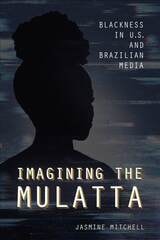
Imagining the Mulatta
Blackness in U.S. and Brazilian MediaJasmine Mitchell
University of Illinois Press, 2020
Jasmine Mitchell investigates the development and exploitation of the mulatta figure in Brazilian and U.S. popular culture. Drawing on a wide range of case studies, she analyzes policy debates and reveals the use of mixed-Black female celebrities as subjects of racial and gendered discussions. Mitchell also unveils the ways the media moralizes about the mulatta figure and uses her as an example of an ”acceptable” version of blackness that at once dreams of erasing undesirable blackness while maintaining the qualities that serve as outlets for interracial desire.

Imperial Affects
Sensational Melodrama and the Attractions of American CinemaEagle, Jonna
Rutgers University Press, 2017

In Defense of Negativity
Attack Ads in Presidential CampaignsJohn G. Geer
University of Chicago Press, 2006
In Defense of Negativity, Geer’s study of negative advertising in presidential campaigns from 1960 to 2004, asserts that the proliferating attack ads are far more likely than positive ads to focus on salient political issues, rather than politicians’ personal characteristics. Accordingly, the ads enrich the democratic process, providing voters with relevant and substantial information before they head to the polls.
An important and timely contribution to American political discourse, In Defense of Negativity concludes that if we want campaigns to grapple with relevant issues and address real problems, negative ads just might be the solution.

In Permanent Crisis
Ethnicity in Contemporary European Media and CinemaIpek A. Celik
University of Michigan Press, 2015
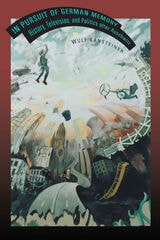
In Pursuit of German Memory
History, Television, and Politics after AuschwitzWulf Kansteiner
Ohio University Press, 2006
The collective memories of Nazism that developed in postwar Germany have helped define a new paradigm of memory politics. From Europe to South Africa and from Latin America to Iraq, scholars have studied the German case to learn how to overcome internal division and regain international recognition.
In Pursuit of German Memory: History, Television, and Politics after Auschwitz examines three arenas of German memory politics—professional historiography, national politics, and national public television—that have played key roles in the reinvention of the Nazi past in the last sixty years. Wulf Kansteiner shows that the interpretations of the past proposed by historians, politicians, and television producers reflect political and generational divisions and an extraordinary concern for Germany's image abroad. At the same time, each of these theaters of memory has developed its own dynamics and formats of historical reflection.
Kansteiner’s analysis of the German scene reveals a complex social geography of collective memory. In Pursuit of German Memory underscores the fact that German memories of Nazism, like many other collective memories, combine two seemingly contradictory qualities: They are highly mediated and part of a global exchange of images and story fragments but, at the same time, they can be reproduced only locally, in narrowly circumscribed networks of communication.
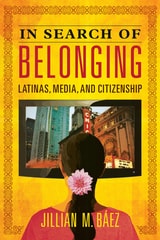
In Search of Belonging
Latinas, Media, and CitizenshipJillian M Baez
University of Illinois Press, 2018
Innovative and informed by a wealth of new evidence, In Search of Belonging answers important questions about the ways Latinas perform citizenship in today’s America.

In Sullivan's Shadow
The Use and Abuse of Libel Law during the Long Civil Rights StruggleAimee Edmondson
University of Massachusetts Press, 2019
Drawing on archival research and scholarship in journalism, legal history, and African American studies, Edmondson offers a new narrative of brave activists, bold journalists and publishers, and hardheaded southern officials. These little-known courtroom dramas at the intersection of race, libel, and journalism go beyond the activism of the 1960s and span much of the country's history, beginning with lawsuits filed against abolitionist William Lloyd Garrison and concluding with a suit spawned by the 1988 film Mississippi Burning.

In the Name of National Security
Hitchcock, Homophobia, and the Political Construction of Gender in Postwar AmericaRobert J. Corber
Duke University Press, 1993
As Corber shows, throughout the 1950s a cast of mind known as the Cold War consensus prevailed in the United States. Promoted by Cold War liberals--that is, liberals who wanted to perserve the legacies of the New Deal but also wished to separate liberalism from a Communist-dominated cultural politics--this consensus was grounded in the perceived threat that Communists, lesbians, and homosexuals posed to national security. Through an analysis of the films of Alfred Hitchcock, combined with new research on the historical context in which these films were produced, Corber shows how Cold War liberals tried to contain the increasing heterogeneity of American society by linking questions of gender and sexual identity directly to issues of national security, a strategic move that the films of Hitchcock both legitimated and at times undermined. Drawing on psychoanalytic and Marxist theory, Corber looks at such films as Rear Window, Strangers on a Train, and Psycho to show how Hitchcock manipulated viewers' attachments and identifications to foster and reinforce the relationship between homophobia and national security issues.
A revisionary account of Hitchcock's major works, In the Name of National Security is also of great interest for what it reveals about the construction of political "reality" in American history.

In/visible War
The Culture of War in Twenty-first-Century AmericaJon Simons and John Louis Lucaites
Rutgers University Press, 2017
Yet, the normalization of twenty-first century war also renders it highly visible. War is made visible through popular, commercial, mediated culture. The spectacle of war occupies the contemporary public sphere in the forms of celebrations at athletic events and in films, video games, and other media, coming together as MIME, the Military-Industrial-Media-Entertainment Network.

InDEBTed to Intervene
Critical Lessons in Debt, Communication, Art, and Theoretical PracticeOliver Vodeb and Nikola Janovic Kolenc
Intellect Books, 2013
Inclusion in New Danish Cinema
Sexuality and Transnational BelongingMeryl Shriver-Rice
Intellect Books, 2015

Inclusive Play
Magic Commander and Community PracticeJohn Banks
University of Michigan Press, 2027
Magic: The Gathering, considered to be the first collectible trading card game, was conceived by Richard Garfield in 1991 and commercially released by Wizards of the Coast in 1993. Since then, Magic has exerted profound influence on hobbyist board gaming through its distinctive and innovative mechanics and practices of collecting cards from periodic set releases and deckbuilding for competitive play. Originating in the Magic player community, the Commander format became popular for casual play and a more inclusive style of social play. Like games cultures more broadly, Magic has been characterized by oppressions that exclude marginalized people.
Drawing on his research of the player community at his local game store in Brisbane, Australia; interviews with Sheldon Menery and members of the Commander Rules Committee and Advisory Group; and research in the field of game studies, John Banks considers how games like Commander can be approached and played more inclusively. Banks argues that there is an ethical dimension to how players approach inclusion. While not all games or communities embody inclusivity, Commander play has integral practices that exemplify virtuous play: an ethic of play rooted in respect, care, and community. Inclusive Play shows that games such as Commander are culturally significant as they provide opportunity for meaningful inclusive cultural change.
Incorporating the Digital Commons
Corporate Involvement in Free and Open Source SoftwareBenjamin J. Birkinbine
University of Westminster Press, 2020
The concept of ‘the commons’ has been used as a framework to understand resources shared by a community rather than a private entity, and it has also inspired social movements working against the enclosure of public goods and resources. One such resource is free (libre) and open source software (FLOSS). FLOSS emerged as an alternative to proprietary software in the 1980s. However, both the products and production processes of FLOSS have become incorporated into capitalist production. For example, Red Hat, Inc. is a large publicly traded company whose business model relies entirely on free software, and IBM, Intel, Cisco, Samsung, Google are some of the largest contributors to Linux, the open-source operating system. This book explores the ways in which FLOSS has been incorporated into digital capitalism. Just as the commons have been used as a motivational frame for radical social movements, it has also served the interests of free-marketeers, corporate libertarians, and states to expand their reach by dragging the shared resources of social life onto digital platforms so they can be integrated into the global capitalist system.
The book concludes by asserting the need for a critical political economic understanding of the commons that foregrounds (digital) labour, class struggle, and uneven power distribution within the digital commons as well as between FLOSS communities and their corporate sponsors.
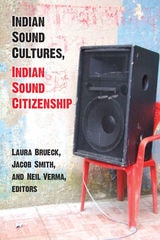
Indian Sound Cultures, Indian Sound Citizenship
Laura Brueck, Jacob Smith, and Neil Verma, editors
University of Michigan Press, 2020
Indian Sound Cultures, Indian Sound Citizenship addresses the multifaceted roles sound plays in Indian cultures and media, and enacts a sonic turn in South Asian Studies by understanding sound in its own social and cultural contexts. “Scapes, Sites, and Circulations” considers the spatial and circulatory ways in which sound “happens” in and around Indian sound cultures, including diasporic cultures. “Voice” emphasizes voices that embody a variety of struggles and ambiguities, particularly around gender and performance. Finally, “Cinema Sound” make specific arguments about film sound in the Indian context, from the earliest days of talkie technology to contemporary Hindi films and experimental art installations.
Integrating interdisciplinary scholarship at the nexus of sound studies and South Asian Studies by questions of nation/nationalism, postcolonialism, cinema, and popular culture in India, Indian Sound Cultures, Indian Sound Citizenship offers fresh and sophisticated approaches to the sonic world of the subcontinent.

Indianizing Film
Decolonization, the Andes, and the Question of TechnologySchiwy, Freya
Rutgers University Press, 2009
Schiwy argues that instead of solely creating entertainment through their work indigenous media activists are building communication networks that encourage interaction between diverse cultures. As a result, mainstream images are retooled, permitting communities to strengthen their cultures and express their own visions of development and modernization. Indianizing Film encourages readers to consider how indigenous media contributes to a wider understanding of decolonization and anticolonial study against the universal backdrop of the twenty-first century.
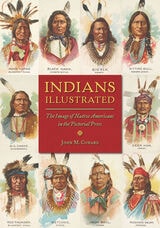
Indians Illustrated
The Image of Native Americans in the Pictorial PressJohn M Coward
University of Illinois Press, 2016

Indie Cinema Online
Sarah E.S. Sinwell
Rutgers University Press, 2020

Indie Porn
Revolution, Regulation, and ResistanceZahra Stardust
Duke University Press, 2024
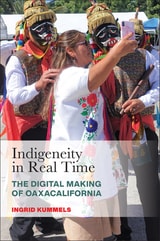
Indigeneity in Real Time
The Digital Making of OaxacaliforniaIngrid Kummels
Rutgers University Press, 2023

Indigenous Dispossession, Anti-Immigration, and the Public Pedagogy of US Empire
Leah Perry
The Ohio State University Press, 2024
From the founding of the United States, enduringly consequential debates over Indigeneity and immigration have occurred on the battlefield and in Congress, in courtrooms, at territorial borders, and in mainstream culture. In Indigenous Dispossession, Anti-Immigration, and the Public Pedagogy of US Empire, Leah Perry traces the ways that the US created its empire through public pedagogies—which she defines as policy and media discourses—surrounding Indigenous dispossession, gendered state violence, and racialized immigration. These pedagogies have propelled the expansion of US empire, including the redrawing of the US as a neoliberal democracy. Perry argues that by changing the discourse around gender, race, immigration, and Indigeneity, the United States has continued its imperial project through different eras, always predicated on Indigenous dispossession.
In exploring crucial components of empire, such as welfare, eugenics, disability, sexual violence, foodways, queerness, and policing, Perry interrogates violence against Indigenous peoples and against immigrants, examining these not independently—as is so often the case—but as co-constitutive. Indigenous Dispossession, Anti-Immigration, and the Public Pedagogy of US Empire thus intervenes in and fills a gap in immigration studies, Indigenous studies, race and ethnic studies, gender and sexuality studies, and US history.
Indigenous Interfaces
Spaces, Technology, and Social Networks in Mexico and Central AmericaEdited by Jennifer Gómez Menjívar and Gloria Elizabeth Chacón; Foreword by Arturo Arias
University of Arizona Press, 2019
Indigenous Interfaces provides the first thorough examination of indigeneity at the interface of cyberspace. Correspondingly, it examines the impact of new media on the struggles for self-determination that Indigenous peoples undergo in Mexico and Central America. The volume’s contributors highlight the fresh approaches that Mesoamerica’s Indigenous peoples have given to new media—from YouTubing Maya rock music to hashtagging in Zapotec. Together, they argue that these cyberspatial activities both maintain tradition and ensure its continuity. Without considering the implications of new technologies, Indigenous Interfaces argues, twenty-first-century indigeneity in Mexico and Central America cannot be successfully documented, evaluated, and comprehended.
Indigenous Interfaces rejects the myth that indigeneity and information technology are incompatible through its compelling analysis of the relationships between Indigenous peoples and new media. The volume illustrates how Indigenous peoples are selectively and strategically choosing to interface with cybertechnology, highlights Indigenous interpretations of new media, and brings to center Indigenous communities who are resetting modes of communication and redirecting the flow of information. It convincingly argues that interfacing with traditional technologies simultaneously with new media gives Indigenous peoples an edge on the claim to autonomous and sovereign ways of being Indigenous in the twenty-first century.
Contributors
Arturo Arias
Debra A. Castillo
Gloria Elizabeth Chacón
Adam W. Coon
Emiliana Cruz
Tajëëw Díaz Robles
Mauricio Espinoza
Alicia Ivonne Estrada
Jennifer Gómez Menjívar
Sue P. Haglund
Brook Danielle Lillehaugen
Paul Joseph López Oro
Rita M. Palacios
Gabriela Spears-Rico
Paul Worley
Indigenous Media in Mexico
Culture, Community, and the StateErica Cusi Wortham
Duke University Press, 2013
Drawing on her in-depth ethnographic research among indigenous mediamakers in Mexico, Wortham traces their shifting relationship with Mexican cultural agencies; situates their work within a broader, hemispheric network of indigenous media producers; and complicates the notion of a unified, homogeneous indigenous identity. Her analysis of projects from community-based media initiatives in Oaxaca to the transnational Chiapas Media Project highlights variations in cultural identity and autonomy based on specific histories of marginalization, accommodation, and resistance.
Indigenous Peoples Rise Up
The Global Ascendency of Social Media ActivismBronwyn Carlson
Rutgers University Press, 2021
Including a range of international indigenous voices from the US, Canada, Australia, Aotearoa (New Zealand) and Africa, the book takes an interdisciplinary approach, bridging Indigenous studies, media studies, and social justice studies. Including examples like Idle No More in Canada, Australian Recognise!, and social media campaigns to maintain Maori language, Indigenous Peoples Rise Up serves as one of the first studies of Indigenous social media use and activism.

Indirect Subjects
Nollywood's Local AddressMatthew H. Brown
Duke University Press, 2021
Inequalities of Platform Publishing
The Promise and Peril of Self-Publishing in the Digital Book EraClaire Parnell
University of Massachusetts Press, 2025
Uncovering race, gender, and sexual biases in popular self-publishing platforms
The average reader need not go far in a bookstore before, knowingly or not, they encounter authors who started their careers by self-publishing prior to achieving commercial success. Examples include Margaret Atwood, Andy Weir, Colleen Hoover, Anna Todd, E. L. James, Scarlett St. Clair, and many more. Such stories of self-made writers are compelling and seem more attainable to others with the accessibility of modern publishing platforms such as Amazon, Apple, Google, Kobo, Wattpad, Webtoon, Radish, Inkitt, Qidian, Tapas, and Swoon Reads. However, as Claire Parnell uncovers in her examination of the two most popular—Amazon and Wattpad—these services in fact perpetuate systemic racial, gender, and sexual bias against authors of color and queer authors through their technological, economic, social, and cultural structures.
At a time when there is a real reckoning with the discrimination that has resulted in publishing opportunities for only relatively few privileged authors—who are often White, upper class, and male—self-publishing presents itself as an equalizer of sorts. Exploring that idea, Parnell shows that these platforms are not just intermediaries for information; they structure content and users in multiple, often inequitable, ways through their ability to set market conditions and apply algorithmic sorting. Combining original interviews, walkthrough method, metadata analysis, and more, Parnell finds that self-publishing platforms reproduce challenges for authors from marginalized communities. Far from equalizing the market, the new platforms instead frequently perpetuate the stubborn barriers to mainstream success for BIPOC and queer authors.
Inequity in the Technopolis
Race, Class, Gender, and the Digital Divide in AustinEdited by Joseph Straubhaar, Jeremiah Spence, Zeynep Tufekci, and Roberta G. Lentz
University of Texas Press, 2012
Over the past few decades, Austin, Texas, has made a concerted effort to develop into a “technopolis,” becoming home to companies such as Dell and numerous start-ups in the 1990s. It has been a model for other cities across the nation that wish to become high-tech centers while still retaining the livability to attract residents. Nevertheless, this expansion and boom left poorer residents behind, many of them African American or Latino, despite local and federal efforts to increase lower-income and minority access to technology.
This book was born of a ten-year longitudinal study of the digital divide in Austin—a study that gradually evolved into a broader inquiry into Austin’s history as a segregated city, its turn toward becoming a technopolis, what the city and various groups did to address the digital divide, and how the most disadvantaged groups and individuals were affected by those programs.
The editors examine the impact of national and statewide digital inclusion programs created in the 1990s, as well as what happened when those programs were gradually cut back by conservative administrations after 2000. They also examine how the city of Austin persisted in its own efforts for digital inclusion by working with its public libraries and a number of local nonprofits, and the positive impact those programs had.

Information Activism
A Queer History of Lesbian Media TechnologiesCait McKinney
Duke University Press, 2020

Information Fantasies
Precarious Mediation in Postsocialist ChinaXiao Liu
University of Minnesota Press, 2019
Winner of the Science Fiction Research Association Book Award
A groundbreaking, alternate history of information technology and information discourses
Although the scale of the information economy and the impact of digital media on social life in China today could pale that of any other country, the story of their emergence in the post-Mao sociopolitical environment remains untold. Information Fantasies offers a revisionist account of the emergence of the “information society,” arguing that it was not determined by the technology of digitization alone but developed out of a set of techno-cultural imaginations and practices that arrived alongside postsocialism.
Anticipating discussions on information surveillance, data collection, and precarious labor conditions today, Xiao Liu goes far beyond the current scholarship on internet and digital culture in China, questioning the limits of current new-media theory and history, while also salvaging postsocialism from the persistent Cold War structure of knowledge production.
Ranging over forgotten science fiction, unjustly neglected films, corporeal practices such as qigong, scientific journals, advertising, and cybernetic theories, Information Fantasies constructs an alternate genealogy of digital and information imaginaries—one that will change how we look at the development of the postsocialist world and the emergence of digital technologies.
Information Politics
Liberation and Exploitation in the Digital SocietyTim Jordan
Pluto Press, 2015
The first of Pluto Press’s new Digital Barricades series, focusing on ground-breaking critical explorations of resistance within the digital world, Information Politics explores the exploitations both facilitated by, and contested through, increases in information flows; the embedding of information technologies in daily life; and the intersection of network and control protocols. Anyone hoping to get to grips with the rapidly changing terrain of digital culture and conflict should start here.

Innocent Lens
Race and Visibility on the Swedish ScreenBenjamin Mier-Cruz
University of Wisconsin Press, 2027
Sweden, like other Nordic countries, prides itself on being “colorblind” or immune to the kinds of racism found in, for example, the United States. In the 1960s and 1970s, white Swedish documentarians, in the fashion of early anthropologists, recorded racial tensions amid the US civil rights movement. More recently, in the twenty-first century, short films produced by Swedes of color have tackled racism and bigotry within Sweden.
Benjamin Mier-Cruz offers a comparative study of these two periods of Swedish documentary filmmaking. “Racially innocent” white documentarians of the mid-twentieth century developed an “aesthetics of altruism” predicated on Sweden’s assumed racial equalitarianism—a notion that their documentaries in turn helped create and maintain. In contemporary films, on the other hand, Swedes of color use the same filmic format to challenge not only their predecessors’ reductionist, pseudo-anthropological presentations but also Sweden’s purportedly colorblind ideology. Mier-Cruz’s close readings of films from both eras demonstrate the possibilities and limitations of the documentary form and the ways in which it is motivated by politics and activism.

Insect Media
An Archaeology of Animals and TechnologyJussi Parikka
University of Minnesota Press, 2010
Through close engagement with the pioneering work of insect ethologists, including Jakob von Uexküll and Karl von Frisch, posthumanist philosophers, media theorists, and contemporary filmmakers and artists, Parikka develops an insect theory of media, one that conceptualizes modern media as more than the products of individual human actors, social interests, or technological determinants. They are, rather, profoundly nonhuman phenomena that both draw on and mimic the alien lifeworlds of insects.
Inside the Presidential Debates
Their Improbable Past and Promising FutureNewton N. Minow and Craig L. LaMay
University of Chicago Press, 2008
Inside the TV Newsroom
Profession Under PressureLine Hassall Thomsen
Intellect Books, 2018
This book, built on years of unique access to the newsrooms of BBC News and ITV News in the United Kingdom and DR TV Avisen and TV2 Nyhedeme in Denmark, answers those questions and more. Exploring the shared professional ideals of journalists, the study analyzes how they conceive of stories as important, and how their ideals relating to their work are expressed and aspired to in everyday practice.
Instafame
Graffiti and Street Art in the Instagram EraLachlan MacDowall
Intellect Books, 2019

Insufferable Tools
Feminism Against Big TechSarah Sharma
Duke University Press, 2026
Intelligent Action
A History of Artistic Research, Aesthetic Experience, and Artists in AcademiaTimothy Ridlen
Rutgers University Press, 2024

Intelligently Designed
How Creationists Built the Campaign against EvolutionEdward Caudill
University of Illinois Press, 2013
Interactive Cinema
The Ambiguous Ethics of Media ParticipationMarina Hassapopoulou
University of Minnesota Press, 2024
Connecting interactive cinema to media ethics and global citizenship
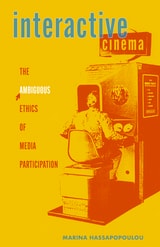
Interactive Cinema explores various cinematic practices that work to transform what is often seen as a primarily receptive activity into a participatory, multimedia experience. Surveying a multitude of unorthodox approaches throughout the history of motion pictures, Marina Hassapopoulou offers insight into a range of largely ephemeral and site-specific projects that consciously assimilate viewers into their production.
Analyzing examples of early cinema, Hollywood B movies, museum and gallery installations, virtual-reality experiments, and experimental web-based works, Hassapopoulou travels across numerous platforms, highlighting a diverse array of strategies that attempt to unsettle the allegedly passive spectatorship of traditional cinema. Through an exploration of these radically inventive approaches to the medium, many of which emerged out of sociopolitical crises and periods of historical transition, she works to expand notions of interactivity by considering it in both technological and phenomenological terms.
Deliberately revising and expanding Eurocentric scholarship to propose a much broader, transnational scope, the book emphasizes the ethical dimensions of interactive media and their links to larger considerations around community building, citizenship, and democracy. By combining cutting-edge theory with updated conventional film studies methodologies, Interactive Cinema presses at the conceptual limits of cinema and offers an essential road map to the rapidly evolving landscape of contemporary media.
Interactive Journalism
Hackers, Data, and CodeNikki Usher
University of Illinois Press, 2016
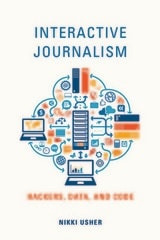
Nikki Usher brings together a comprehensive portrait of nothing less than a new journalistic identity. Usher provides a history of the impact of digital technology on reporting, photojournalism, graphics, and other disciplines that define interactive journalism. Her eyewitness study of the field's evolution and accomplishments ranges from the interactive creation of Al Jazeera English to the celebrated data desk at the Guardian to the New York Times' Pulitzer-endowed efforts in the new field. What emerges is an illuminating, richly reported profile of the people coding a revolution that may reverse the decline and fall of traditional journalism.
Interdisciplining Digital Humanities
Boundary Work in an Emerging FieldJulie Thompson Klein
University of Michigan Press, 2015