Results by title
1414 books match the query 'Medical' and 43 start with i
Iatrogenicity
Causes and Consequences of Iatrogenesis in Cardiovascular MedicineGussak, Ihor B
Rutgers University Press, 2017
Edited by two renowned cardiology experts, Iatrogenicity: Causes and Consequences of Iatrogenesis in Cardiovascular Medicine addresses both the iatrogenicity that arises with cardiovascular interventions, as well as non-cardiovascular interventions that result in adverse consequences on the cardiovascular system. The book aims to achieve three things: to summarize the available information on this topic in a single high-yield volume; to highlight the human and financial cost of iatrogenesis; and to describe and propose potential interventions to ameliorate the effects of iatrogenesis. This accessible book is a practical reference for any practicing physician who sees patients with cardiovascular issues. .

If Memory Serves
Gay Men, AIDS, and the Promise of the Queer PastChristopher Castiglia
University of Minnesota Press, 2011
The AIDS epidemic soured the memory of the sexual revolution and gay liberation of the 1970s, and prominent politicians, commentators, and academics instructed gay men to forget the sexual cultures of the 1970s in order to ensure a healthy future. But without memory there can be no future, argue Christopher Castiglia and Christopher Reed in this exploration of the struggle over gay memory that marked the decades following the onset of AIDS.
Challenging many of the assumptions behind first-wave queer theory, If Memory Serves offers a new perspective on the emergence of contemporary queer culture from the suppression and repression of gay memory. Drawing on a rich archive of videos, films, television shows, novels, monuments, paintings, and sculptures created in the wake of the epidemic, the authors reveal a resistance among critics to valuing—even recognizing—the inscription of gay memory in art, literature, popular culture, and the built environment. Castiglia and Reed explore such topics as the unacknowledged ways in which the popular sitcom Will and Grace circulated gay subcultural references to awaken a desire for belonging among young viewers; the post-traumatic (un)rememberings of queer theory; and the generation of “ideality politics” in the art of Félix González-Torres, the film Chuck & Buck, and the independent video Video Remains.
Inspired by Alasdair MacIntyre’s insight that “the possession of a historical identity and the possession of a social identity coincide,” Castiglia and Reed demonstrate that memory is crafted in response to inadequacies in the present—and therefore a constructive relation to the past is essential to the imagining of a new future.
Illness or Deviance?
Drug Courts, Drug Treatment, and the Ambiguity of AddictionJennifer Murphy
Temple University Press, 2015
Illness or Deviance? highlights the confusion and contradictions about labeling addiction. Murphy’s fieldwork in a drug court and an outpatient drug treatment facility yields fascinating insights, such as how courts and treatment centers both enforce the “disease” label of addiction, yet their management tactics overlap treatment with “therapeutic punishment.” The “addict" label is a result not just of using drugs, but also of being a part of the drug lifestyle, by selling drugs. In addition, Murphy observes that drug courts and treatment facilities benefit economically from their cooperation, creating a very powerful institutional arrangement.
Murphy contextualizes her findings within theories of medical sociology as well as criminology to identify the policy implications of a medicalized view of addiction.
Imagining Illness
Public Health and Visual CultureDavid Serlin
University of Minnesota Press, 2010
Contributors to this volume examine historical and contemporary visual practices-Chinese health fairs, documentary films produced by the World Health Organization, illness maps, fashions for nurses, and live surgery on the Internet-in order to delve into the political and epidemiological contexts underlying their creation and dissemination.
Imagining Progress
Science, Faith, and Child Mortality in AmericaKristin Johnson
University of Alabama Press, 2024
Explores the intellectual history of how Americans imagined science, faith, and human improvement through the most wrenching of experiences—the deaths of children.
Offering fascinating examples from the works of diverse writers and thinkers such as Benjamin Franklin, Frederick Douglass, Mark Twain, W. E. B. Du Bois, Elizabeth Cady Stanton, and Harriet Shelton Dover, Kristin Johnson traces the history of Americans’ complicated faith in science and the various triumphs and tragedies that faith has inspired. Imagining Progress reveals many of the complex factors involved in the polarized state of contemporary American attitudes toward science, scientists, public health, medicine, and science policy.
Humankind has always wrestled with the existence of suffering, how to respond to suffering, whom to care for, and in what ways. For two centuries, many American ministers, physicians, and scientists believed that an omnipotent and omniscient God created the world such that people might relieve suffering through ingenuity and learning. Others responded to the new worldview introduced by the scientific revolution as a threat to the divine order. In Imagining Progress, Johnson traces the history of Americans’ evolving relationship with science and religion at “one of its most dramatic places”—the bedsides of dying children. It’s here, in the crucible of parental despair, that she illuminates diverging assumptions about God, nature, and history.
From Cotton Mather’s campaign for smallpox inoculation to battles over teaching evolution in the 1920s, Johnson adroitly weaves an interdisciplinary history of medicine, science, theology, and activism. She follows a wide cast of characters from across theological, scientific, and political spectrums. What emerges is a kaleidoscopic portrait of diverse, often contradictory hopes and anxieties inspired by new theories of nature and human existence. Johnson also discerns a problematic pattern of invoking science both to ameliorate the suffering of some children while ignoring the suffering of others.
Importing Care, Faithful Service
Filipino and Indian American Nurses at a Veterans HospitalStephen M. Cherry
Rutgers University Press, 2022
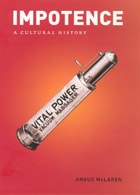
Impotence
A Cultural HistoryAngus McLaren
University of Chicago Press, 2007
As anyone who has watched television in recent years can attest, we live in the age of Viagra. From Bob Dole to Mike Ditka to late-night comedians, our culture has been engaged in one long, frank, and very public talk about impotence—and our newfound pharmaceutical solutions. But as Angus McLaren shows us in Impotence, the first cultural history of the subject, the failure of men to rise to the occasion has been a recurrent topic since the dawn of human culture.
Drawing on a dazzling range of sources from across centuries, McLaren demonstrates how male sexuality was constructed around the idea of potency, from times past when it was essential for the purpose of siring children, to today, when successful sex is viewed as a component of a healthy emotional life. Along the way, Impotence enlightens and fascinates with tales of sexual failure and its remedies—for example, had Ditka lived in ancient Mesopotamia, he might have recited spells while eating roots and plants rather than pills—and explanations, which over the years have included witchcraft, shell-shock, masturbation, feminism, and the Oedipal complex. McLaren also explores the surprising political and social effects of impotence, from the revolutionary unrest fueled by Louis XVI’s failure to consummate his marriage to the boost given the fledgling American republic by George Washington’s failure to found a dynasty. Each age, McLaren shows, turns impotence to its own purposes, using it to help define what is normal and healthy for men, their relationships, and society.
From marraige manuals to metrosexuals, from Renaissance Italy to Hollywood movies, Impotence is a serious but highly entertaining examination of a problem that humanity has simultaneously regarded as life’s greatest tragedy and its greatest joke.
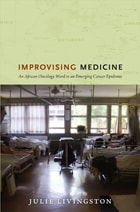
Improvising Medicine
An African Oncology Ward in an Emerging Cancer EpidemicJulie Livingston
Duke University Press, 2012

In Changing Times
Gay Men and Lesbians Encounter HIV/AIDSEdited by Martin P. Levine, Peter M. Nardi, and John H. Gagnon
University of Chicago Press, 1997
The distinguished contributors to this volume discuss the ways HIV/AIDS has changed collective and individual identities, as well as lives, of gay men and lesbians, and how these alterations have changed our perceptions of the epidemic. They cover such topics as the impact of the epidemic on small towns, cultural barriers to AIDS prevention, gay youth and intergenerational relations, and the roles of lesbians in AIDS organizations. This collection provides compelling insights into the new communities among gay men and lesbians and the new kinds of identities and relationships that are emerging from the social and cultural ferment engendered by HIV/AIDS.
Contributors include Barry D. Adam, Lourdes Arguelles, Rafael Miguel Diaz, John H. Gagnon, Gilbert Herdt, Gregory M. Herek, Nan D. Hunter, Peter M. Nardi, John L. Peterson, Anne Rivero, Gayle S. Rubin, Beth E. Schneider, and Nancy E. Stoller.

In Search of "Aryan Blood"
Serology in Interwar and National Socialist GermanyRachel E. Boaz
Central European University Press, 2012

In Whose Hands
The Home Pregnancy Test and the Politics of ReproductionJoan H. Robinson
Rutgers University Press, 2027
The home pregnancy test is a technology that can be purchased in drug stores, gas stations, and online, and the results are often casually posted to social media. But, as sociologist and attorney Joan Robinson argues, no technology is as simple as it appears. In Whose Hands traces this test from its origin story in a lab to its day-to-day existence in the hands of users, showing that mundane technologies matter, especially when they are used as tools of surveillance and self-surveillance. The book is the result of Robinson's fourteen-year exploration of the social life of the home pregnancy test, and it describes the breadth and beauty of people's messy reproductive lives today. Based on archival and legal research as well as interviews with home pregnancy test users, it shows how even those technologies that we use because they're convenient can be tools of shame, surveillance, and control.
In the Company of Grace
A Veterinarian's Memoir of Trauma and HealingJody Lulich
University of Minnesota Press, 2023
The son of a Black mother and white father overcomes family trauma to find the courage of compassion in veterinary practice
Rising to accept a prestigious award, Jody Lulich wondered what to say. Explain how he’d been attracted to veterinary medicine? Describe how caring for helpless, voiceless animals in his own shame and pain provided a lifeline, a chance to heal himself as well? Lulich tells his story in In the Company of Grace, a memoir about finding courage in compassion and strength in healing—and power in finally confronting the darkness of his youth.
Lulich’s white father and Black mother met at a civil rights rally, but love was no defense against their personal demons. His mother’s suicide, in his presence when he was nine years old, and his sometimes brutal father’s subsequent withdrawal set Lulich on a course from the South Side of Chicago to the Tuskegee School of Veterinary Medicine in Alabama to an endowed chair at the University of Minnesota, forever searching for the approval and affection that success could not deliver. Though shadowed by troubling secrets, his memoir also features scenes of surprising light and promise—of the neighbors who take him in, a brother’s unlikely effort to save Christmas, his mother’s memories of the family’s charmed early days, bright moments (and many curious details) of veterinary practice. Most consequentially, at Tuskegee Lulich rents a room in the home of a seventy-five-year-old Black woman named Grace, whose wholehearted adoption of him—and her own stories of the Jim Crow era—finally gives him a sense of belonging and possibility.
Completing his book amid the furor over George Floyd’s murder, Lulich reflects on all the ways that race has shaped his life. In the Company of Grace is a moving testament to the power of compassion in the face of seemingly overwhelming circumstances.
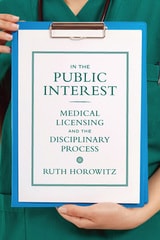
In the Public Interest
Medical Licensing and the Disciplinary ProcessHorowitz, Ruth
Rutgers University Press, 2012
Winner of the American Sociological Association Sociology of Law Section 2013 Outstanding Book Award
How do we know when physicians practice medicine safely? Can we trust doctors to discipline their own? What is a proper role of experts in a democracy? In the Public Interest raises these provocative questions, using medical licensing and discipline to advocate for a needed overhaul of how we decide public good in a society dominated by private interest groups. Throughout the twentieth century, American physicians built a powerful profession, but their drive toward professional autonomy has made outside observers increasingly concerned about physicians’ ability to separate their own interests from those of the general public.
Ruth Horowitz traces the history of medical licensure and the mechanisms that democratic societies have developed to certify doctors to deliver critical services. Combining her skills as a public member of medical licensing boards and as an ethnographer, Horowitz illuminates the workings of the crucial public institutions charged with maintaining public safety. She demonstrates the complex agendas different actors bring to board deliberations, the variations in the board authority across the country, the unevenly distributed institutional resources available to board members, and the difficulties non-physician members face as they struggle to balance interests of the parties involved.
In the Public Interest suggests new procedures, resource allocation, and educational initiatives to increase physician oversight. Horowitz makes the case for regulations modeled after deliberative democracy that promise to open debates to the general public and allow public members to take a more active part in the decision-making process that affects vital community interests.
In the Shadow of Diagnosis
Psychiatric Power and Queer LifeRegina Kunzel
University of Chicago Press, 2024
In the mid-twentieth century, American psychiatrists proclaimed homosexuality a mental disorder, one that was treatable and amenable to cure. Drawing on a collection of previously unexamined case files from St. Elizabeths Hospital, In the Shadow of Diagnosis explores the encounter between psychiatry and queer and gender-variant people in the mid- to late-twentieth-century United States. It examines psychiatrists’ investments in understanding homosexuality as a dire psychiatric condition, a judgment that garnered them tremendous power and authority at a time that historians have characterized as psychiatry’s “golden age.” That stigmatizing diagnosis made a deep and lasting impact, too, on queer people, shaping gay life and politics in indelible ways. In the Shadow of Diagnosis helps us understand the adhesive and ongoing connection between queerness and sickness.
In the Shadow of Diagnosis
Psychiatric Power and Queer LifeRegina Kunzel
University of Chicago Press, 2024
A look at the history of psychiatry’s foundational impact on the lives of queer and gender-variant people.
In the mid-twentieth century, American psychiatrists proclaimed homosexuality a mental disorder, one that was treatable and amenable to cure. Drawing on a collection of previously unexamined case files from St. Elizabeths Hospital, In the Shadow of Diagnosis explores the encounter between psychiatry and queer and gender-variant people in the mid- to late-twentieth-century United States. It examines psychiatrists’ investments in understanding homosexuality as a dire psychiatric condition, a judgment that garnered them tremendous power and authority at a time that historians have characterized as psychiatry’s “golden age.” That stigmatizing diagnosis made a deep and lasting impact, too, on queer people, shaping gay life and politics in indelible ways. In the Shadow of Diagnosis helps us understand the adhesive and ongoing connection between queerness and sickness.
Inclusion
The Politics of Difference in Medical ResearchSteven Epstein
University of Chicago Press, 2007
With Inclusion, Steven Epstein argues that strategies to achieve diversity in medical research mask deeper problems, ones that might require a different approach and different solutions.
Formal concern with this issue, Epstein shows, is a fairly recent phenomenon. Until the mid-1980s, scientists often studied groups of white, middle-aged men—and assumed that conclusions drawn from studying them would apply to the rest of the population. But struggles involving advocacy groups, experts, and Congress led to reforms that forced researchers to diversify the population from which they drew for clinical research. While the prominence of these inclusive practices has offered hope to traditionally underserved groups, Epstein argues that it has drawn attention away from the tremendous inequalities in health that are rooted not in biology but in society.
“Epstein’s use of theory to demonstrate how public policies in the health profession are shaped makes this book relevant for many academic disciplines. . . . Highly recommended.”—Choice
“A masterful comprehensive overview of a wide terrain.”—Troy Duster, Biosocieties
Incommunicable
Toward Communicative Justice in Health and MedicineCharles L. Briggs
Duke University Press, 2024

Incurable and Intolerable
Chronic Disease and Slow Death in Nineteenth-Century FranceJason Szabo
Rutgers University Press, 2009
Incurable and Intolerable looks at the history of incurable illness from a variety of perspectives, including those of doctors, patients, families, religious counsel, and policy makers. This compellingly documented and well-written history illuminates the physical, emotional, social, and existential consequences of chronic disease and terminal illness, and offers an original look at the world of palliative medicine, politics, religion, and charity. Revealing the ways in which history can shed new light on contemporary thinking, Jason Szabo encourages a more careful scrutiny of today's attitudes, policies, and practices surrounding "imminent death" and its effects on society.

Indigenous Communalism
Belonging, Healthy Communities, and Decolonizing the CollectiveCarolyn Smith-Morris
Rutgers University Press, 2020
Told in vibrant detail, the narrative of the book conveys the importance of communalism as a value system present in all human groups and one at the center of Indigenous survival. Carolyn Smith-Morris draws on her work among the Akimel O'odham and the Wiradjuri to show how communal work and culture help these communities form distinctive Indigenous bonds. The results are not only a rich study of Indigenous relational lifeways, but a serious inquiry to the continuing acculturative atmosphere that Indigenous communities struggle to resist. Recognizing both positive and negative sides to the issue, she asks whether there is a global Indigenous communalism. And if so, what lessons does it teach about healthy communities, the universal human need for belonging, and the potential for the collective to do good?
Indigenous Health and Justice
Edited by Karen Jarratt-Snider and Marianne O. Nielsen
University of Arizona Press, 2024
Indirect Action
Schizophrenia, Epilepsy, AIDS, and the Course of Health ActivismLisa Diedrich
University of Minnesota Press, 2016
The experience of illness (both mental and physical) figures prominently in the critical thought and activism of the 1960s and 1970s, though it is largely overshadowed by practices of sexuality. Lisa Diedrich explores how and why illness was indeed so significant to the social, political, and institutional transformation beginning in the 1960s through the emergence of AIDS in the United States. A rich intervention—both theoretical and methodological, political and therapeutic—Indirect Action illuminates the intersection of illness, thought, and politics.
Not merely a revision of the history of this time period, Indirect Action expands the historiographical boundaries through which illness and health activism in the United States have been viewed. Diedrich explores the multiplicity illness–thought–politics through an array of subjects: queering the origin story of AIDS activism by recalling its feminist history; exploring health activism and the medical experience; analyzing psychiatry and self-help movements; thinking ecologically about counterpractices of generalism in science and medicine; and considering the experience and event of epilepsy and the witnessing of schizophrenia.
Indirect Action places illness in the leading role in the production of thought during the emergence of AIDS, ultimately showing the critical interconnectedness of illness and political and critical thought.
Infected Kin
Orphan Care and AIDS in LesothoEllen Block
Rutgers University Press, 2019
Supplementary instructor resources (https://www.csbsju.edu/sociology/faculty/anthropology-teaching-resources/infected-kin-teaching-resources)
Infectious Disease Emergencies
Preparedness and ResponseEdited by Dale Fisher
National University of Singapore Press, 2025
For too long, the theory and practice of infectious disease outbreak response have been the domain of a small number of experienced responders. The COVID-19 pandemic brought global attention to the requirements of effective outbreak response, and the need for preparation across the key pillars. Decisionmakers, early career practitioners, and those in the field now have access to a comprehensive text that brings together evidence-based and practical insights from the best in the business.
Dale Fisher, Professor of Medicine at the National University of Singapore, was chair of WHO’s Global Outbreak Alert and Response Network before and during most of the pandemic. In this massive collaborative effort, he marshals nearly one hundred top public health leaders and experts from the front lines to present thirty-seven chapters on pandemic preparedness and response, drawing heavily on experiences from COVID-19, but also from Ebola, MERS, SARS-1, influenza, and other outbreaks of modern times. The contributors include experts from health ministries and Centres for Disease Control and national public health institutions around the world; from international organizations like the WHO, MSF, IFRC, and UNICEF; and research institutions and various NGOs from dozens of countries, adding to the diversity and richness of the descriptions.

Infectious Disease
A Scientific American ReaderEdited by Scientific American
University of Chicago Press, 2008

Influenza and Inequality
One Town's Tragic Response to the Great Epidemic of 1918Patricia J. Fanning
University of Massachusetts Press, 2010
By 1918, Norwood was a small, ethnically diverse, industrialized, and stratified community. Ink, printing, and tanning factories were owned by wealthy families who lived privileged lives. These industries attracted immigrant laborers who made their homes in several ethnic neighborhoods and endured prejudice and discrimination at the hands of native residents. When the epidemic struck, the immigrant neighborhoods were most affected; a fact that played a significant role in the town's response—with tragic results.
This close analysis of one town's struggle illuminates how even well-intentioned elite groups may adopt and implement strategies that can exacerbate rather than relieve a medical crisis. It is a cautionary tale that demonstrates how social behavior can be a fundamental predictor of the epidemic curve, a community's response to crisis, and the consequences of those actions.
Inside the Body of Black Feminism
Science, Race, CultureSamantha Pinto
Duke University Press, 2026
Inside the Body of Black Feminism charts a cultural genealogy of antiracist and feminist engagement with some of the most objectified internal “parts” of racist medical and scientific inquiry: bones and blood, brains and hearts, guts and wombs. In a move counterintuitive to Black feminism’s emphasis on externalized representations of the body, Samantha Pinto reinterprets the relationship between embodiment, health, and race through cultural archives that reimagine the inside of the Black body. Working through materials such as medical textbooks, memoirs, data visualizations, museum displays, speculative fiction, and horror films, Pinto explores how a visually inaccessible corporeal interior becomes discernible and racialized in the public sphere. Inside the Body of Black Feminism engages expressive cultural work to ask how we might know the inside of the Black body differently through Black feminist theory and how scientific and medical inquiry might enable us to understand political subjectivity anew.
Insourced
How Importing Jobs Impacts the Healthcare Crisis Here and AbroadDr. Kate Tulenko
Dartmouth College Press, 2012
Institutional Change and Healthcare Organizations
From Professional Dominance to Managed CareW. Richard Scott, Martin Ruef, Peter J. Mendel, and Carol A. Caronna
University of Chicago Press, 2000
This book examines the transformations that have occurred in medical care systems in the San Francisco Bay area since 1945. The authors describe these changes in detail and relate them to both the sociodemographic trends in the Bay Area and to shifts in regulatory systems and policy environments at local, state, and national levels. But this is more than a social history; the authors employ a variety of theoretical perspectives—including strategic management, population ecology, and institutional theory—to examine five types of healthcare organizations through quantitative data analysis and illustrative case studies.
Providing a thorough account of changes for one of the nation's leading metropolitan areas in health service innovation, this book is a landmark in the theory of organizations and in the history of healthcare systems.

Integrating Family Planning Training into Medical Education
A Case Study of St. Paul's Hospital Millennium Medical CollegeLia T. Gebremedhin
Michigan Publishing Services, 2017
The innovative approach, founded on the values of sustainable capacity building through academic partnership and centered on improving access to dignified women’s reproductive health care through effective pre-service training, has the potential for expansion to other countries with high rates of maternal mortality and morbidity. In this case study, we spell out the best practices, which we hope will inspire academic medical centers in the Global South, global health departments/centers internationally, and the reproductive health community at large.
Intensive Care
Medical Ethics and the Medical ProfessionRobert Zussman
University of Chicago Press, 1992
His book is a portrait of the way careful planning is undermined by the unpredictability of illness and the persistence of self-interest, by high principle and curious compromise.
International Annals of Adolescent Psychiatry, Volume 2
Psychosis and Psychotic FunctioningEdited by Allan Z. Schwartzberg
University of Chicago Press, 1992
International Surrogacy as Disruptive Industry in Southeast Asia
Whittaker, Andrea
Rutgers University Press, 2019
In International Surrogacy as Disruptive Industry in Southeast Asia, Andrea Whittaker traces the development of this industry and its movement across Southeast Asia following a sequence of governmental bans in India, Nepal, Thailand, and Cambodia. Through a case study of the industry in Thailand, the book offers a nuanced and sympathetic examination of the industry from the perspectives of the people involved in it: surrogates, intended parents, and facilitators. The industry offers intended parents the opportunity to form much desired families, but also creates vulnerabilities for all people involved. These vulnerabilities became evident in cases of trafficking, exploitation, and criminality that emerged in southeast Asia, leading to greater scrutiny on the industry as a whole. Yet the trade continues in new flexible hybrid forms, involving the circulation of reproductive gametes, embryos, surrogates, and ova donors across international borders to circumvent regulations. The book demonstrates the need for new forms of regulation to protect those involved in international surrogacy arrangements.
Into Africa
A Transnational History of Catholic Medical Missions and Social ChangeWall, Barbra Mann
Rutgers University Press, 2015
Awarded first place in the 2016 American Journal of Nursing Book of the Year Award in the History and Public Policy category
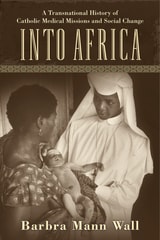
The most dramatic growth of Christianity in the late twentieth century has occurred in Africa, where Catholic missions have played major roles. But these missions did more than simply convert Africans. Catholic sisters became heavily involved in the Church’s health services and eventually in relief and social justice efforts. In Into Africa, Barbra Mann Wall offers a transnational history that reveals how Catholic medical and nursing sisters established relationships between local and international groups, sparking an exchange of ideas that crossed national, religious, gender, and political boundaries.
Both a nurse and a historian, Wall explores this intersection of religion, medicine, gender, race, and politics in sub-Saharan Africa, focusing on the years following World War II, a period when European colonial rule was ending and Africans were building new governments, health care institutions, and education systems. She focuses specifically on hospitals, clinics, and schools of nursing in Ghana and Uganda run by the Medical Mission Sisters of Philadelphia; in Nigeria and Uganda by the Irish Medical Missionaries of Mary; in Tanzania by the Maryknoll Sisters of New York; and in Nigeria by a local Nigerian congregation. Wall shows how, although initially somewhat ethnocentric, the sisters gradually developed a deeper understanding of the diverse populations they served. In the process, their medical and nursing work intersected with critical social, political, and cultural debates that continue in Africa today: debates about the role of women in their local societies, the relationship of women to the nursing and medical professions and to the Catholic Church, the obligations countries have to provide care for their citizens, and the role of women in human rights.
A groundbreaking contribution to the study of globalization and medicine, Into Africa highlights the importance of transnational partnerships, using the stories of these nuns to enhance the understanding of medical mission work and global change.
Into Our Own Hands
The Women's Health Movement in the United States, 1969–1990Morgen, Sandra
Rutgers University Press, 2002
Recent history has witnessed a revolution in womens health care. Beginning in the late 1960s, women in communities across the United States challenged medical and male control over womens health. Few people today realize the extent to which these grassroots efforts shifted power and responsibility from the medical establishment into womens hands as health care consumers, providers, and advocates.
Into Our Own Hands traces the womens health care movement in the United States. Richly documented, this study is based on more than a decade of research, including interviews with leading activists; documentary material from feminist health clinics and advocacy organizations; a survey of womens health movement organizations in the early 1990s; and ethnographic fieldwork. Sandra Morgen focuses on the clinics born from this movement, as well as how the movements encounters with organized medicine, the state, and ascendant neoconservative and neoliberal political forces of the 1970s to the1980s shaped the confrontations and accomplishments in womens health care. The book also explores the impact of political struggles over race and class within the movement organizations.

Intoxicated Ways of Knowing
The Untold Story of Intoxicants and the Biological Subject in Nineteenth-Century GermanyMatthew Perkins-McVey
University of Chicago Press, 2026
Intoxicating substances can be found lurking in every corner of modern life, and Matthew Perkins-McVey’s pathbreaking book offers the untold story of how they were implicated in shifting perceptions of embodiment found in the emerging sciences of the body and mind in late-nineteenth-century Germany. Their use in this experimental context gave rise to a dynamic conception of the subject within the scientific, psychological, philosophical, and sociological milieu of the era. The history of the modern biological subject, Perkins-McVey argues, turns on “intoxicated ways of knowing.”
Intoxicated Ways of Knowing identifies the state of intoxication as a tacit form of thinking and knowing with the body. Intoxicants force us to feel, intervening directly in our perceptional awareness, and, Perkins-McVey contends, they bring latent conceptual associations into the foreground of conscious thought, engendering new ways of knowing the world. The book unfurls how intoxicants affected nineteenth-century German science and how, ultimately, the connection between mental life and intoxication is taken up in the works of Friedrich Nietzsche, Max Weber, and Sigmund Freud, bringing the biological subject out of the lab and into the worlds of philosophy, psychoanalysis, sociology, and politics.
Intuition in Medicine
A Philosophical Defense of Clinical ReasoningHillel D. Braude
University of Chicago Press, 2012
Intuition is central to discussions about the nature of scientific and philosophical reasoning and what it means to be human. In this bold and timely book, Hillel D. Braude marshals his dual training as a physician and philosopher to examine the place of intuition in medicine.

Inventing Pollution
Coal, Smoke, and Culture in Britain since 1800Peter Thorsheim
Ohio University Press, 2006
Britain's supremacy in the nineteenth century depended in large part on its vast deposits of coal. This coal not only powered steam engines in factories, ships, and railway locomotives but also warmed homes and cooked food. As coal consumption skyrocketed, the air in Britain's cities and towns became filled with ever-greater and denser clouds of smoke.
In this far-reaching study, Peter Thorsheim explains that, for much of the nineteenth century, few people in Britain even considered coal smoke to be pollution. To them, pollution meant miasma: invisible gases generated by decomposing plant and animal matter. Far from viewing coal smoke as pollution, most people considered smoke to be a valuable disinfectant, for its carbon and sulfur were thought capable of rendering miasma harmless.
Inventing Pollution examines the radically new understanding of pollution that emerged in the late nineteenth century, one that centered not on organic decay but on coal combustion. This change, as Peter Thorsheim argues, gave birth to the smoke-abatement movement and to new ways of thinking about the relationships among humanity, technology, and the environment.

Is Social Security Broke?
A Cartoon Guide to the IssuesBarbara R. Bergmann and Jim Bush
University of Michigan Press, 2000
Ischemic Stroke
Diagnosis and TreatmentMartin-Schild, Sheryl
Rutgers University Press, 2018
Key topics explored cover all elements of stroke care, including examinations of: emergent evaluation of the suspected stroke patient, clinical signs and symptoms of stroke, mechanisms of ischemic stroke, neuroimaging, cardiac-based evaluation, thrombolytic therapy, endovascular therapy, critical care management, rehabilitation, cardiac arrhythmias, and structural heart disease.

Islamically Integrated Psychotherapy
Uniting Faith and Professional PracticeCarrie York Al-Karam
Templeton Press, 2018
Integrating the Islamic faith with modern psychotherapy is at the forefront of the spiritually integrated psychotherapy movement. To bring this work to wider attention and to promote its continuation, Dr. Carrie York Al-Karam has brought together the present volume of nine essays, each of which is written by a Muslim clinician who practices Islamically integrated psychotherapy (IIP)—a modern approach that unites the teachings, principles, and interventions of the faith with Western therapeutic approaches.
As delineated in the Introduction, IIP has emerged from a variety of domains including the psychology of religion and spirituality, multicultural psychology and counseling, transpersonal psychology, Muslim Mental Health, and Islamic Psychology. The individual chapters then describe a variety of ways IIP is practiced by Muslim clinicians in their service provision with Muslim clients.
The contributors discuss a wide range of topics, such as how Islam can be viewed as a system for psychological wellbeing, or a “science of the soul”; what marital counseling can look like from an Islamically-integrated perspective; Prophet Mohammed as a psycho-spiritual exemplar in a new approach called The HEART Method; the use of Quranic stories in family therapy; as well as using Islamic teachings when working with Muslim children and adolescents.
A description of the various approaches is supplemented with discussions of their theoretical underpinnings as well as research-based recommendations for advancing clinical application. What emerges is a vital resource for Muslim and non-Muslim clinicians alike as well as the lay Muslim reader wanting to know more about how the Islamic faith and psychotherapy are engaging with each other in a modern clinical context.
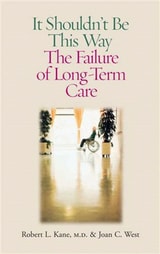
It Shouldn't Be This Way
The Failure of Long-Term CareRobert L. Kane
Vanderbilt University Press, 2005
Part memoir, part practical guide, part prescription for change, It Shouldn't Be This Way is a unique look at the problems of long-term care. Robert L. Kane, a highly experienced physician and gerontologist, and his sister, Joan C. West, tell the painful story of what happened to their mother after she suffered a debilitating stroke and spent the last years of her life in rehabilitation, assisted-living facilities, and finally a nursing home. Along the way, her adult children encountered some professionals who were kind and considerate but also many frustrations—inadequate care and the need to hire private duty aides, as well as poor communication and lack of coordination throughout the system. The situation, they found, proved far more difficult than it needed to be.
As the authors recount their mother's story, they impart various lessons they learned from each phase of the experience. They alert those who are confronting such situations for the first time about what they will likely face and how to approach the problems. Closing with a broader look at why long-term care is the way it is, they propose steps to make necessary reforms, including the development of national organizations to work for change. Their message to families, care professionals, and policy-makers could not be more urgent.

It's Not Your Fault!
Strategies for Solving Toilet Training and Bedwetting ProblemsJoseph Barone, M.D.
Rutgers University Press, 2015
iatrogenesis
Essays on Becoming a PhysicianMichigan Publishing Services, 2018
In Greek, iatro- means doctor, and -genesis means origin: Iatrogenesis thus describes any effect, good or bad, brought forth by a physician’s actions. This essay compendium looks beyond a physician’s impact on patients, instead turning inward to examine the impact of medical training on student doctors. These essays written by University of Michigan medical students span from the donning of the White Coat to graduation. Along the way, each writer weaves a story, the threads of which unite in a tapestry highlighting the universality of this coming-of-age journey. These essays breathe life into each stage of medical apprenticeship, displaying the full spectrum of human emotion as medical students find ways to reinvent themselves as the physicians of tomorrow.