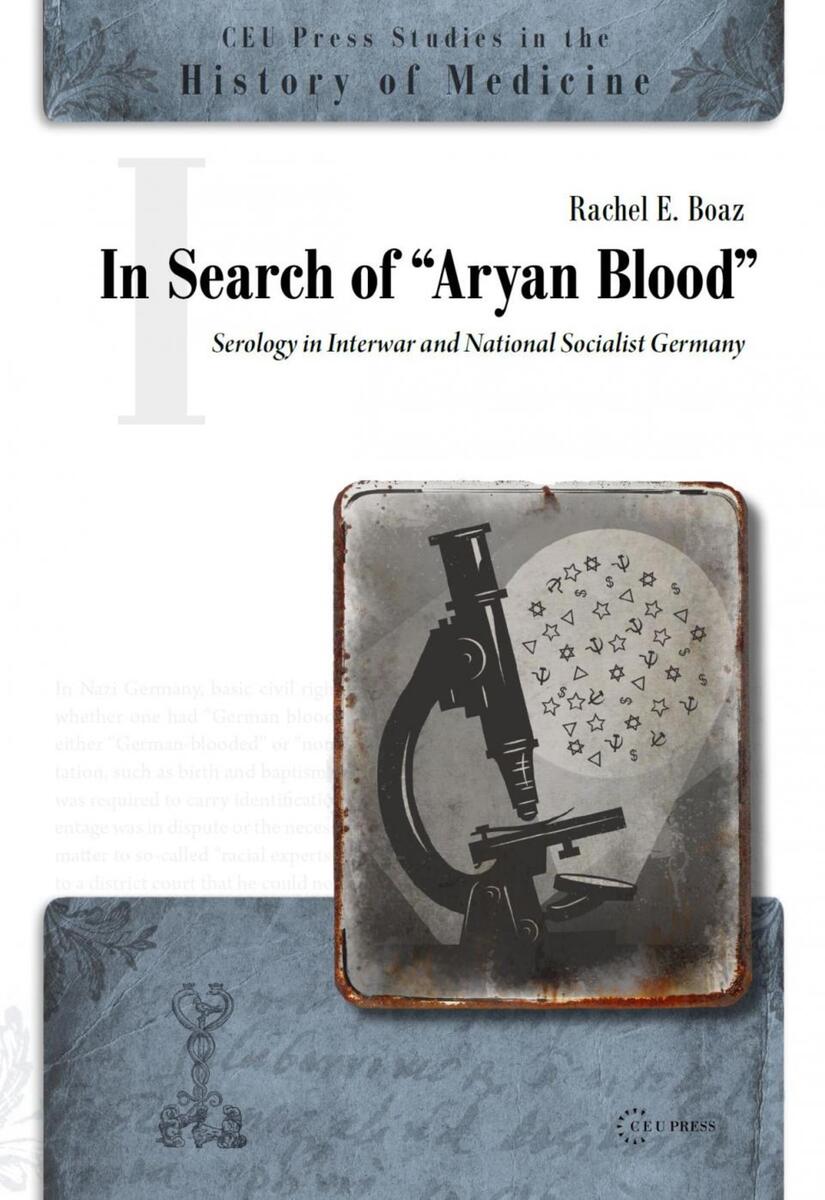
In Search of "Aryan Blood": Serology in Interwar and National Socialist Germany
Central European University Press, 2012
Cloth: 978-963-9776-50-0 | eISBN: 978-963-386-227-8 (ePub) | eISBN: 978-615-5053-45-0 (PDF)
Library of Congress Classification R510.B63 2011
Dewey Decimal Classification 616.07950943
Cloth: 978-963-9776-50-0 | eISBN: 978-963-386-227-8 (ePub) | eISBN: 978-615-5053-45-0 (PDF)
Library of Congress Classification R510.B63 2011
Dewey Decimal Classification 616.07950943
ABOUT THIS BOOK | AUTHOR BIOGRAPHY | TOC
ABOUT THIS BOOK
Explores the course of development of German seroanthropology from its origins in World War I until the end of the Third Reich. Gives an all encompassing interpretation of how the discovery of blood groups in around 1900 galvanised not only old mythologies of blood and origin but also new developments in anthropology and eugenics in the 1920s and 1930s. Boaz portrays how the personal motivations of blood scientists influenced their professional research, ultimately demonstrating how conceptually indeterminate and politically volatile the science of race was under the Nazi regime.
See other books on: 1918-1933 | 1933-1945 | Antisemitism | Biopolitics | Search
See other titles from Central European University Press