321 books match the query 'Mexican Americans' and 10 start with i
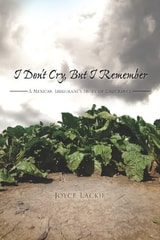
cover of I Don't Cry, But I Remember: A Mexican Immigrant's Story of Endurance

I Don't Cry, But I Remember

A Mexican Immigrant's Story of Endurance

Joyce Lackie

University of Arizona Press, 2012

When Viviana Salguero came to the United States in 1946, she spoke very little English, had never learned to read or write, and had no job skills besides housework or field labor. She worked eighteen-hour days and lived outdoors as often as not. And yet she raised twelve children, shielding them from her abusive husband when she dared, and shared in both the tragedies and accomplishments of her family. Through it all, Viviana never lost her love for Mexico or her gratitude to the United States for what would eventually become a better life. Though her story is unique, Viviana Salguero could be the mother, grandmother, or great-grandmother of immigrants anywhere, struggling with barriers of gender, education, language, and poverty.

In I Don't Cry, But I Remember, Joyce Lackie shares with us an intimate portrait of Viviana's life. Based on hours of recorded conversations, Lackie skillfully translates the interviews into an engaging, revealing narrative that details the migrant experience from a woman's point of view and fills a gap in our history by examining the role of women of color in the American Southwest. The book presents Vivana's life not only as a chronicle of endurance, but as a tale of everyday resistance. What she lacks in social confidence, political strength, and economic stability, she makes up for in dignity, faith, and wisdom.

Like all good oral history, Salguero's accounts and Lackie's analyses contribute to our understanding of the past by exposing the inconsistencies and contradictions in our remembrances. This book will appeal to ethnographers, oral historians, students and scholars of Chicana studies and women's studies, as well as general readers interested in the lives of immigrant women.
[more]
cover of I'm Neither Here nor There: Mexicans' Quotidian Struggles with Migration and Poverty

I'm Neither Here nor There

Mexicans' Quotidian Struggles with Migration and Poverty

Patricia Zavella

Duke University Press, 2011

I’m Neither Here nor There explores how immigration influences the construction of family, identity, and community among Mexican Americans and migrants from Mexico. Based on long-term ethnographic research, Patricia Zavella describes how poor and working-class Mexican Americans and migrants to California’s central coast struggle for agency amid the region’s deteriorating economic conditions and the rise of racial nativism in the United States. Zavella also examines tensions within the Mexican diaspora based on differences in legal status, generation, gender, sexuality, and language. She proposes “peripheral vision” to describe the sense of displacement and instability felt by Mexican Americans and Mexicans who migrate to the United States as well as by their family members in Mexico.

Drawing on close interactions with Mexicans on both sides of the border, Zavella examines migrant journeys to and within the United States, gendered racialization, and exploitation at workplaces, and the challenges that migrants face in forming and maintaining families. As she demonstrates, the desires of migrants to express their identities publicly and to establish a sense of cultural memory are realized partly through Latin American and Chicano protest music, and Mexican and indigenous folks songs played by musicians and cultural activists.
[more]
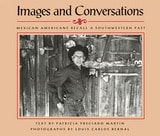
cover of Images and Conversations: Mexican Americans Recall a Southwestern Past

Images and Conversations

Mexican Americans Recall a Southwestern Past

Text by Patricia Preciado Martin; Photographs by Louis Carlos Bernal

University of Arizona Press, 1983
Some Hispanic Americans living today can recall a time when barrio or ranch life was marked by a simplicity and neighborliness that has vanished with progress. These thirteen first-person accounts of southern Arizona residents capture a spirit evocative of the Hispanic presence in the Southwest—whether in San Antonio, Santa Fe, Pueblo, or Los Angeles—while striking photographs reflect the grace and dignity of these indomitable individuals.
[more]
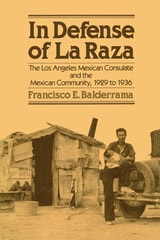
cover of In Defense of La Raza: The Los Angeles Mexican Consulate and the Mexican Community, 1929 to 1936

In Defense of La Raza

The Los Angeles Mexican Consulate and the Mexican Community, 1929 to 1936

Francisco E. Balderrama

University of Arizona Press, 1982

Mexican communities in the United States faced more than unemployment during the Great Depression. Discrimination against Mexican nationals and similar prejudices against Mexican Americans led the communities to seek help from Mexican consulates, which in most cases rose to their defense.
 
Los Angeles’s consulate was confronted with the country’s largest concentration of Mexican Americans, for whom the consuls often assumed a position of community leadership. Whether helping the unemployed secure repatriation and relief or intervening in labor disputes, consuls uniquely adapted their roles in international diplomacy to the demands of local affairs.
[more]
cover of In Search of the Mexican Beverly Hills: Latino Suburbanization in Postwar Los Angeles

In Search of the Mexican Beverly Hills

Latino Suburbanization in Postwar Los Angeles

González, Jerry

Rutgers University Press, 2018

Residential and industrial sprawl changed more than the political landscape of postwar Los Angeles. It expanded the employment and living opportunities for millions of Angelinos into new suburbs. In Search of the Mexican Beverly Hills examines the struggle for inclusion into this exclusive world—a multilayered process by which Mexican Americans moved out of the barrios and emerged as a majority population in the San Gabriel Valley—and the impact that movement had on collective racial and class identity. Contrary to the assimilation processes experienced by most Euro-Americans, Mexican Americans did not graduate to whiteness on the basis of their suburban residence. Rather, In Search of the Mexican Beverly Hills illuminates how Mexican American racial and class identity were both reinforced by and took on added metropolitan and transnational dimensions in the city during the second half of the twentieth century.  
[more]
cover of In the Days of Billy the Kid: The Lives and Times of José Chávez y Chávez, Juan Patrón, Martín Chávez, and Yginio Salazar

In the Days of Billy the Kid

The Lives and Times of José Chávez y Chávez, Juan Patrón, Martín Chávez, and Yginio Salazar

James B. Mills

University of North Texas Press, 2025

[more]
cover of In the Shadow of Cortés: Conversations Along the Route of Conquest

In the Shadow of Cortés

Conversations Along the Route of Conquest

Kathleen Ann Myers

University of Arizona Press, 2015

Five hundred years ago, the army of conquest led by Hernan Cortés marched hundreds of miles across a rugged swath of land from Veracruz on the Mexican Caribbean to the capital city of the Aztecs, now Mexico City. This journey was the catalyst for profound cultural and political change in Mesoamerica. Today, many Mexicans view the Ruta de Cortés as a symbol of an event that forever changed the course of their history. But few U.S. Americans understand how the conquest still affects Mexicans’ national identity and their relationship with the United States.

Following the route of Hernán Cortés, In the Shadow of Cortés offers a visual and cultural history of the legacy of contact between Spaniards and indigenous civilizations. The book is a reflective journey that presents a diversity of voices, images, and ideas about history and conquest. Specialist in Mexican culture Kathleen Ann Myers teams up with prize-winning translators and photographers to offer a unique reading experience that combines accessible interpretative essays with beautifully translated interviews and dozens of historical and contemporary black-and-white and color images, including some by award-winner Steven Raymer. The result offers readers multiple perspectives on these pivotal events as imagined and re-envisioned today by Mexicans both in their homeland and in the United States.

In the Shadow of Cortés offers an extensive visual narrative about conquest and, ultimately, about Mexican history. It traces the symbolic geography of the conquest and shows how the historical memory of colonialism continues to shape lives today.
[more]
cover of Indigenous Genres of the Human: Locating the Intersections of Indigeneity and Latinidad

Indigenous Genres of the Human

Locating the Intersections of Indigeneity and Latinidad

Gabriela Raquel Ríos

University of Arizona Press, 2026

In this work, scholar Gabriela Raquel Ríos considers how Latina/o/x communities engage in the ethical reclamation of indigeneity. Through case studies that include testimonios and other Indigenous storytelling practices, Ríos reveals how cultural logics of colonization continue to shape—and often constrain—understandings of indigeneity across Latin America and in the United States.

Addressing different genres of human and what contemporary indigeneity and reclaiming indigeneity looks like across Latin American contexts, chapters in this work examine digital bruja poetry, Aymara women’s Lucha Libre in Bolivia, Raramuri dance in Mexico, and Indigenous Khipu in the Andes. The author weaves her own story of being from southern Texas and traveling to Mexico throughout the book.

Bridging Sylvia Wynter’s theory of “genres of the human” with critical Latinx indigeneity studies, Chicana/o/x studies, decolonial theory, and rhetorical new materialisms, this book challenges readers to rethink what it means to be human, Indigenous, and Chicanx in the wake of colonial violence. Rather than reinforcing binaries defined by settler colonialism, Ríos proposes a framework that centers community knowledge and grounded practices. Her work opens space for dialogue, listening, and healing, emphasizing that reclaiming indigeneity requires attention to the stories, movements, and rhetorical practices that emerge from within communities themselves.
[more]
cover of Infinite Divisions: An Anthology of Chicana Literature

Infinite Divisions

An Anthology of Chicana Literature

Tey Diana Rebolledo

University of Arizona Press, 1993

Given the explosive creativity shown by Chicana writers over the past two decades, this first major anthology devoted to their work is a major contribution to American letters. It highlights the key issues, motifs, and concerns of Mexican American women from 1848 to the present, and particularly reflects the modern Chicana's struggle for identity. Among the recurring themes in the collection is a re-visioning of foremothers such as the historical Malinche, the mythical Llorona, and pioneering women who settled the American Southwest from the sixteenth to twentieth centuries. Also included are historical documents on the lives, culture, and writings of Mexican American women in the nineteenth century, as well as oral histories recorded by the Federal Writers Project in the 1930s.

Through poetry, fiction, drama, essay, and other forms, this landmark volume showcases the talents of more than fifty authors, including Gloria E. Anzaldúa, Ana Castillo, Lorna Dee Cervantes, Denise Chávez, Sandra Cisneros, Pat Mora, Cherríe Moraga, and María Helena Viramontes.
[more]
cover of Italians Then, Mexicans Now: Immigrant Origins and the Second-Generation Progress, 1890-2000

Italians Then, Mexicans Now

Immigrant Origins and the Second-Generation Progress, 1890-2000

Joel Perlmann

Russell Sage Foundation, 2005

According to the American dream, hard work and a good education can lift people from poverty to success in the "land of opportunity." The unskilled immigrants who came to the United States from southern, central, and eastern Europe in the late 19th and early 20th centuries largely realized that vision. Within a few generations, their descendants rose to the middle class and beyond. But can today's unskilled immigrant arrivals—especially Mexicans, the nation's most numerous immigrant group—expect to achieve the same for their descendants? Social scientists disagree on this question, basing their arguments primarily on how well contemporary arrivals are faring. In Italians Then, Mexicans Now, Joel Perlmann uses the latest immigration data as well as 100 years of historical census data to compare the progress of unskilled immigrants and their American-born children both then and now. The crucial difference between the immigrant experience a hundred years ago and today is that relatively well-paid jobs were plentiful for workers with little education a hundred years ago, while today's immigrants arrive in an increasingly unequal America. Perlmann finds that while this change over time is real, its impact has not been as strong as many scholars have argued. In particular, these changes have not been great enough to force today's Mexican second generation into an inner-city "underclass." Perlmann emphasizes that high school dropout rates among second-generation Mexicans are alarmingly high, and are likely to have a strong impact on the group's well-being. Yet despite their high dropout rates, Mexican Americans earn at least as much as African Americans, and they fare better on social measures such as unwed childbearing and incarceration, which often lead to economic hardship. Perlmann concludes that inter-generational progress, though likely to be slower than it was for the European immigrants a century ago, is a reality, and could be enhanced if policy interventions are taken to boost high school graduation rates for Mexican children. Rich with historical data, Italians Then, Mexicans Now persuasively argues that today's Mexican immigrants are making slow but steady socio-economic progress and may one day reach parity with earlier immigrant groups who moved up into the heart of the American middle class. Copublished with the Levy Economics Institute of Bard College
[more]