Results by title
618 books match the query 'Motion pictures' and 25 start with i
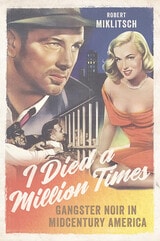
I Died a Million Times
Gangster Noir in Midcentury AmericaRobert Miklitsch
University of Illinois Press, 2020
With the Senate's organized crime hearings and the brighter-than-bright myth of the American Dream as a backdrop, Miklitsch examines the style and history, and the production and cultural politics, of classic pictures from The Big Heat and The Asphalt Jungle to lesser-known gems like 711 Ocean Drive and post-Fifties movies like Ocean’s Eleven. Miklitsch pays particular attention to trademark leitmotifs including the individual versus the collective, the family as a locus of dissension and rapport, the real-world roots of the heist picture, and the syndicate as an octopus with its tentacles deep into law enforcement, corporate America, and government. If the memes of gangster noir remain prototypically dark, the look of the films becomes lighter and flatter, reflecting the influence of television and the realization that, under the cover of respectability, crime had moved from the underworld into the mainstream of contemporary everyday life.
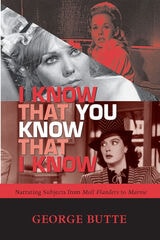
I KNOW THAT YOU KNOW THAT I KNOW
NARRATING SUBJECTS FROM MOLL FLANDERS TO MARNIEGeorge Butte
The Ohio State University Press, 2004
In I Know That You Know That I Know, Butte explores how stories narrate human consciousness. Butte locates a historical shift in the representation of webs of consciousnesses in narrative—what he calls “deep intersubjectivity”—and examines the effect this shift has since had on Western literature and culture. The author studies narrative practices in two ways: one pairing eighteenth-and nineteenth-century British novels (Moll Flanders and Great Expectations, for example), and the other studying genre practices—comedy, anti-comedy and masquerade—in written and film narratives (Jane Austen and His Girl Friday, for example, and Hitchcock’s Cary Grant films).
Butte’s second major claim argues for new ways to read representations of human consciousness, whether or not they take the form of deep intersubjectivity. Phenomenological criticism has lost its credibility in recent years, but this book identifies better reading strategies arising out of what the author calls poststructuralist phenomenology, grounded largely in the work of the French philosopher Merleau-Ponty. Butte criticizes the extreme of transcendental idealism (first-wave phenomenological criticism) and cultural materialism (when it rules out the study of consciousness). He also criticizes the dominant Lacanian framework of much academic film criticism.

I'd Just as Soon Kiss a Wookiee
Uncovering Racialized Desire in the Star Wars GalaxyGreg Carter
University of Texas Press, 2025
How the Star Wars trilogies and their fandoms have engaged with and mirrored American beliefs about race and gender.
2026 Award for Best Single Work, Popular Culture Association (MPCA)
The Star Wars saga takes place in a galaxy far, far away, but its social structures—in particular its racial realities—are thoroughly American. So argues Greg Carter in this thought-provoking analysis, which blends historical and theoretical treatments of science fiction cinema and Star Wars fandom to explore the subtle mirroring between fantasy and the communities that create and consume it.
I’d Just as Soon Kiss a Wookiee draws on insights from prominent scholars to examine fictional relationships between groups perceived to be biologically different. Three areas of commonality between the United States and Star Wars arise: stiff regulation of racial mixture; racialized servitude, with nonhumans placed in positions of bondage; and the presumption of white male supremacy. None of these are functions of the of the Star Wars story; rather, they index the expectations of US society. But expectations have also shifted since Star Wars launched in 1977, and the franchise with it. Carter gauges minority and mainstream fan reactions, finding that, while science fiction enthusiasts have a reputation for progressiveness, the truth turns out to be as complicated as US racism itself.
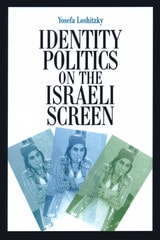
Identity Politics on the Israeli Screen
By Yosefa Loshitzky
University of Texas Press, 2002
2002 — A Choice Outstanding Academic Book
The struggle to forge a collective national identity at the expense of competing plural identities has preoccupied Israeli society since the founding of the state of Israel. In this book, Yosefa Loshitzky explores how major Israeli films of the 1980s and 1990s have contributed significantly to the process of identity formation by reflecting, projecting, and constructing debates around Israeli national identity.
Loshitzky focuses on three major foundational sites of the struggle over Israeli identity: the Holocaust, the question of the Orient, and the so-called (in an ironic historical twist of the "Jewish question") Palestinian question. The films she discusses raise fundamental questions about the identity of Jewish Holocaust survivors and their children (the "second generation"), Jewish immigrants from Muslim countries or Mizrahim (particularly the second generation of Israeli Mizrahim), and Palestinians. Recognizing that victimhood marks all the identities represented in the films under discussion, Loshitzky does not treat each identity group as a separate and coherent entity, but rather attempts to see the conflation, interplay, and conflict among them.

Identity, Place, and Subversion in Contemporary Mizrahi Cinema in Israel
Yaron Shemer
University of Michigan Press, 2013
In Identity, Place, and Subversion in Contemporary Mizrahi Cinema in Israel, Yaron Shemer presents the most comprehensive and systematic study to date of Mizrahi (Oriental-Jewish or Arab-Jewish) films produced in Israel in the last several decades. Through an analysis of dozens of films the book illustrates how narratives, characters, and space have been employed to give expression to Mizrahi ethnic identity and to situate the Mizrahi within the broader context of the Israeli societal fabric. The struggle over identity and the effort to redraw ethnic boundaries have taken place against the backdrop of a long-standing Zionist view of the Mizrahi as an inferior other whose “Levantine” culture posed a threat to the Western-oriented Zionist enterprise.
In its examination of the nature and dynamics of Mizrahi cinema (defined by subject-matter), the book engages the sensitive topic of Mizrahi ethnicity head-on, confronting the conventional notion of Israeli society as a melting pot and the widespread dismissal of ethnic divisions in the country. Shemer explores the continuous marginalization of the Mizrahi in contemporary Israeli cinema and the challenge some Mizrahi films offer to the subjugation of this ethnic group. He also studies the role cultural policies and institutional power in Israel have played in shaping Mizrahi cinema and the creation of a Mizrahi niche in cinema. In a broader sense, this pioneering work is a probing exploration of Israeli culture and society through the prism of film and cinematic expression. It sheds light on the play of ethnicity, class, gender, and religion in contemporary Israel, and on the heated debates surrounding Zionist ideology and identity politics. By charting a new territory of academic inquiry grounded in an interdisciplinary theoretical framework, the study contributes to the formation of “Mizrahi Cinema” as a recognized and vibrant scholarly field.
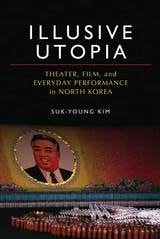
Illusive Utopia
Theater, Film, and Everyday Performance in North KoreaSuk-Young Kim
University of Michigan Press, 2010
"North Korea is not just a security or human rights problem (although it is those things) but a real society. This book gets us closer to understanding North Korea beyond the usual headlines, and does so in a richly detailed, well-researched, and theoretically contextualized way."
---Charles K. Armstrong, Director, Center for Korean Research, Columbia University
"One of this book's strengths is how it deals at the same time with historical, geographical, political, artistic, and cultural materials. Film and theatre are not the only arts Kim studies---she also offers an excellent analysis of paintings, fashion, and what she calls 'everyday performance.' Her analysis is brilliant, her insights amazing, and her discoveries and conclusions always illuminating."
---Patrice Pavis, University of Kent, Canterbury
No nation stages massive parades and collective performances on the scale of North Korea. Even amid a series of intense political/economic crises and international conflicts, the financially troubled country continues to invest massive amounts of resources to sponsor unflinching displays of patriotism, glorifying its leaders and revolutionary history through state rituals that can involve hundreds of thousands of performers. Author Suk-Young Kim explores how sixty years of state-sponsored propaganda performances---including public spectacles, theater, film, and other visual media such as posters---shape everyday practice such as education, the mobilization of labor, the gendering of social interactions, the organization of national space, tourism, and transnational human rights. Equal parts fascinating and disturbing, Illusive Utopia shows how the country's visual culture and performing arts set the course for the illusionary formation of a distinctive national identity and state legitimacy, illuminating deep-rooted cultural explanations as to why socialism has survived in North Korea despite the fall of the Berlin Wall, the collapse of the Soviet Union, and China's continuing march toward economic prosperity. With over fifty striking color illustrations, Illusive Utopia captures the spectacular illusion within a country where the arts are not only a means of entertainment but also a forceful institution used to regulate, educate, and mobilize the population.
Suk-Young Kim is Associate Professor in the Department of Theater and Dance at the University of California, Santa Barbara, and coauthor with Kim Yong of Long Road Home: A Testimony of a North Korean Camp Survivor.
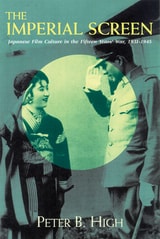
Imperial Screen
Japanese Film Culture In The Fifteen Years War,Peter B. High
University of Wisconsin Press, 2003
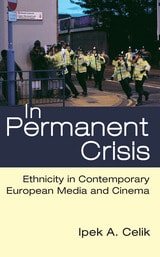
In Permanent Crisis
Ethnicity in Contemporary European Media and CinemaIpek A. Celik
University of Michigan Press, 2015
In the Eye of the Beholder
Critical Perspectives in Popular Film and TelevisionEdited by Gary R. Ederton, Michael T. Marsden, and Jack Nachbar
University of Wisconsin Press, 1997
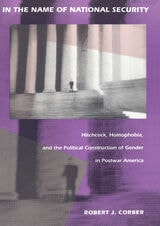
In the Name of National Security
Hitchcock, Homophobia, and the Political Construction of Gender in Postwar AmericaRobert J. Corber
Duke University Press, 1993
As Corber shows, throughout the 1950s a cast of mind known as the Cold War consensus prevailed in the United States. Promoted by Cold War liberals--that is, liberals who wanted to perserve the legacies of the New Deal but also wished to separate liberalism from a Communist-dominated cultural politics--this consensus was grounded in the perceived threat that Communists, lesbians, and homosexuals posed to national security. Through an analysis of the films of Alfred Hitchcock, combined with new research on the historical context in which these films were produced, Corber shows how Cold War liberals tried to contain the increasing heterogeneity of American society by linking questions of gender and sexual identity directly to issues of national security, a strategic move that the films of Hitchcock both legitimated and at times undermined. Drawing on psychoanalytic and Marxist theory, Corber looks at such films as Rear Window, Strangers on a Train, and Psycho to show how Hitchcock manipulated viewers' attachments and identifications to foster and reinforce the relationship between homophobia and national security issues.
A revisionary account of Hitchcock's major works, In the Name of National Security is also of great interest for what it reveals about the construction of political "reality" in American history.
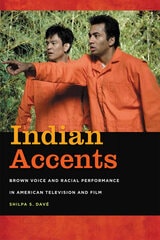
Indian Accents
Brown Voice and Racial Performance in American Television and FilmShilpa S. Dave
University of Illinois Press, 2013
Indie Cinema Online
Sarah E.S. Sinwell
Rutgers University Press, 2020
Indirect Subjects
Nollywood's Local AddressMatthew H. Brown
Duke University Press, 2021
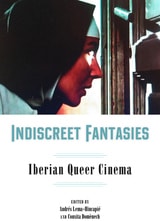
Indiscreet Fantasies
Iberian Queer CinemaAndrés Lema-Hincapié
Bucknell University Press, 2021
Published by Bucknell University Press. Distributed worldwide by Rutgers University Press.

Infinity (Stage)
Spencer Golub
University of Michigan Press, 2001
Interactive Cinema
The Ambiguous Ethics of Media ParticipationMarina Hassapopoulou
University of Minnesota Press, 2024
Connecting interactive cinema to media ethics and global citizenship
Interactive Cinema explores various cinematic practices that work to transform what is often seen as a primarily receptive activity into a participatory, multimedia experience. Surveying a multitude of unorthodox approaches throughout the history of motion pictures, Marina Hassapopoulou offers insight into a range of largely ephemeral and site-specific projects that consciously assimilate viewers into their production.
Analyzing examples of early cinema, Hollywood B movies, museum and gallery installations, virtual-reality experiments, and experimental web-based works, Hassapopoulou travels across numerous platforms, highlighting a diverse array of strategies that attempt to unsettle the allegedly passive spectatorship of traditional cinema. Through an exploration of these radically inventive approaches to the medium, many of which emerged out of sociopolitical crises and periods of historical transition, she works to expand notions of interactivity by considering it in both technological and phenomenological terms.
Deliberately revising and expanding Eurocentric scholarship to propose a much broader, transnational scope, the book emphasizes the ethical dimensions of interactive media and their links to larger considerations around community building, citizenship, and democracy. By combining cutting-edge theory with updated conventional film studies methodologies, Interactive Cinema presses at the conceptual limits of cinema and offers an essential road map to the rapidly evolving landscape of contemporary media.
Intermedialities
Political Theory and Cinematic ExperienceDavide Panagia
Northwestern University Press, 2024
Shining new light on our understanding of cinema’s ways of political thinking, Intermedialities: Political Theory and Cinematic Experience puts modern political theory in conversation with the philosophy of film. Davide Panagia argues that there are no natural laws of association that can guarantee a template for democratic participation, as democracy is predicated not on stabilizing foundations but rather on the formation of expansive collectivities and institutions that are responsive to alterability. Instead, democracy requires a relational ontology, one that he elucidates by turning to philosophers of film like Stanley Cavell, Gilles Deleuze, Miriam Hansen, and Jean-Luc Godard—all of whom have articulated a political aesthetic of cinematic experience that is at once aspectual and compositional. Panagia reads these thinkers alongside a countertradition of modern political thought, represented by David Hume, Ludwig Wittgenstein, and Gilbert Simondon. His articulation of cinematic experience thus allows for a political aesthetic that is rooted in the migratory realities of undetermined relations.

Intertextual Encounters in American Fiction, Film, and Popular Culture
Michael Dunne
University of Wisconsin Press, 2001
Intimations
The Cinema of Wojciech HasAnnette Insdorf
Northwestern University Press, 2017
Wojciech Has’s films are still less known outside of his native Poland than those of his countrymen Andrzej Wajda, Krzysztof Zanussi, and Krzysztof Kieslowski. Yet thanks to his singular vision, many critics rank Has among the masters of world cinema. Some of his movies have developed a cult following, notably The Saragossa Manuscript, the favorite film of the Grateful Dead’s Jerry Garcia, which has been praised by directors such as Luis Buñuel, Francis Ford Coppola, and Roman Polanski.
Has’s films reveal the inner lives of his characters, which he portrays by giving free rein to his own wildly creative imagination. In addition toThe Saragossa Manuscript, his diverse and innovative filmography includes The Hourglass Sanatorium, a vividly surreal depiction of Hassidic life in Poland between the world wars; The Noose, a stark poetic drama about a lucid alcoholic who knows he will not be able to kick the habit; and How to Be Loved, in which an actress remembers her wartime past.
Has made disparate but formally striking movies infused with European strains of existentialism and the avant-garde. With many of his films being restored and rereleased, new generations of film lovers are discovering his artistic genius. Intimations: The Cinema of Wojciech Has is the definitive guide in English to his work.
Inventing Film Studies
Lee Grieveson and Haidee Wasson, eds.
Duke University Press, 2008
Inventing Film Studies shows how the study of cinema has developed in relation to a constellation of institutions, technologies, practices, individuals, films, books, government agencies, pedagogies, and theories. Contributors illuminate the connections between early cinema and the social sciences, between film programs and nation-building efforts, and between universities and U.S. avant-garde filmmakers. They analyze the evolution of film studies in relation to the Museum of Modern Art, the American Film Council movement of the 1940s and 1950s, the British Film Institute, influential journals, cinephilia, and technological innovations past and present. Taken together, the essays in this collection reveal the rich history and contemporary vitality of film studies.
Contributors: Charles R. Acland, Mark Lynn Anderson, Mark Betz, Zoë Druick, Lee Grieveson, Stephen Groening, Haden Guest, Amelie Hastie, Lynne Joyrich, Laura Mulvey, Dana Polan,
D. N. Rodowick, Philip Rosen, Alison Trope, Haidee Wasson, Patricia White, Sharon Willis,
Peter Wollen, Michael Zryd
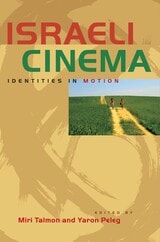
Israeli Cinema
Identities in MotionEdited by Miri Talmon and Yaron Peleg
University of Texas Press, 2011
With top billing at many film forums around the world, as well as a string of prestigious prizes, including consecutive nominations for the Best Foreign Film Oscar, Israeli films have become one of the most visible and promising cinemas in the first decade of the twenty-first century, an intriguing and vibrant site for the representation of Israeli realities. Yet two decades have passed since the last wide-ranging scholarly overview of Israeli cinema, creating a need for a new, state-of-the-art analysis of this exciting cinematic oeuvre.
The first anthology of its kind in English, Israeli Cinema: Identities in Motion presents a collection of specially commissioned articles in which leading Israeli film scholars examine Israeli cinema as a prism that refracts collective Israeli identities through the medium and art of motion pictures. The contributors address several broad themes: the nation imagined on film; war, conflict, and trauma; gender, sexuality, and ethnicity; religion and Judaism; discourses of place in the age of globalism; filming the Palestinian Other; and new cinematic discourses. The authors' illuminating readings of Israeli films reveal that Israeli cinema offers rare visual and narrative insights into the complex national, social, and multicultural Israeli universe, transcending the partial and superficial images of this culture in world media.

It's All in the Delivery
Pregnancy in American Film and Television ComedyVictoria Sturtevant
University of Texas Press, 2024
2025 John G. Cawelti Award for the Best Textbook/Primer, Popular Culture Association/American Culture Association (PCA/ACA)
2025 Longlist, Kraszna-Krausz Moving Image Book Award
How changing depictions of pregnancy in comedy from the start of the twentieth century to the present show an evolution in attitudes toward women’s reproductive roles and rights.
Some of the most groundbreaking moments in American film and TV comedy have centered on pregnancy, from Lucille Ball’s real-life pregnancy on I Love Lucy, to the abortion plot on Maude; Murphy Brown’s controversial single motherhood; Arnold Schwarzenegger’s pregnancy in Junior; or the third-trimester stand-up special Ali Wong: Baby Cobra.
In the first book-length study of pregnancy in popular comedy, Victoria Sturtevant examines the slow evolution of pregnancy tropes during the years of the Production Code; the sexual revolution and changing norms around nonmarital pregnancy in the 1960s and ‘70s; and the emphasis on biological clocks, infertility, adoption, and abortion from the 1980s to now.
Across this history, popular media have offered polite evasions and sentimentality instead of real candor about the physical and social complexities of pregnancy. But comedy has often led the way in puncturing these clichés, pointing an irreverent and satiric lens at the messy and sometimes absurd work of gestation. Ultimately, Sturtevant argues that comedy can reveal the distortions and lies that treat pregnancy as simple and natural “women’s work,” misrepresentations that rest at the heart of contemporary attacks on reproductive rights in the US.
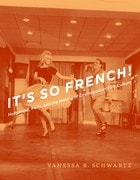
It's So French!
Hollywood, Paris, and the Making of Cosmopolitan Film CultureVanessa R. Schwartz
University of Chicago Press, 2007
Hollywood was once enamored with everything French and this infatuation blossomed in a wildly popular series of films including An American in Paris, Gigi,and Funny Face. Schwartz here examines the visual appeal of such films, and then broadens her analysis to explore their production and distribution, probing the profitable influences that Hollywood and Paris exerted on each other. This exchange moved beyond individual films with the sensational spectacle of the Cannes Film Festival and the meteoric career of Brigitte Bardot. And in turn, their success led to a new kind of film that celebrated internationalism and cultural hybridity. Ultimately, Schwartz uncovers an intriguing paradox: that the road to globalization was paved with nationalist clichés, and thus, films beloved for being so French were in fact the first signs of a nascent cosmopolitan culture.
Packed with an array of colorful film stills, publicity photographs, paparazzi shots, ads, and never before seen archival images, It’s So French! is an incisive account of the fertile collaboration between France and the United States that expanded the geographic horizons of both filmmaking and filmgoing, forever changing what the world saw and dreamed of when they went to the movies.

Italian Locations
Reinhabiting the Past in Postwar CinemaNoa Steimatsky
University of Minnesota Press, 2008
Fascism and the Second World War left Italy indelibly changed, and cinema was arguably the art that most rigorously confronted the devastated nation. In this examination of four Italian filmmakers, Noa Steimatsky brilliantly maps their forceful negotiation of Italy’s identity and posits that the cinematic forms they employ constitute an imaginary reinhabiting of Italy-one that is inextricably linked with the political, physical, and symbolic predicament of reconstruction.
A dynamic intersection of pictorial and photographic, architectural and literary discourses inform Steimatsky’s revisionist interrogation of exemplary works from the 1940s to the mid–1960s. From the earliest documentary work of Michelangelo Antonioni on the River Po to Pier Paolo Pasolini’s re-siting of the Gospel in the arid, peripheral landscape of the Italian south, and from Roberto Rossellini’s tracing of a neorealist project in ruinous Berlin to Luchino Visconti’s wrought grandeur visited upon a humble Sicilian fishing village, Italian Locations probes the historical experience of displacement, anachronism, and a thoroughly contemporary anxiety in the cinematic arena.
For Steimatsky, Antonioni’s modernist achievement, informed by his native landscape, Rossellini’s neorealist image of Italy as a nation of ruins, Visconti’s reaching back to the nineteenth century and even more archaic pasts, and Pasolini’s ambivalence about modernity-all partake in a search for a politically and culturally redeemed Italy.
Noa Steimatsky is associate professor of the history of art and film studies at Yale University.
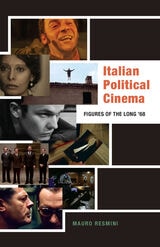
Italian Political Cinema
Figures of the Long ’68Mauro Resmini
University of Minnesota Press, 2022
An exploration of how film has made legible the Italian long ’68 as a moment of crisis and transition
Traditionally, the definition of political cinema assumes a relationship between cinema and politics. In contrast to this view, author Mauro Resmini sees this relationship as an impasse. To illustrate this theory, Resmini turns to Italian cinema to explore how films have reinvented the link between popular art and radical politics in Italy from 1968 to the early 1980s, a period of intense political and cultural struggles also known as the long ’68.
Italian Political Cinema conjures a multifaceted, complex portrayal of Italian society. Centered on emblematic figures in Italian cinema, it maps the currents of antagonism and repression that defined this period in the country’s history. Resmini explores how film imagined the possibilities, obstacles, and pitfalls that characterized the Italian long ’68 as a moment of crisis and transition. From workerism to autonomist Marxism to feminism, this book further expands the debate on political cinema with a critical interpretation of influential texts, some of which are currently only available in Italian.
A comprehensive and novel redefinition of political film, Italian Political Cinema introduces its audience to lesser-known directors alongside greats such as Pasolini, Bertolucci, Antonioni, and Bellocchio. Resmini offers access to untranslated work in Italian philosophy, political theory, and film theory, and forcefully advocates for the continued artistic and political relevance of these films in our time.